

If you’re a traveler that likes visiting extreme places, Longyearbyen is probably on your bucket list—it’s the northernmost city in the world, after all! This Norwegian town of 2,400 residents is located on Svalbard, a northerly archipelago located between Norway and the North Pole. But what exactly is there to do in this unique place?
My husband, Justin, and I spent a few days exploring all over this quirky town before our cruise around Svalbard, so we’ve put together this list of 14 incredible things to do in Longyearbyen.
This post may contain affiliate links. If you make a purchase through them, we may receive a small commission, for which we are extremely grateful, at no extra cost to you.
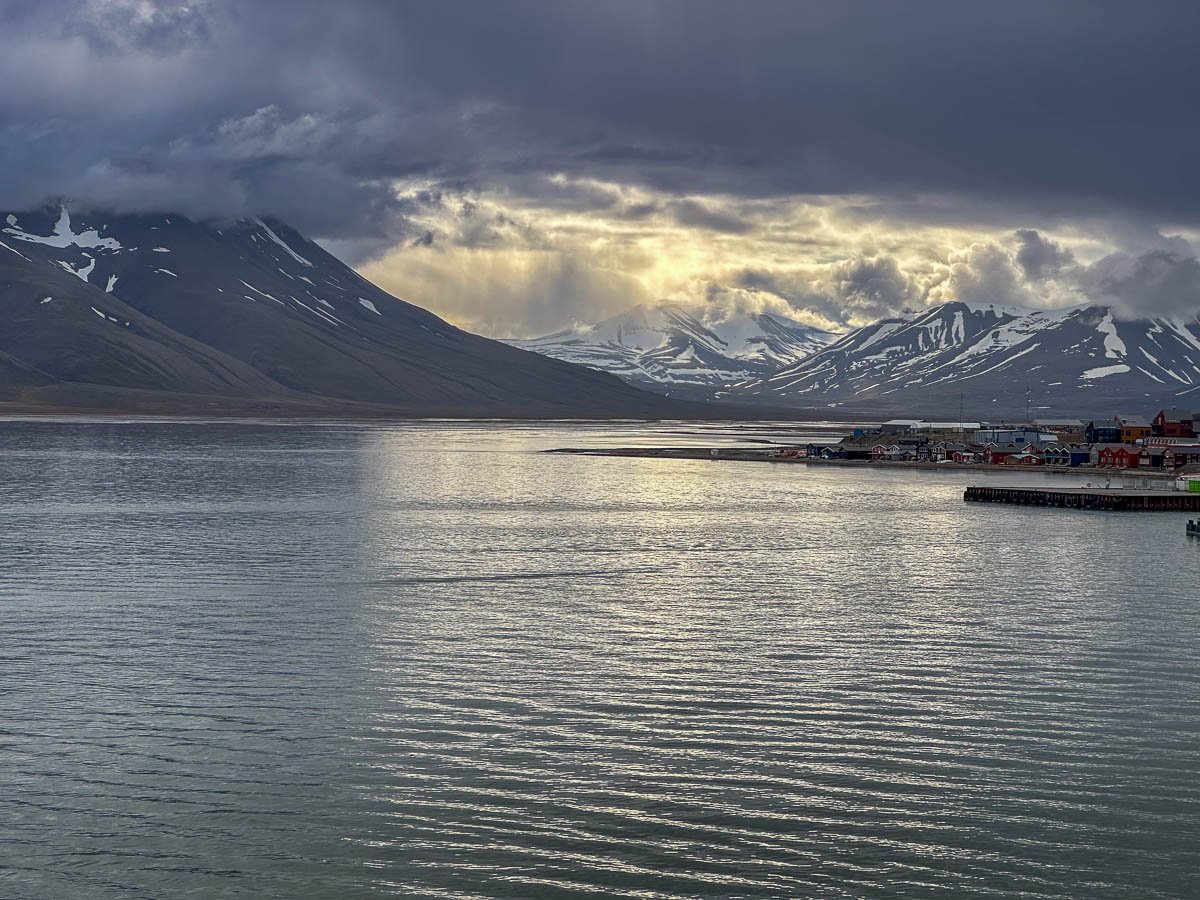

What is Longyearbyen?
Before we dive into what to do in Longyearbyen, I thought it would be worth explaining a bit of the history of this extreme city.
Unlike many of the remote islands around the Arctic, Svalbard actually wasn’t inhabited by Indigenous people and was first inhabited by whalers and trappers in the 1600s.
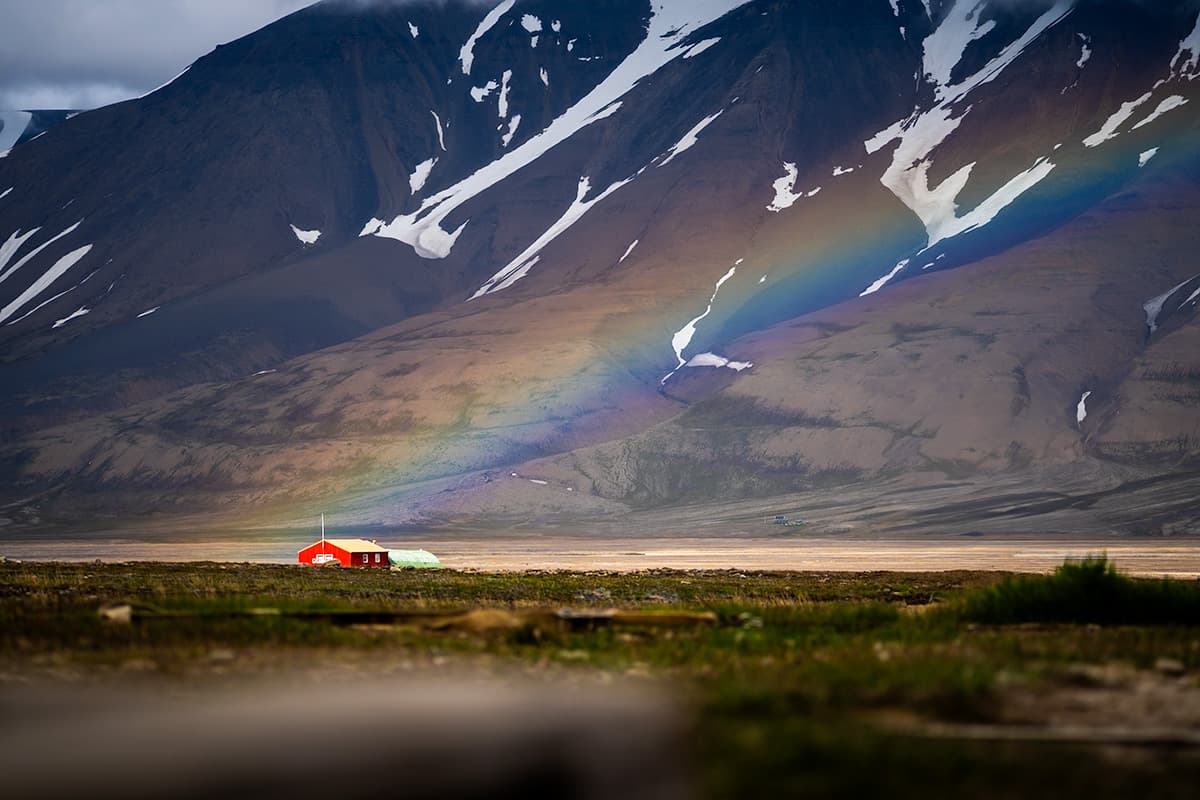
There really wasn’t a sizable settlement on Svalbard until an American, John Longyear, came as a tourist to the archipelago and decided to open a coal mine here. Longyear City was founded in 1906 and, by the time it was renamed Longyearbyen in 1925, the town had ballooned to 1,000 residents.
Even though mining has officially stopped in the city as of 2025, it currently is home to a mix of people from Norway and 50 other countries, with a healthy number of students and other residents that are attracted to Svalbard’s nature and unique natural phenomenon, including the Midnight Sun, where the sun literally doesn’t set below the horizon for seven months, or the Polar Night, where the sun doesn’t rise above the horizon for three months.
Things to do in Longyearbyen
1. Svalbard Museum
To get your bearings in Longyearbyen, the Svalbard Museum is a good place to start. We visited a number of museums while in the city and this one definitely offers the most comprehensive overview of the archipelago, ranging from its history of human inhabitation and animal diversity to geology and impacts of climate change.
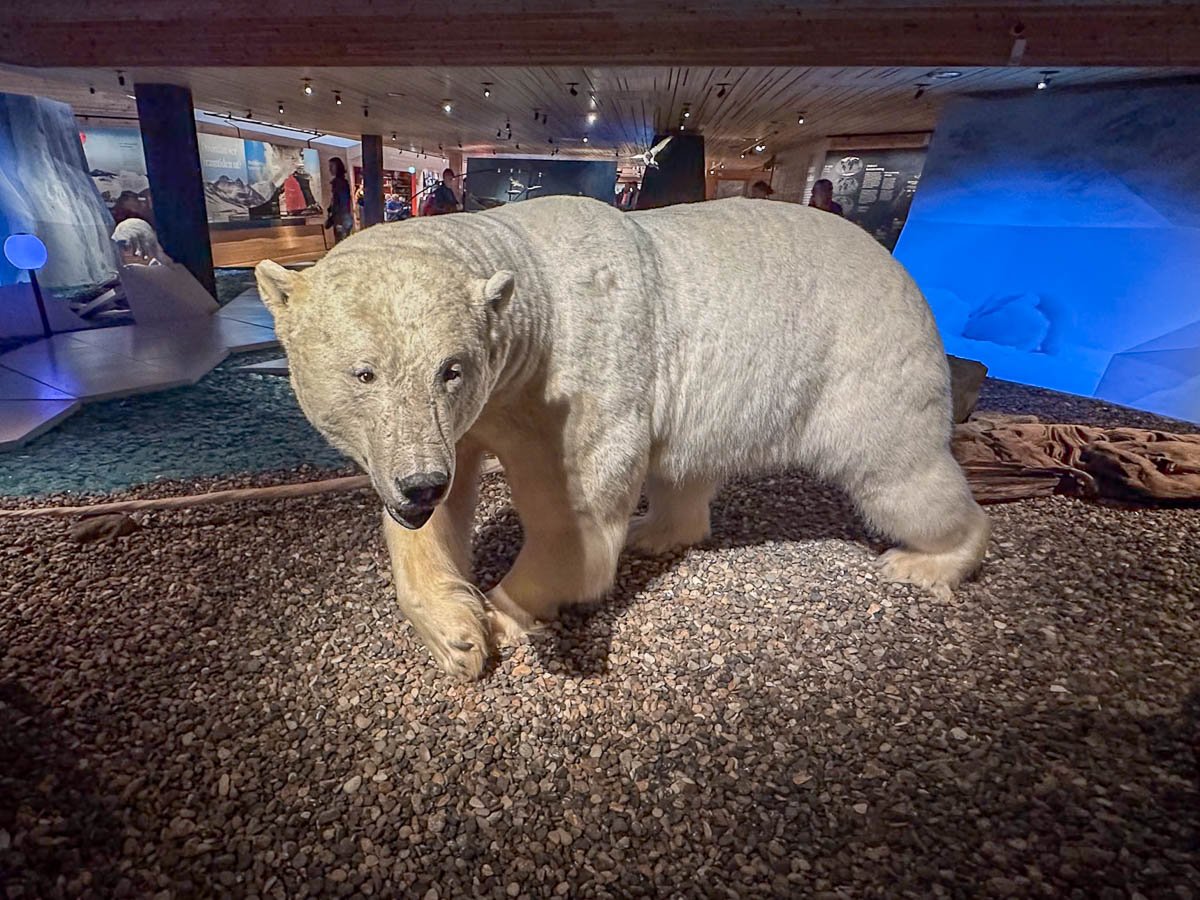
Signage is offered in both Norwegian and English and there’s a variety of artifacts on display, ranging from taxidermied animals that have almost exclusively died of natural causes (but for one polar bear that was shot in self defense) to clothing and equipment used by early trappers and whalers. In our opinion, it’s definitely the most interesting museum in Longyearbyen!
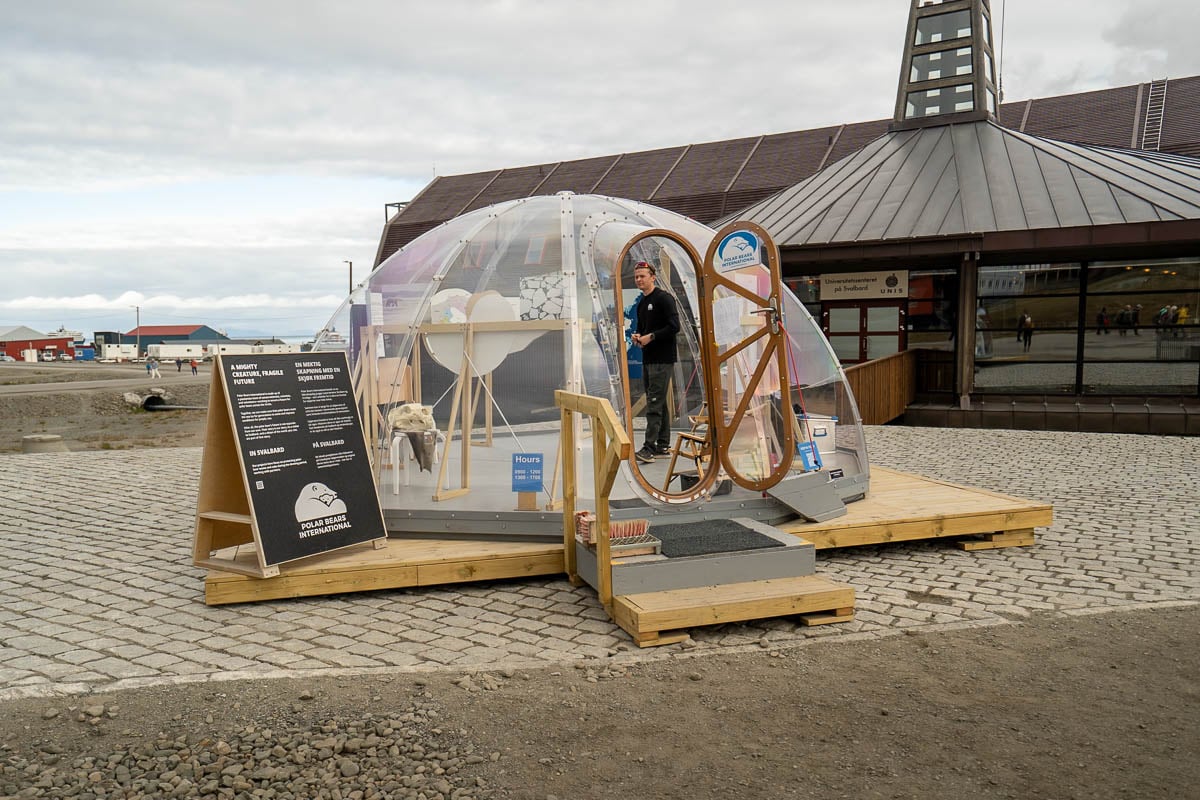
Be sure to pop by the “ice house” pop up outside of the museum, hosted by Polar Bear International, to learn more about climate change’s impact on the apex predator of the Arctic.
Word of warning, though—the museum gets PACKED with tour groups, especially from around 11 AM to 3 PM. So, you’ll likely have the most pleasant experience here if you can visit either when it first opens or in the hour or two before it closes.
2. Cafe Huskies
This coffee shop is a one-two punch—Cafe Huskies is the northernmost cafe in the world AND, true to its name, has huskies that you can cuddle with!
The entrepreneurial owners recognized that there weren’t that many coffee shops in Longyearbyen and thought that tourists, who love a good dog sled ride, might be enthused to visit one that featured huskies. And they were totally right!

Now, the cafe has a rotating roster of huskies, who are pets of the owners and their friends, who take turns pulling “shifts” at the cafe (usually, two huskies at a time).
Beyond the cuddly employees, the coffee shop itself is nothing to sneeze at, with solid coffee offerings, including some brewed with beans roasted at the northernmost roastery in the world (you might notice that “northernmost” is kind of a theme around these parts!). There’s also seriously delicious pastries and baked goods, many of which are vegan and gluten-free.
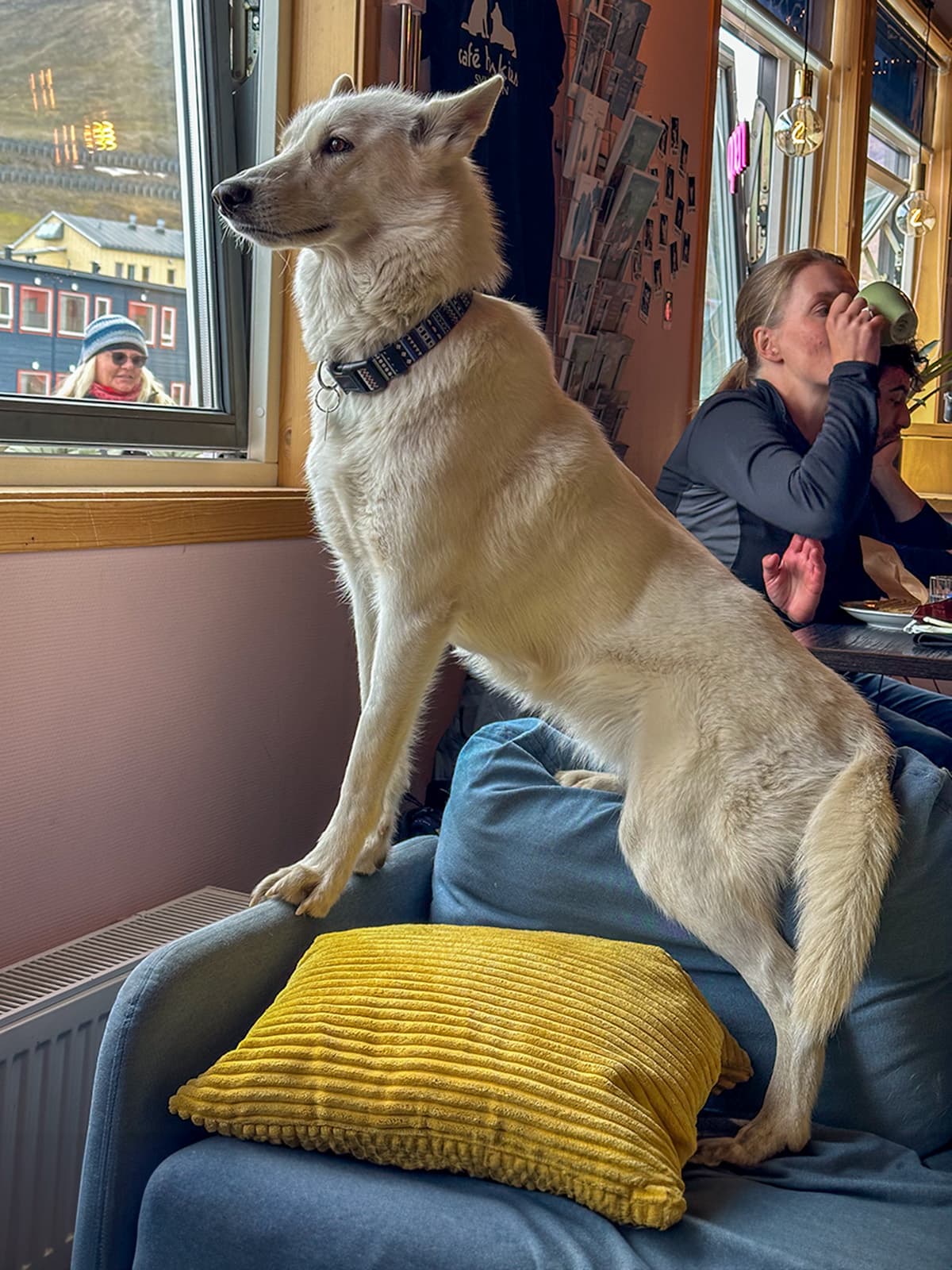
Even if you’re not interested in getting caffeinated or a dessert, Cafe Huskies has a little nook with locally made handicrafts that serve as cute souvenirs to remember your time in this unique town.
If you’re interested, check out our Instagram Reel about our experience here!
3. Svalbard Global Seed Vault
For whatever reason, the Global Seed Vault was one of the things that I was most excited to see in Longyearbyen and it really was SO cool to see in person!
The Global Seed Vault provides long-term storage for each country to store genetic material of agricultural seeds.
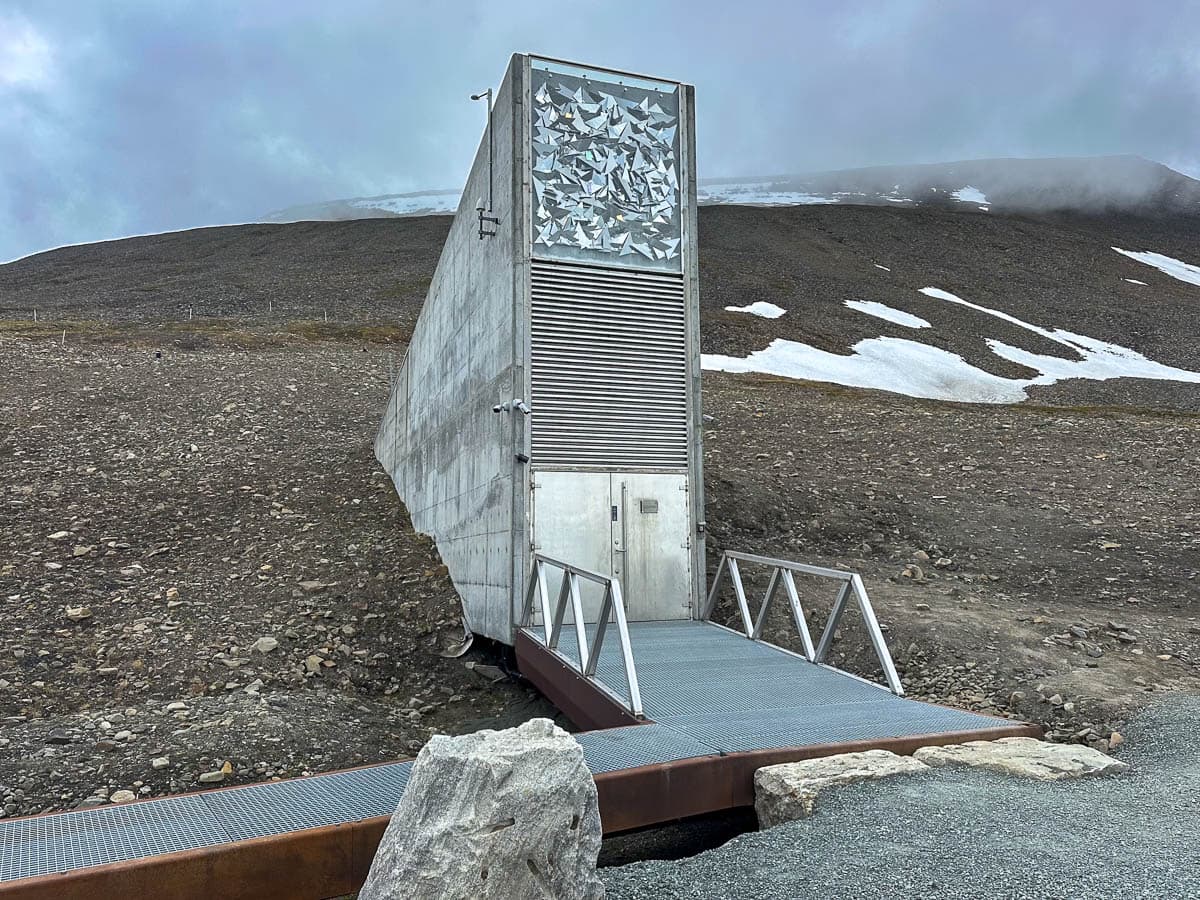
Its nickname is the “Doomsday Vault”, as it acts as a safeguard in the event that a country has some sort of environmental or geopolitical disaster that wipes out its crops. Due to Svalbard’s remoteness, which makes it an unlikely target of war, and the presence of permafrost, which acts as an extra layer of protection in the event of a mass electrical outage, makes Longyearbyen the perfect location for this kind of vault.
Since its opening in 2008, Syria actually made the first withdrawal from the bank in 2015, following significant agricultural disruption caused by the Syrian Civil War.
To set expectations, you can’t actually go into the Global Seed Vault and just have to admire it from its exterior. Still, with its angular architecture, funky art installation on its facade, and sweeping views of the surrounding fjords, I think it’s absolutely worth a visit!
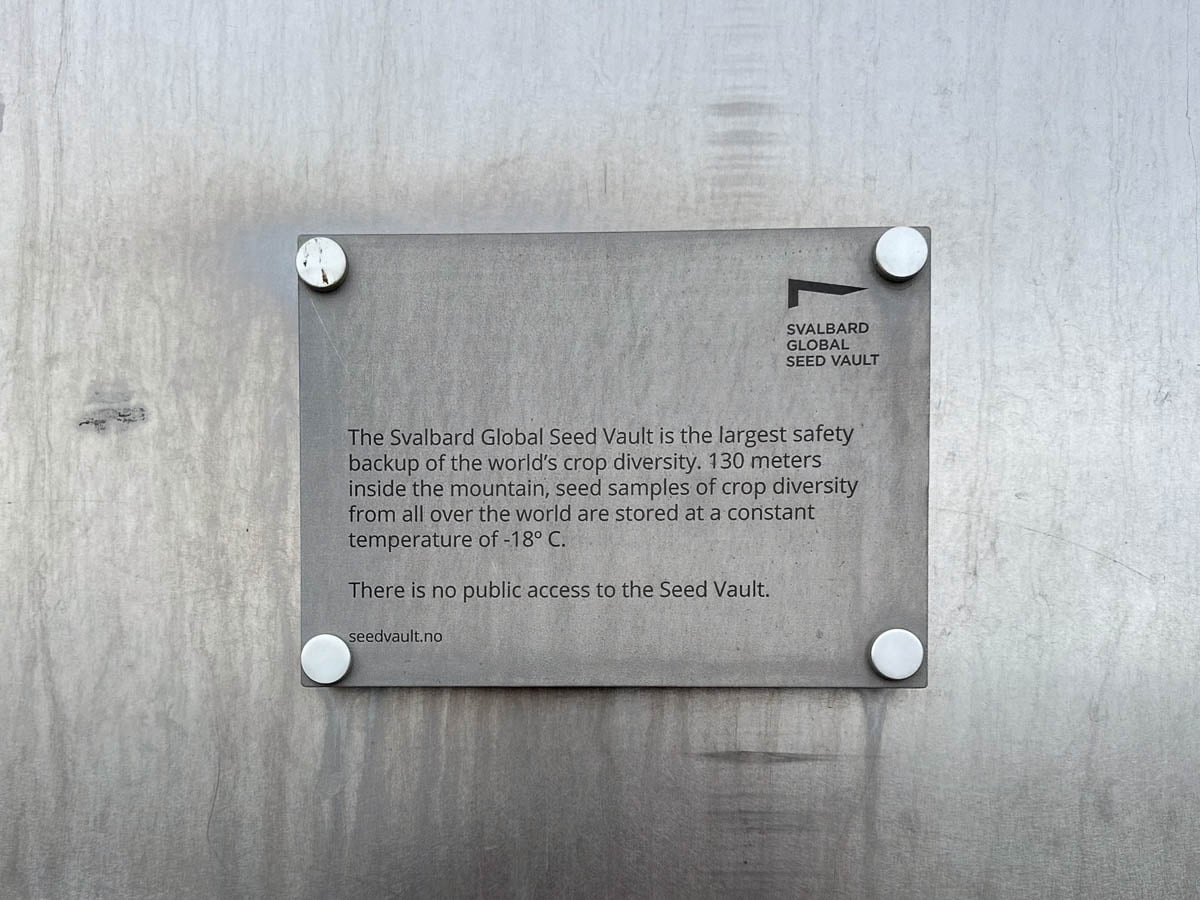
If you visit on your own, just be prepared for a long walk from town—it’s over four kilometers (one-way) from Longyearbyen and up a pretty steep hill!
4. Nordover
Nordover has a LOT going on, serving as a coffee and gift shop AND the northernmost art museum in the world!
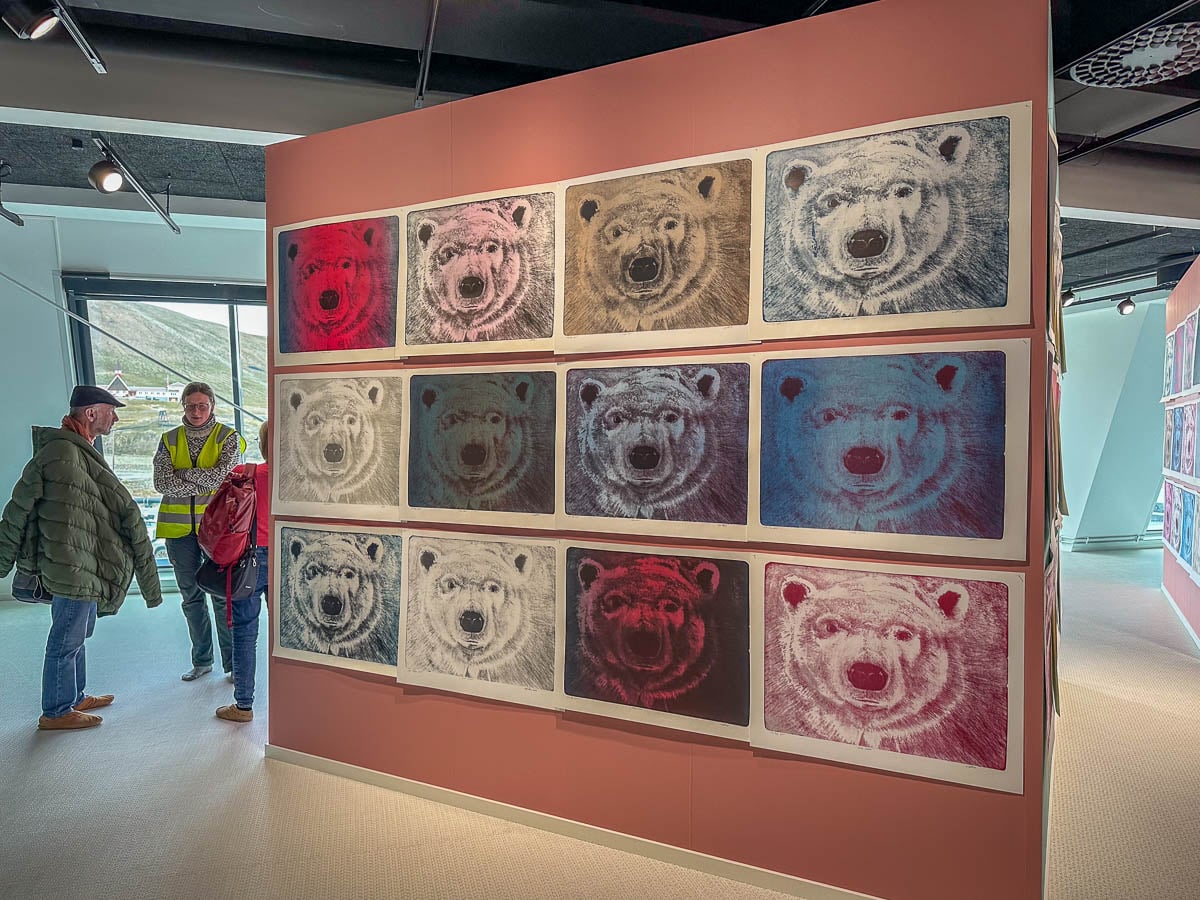
The gallery portion is quite small, but features some unique artists that live in Svalbard that touch on Arctic themes. There’s also a small theater that usually plays an intersting half hour film that documents the evolution of arts and culture in Svalbard, plus hosts some cool events, like the Arctic Film Festival every May.
5. Go on a glacier tour
Over 60% of Svalbard is currently covered with glaciers—but, in order to REALLY see some of the archipelago’s most impressive ones, you gotta get out of Longyearbyen to some of its more remote fjords and bays.
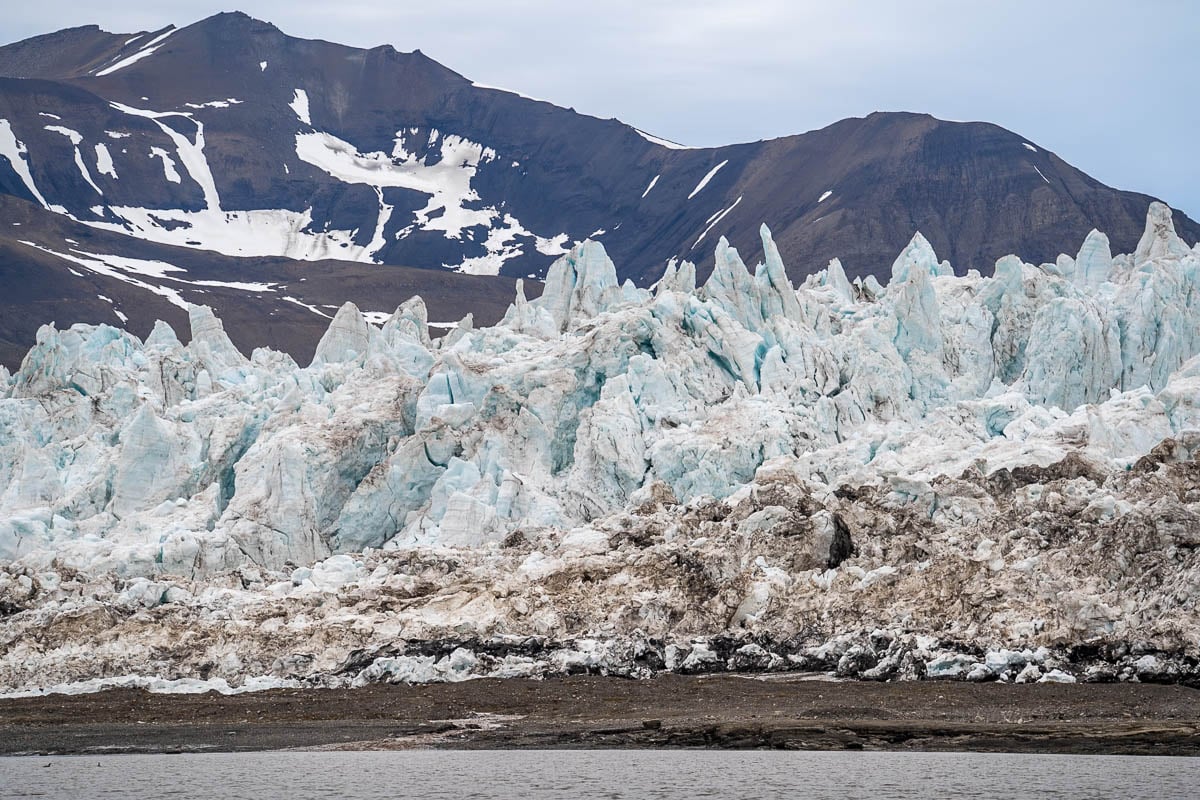
Luckily, there are a handful of tours that you can take from the city to the Nordenskiöld Glacier via boat, like this option or this option, which also stops at Pyramiden, an abandoned Soviet mining town.
Seeing Svalbard’s massive glaciers from the water is cool enough, but the biggest benefit of going on one of these tours is that you have a much better chance of seeing wildlife, like bearded seals, walruses, or, if you’re incredibly lucky, maybe even a polar bear.
6. Svalbard Brewing
Hopefully, you’re not getting tired of this schtick yet (because there’s more where that came from!), but who wouldn’t want to go to the northernmost brewery in the world?!
Svalbard Brewing (or Svalbard Bryggeri) prides itself on brewing its beer with glacial waters and has some fun Arctic nods in its beers, like a brown ale called “Dark Season” or Ny-Ålesund IPA, named after a Norwegian research station in the archipelago.

The brewery has a small and cozy taproom that’s open every Friday from 4 PM to 10 PM or there’s a tasting experience offered on Mondays, Wednesdays, and Saturdays at 6 PM.
7. Explore downtown Longyearbyen
Longyearbyen has a small pedestrian street in its downtown area that’s packed with outdoor adventure gear outfitters, as well as gift shops and boutiques. It’s not huge, but I’d definitely plan on moseying around for an hour or so to pick up some souvenirs.
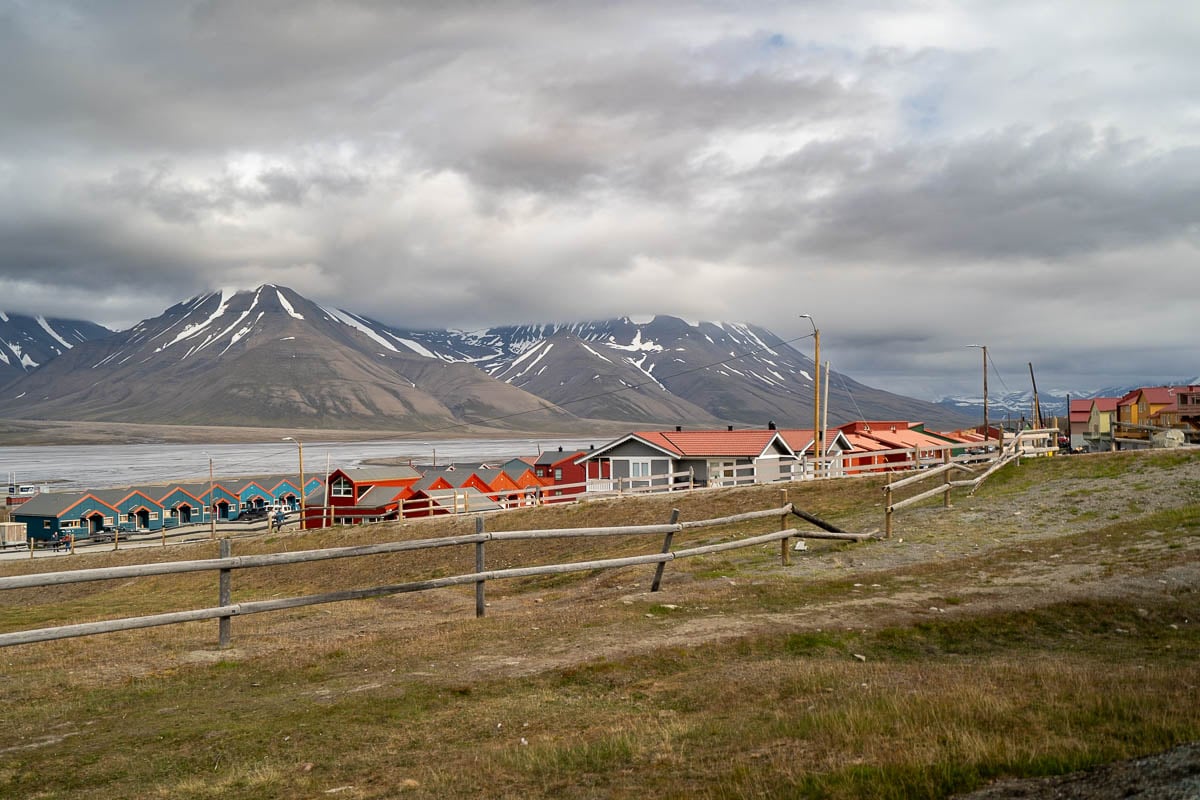
One of the most popular things to do in Longyearbyen’s downtown area is to pop by the post office, where you can pick up polar bear stamps and postcards and mail them to your loved ones from the northernmost post office on the planet.
8. Go on a mine tour
Longyearbyen would not be what it is today without the mining industry and, although the mines stopped operating in 2025, you can still see remnants of them all around town. So why not go experience this important history up close and personal?

On this mining tour, you’ll get to go inside Gruve 3, learn stories about the men who once worked here, see industrial equipment that’s almost a century old, and have the opportunity to don your own set of miner’s overalls and wriggle into a tight mineshaft (I’d only recommend doing this if you’re not claustrophobic!).
Word of warning—the mine is COLD (around freezing!), so be sure to include plenty of warm layers on your Svalbard packing list!
9. North Pole Museum
This museum documents the various historical attempts to reach the North Pole until Roald Amundsen and Umberto Nobile in 1926.
The small museum is housed in a two-story building and most of its exhibits consist of signage (provided in both Norwegian and English), with interesting maps, newspaper clippings, photos, and a handful of other artifacts.

Since it is disputed which explorer truly reached the North Pole first, the museum is entirely privately funded so that it may remain neutral.
I’d especially recommend a stop here if you’re interested in the early explorers or polar expeditions.
10. Visit one of the other towns in Svalbard
Longyearbyen is the largest city on Svalbard, but there’s a handful of other settlements and research stations sprinkled around Spitsbergen, the island that Longyearbyen is located on.
As mentioned above, there are a few tours, like this private photography tour or this group option, that you can take to Pyramiden, a mining ghost town that serves as a unique time machine back to the USSR, complete with a bust of Lenin.

Alternatively, you can visit Barentsburg, a Russian mining village that is the second largest town in Svalbard, with a whopping 300 inhabitants. On this private photography tour, you’ll have two hours to explore Barentsburg and get to see some of the unique buildings here, like the town’s swimming pool and library, plus stop at some glaciers and beautiful fjords along the way.
11. Get a photo of the polar bear sign
This one’s a quick stop but did you even go to Longyearbyen if you didn’t get a photo of the polar bear warning signs?
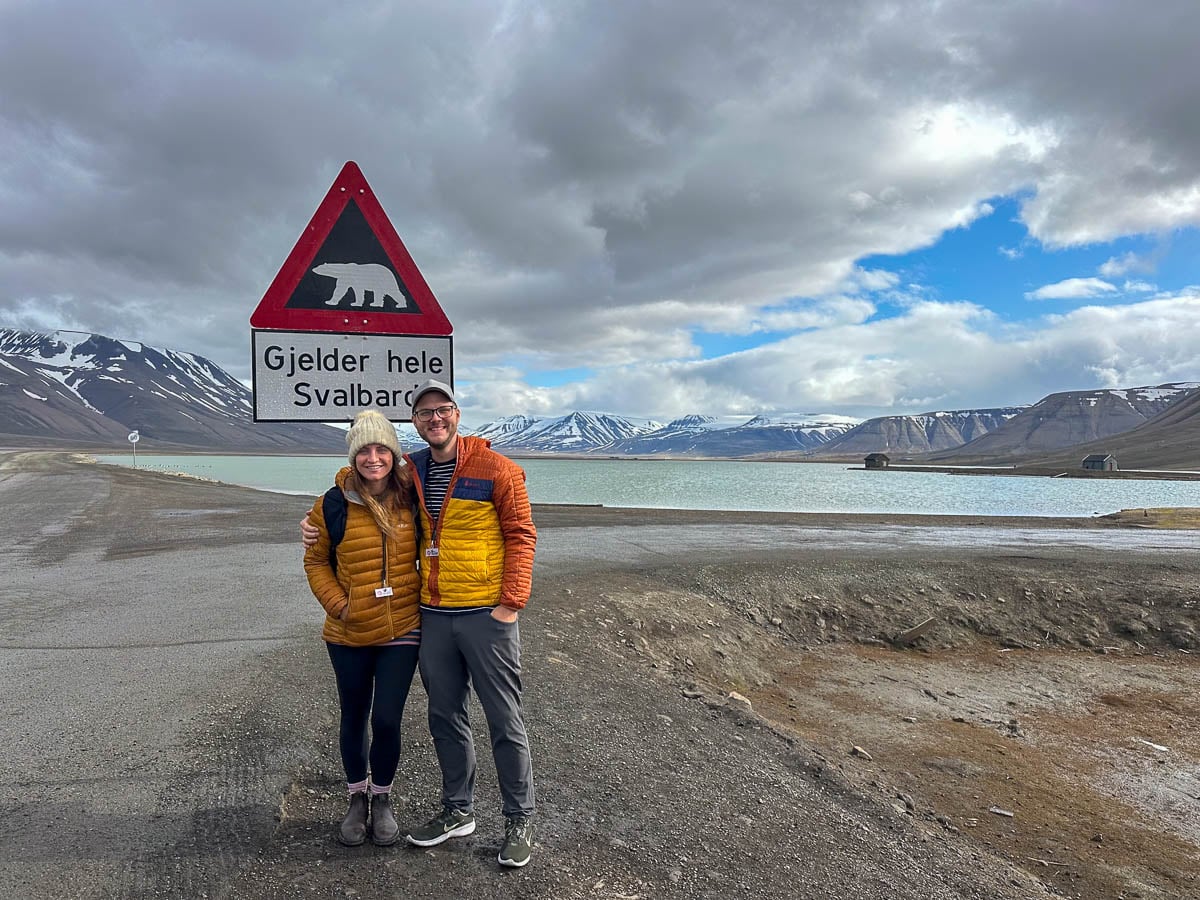
There’s one right outside of the airport for photo opps, but if you want to see the *real deal*, go to this sign on the edge of town, with a beautiful backdrop of a lake surrounded by snow-capped mountains.
Just be sure to not go past this sign—it’s actually illegal to go beyond it without having an armed guard with you, in case any polar bears happen to appear!
12. Go on a cruise
If visiting Longyearbyen is all that’s in your budget for exploring Svalbard, it’s certainly a fascinating place to visit. However, if you have a more flexible budget, I’d strongly recommend going on a muti-day cruise around Svalbard—the longer, the better. That way, you’ll get to explore its impressive glaciers; see more of the archipelago’s stunning landscape; and have a better chance of spotting wildlife, like Arctic foxes, walruses, and polar bears.

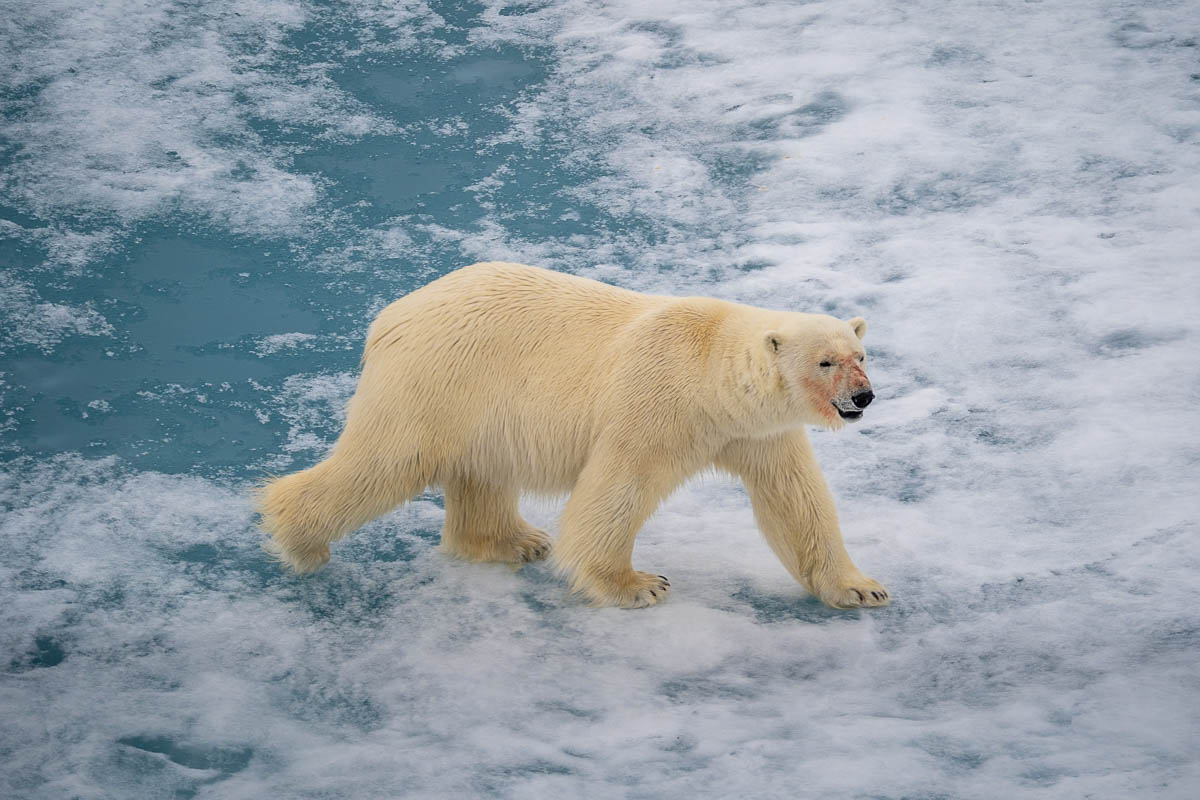
We went on a 14 day expedition cruise around the archipelago (check out our Aurora Expeditions Svalbard cruise review) and had an absolutely INCREDIBLE time. We sailed up past 82° north, did a polar plunge in the Arctic Ocean, and watched polar bears fighting on the pack ice and glaciers calving. It was seriously the adventure of a lifetime and if you’re already coming to Svalbard, you might as well do it right!
13. Visit sled dogs
Dog sleds were used in Svalbard, starting in the late 1800s, for miners and trappers to get around.
Today, locals use snowmobiles to access remote areas in the winter season, but there’s still a handful of sled dog kennels that offer a variety of different tours, ranging from a three hour wagon trip along the coastline to multi-day trips across the frozen tundra.

Please just do your research and ensure that, if you choose to take a dog sledding tour, that the dogs are treated well. We visited Green Dog Svalbard, who seem to treat their dogs very well (retired sled dogs go on to be adopted by visitors from all over the world!). Svalbard Husky also seems to treat its dogs with respect and care and is committed to sustainability, with a certification from The Eco-Lighthouse and a number of eco-conscious environmental practices.
14. Chase the Northern Lights
You can see the Northern Lights in Longyearbyen from late September to mid-March, when the skies get dark enough to see the Aurora Borealis dancing overhead. You can actually even see the lights during the middle of the day if you visit during the Polar Night!
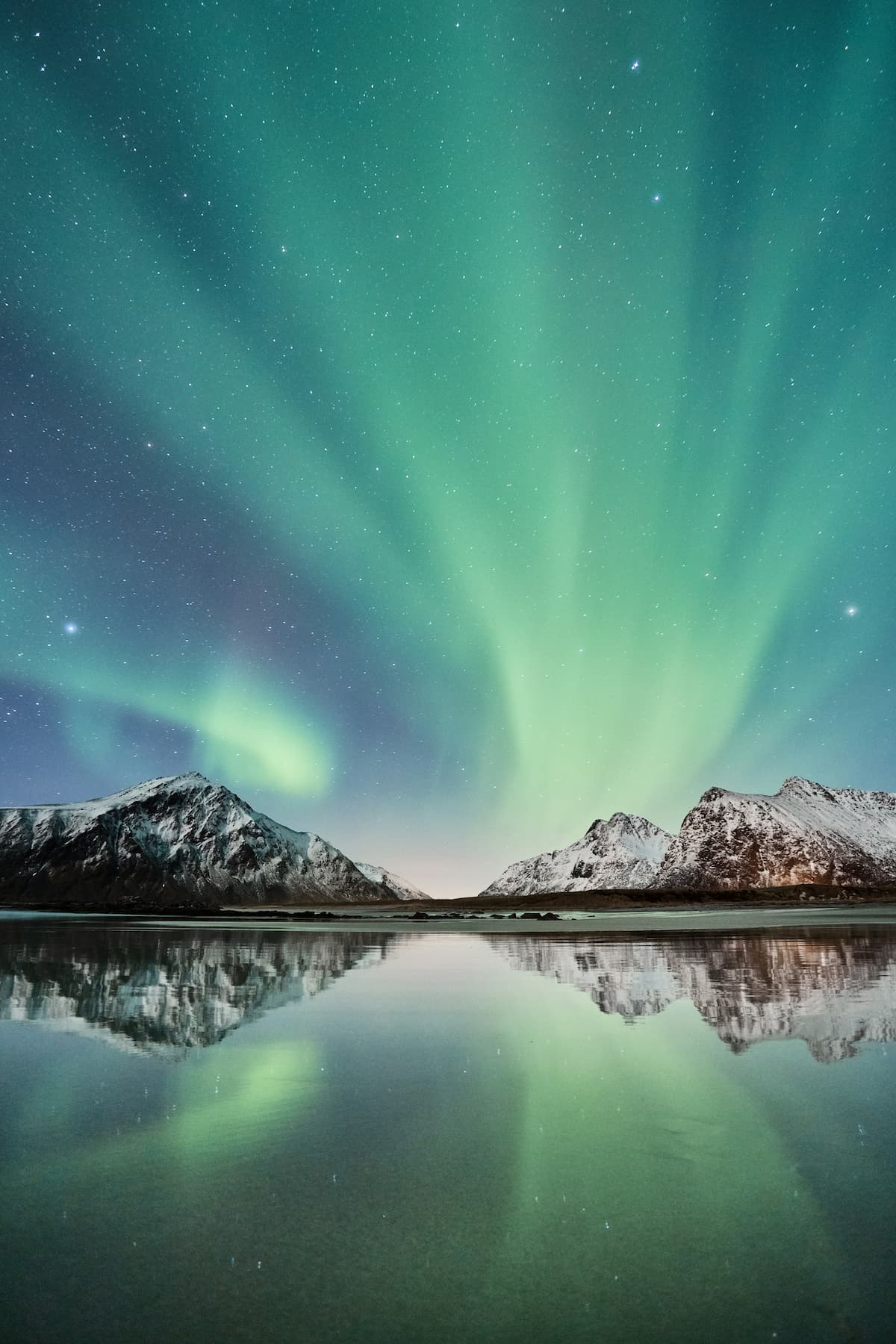
There’s a variety of ways to see the Northern Lights:
- Go on a photography tour to capture them, like this group option or this private offering, where you’ll be driven away from the light pollution of Longyearbyen to have a clear viewing of the sky
- Join a Wilderness Evening at Camp Barentz, a unique property outside of the town of Longyearbyen with a recreation cabin of Willem Barentz, who is credited for first discovering Svalbard in 1596. You’ll enjoy an Arctic-themed dinner, learn from a knowledgeable guide about polar bears, and, with any luck, get to see some Northern Lights.
- You can also just watch the Northern Lights from the window of your hotel room in Longyearbyen, but the light pollution will make them a bit harder to see.
When to visit Longyearbyen
When you should visit Longyearbyen is going to largely depend on what you want to do there.
If you’re coming to see Arctic wildlife, go hiking, or head out on scenic cruises, you’re going to want to come in the warmer months, from May through August, when the snow and ice around Svalbard melts and the animals become much more active.
Alternatively, if you dream of going on multi-day dog sledding adventures and seeing the Northern Lights, I’d recommend coming in March through early April, where there’s still plenty of snow, the sunlight returns after the long Polar Night, and there’s also enough darkness to see the Aurora Borealis.
Visiting during the Polar Night would definitely be a unique experience, but it also might be challenging for some to explore a destination in round-the-clock darkness and extreme temperatures that can dip to -20 to -30°C. If that doesn’t sound like your jam, I’d avoid visiting from November through February.
Where to stay in Longyearbyen
For being a tiny town, there’s actually a decent amount of hotels to choose from here.
Consider:
Coal Miners’ Cabin
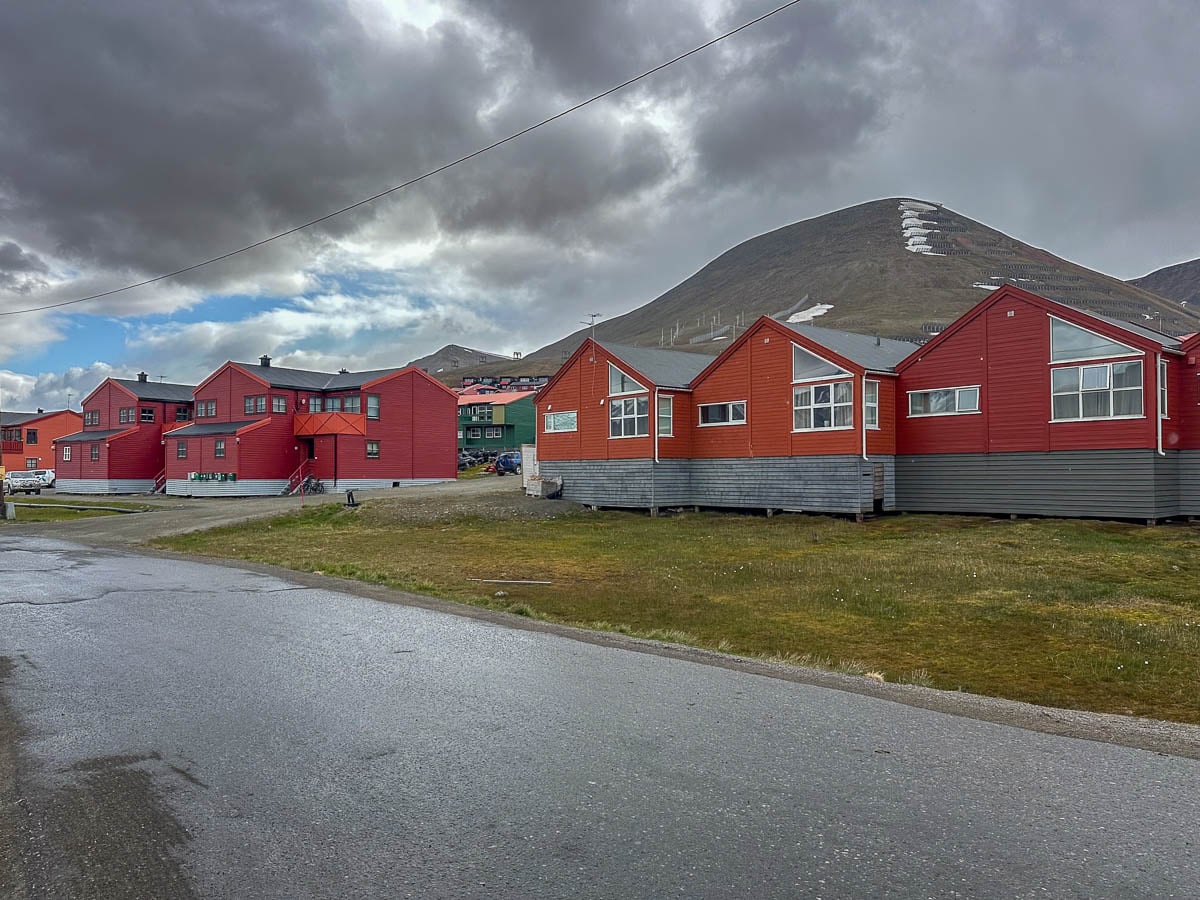
If you’re on a tight budget, your options are kind of limited (outside of the Longyearbyen Campground), this basic yet cozy lodge offers everything you need for a reasonable price. The rooms are simple, with a shared bathroom, but have stellar mountain views; come with complimentary breakfast and coffee; and access to kitchen and laundry facilities.
Svalbard Hotell
For something a bit bougier, this hotel has some really thoughtful touches, like plush robes, heated bathroom floors, and complimentary breakfast and coffee. Additionally, the hotel is centrally located in the heart of Longyearbyen, making it the perfect basecamp to explore the city.
Basecamp Hotel
Basecamp is definitely the most unique hotel in Longyearbyen, with each room modeled after a historic trapper’s cabin, with maps, photos, and Arctic objects thoughtfully adorning every corner (but still offering all the modern amenities and features you need for a super comfortable stay, like a waterfall shower and onsite chef!). There’s tons of thoughtful elements to immerse you into Svalbard’s culture and landscape, like, my personal favorite, a cool shared loft area that guests can use with a glass roof to take in the Northern Lights. If you have room in your budget, I honestly wouldn’t stay anywhere else in Longyearbyen—what other hotel will you straight up feel like a real Arctic explorer?
How to get around Longyearbyen
You might be wondering whether it’s worth renting a car in Longyearbyen.
There are a handful of car rental agencies in town, but it’s almost never going to make sense to rent one.

The downtown area where almost all of the main attractions are is extremely small and walkable. Outside of that, the entire length of the town, which basically spans from the Svalbard Airport to the west to the polar bear warning sign to the east, is about six kilometers (or about an hour and a half walk). And, outside of the city itself, you’re not allowed to walk around by yourself without a rifle, which requires a special permit or license.
Additionally, almost all of the tours will pick you up and drop you off directly at your hotel.
Admittedly, the airport is a bit far away from the downtown area to walk, but, conveniently, there’s a shuttle that is scheduled after every arrival and before every departure.
There you have it—all of the best things to do in Longyearbyen! I hope you enjoy exploring this quirky town as much as we did! Do you have any questions about what to see and do here? Let us know in the comments below!
Thank you for reading our post! Check out our latest stories here and follow us on Instagram (@JustinAndJess_), YouTube, TikTok, or on Facebook to see what we’re up to next!
