

Joshua Tree National Park is known for its enormous monzogranite boulders, rugged mountain ranges, and forests of Seussian-like Joshua tree forests. What it’s not known for is its lush plantlife—with less than five inches of rain per year, Joshua Tree is decidedly an arid desert.
But the Lost Palms Oasis Trail is one of the glaring exceptions, with a series of impossibly green palm trees lining a deep canyon. If you want to see this unique corner of Joshua Tree for yourself, here’s everything you need to know about the Lost Palms Oasis Trail, one of the best hidden gems in the park.
This post may contain affiliate links. If you make a purchase through them, we may receive a small commission, for which we are extremely grateful, at no extra cost to you.

About Lost Palms Oasis Trail
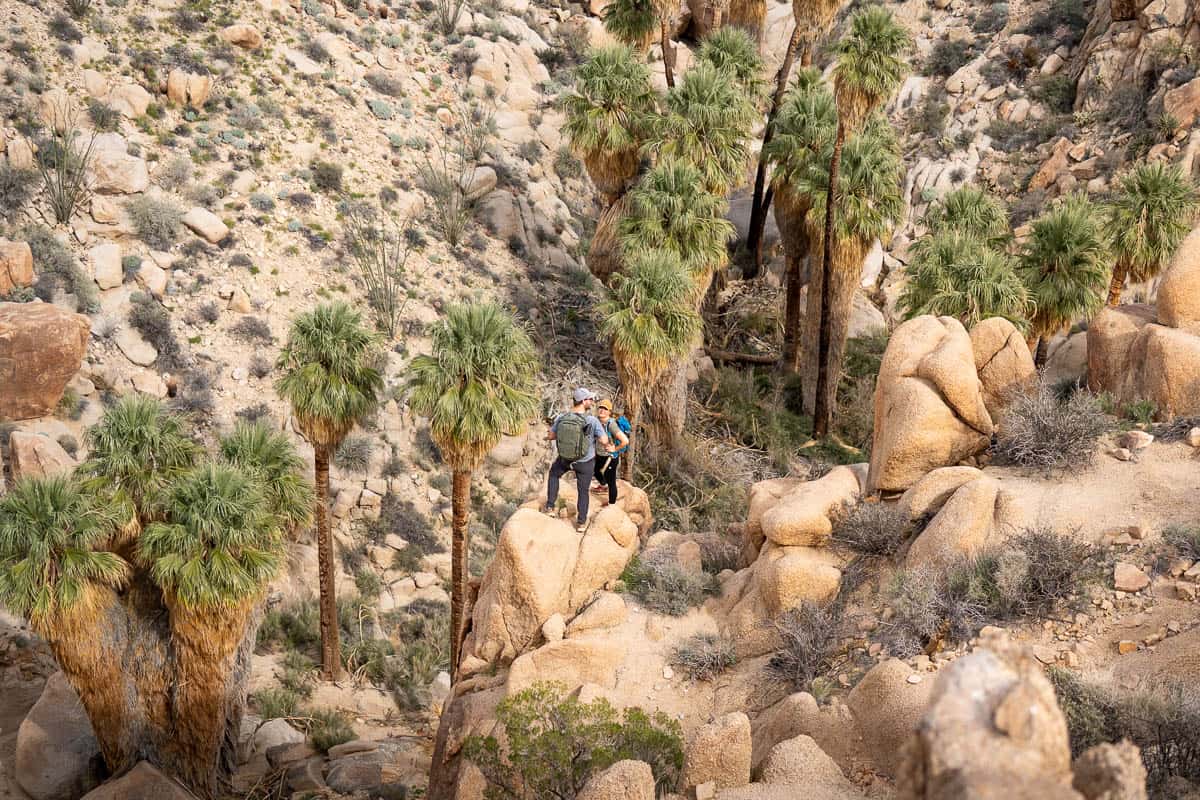
The Lost Palms Oasis Trail is a STUNNING hike that offers an epic mix of desert scenery, from rugged canyons to rocky ridgelines with jaw dropping views of the surrounding mountains. You’ll also see plenty of desert plant life here—-and, with a little luck, even wildlife, like bighorn sheep and desert tortoises.
It’s totally worth adding to your California bucketlist, whether you’re spending the weekend in Palm Springs or exploring the LA area for a bit.
Here are some quick stats about this hike:
- Length: 7.4 miles
- Elevation gain: 1,046 feet
- Difficulty: Moderate
- Dog friendly? Like most national park hikes, you’ll unfortunately need to leave the puppies at home for this one!
- Trail map
How to get to Lost Palms Oasis Trail
The Lost Palms Oasis trailhead is located here in the southern section of Joshua Tree National Park, about an hour east of Palm Springs or two and a half hours east of Los Angeles.
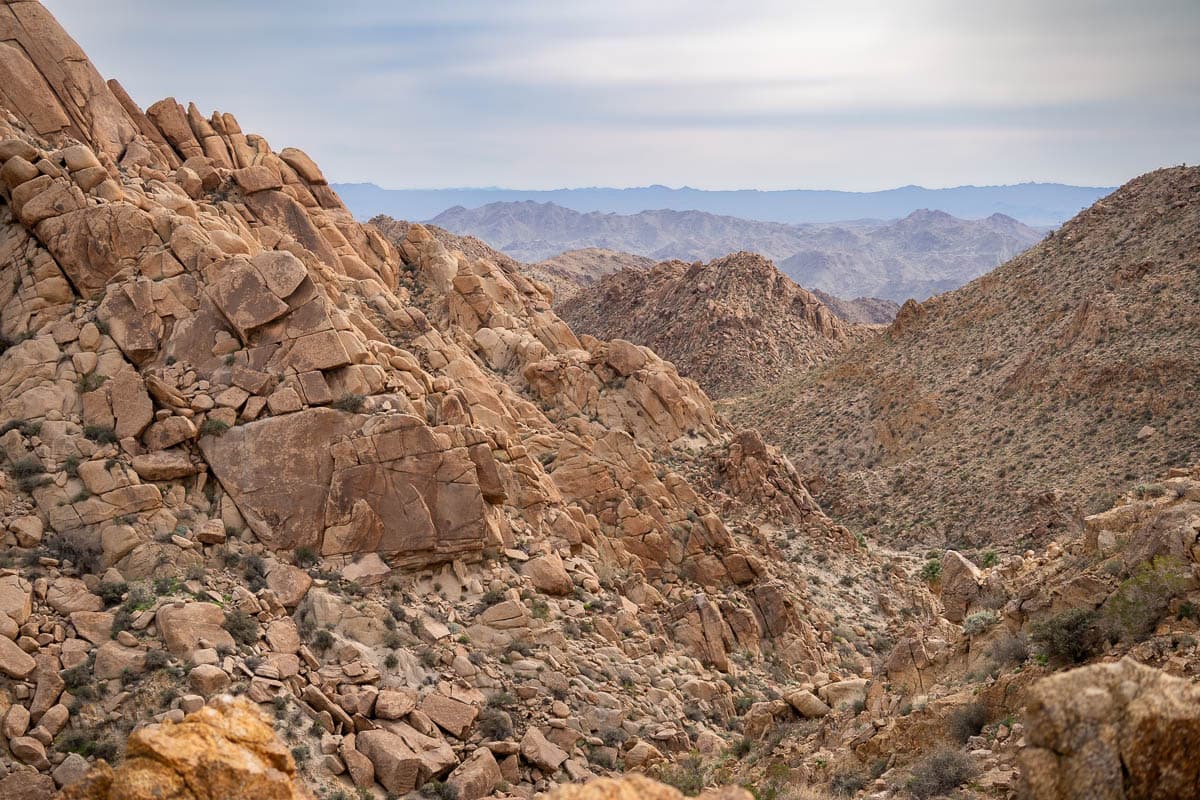
The drive into this section of the park, along Cottonwood Springs Road, is absolutely beautiful, winding through canyons that are full of larger-than-life boulders. Be sure to drive slowly along the curvy road, and keep an eye out for big-horn sheep on the surrounding mountain slopes.
As you drive along Cottonwood Springs Road, you’ll pass the Cottonwood Visitor Center.
You’ll need to stop here to pay for your entrance fee, which is $30 per private vehicle for up to a week in the park. Alternatively, you can simply display your valid interagency pass, like America the Beautiful, on your dashboard.
Even if you have an interagency pass, you might still want to stop by the visitor center to use the bathrooms (there’s none at the trailhead!) and to fill up your water bottle.
The parking lot for the Lost Palms Oasis Trail is teeny tiny, holding just 30 cars. My husband, Justin, and I visited here on a random Thursday in January around 9 AM and the lot was nearly full—so I’d suggest getting here on the earlier side, especially if you’re visiting on a weekday! Plus, if you start early, you’ll miss the hottest part of the day.
What to expect along the Lost Palms Oasis Trail
From the trailhead, you’ll follow the pathway down a short ramp, with several California fan palms (i.e., the funky palm trees that look like they’re wearing a fuzzy “skirt” of dead palms around its trunk) at the end.
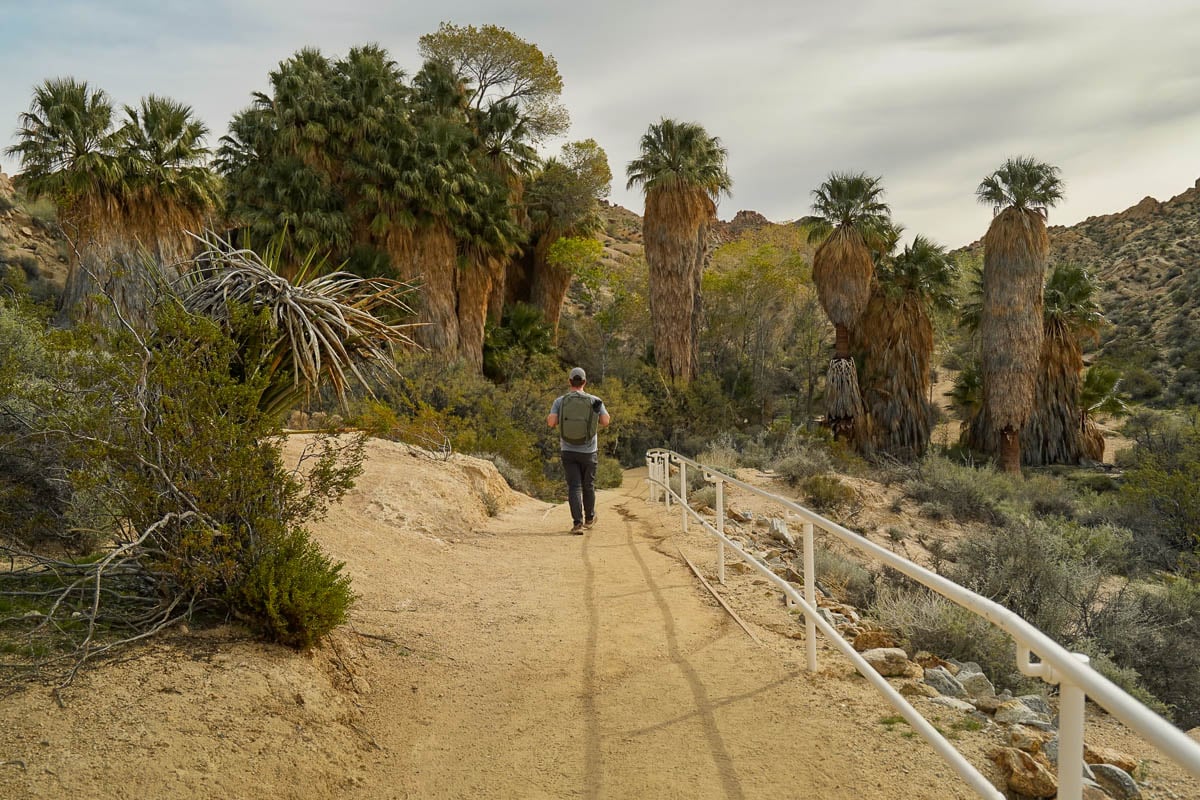
These may look like normal ol’ palm trees, but they’re actually kind of special. California fan palm trees are the ONLY palm tree that’s native to the western United States! Plus, they’re quite rare in the wild, with only 118 oases found in all of North America. And you’ll actually pass two of these oases on this trail!
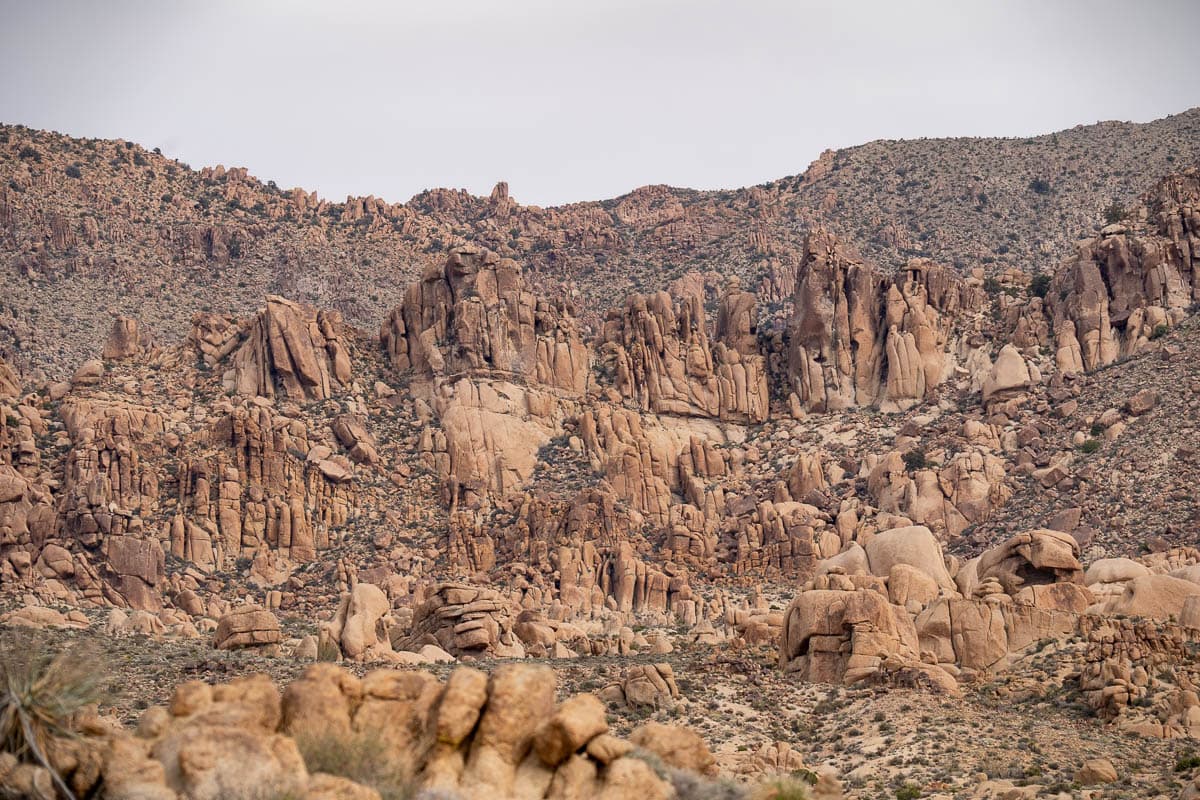
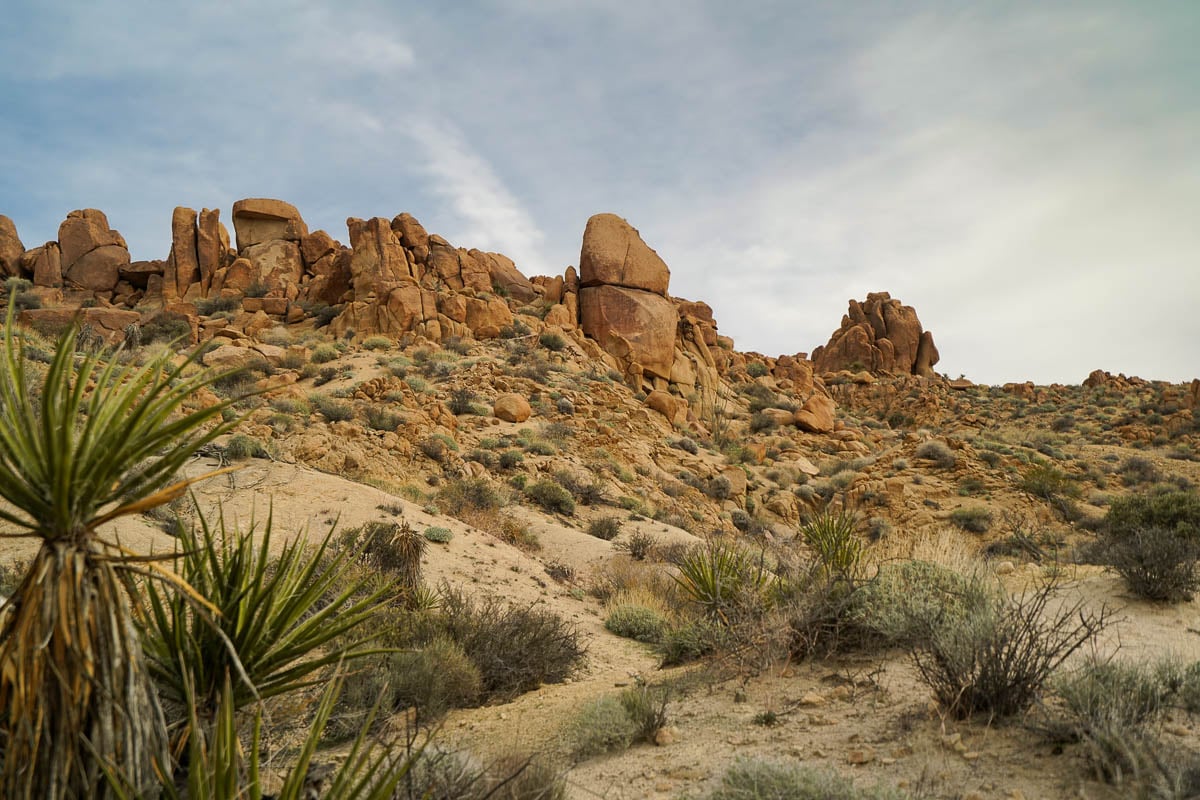
Continuing on, the sandy pathway gradually climbs uphill through the desert for about two miles, past funky monzogranite formations and so many different types of plantlife, like creosote bushes, ocotillo cactuses, and desert gold wildflowers.
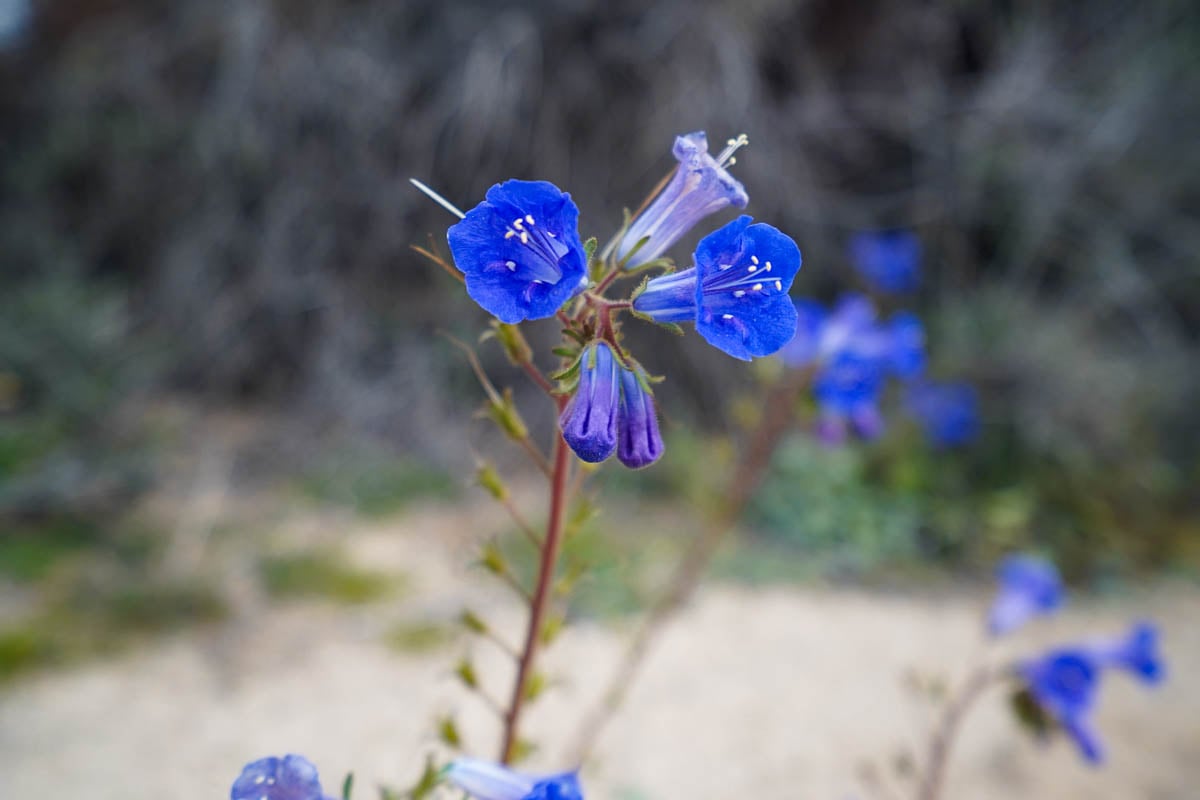
One thing that you won’t see along the trail, though, is the park’s famous Joshua trees. You’ll need to head to one of the trails near the west entrance of the park, like the Hidden Valley Trail, to see them.
However, there’s still PLENTY of other cactuses, succulents, and wildflowers along the Lost Palms Oasis. It smelled so intensely floral when we were here in January!
Eventually, the pathway starts descending downhill towards the oasis, with the trail winding through a narrow canyon and along a series of rocky washes.
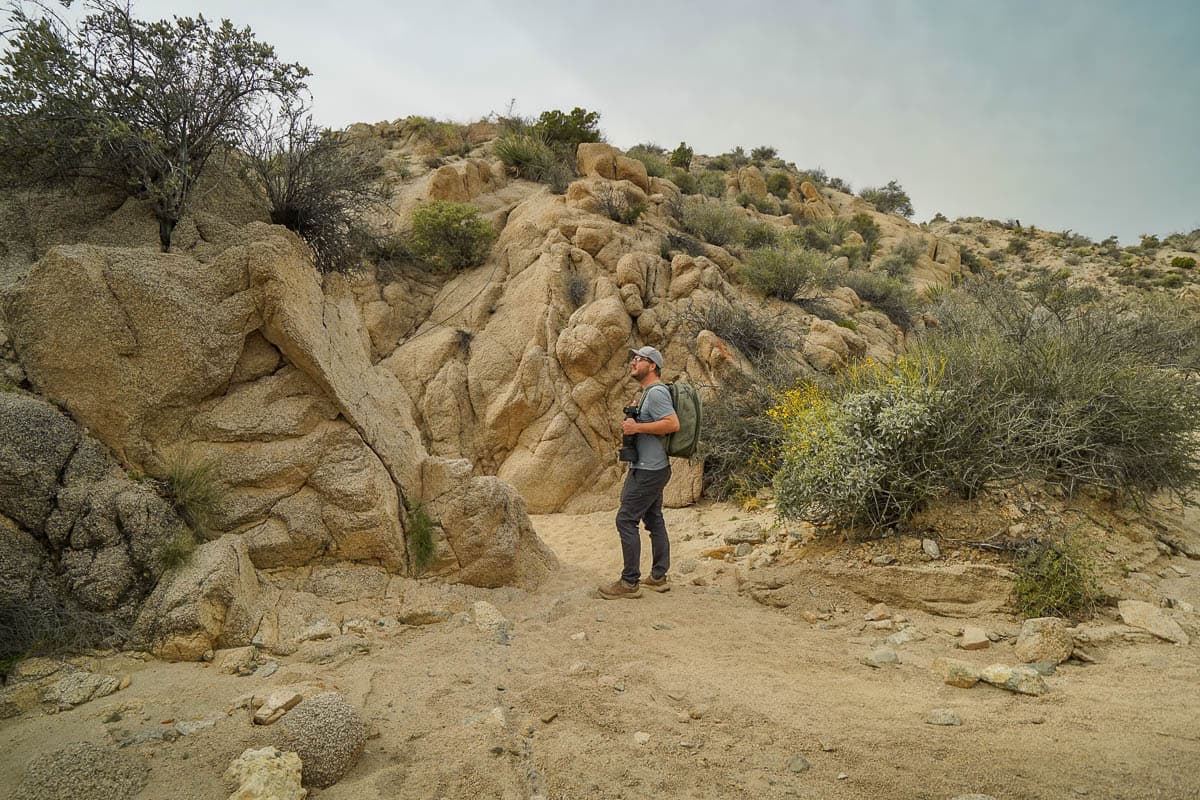
The trail is hard to follow, especially in this section, with wide open areas and lots of rocky washes leading in every direction. Accordingly, I’d recommend downloading an offline map on AllTrails before your hike as there’s no cell service here.
Pssst.... you do need AllTrails+, a premium membership of AllTrails, to download offline maps, but luckily, we got the hookup for our readers, with 30% off your annual subscription. All you need to do is use this link and use the promo code "UPROOTED30" at check out!
I’d also suggest keeping an eye out for markers on the ground—rangers often laid long branches or a series of large rocks to fence off social trails and signal which direction the actual trail is.
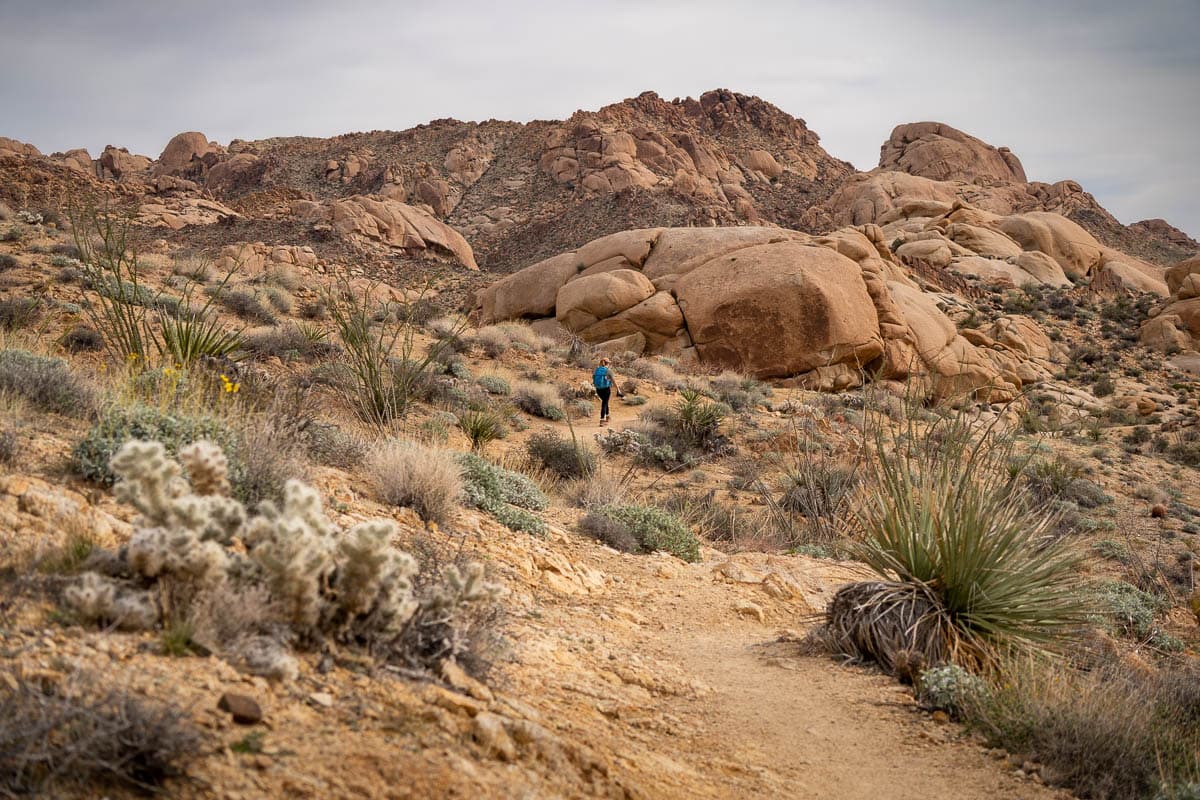
After about a mile and a half of heading downhill, you’ll descend through a rocky wash and spot the end point—a series of fan palms along the oasis, down in a rocky canyon.
The trail technically ends at an overlook along the ridgeline of a hill, where you can enjoy perspectives of the oasis from above.

Alternatively, you can continue on past the maintained trail and scramble down a steep hill to walk through the canyon amongst the palm trees. While there’s no official pathway, you can follow the AllTrails map that loops down the hill, through the oasis, and back up the ridgeline. I personally think the scrambling is a bit easier on this portion if you go clockwise.
If you opt to climb down into the oasis, keep a lookout for big horn sheep, which often use this area as a water source, especially in the morning. If you’re lucky enough to spot them, be sure to give them plenty of space—they’re not typically aggressive, but can be if they feel threatened.
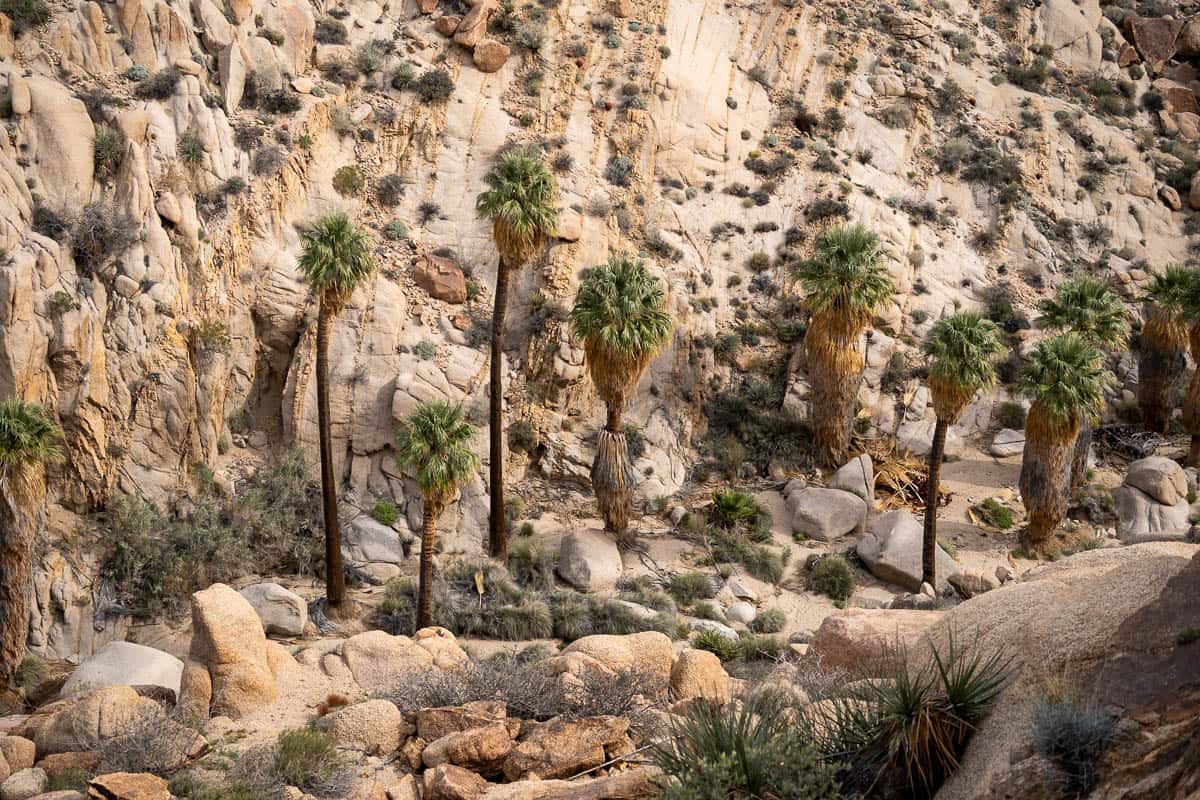
To set expectations, the endpoint of the hike feels a tiny bit anticlimactic (to me, anyway!). The lush oasis definitely stands in stark contrast to the rest of the surrounding arid desert, but it’s tucked pretty deep into a narrow canyon and is kind of hard to see unless you scramble down past the maintained trail.
In my opinion, this trail is definitely one of those “it’s about the journey, not about the destination” experiences. You pass so many different types of GORGEOUS landscapes and plantlife along the way—so be sure to soak in the views throughout your hike!

Once you’re done taking in the views of the fan palms, simply retrace your steps back to the trailhead.
When to hike the Lost Palms Oasis Trail
The best time to hike the trail is from November through March, when the weather isn’t too terribly hot. Outside of this timeframe, temperatures can soar well above 90 degrees, which increases the likelihood of becoming dehydrated or getting heat stroke.
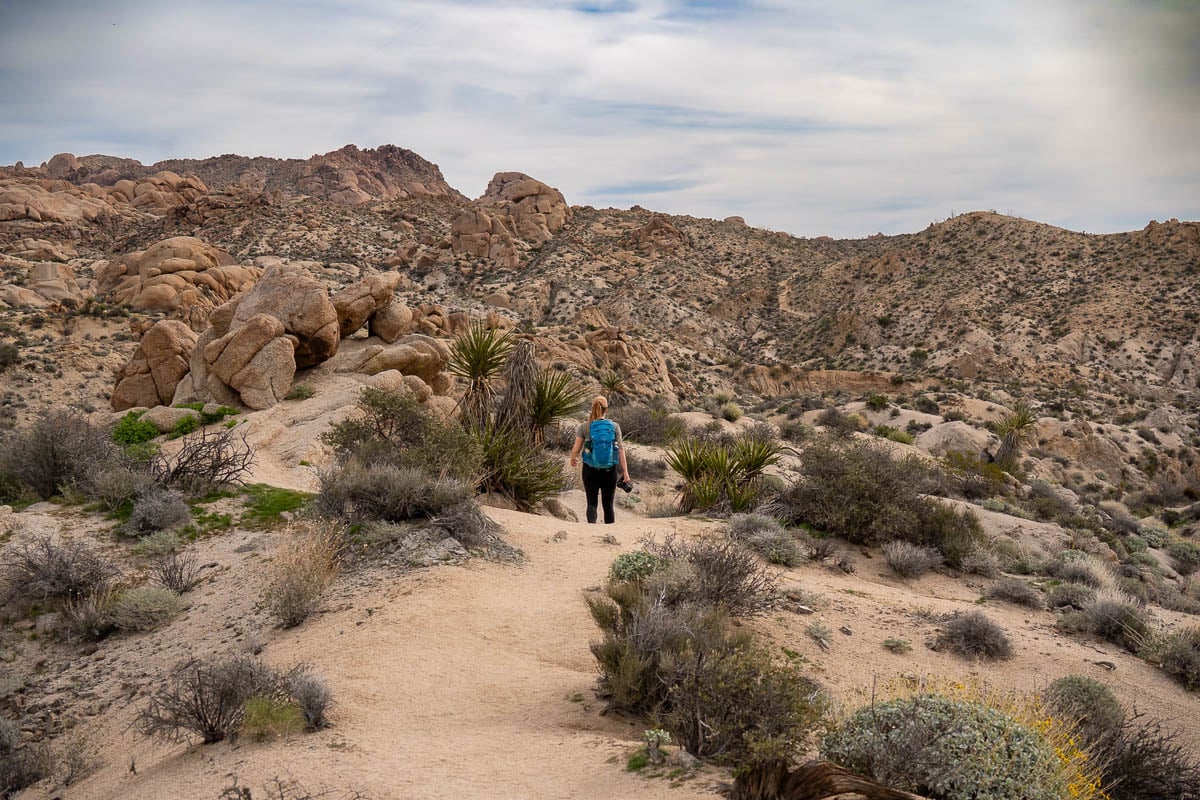
Regardless of what time of year you visit, I’d highly recommend starting on the trail early, both to ensure you snag a parking spot and to avoid hiking during the hottest part of the day.
Tips for the Lost Palms Oasis Trail
Watch out for rattlesnakes
There have been quite a few rattlesnakes spotted here, with TONS of reports of sightings within the oasis itself. They’re most prevalent in the early morning and around dusk, although you can definitely run into them at anytime and anywhere along the trail.
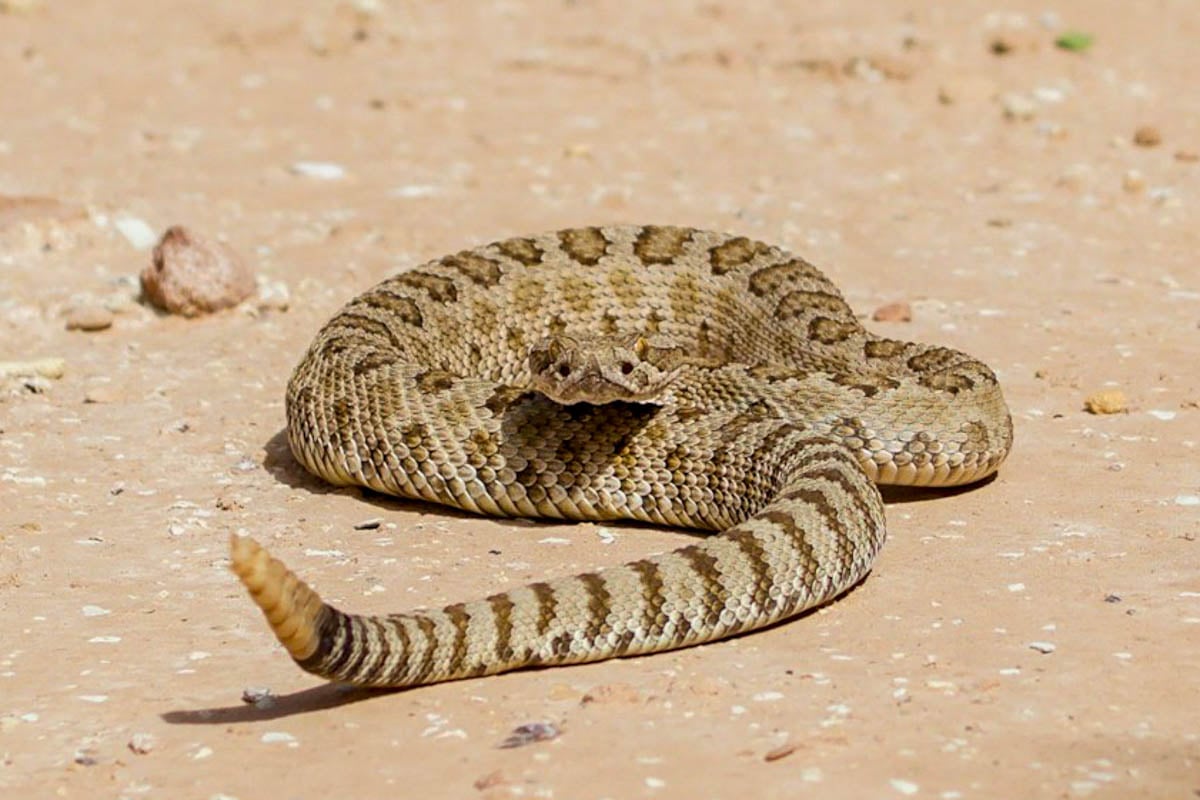
So watch your step, listen closely to your surroundings (i.e., this is not a trail that I’d recommend listening to headphones on).
It also might not be a terrible idea to bring a satellite communicator with you, in the unlikely event that you get bit. Remember that there’s no cell service here!
There’s a LOT of sun exposure
There’s something that’s MUCH more likely to get you out here than rattlesnakes—dehydration!The trail is HOT, with extremely limited shade. We visited in January and it was still in the 80s during our hike!
So start early to avoid the hottest part of the day and bring more water than you think you need. We each have one of these comically enormous Nalgene bottles that we take on every hike.
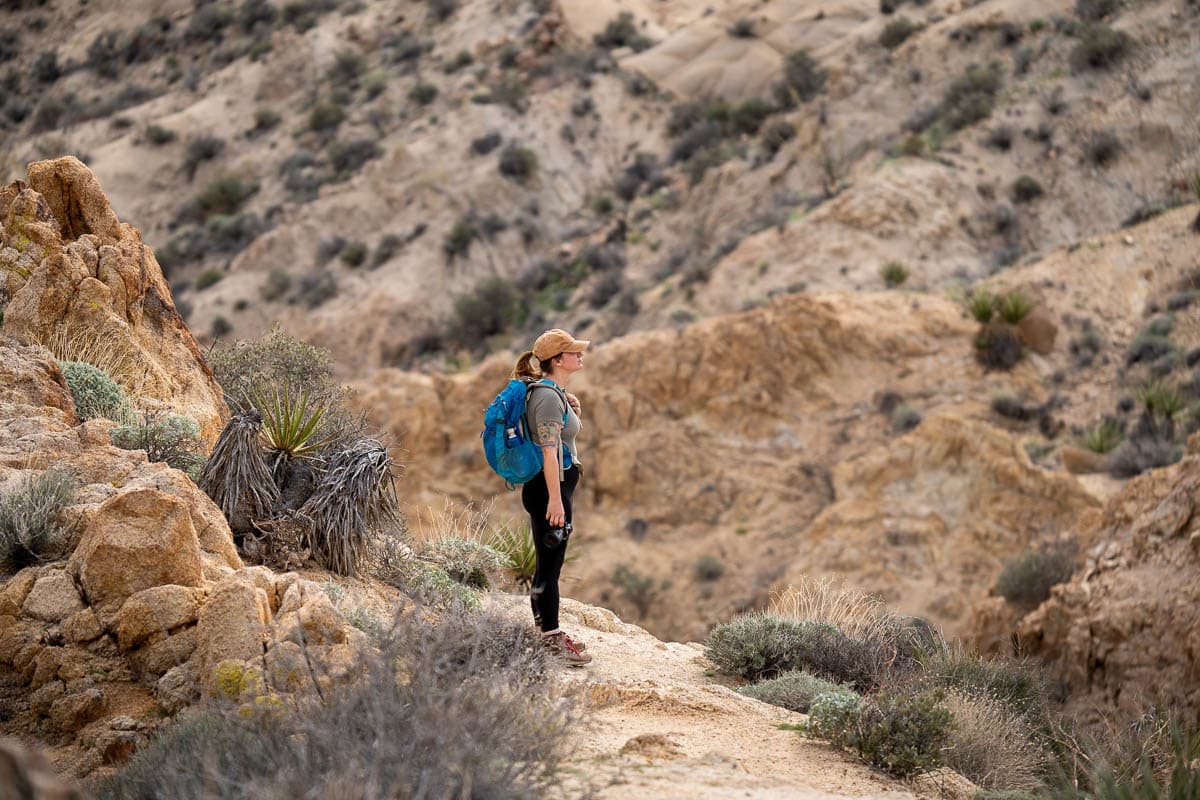
It’s also a good idea to bring along a hat, sunglasses, and plenty of sunscreen. The sun here is no joke!
I hope you enjoy the Lost Palms Oasis Trail—we seriously think it’s one of the most underrated hikes in Joshua Tree! Do you have any questions about this trail? Let us know in the comments below!
Thank you for reading our post! Check out our latest stories here and follow us on Instagram (@JustinAndJess_), YouTube, TikTok, or on Facebook to see what we’re up to next!
