

Joshua Tree National Park is known for its unique desert beauty, with massive monzogranite boulders, arid plantlife, and its iconic Sessian-like Joshua trees. One of the best places in the park to soak in its otherworldly beauty is the Hidden Valley Trail, an easy loop hike that’s accessible for any hiker, regardless of the skill level.
If you want to experience this beautiful corner of California for yourself, here’s everything you need to know about the Hidden Valley Trail, the best bang-for-your-buck hikes in Joshua Tree National Park.
This post may contain affiliate links. If you make a purchase through them, we may receive a small commission, for which we are extremely grateful, at no extra cost to you.

About the Hidden Valley Trail
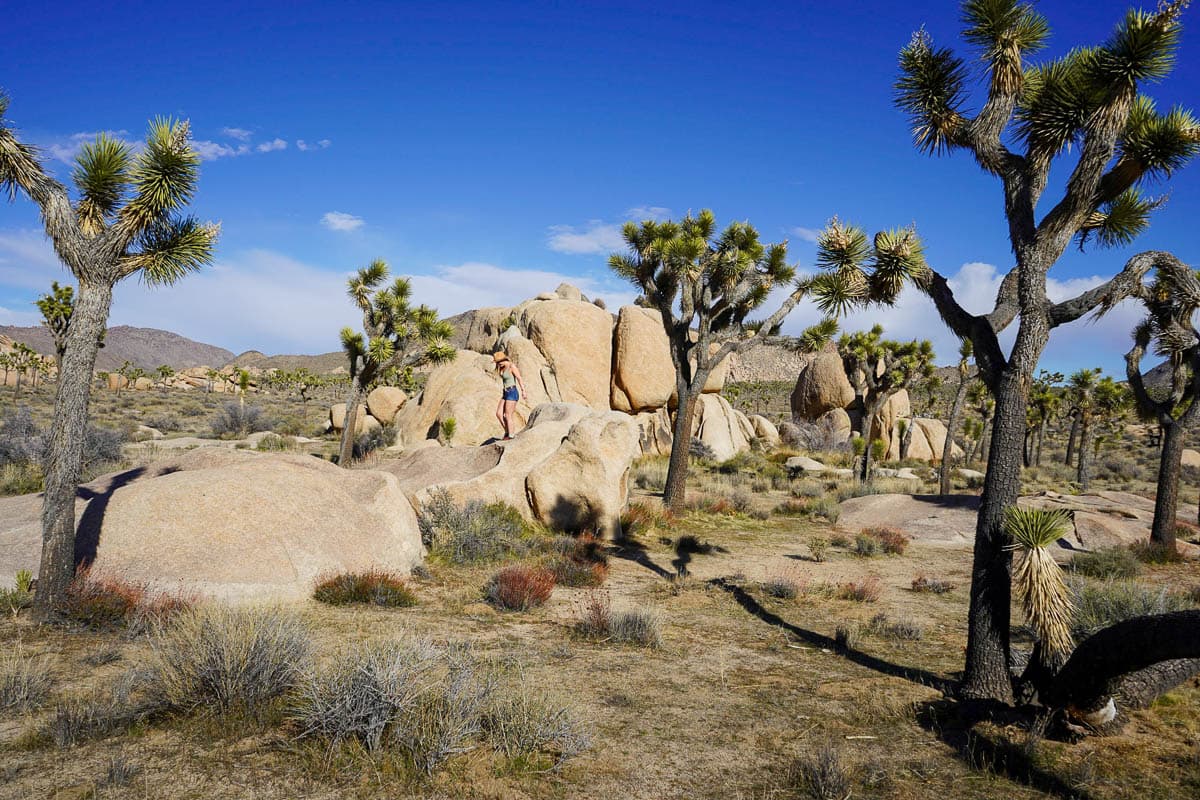
The Hidden Valley Trail loops through a wide basin, enclosed on all sides by huge formations of Joshua Tree’s famous golden boulders. This area does feel a bit “hidden”—it’s actually rumored that cattle thieves used to hide their herds here back in the 1800s!
Nowadays, you won’t find any cows here, but you will find glimpses of all of the best parts of Joshua Tree—its otherworldly boulders (which are just waiting to be climbed on!), the surrounding mountain ranges, pinyon-juniper trees, and, of course, the ethereal Joshua trees.
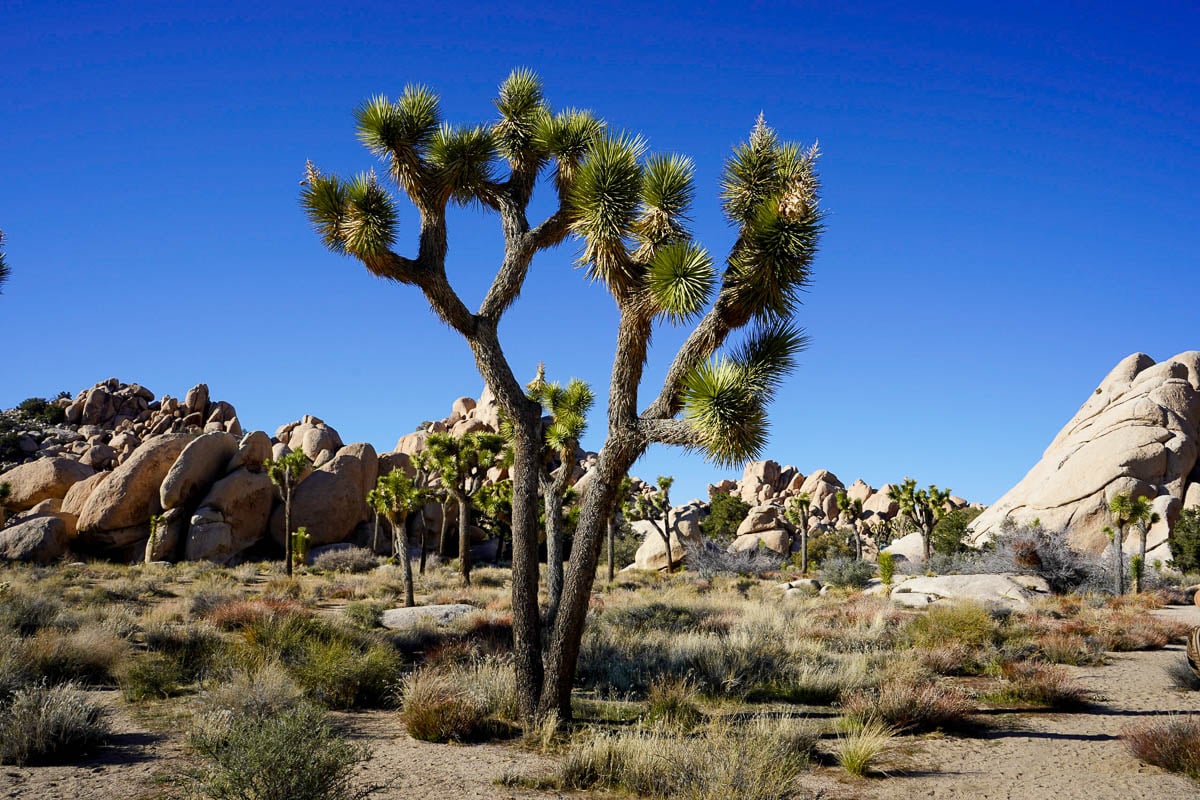
The flora on this particular trail is quite unique, given it’s where the Mojave Desert transitions to the Colorado Desert. Joshua Trees are usually found in the Mojave, whereas the juniper trees are more characteristic of the Colorado—it’s unusual to see both of these plants in one spot!
My husband, Justin, and I have visited Joshua Tree several times and, to be honest, if I could only recommend one trail in the park, it would probably be this one, given its BEAUTIFUL and unique landscape. It’s TOTALLY worth adding to your California bucketlist, whether you’re spending a weekend in Palm Springs or exploring the Los Angeles area for a bit.

Here are some stats on the Hidden Valley Trail:
- Length: 1 mile
- Elevation gain: 114 feet
- Difficulty: Easy. Due to the trail following along sandy and rocky ground, it is not ADA accessible.
- Trail map
- Dog friendly? No, like most national park hikes, you’ll sadly have to leave your pup at home for this one.
How to get to the Hidden Valley Trail
The Hidden Valley trailhead is located here, about 15 minutes past the West entrance of Joshua Tree National Park.
It’s an hour and 15 minute drive from Palm Springs or a three hour and 15 minute drive from Los Angeles. Regardless of which city you’re heading from, the drive is along paved and well-maintained roads (which is not always the case in national parks!). You’ll either need your own vehicle or a rental car to get here, as there’s really no way to get here via public transit.

Joshua Tree charges a $30 entrance fee per private vehicle, which is good for up to a week in the park. Alternatively, entry is free with an America the Beautiful pass (or other valid interagency pass).
There’s a pretty large parking lot, holding about 80 or so cars. However, the Hidden Valley Trail is one of the most popular hikes in Joshua Tree AND this is a busy spot with rock climbers. So the parking lot can get full, especially during busier periods, like weekends from October through May.
Accordingly, I’d recommend trying to visit on a weekday or getting here on the earlier side, if you can swing it!
What to Expect along the Hidden Valley Trail
From the trailhead, the pathway squeezes past two large rock formations and quickly opens up to a wide valley, with funky rock formations on every side.
After just 0.1 miles, the trail forks into a loop. It doesn’t matter too much direction you go, but I’d recommend going counter-clockwise.
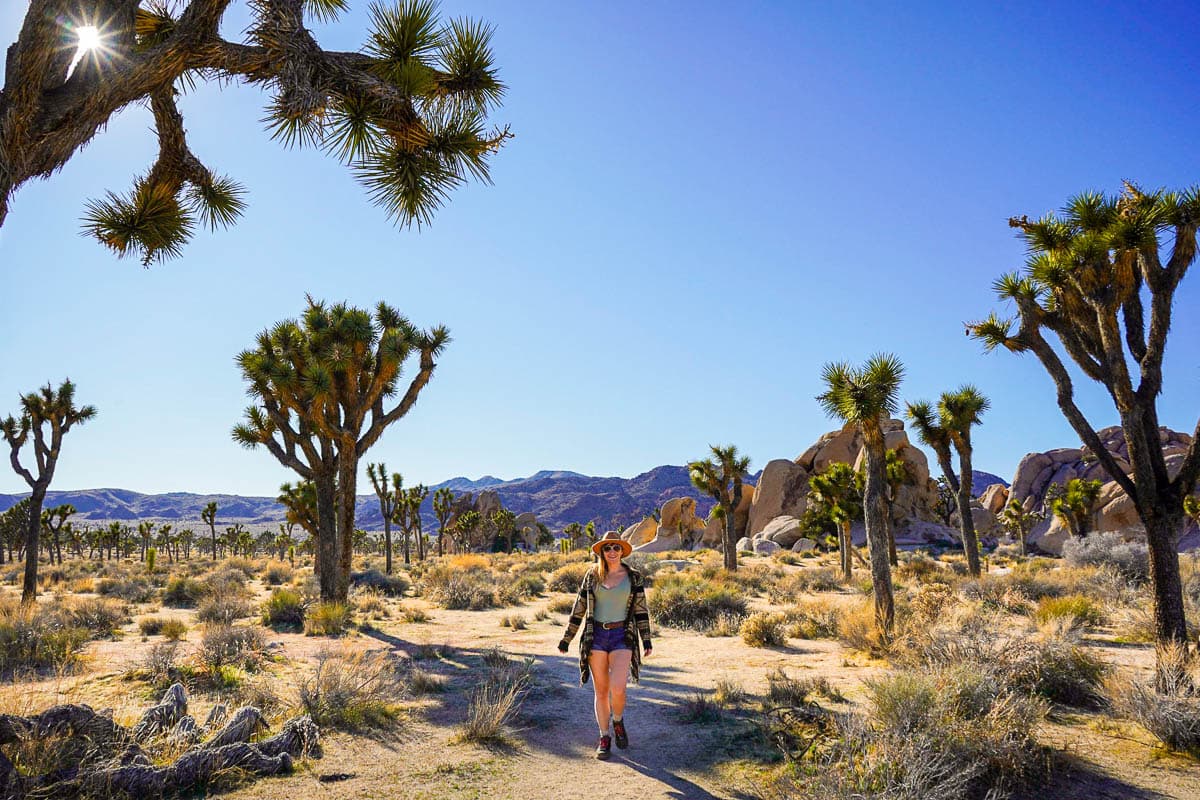
The trail is fairly flat either way, but, if you go this direction, the incline on the hike is a bit more gradual. If you go clockwise, you’ll have to end your hike with a steeper climb up a set of stone stairs.
Along the way, there’s SO much to look at on the trail—cactuses, boulders, Joshua trees, wildflowers—plus educational signs to provide more context about the surrounding geology, flora, and fauna, as well as the human history of the area. For example, the Indigenous people who once lived here used the Joshua tree’s seeds and flowers as food, and its fibrous leaves to weave baskets, ropes, and even sandals!

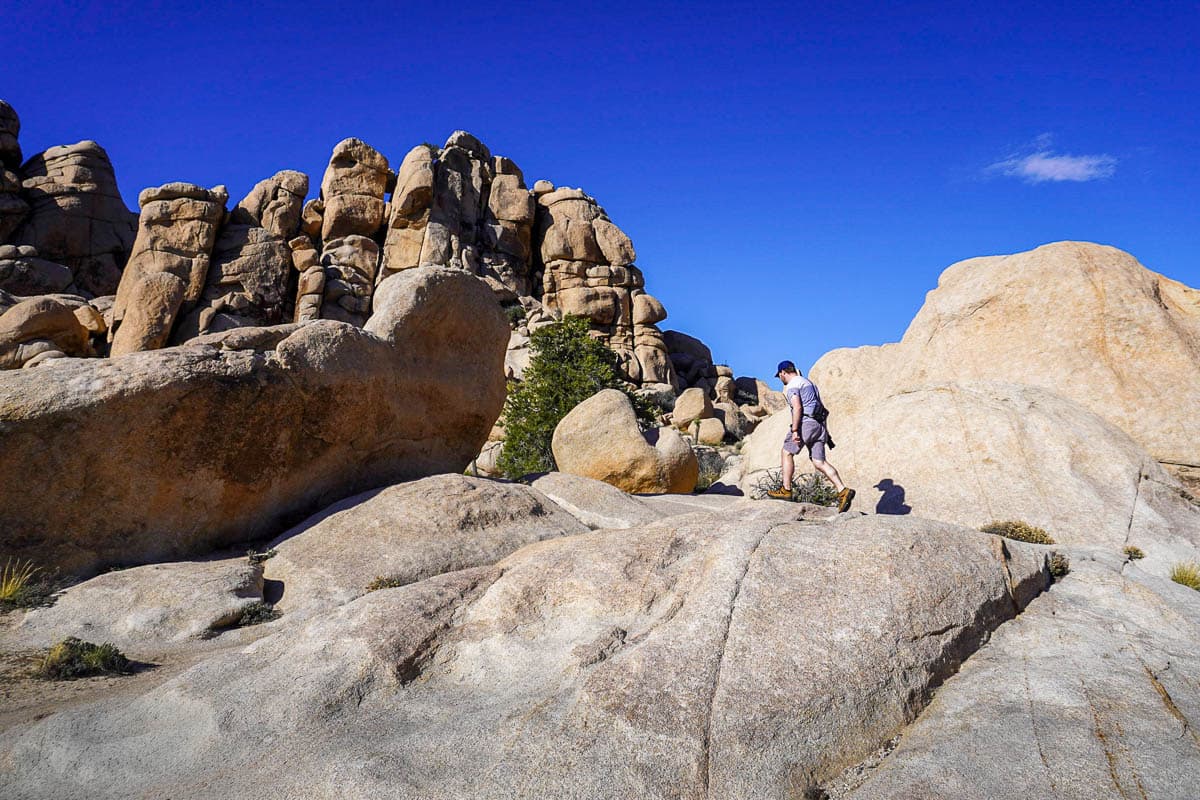
There’s also plenty of opportunities to climb and scramble on the surrounding boulders, which makes this an awesome hike for kids (and kids-at-heart alike). We definitely wouldn’t consider ourselves rock climbers, but we still had a ton of fun trying our hand at bouldering—the higher up you go, the more spectacular the views get!
Despite being a great hike for beginners, I did think it’s a bit easy to get lost on the trail (confession—Justin and I TOTALLY accidentally wandered off trail several times). There’s a TON of different social trails leading every which way and the desert has natural gaps in the plant life that can be easily mistaken for the pathway.
Accordingly, I’d recommend downloading an offline map on AllTrails before you go—there’s no cell service here, so it’s handy to have a map on hand in case you accidentally wander off trail.
Pssst.... you do need AllTrails+, a premium membership of AllTrails, to download offline maps, but luckily, we got the hookup for our readers, with 30% off your annual subscription. All you need to do is use this link and use the promo code "UPROOTED30" at check out!
When to Visit the Hidden Valley Trail
The best time to visit the Hidden Valley Trail is from November through April, when the weather is pleasantly warm. We visited in late February and LOVED it—the temperature was perfect and there were plenty of beautiful wildflowers along the trail!

This timeframe is definitely Joshua Tree’s busiest period, so be prepared to share the trail with others, especially if you’re visiting on a weekend.
If you’re hoping to enjoy the trail in peace and solitude, I’d strongly recommend showing up on the early side (or, really, maybe picking a different trail in the park—we LOVED the Lost Palms Oasis Trail, which is on the south side of the park and a bit more under-the-radar).
From May through October, Joshua Tree can have scorching temperatures, oftentimes exceeding 90 degrees.
On the plus side, the park tends to be less crowded during this timeframe, but if you venture here during the warmer months, I’d definitely recommend bringing LOTS of water, a hat, sunscreen, and a willingness to get seriously sweaty!
Tips for the Hidden Valley Trail
Watch your step
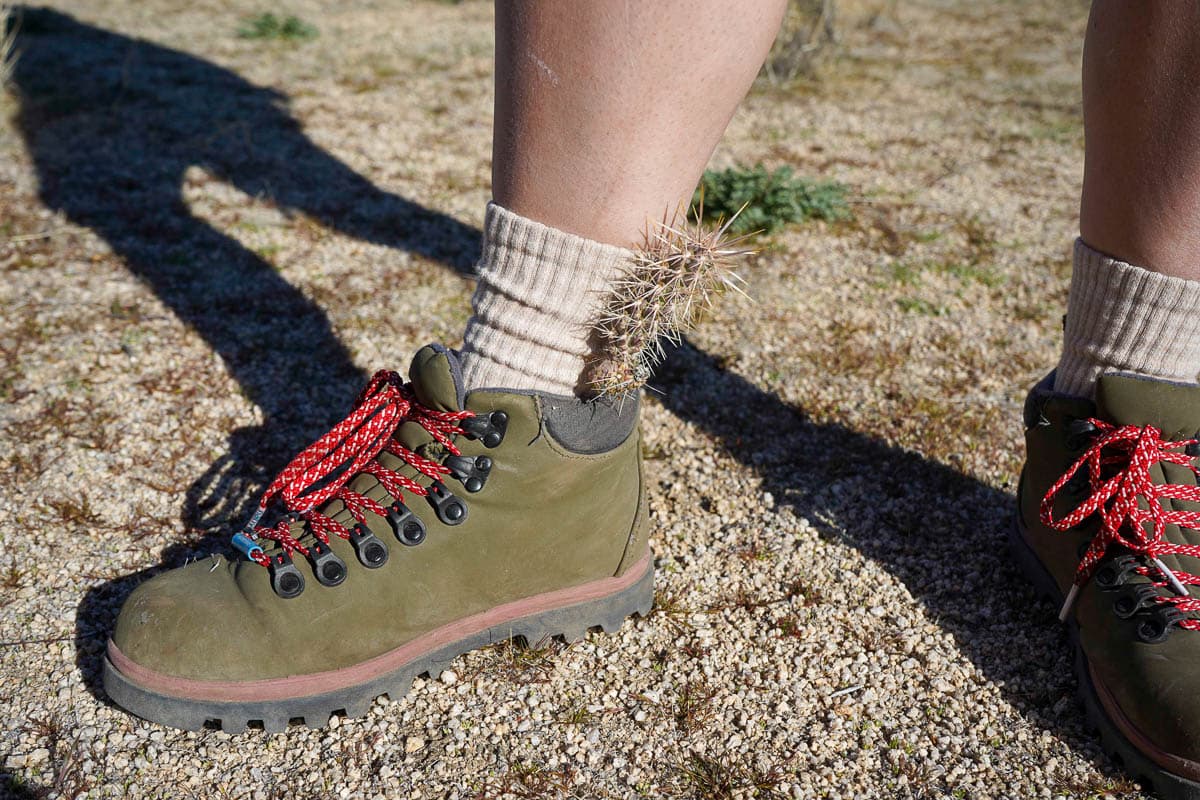
Be sure to keep an eye on the trail, as there’s lots of stabby stuff around. I wound up impaling myself with a pretty gnarly cactus and, while we didn’t see one during our hike, lots of other hikers report seeing rattlesnakes along the trail.
Rattlesnakes usually want nothing to do with humans, so long as you give them space. So if you happen to see one, give it a wide berth!
Come prepared for the sun
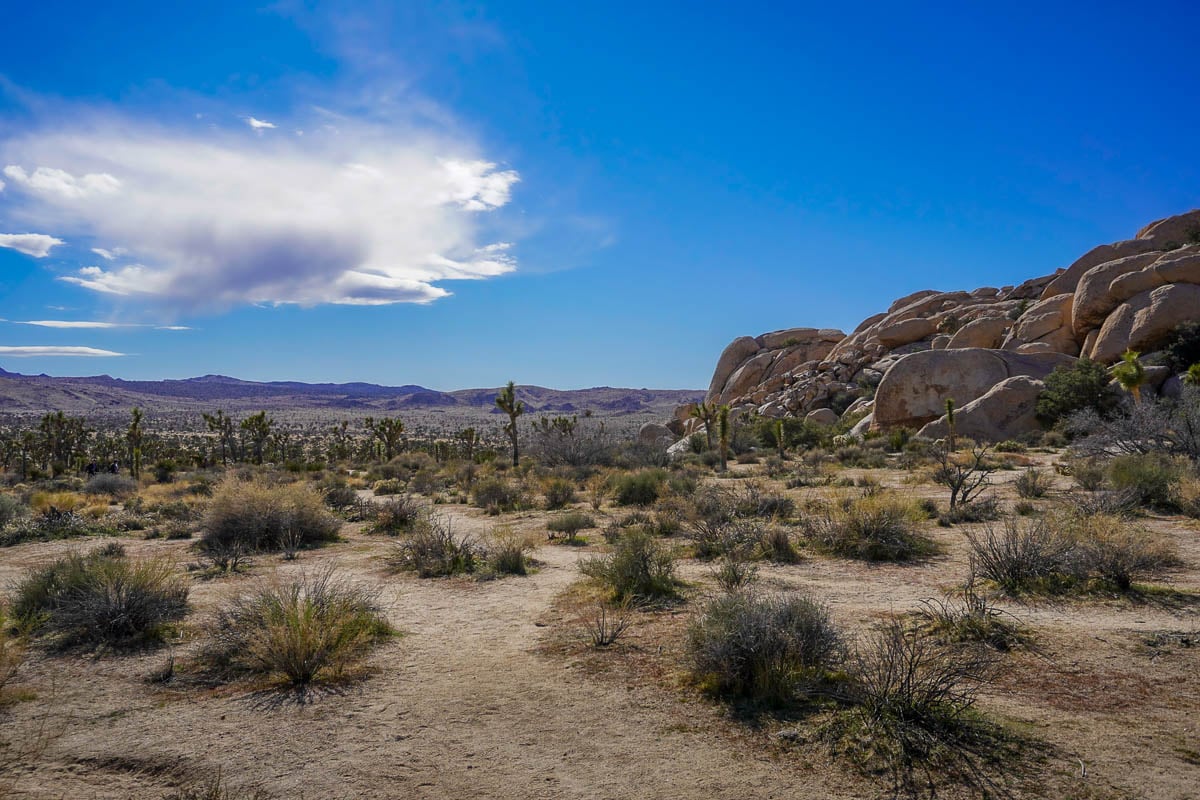
While this trail is on the short and easy side, there’s also extremely limited shade and, as mentioned above, it gets HOT!
So bring plenty of water (we each carry one of these comically giant Nalgene bottles and swear by them), sunscreen, and a hat.
I hope you enjoy exploring the Hidden Valley Trail—it’s one of our favorite hikes in Joshua Tree National Park! Do you have any questions about exploring this trail? Let us know in the comments below!
