

Arctic cruises are currently exploding in popularity, offering an incredible mix of abundant wildlife, otherworldly landscapes, and unique natural phenomena, like the Midnight Sun or the Northern Lights. One of the most popular destinations for Arctic cruises is Svalbard, an archipelago located between Norway and the North Pole, that’s known for being home to the northernmost city, Longyearbyen, AND to one of the highest populations of polar bears on the planet.
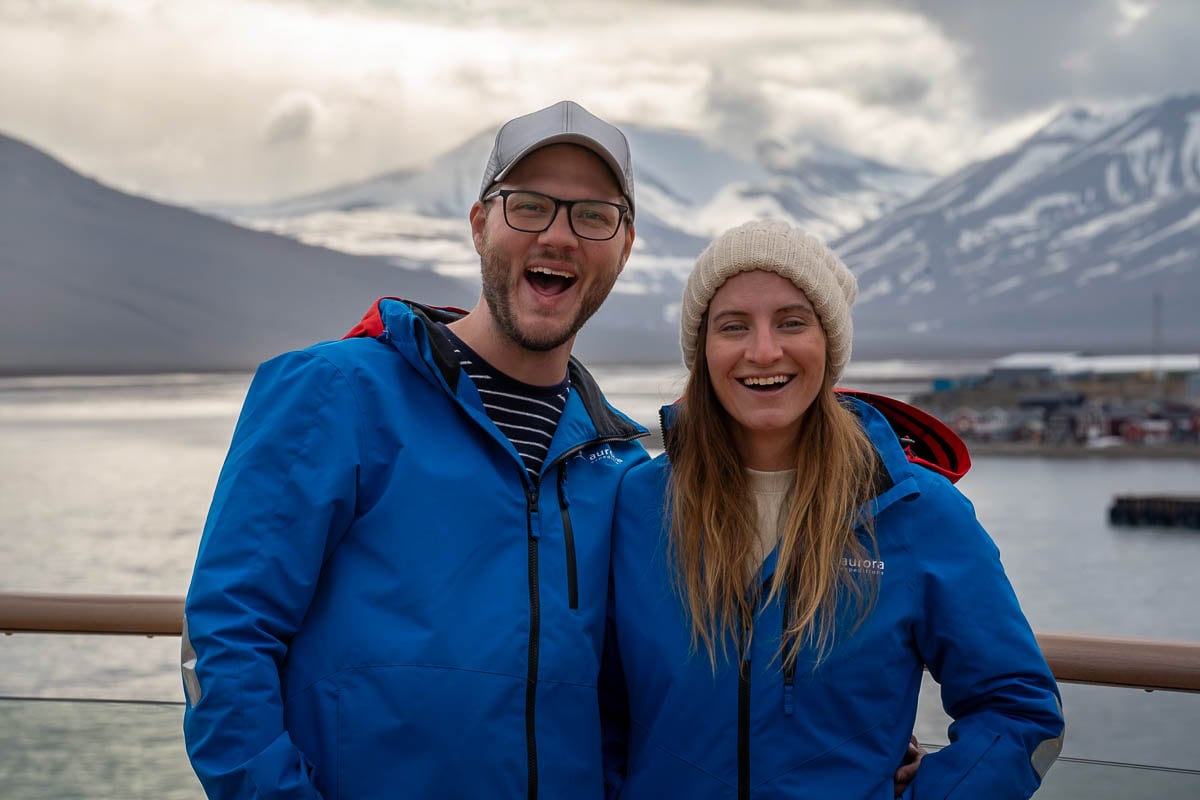
We recently spent two weeks aboard a Svalbard cruise with Aurora Expeditions, an Australian company that specializes in small group polar expeditions. If you’re considering heading to Svalbard or joining an Aurora Expeditions cruise, here’s an honest review of our experience onboard.
This post may contain affiliate links. If you make a purchase through them, we may receive a small commission, for which we are extremely grateful, at no extra cost to you.
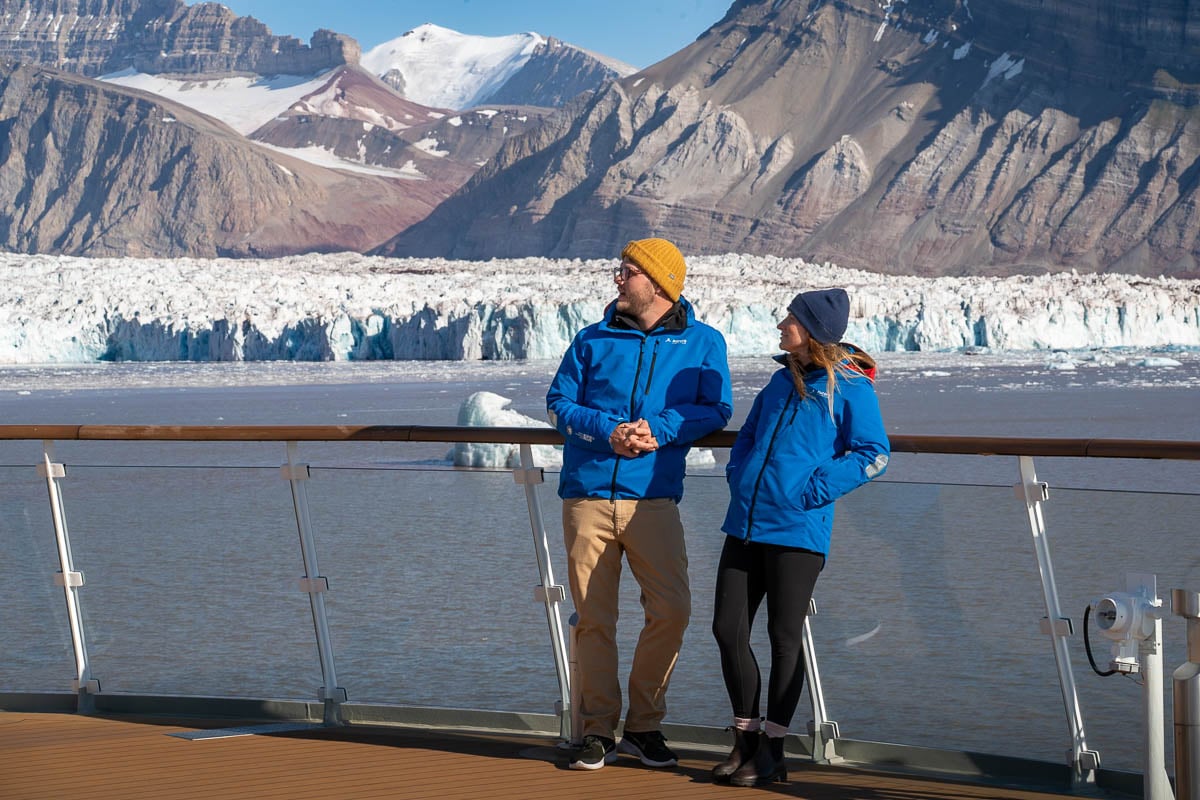

Thanks to Aurora Expeditions for hosting us on this cruise. All opinions are our own.
Exploring Svalbard by land versus a cruise
Before we jump into our experience sailing around Svalbard, you may be trying to figure out the calculus of whether it’s worth going on a cruise as opposed to exploring the archipelago by land.
The answer to this one is pretty straightforward—there’s only a handful of settlements located on one of the islands of Svalbard, called Spitsbergen, with Longyearbyen being the only city with more than a couple hundred residents. And, due to the extreme landscapes here (with over 60% of the archipelago being covered by glaciers), there are no roads that lead around this island.
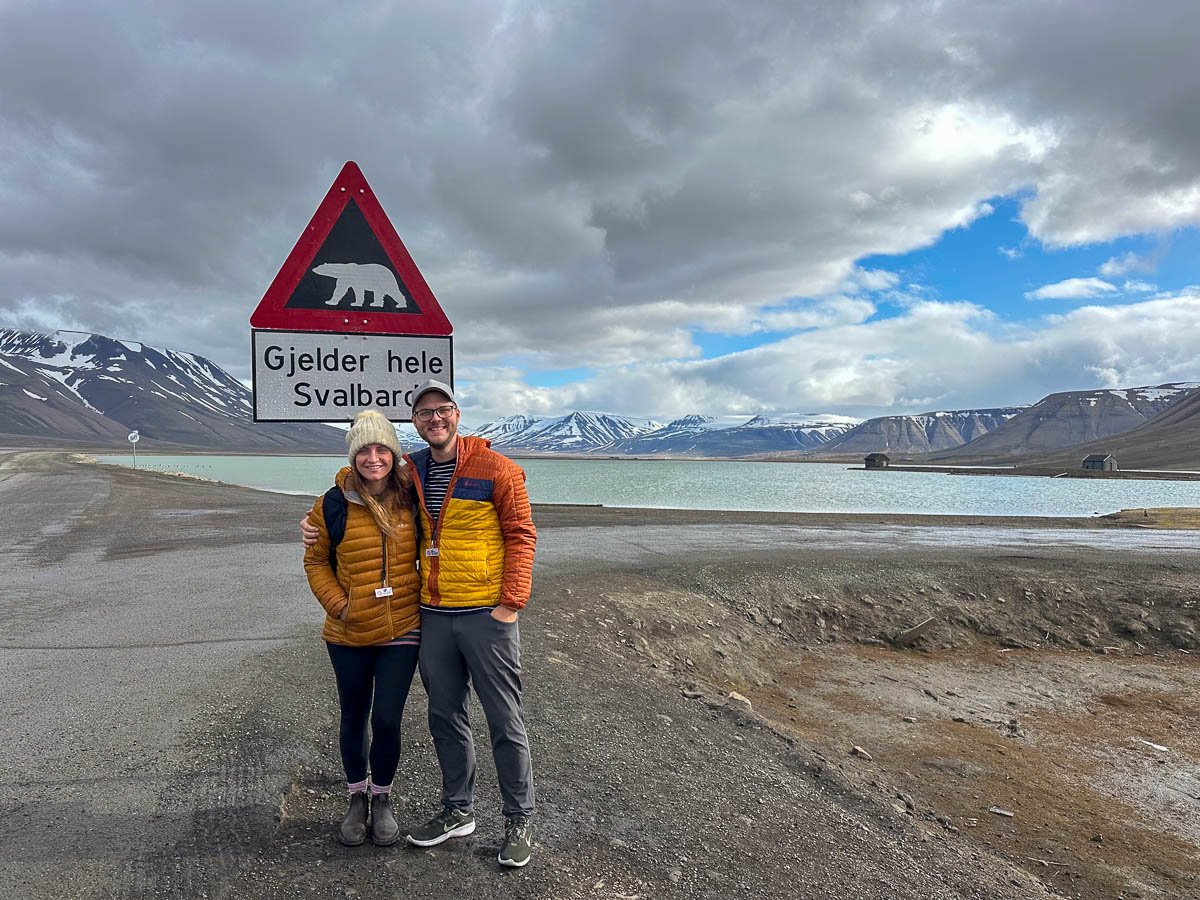
So, exploring Svalbard by land is near impossible. The only thing you could really do is spend a few nights in the city to check out some of the best things to do in Longyearbyen, like trying the world’s northernmost brewery, checking out one of the many museums, or heading out on this wildlife safari around the city.
Obviously, if that’s all that fits in your budget, it’s better than not visiting Svalbard at all (how else are you going to try out the northernmost brewery/coffee roastery/bar in the world?!). But, if you dream of seeing polar bears and puffins and massive glaciers and all of the wild creatures and landscapes that you imagine in the Arctic, going on a cruise is definitely your best bet.
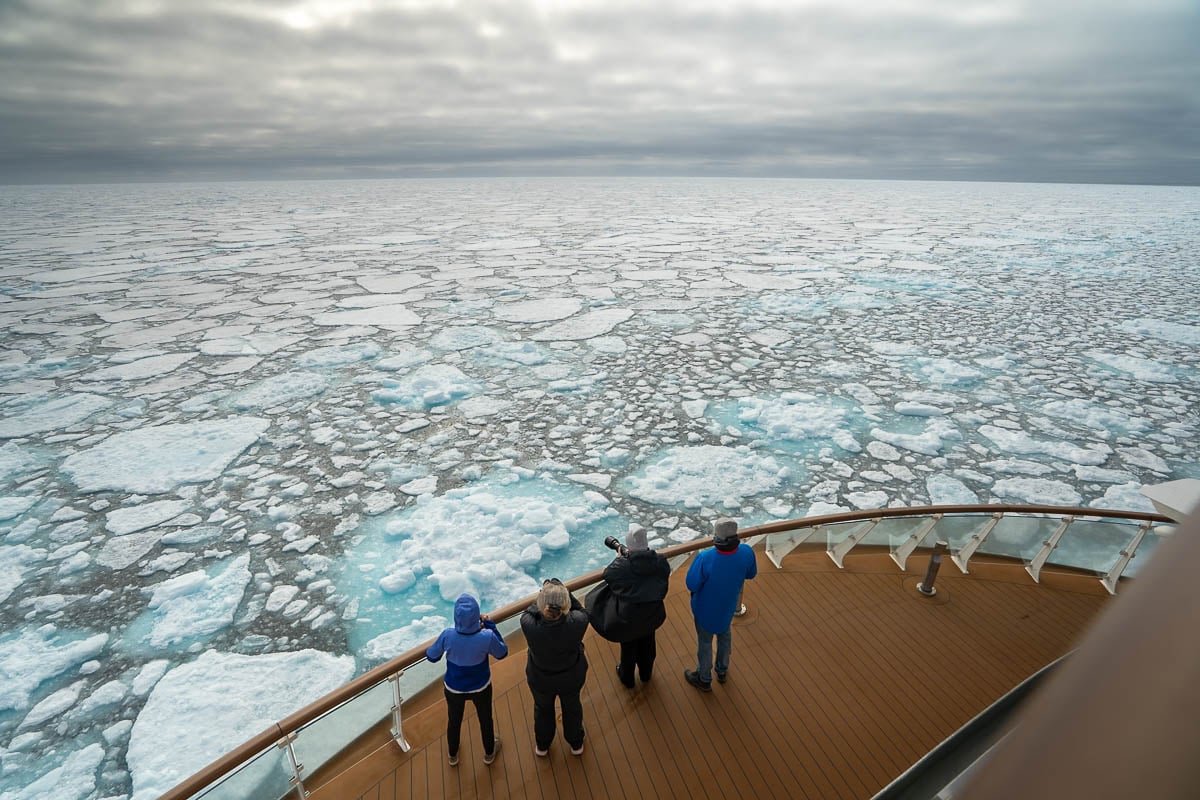
Joining an expedition cruise will allow you to visit all of the areas beyond those that immediately surround Longyearbyen, from the remote islands to the northeast of Spitsbergen to even the pack ice waaaay up north of the archipelago (which is the best place to see polar bears!).
So if you REALLY want to explore Svalbard, an expedition cruise is really the only way to go.
What is Aurora Expeditions?
Aurora is an Australian company that was founded in 1991 by an enthusiastic explorer named Greg Mortimer, who loved exploring the polar regions and sharing his passion for these remote places with others. While my husband, Justin, and I were onboard the ship, members of the expedition team happily regaled us with stories of Greg’s epic adventures, including winning the impressive title of being the first Australian to summit Everest without supporting oxygen.
Over thirty years later, Aurora has grown and evolved from using a repurposed Russian research vessel to two (soon to be three!) bougie ships that accommodate up to 130 guests at a time. While the ships certainly have luxurious aspects, like two(!!) hot tubs and heated bathroom floors, Aurora tends to focus more on your experience off the ship, exploring the wild and remote places you’ve sailed to, instead of having an elaborate afternoon tea service or the like.
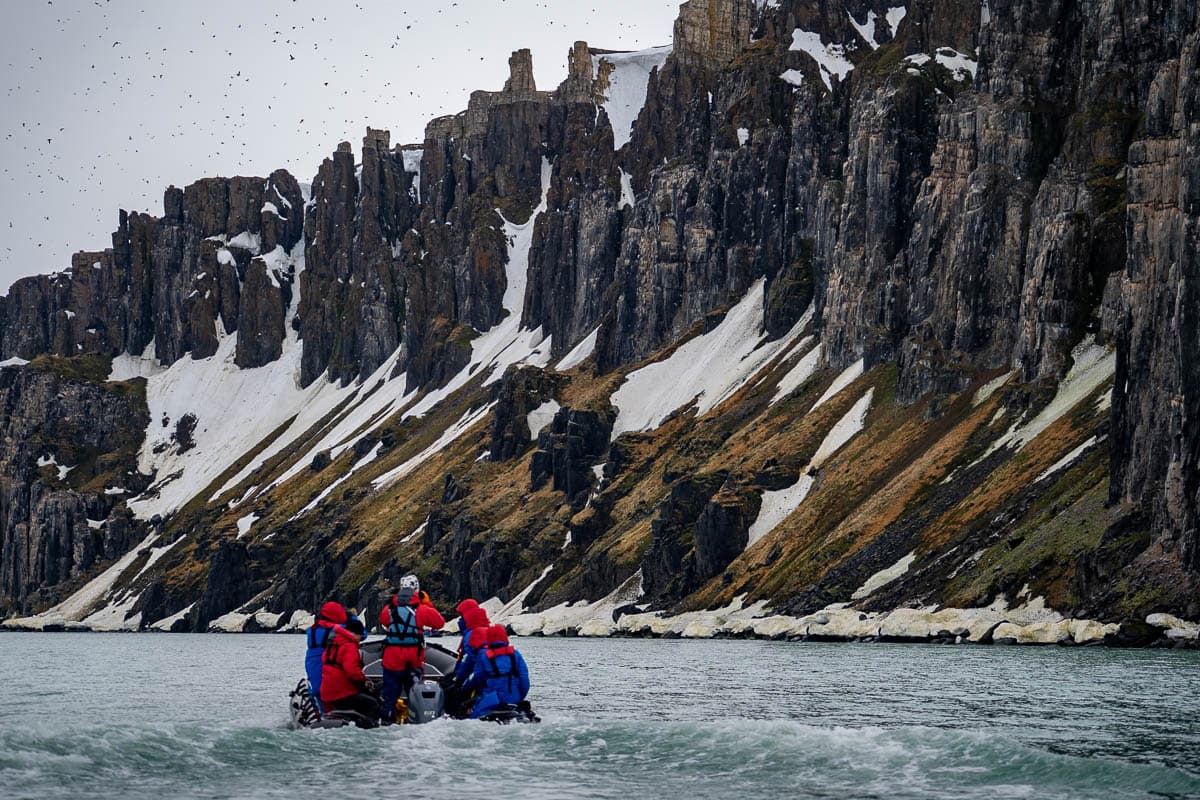
While the experience has gotten a bit more luxurious since the company’s founding, Greg’s core values have been instilled in these small group expeditions. They still concentrate heavily on the scientific aspects of what visitors are seeing during the expeditions, including offering citizen science projects that guests can partake in and highlighting the impacts of climate change.
Additionally, Aurora has retained its commitment to sustainable travel and is one of the only cruise operators to be both carbon neutral AND a certified B corp (i.e., a for-profit corporation that’s gone through a rigorous certification process regarding its commitment to environmental and social practice standards).
What kind of Svalbard cruises does Aurora Expeditions offer?
Aurora offers several different expeditions around Svalbard, which range in length, pricepoint, and theme.
For example, at the time I’m writing this, some of the cruises that Aurora offers include:
- Spitsbergen: Realm of the Ice Bear, which just focuses on the island that Longyearbyen is located on over the course of 8 days
- Svalbard Odyssey (12 days)
- Svalbard in Depth (15 days)
They also offer a variety of other itineraries that include stops in Svalbard, such as sailings that are co-hosted by certain science groups; those that highlight special events, like the solar eclipse; and multi-country cruises, which typically also include stops in Greenland and Iceland.
You can check out all of their Svalbard cruises here.
Pssst... if you have any questions about Aurora's itineraries, please reach out to reservations@auroraexpeditions.com.au and use the referral code "JUSTIN&JESS"!
All of these cruises are hosted on one of the company’s three expedition ships, the Greg Mortimer, Sylvia Earle, and Douglas Mawson, all of which hold 130 passengers and were specifically designed to navigate icy polar waters.
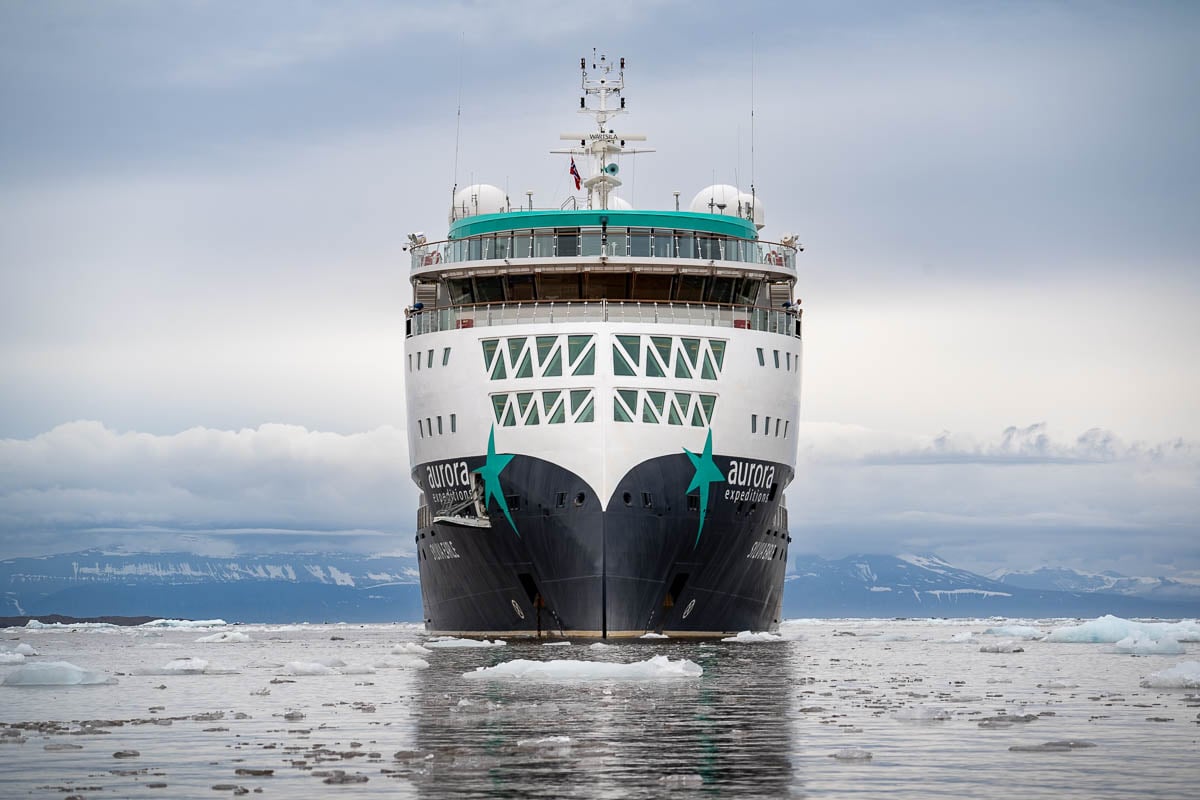
We did the “Svalbard In Depth” itinerary aboard the Sylvia Earle. Over the last couple of years, we’ve been lucky enough to do a handful of expedition cruises and, if we’ve learned one thing, it’s that having a longer period of time to explore is absolutely imperative, especially in polar regions, where the weather is finicky and unpredictable.
If at all possible, I’d HIGHLY recommend trying to book the longest cruise that you can.
We had two extremely foggy days aboard the Sylvia Earle, where we weren’t able to go out on expeditions. It was no big deal, since we had 11 full days of expeditions around Svalbard—however, if you’re on a much shorter itinerary, missing a day or two due to inclement weather becomes a much harder pill to swallow.
Review of Aurora Expeditions Svalbard Cruise
Overview of our experience on Aurora Expeditions Svalbard Cruise
Want the TLDR about our experience in Svalbard?
Our time aboard the Sylvia Earle was easily one of the best travel experiences we’ve ever had—and we’ve been lucky enough to travel a LOT. We’d HIGHLY recommend this expedition to travelers that are looking to have an adventurous experience around Svalbard, with wildlife encounters and daily scientific briefings about what you’ve observed, while still having an extremely comfortable onboard experience.
The highlight of the trip for me is, undoubtedly, the expedition staff. Our expedition leader, Christophe, was incredibly skilled at navigating the constantly changing polar conditions and clearly communicating to passengers his thought process about the destinations and activities he was choosing. Other than the two foggy days that we had, we had an amazing time on every single expedition—all due to his (and the captain’s) expert planning.
But, beyond Christophe, the rest of the expedition staff were incredibly knowledgeable.
Throughout our two weeks onboard, we saw all kinds of wildlife (polar bears! walruses! Arctic foxes!), as well as ice, volcanic rock formations, and a variety of other unique natural features. On each of our expeditions, one of the guides, who consisted of marine biologists, geologists, and oceanographers, was always quick to point out some interesting feature around us, whether it was a unique behavior of a polar bear or some interesting metamorphic rocks.
I seriously can’t imagine a better group of people to help us dive in and understand this otherworldly place.
In my opinion, Aurora shines the brightest at getting you off the ship and experiencing Svalbard (which is kind of why you’re here, right?)—but the onboard experience is still MORE than comfortable, with roomy cabins with private balconies, lots of luxurious amenities (a heated pool! two infinity hot tubs! a gorgeous sauna!), and a cheerful staff that largely learned our names by the second day.
Aurora does not bill itself as a luxury cruise operator and, per my understanding, there are other operators that offer Svalbard cruises that focus more on the bougier side of things, like Silverseas. However, in my opinion, that’s actually a good thing for travelers like us, who are more focused on the adventure side than on having a super upscale experience.
For example, Silverseas has a pretty strict dress code (no jeans in public spaces after 6 PM!), whereas Aurora’s vibe is decidedly more casual. Additionally, most of the luxury cruise lines offer much shorter itineraries in Svalbard—for example, Silverseas currently only offers itineraries that have a maximum of six landings in the archipelago, which is WAY too short, in my opinion, if you run into unfortunate weather along the way.
So, if you’re more concerned with seeing polar bears and being immersed in the Arctic as opposed to having an on-demand butler, Aurora is definitely the right choice.
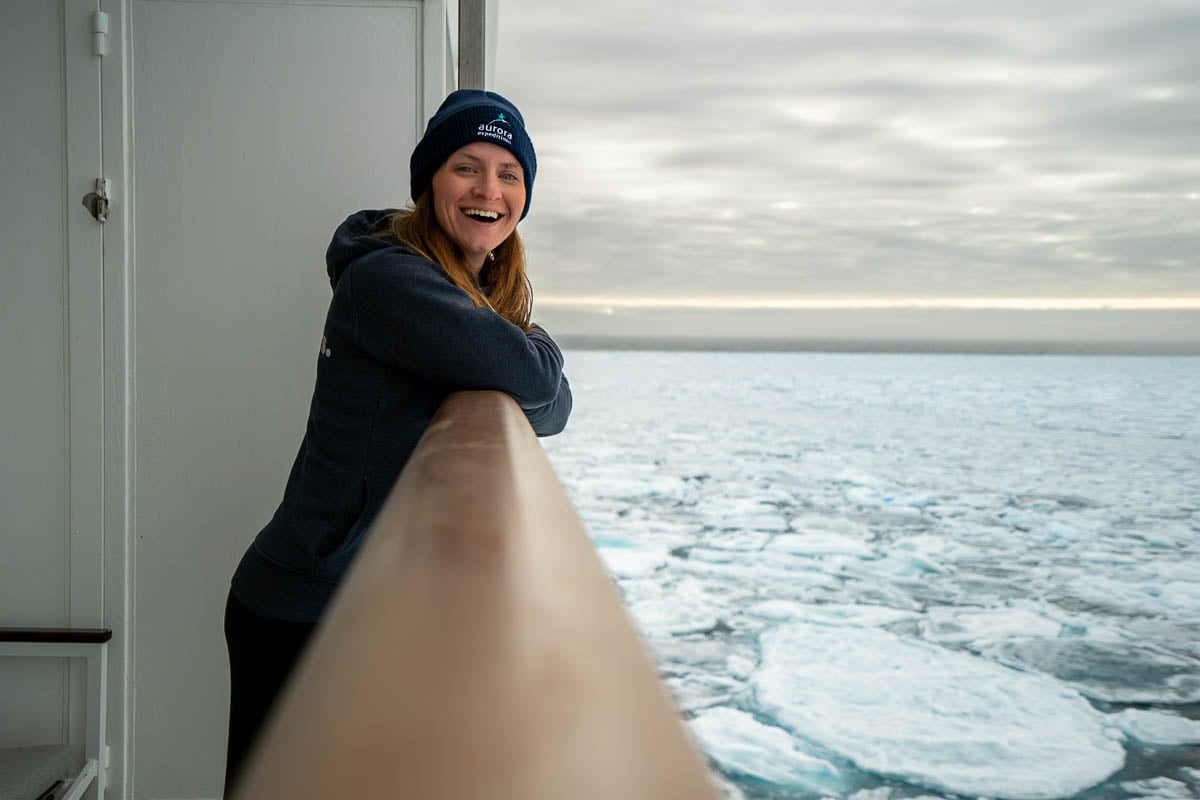
Other than a few nitpicky issues I had while on the ship (for example, I wish there was a wider range of vegetarian options at mealtimes and I wasn’t overly excited about most of the movies included in the entertainment system), I have nothing but glowing things to say about our experience with Aurora in Svalbard.
We’ve been lucky enough to have traveled all over the world and, honestly, our experience onboard the Sylvia Earle is easily in the top three travel experiences (possibly even the number one?!) of our entire lives.
If you’re interested in seeing our experience on Aurora Expeditions in action, you can also watch the YouTube video we made about our experience here:
Want to hear even more about our experience with Aurora? Let’s get into it!
I’m going to break down our experience into offboard (i.e., activities) and onboard (i.e., the ship) experiences.
Offboard Experience
If you’ve made it this far, I’m guessing you’re more interested in the expedition aspect of a Svalbard cruise—spotting wildlife, seeing the glaciers, taking in the extraordinary scenery—with the hot tubs and heated pool and all that just being a fun bonus.
So, let’s start off with the offboard experience, since that’s what you’re here for.
Itinerary
Like any expedition cruise, Aurora’s cruises do not have a strict itinerary, other than “exploring Svalbard.” Rather, your expedition leader and the captain will evaluate weather patterns, ice flows, and wildlife sightings to determine where to go and what to do each day.
This ensures you have the best chance of getting out and experiencing Svalbard in the very best conditions, but it also means there’s no guarantee that you’ll visit any one particular site here.
This is the case across ALL expedition operators in Svalbard (and pretty much any polar region), not just Aurora.
I REALLY enjoyed the pace of the trip. It was definitely busy, with outings usually occurring between 9-11:30 AM and 2-5:30 PM every day, but there was still plenty of downtime to enjoy your meals or rest up if you needed it.
We’ve previously been on expedition cruises where the schedule is absolutely packed, starting before 6 AM and going until 6 PM (which was absolutely EXHAUSTING!)—so I enjoyed this slightly more relaxed experience, especially given how long we were on the ship.
I also really enjoyed that the general schedule of the day was dictated by prioritizing guests’ experience of exploring Svalbard, even if meal times or other onboard activities had to be adjusted slightly. We’ve been on some expeditions where there was no flexibility in the schedule—if a landing couldn’t happen when it was originally scheduled because of weather or wildlife conditions, the entire outing was cancelled, as meal times were treated as completely immovable.
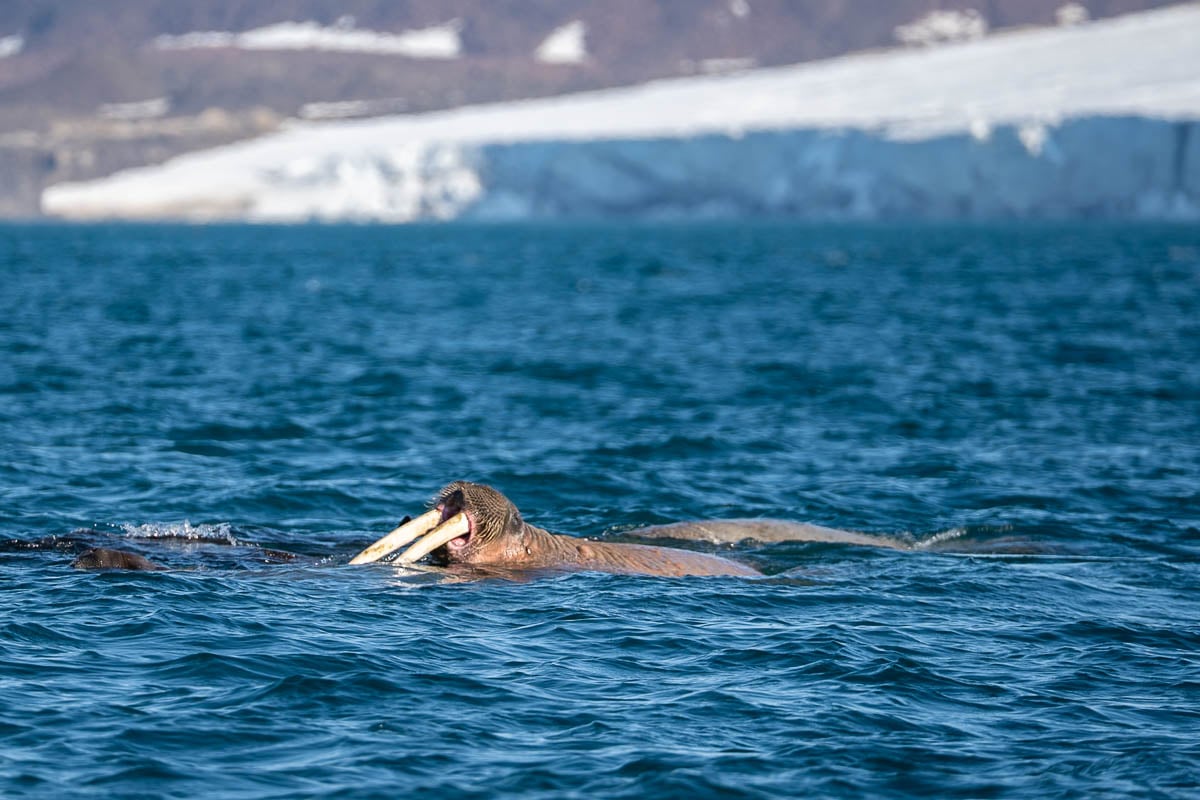
We got to see and do SO much during our time aboard the Sylvia Earle. This was due, in part, to how long we were on the ship, but also by strategic and efficient planning by our expedition leader.
Expedition staff
We’re always a teeny bit nervous when we go on guided experiences—I think any traveler can tell you that a bad guide can ruin even the coolest experiences. But, lucky for us, Aurora’s expedition team was knowledgeable, friendly, and seemingly wildlife-spotting ninjas.
There were 67 passengers during our sailing and we had a whopping 15 expedition guides onboard—that’s almost a 1:4 ratio!
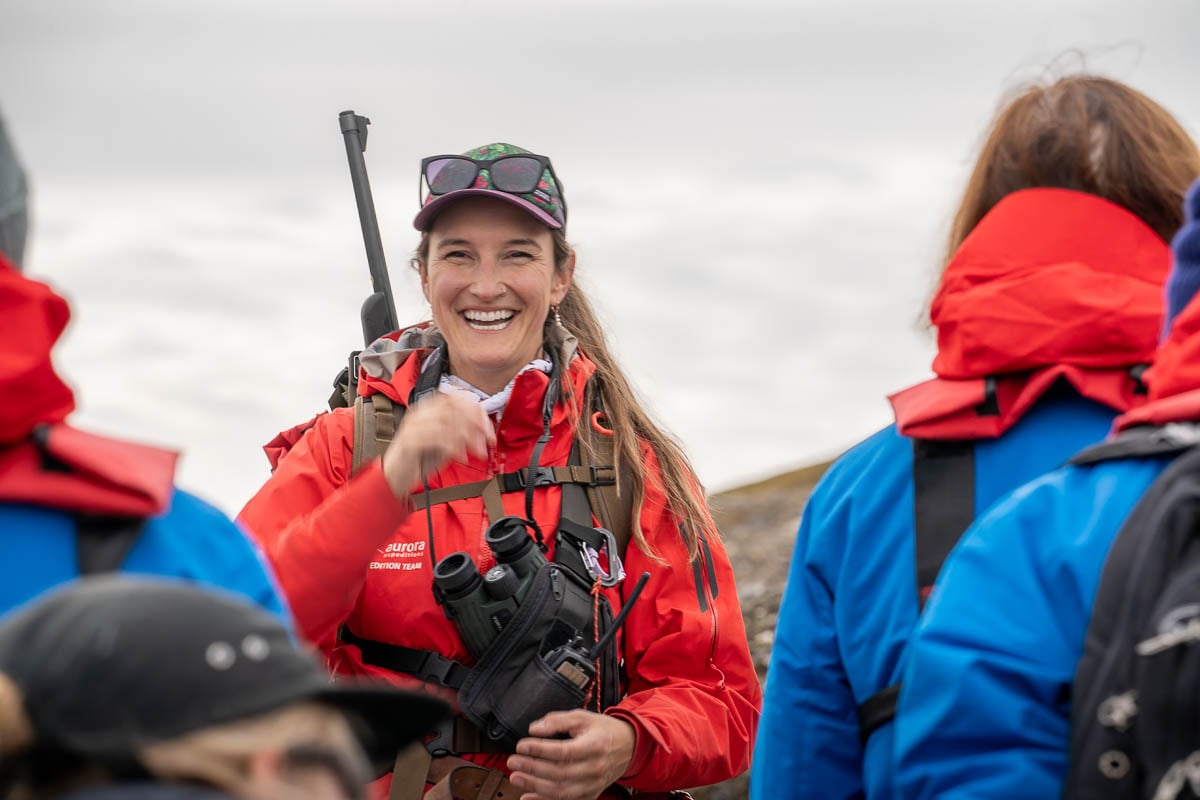
Most of the staff had a higher degrees in relevant disciplines—think geology, animal physiology, oceanography, and marine biology—and, even if they didn’t have a related degree, they usually had decades of experience guiding and exploring polar regions.
I also appreciate that several guides told us that Aurora let them be themselves—other than educating passengers and keeping us safe, guides are free to let their true personalities shine through. We’ve been on some experiences where it’s clear the guides tell the same scripted joke on every single tour—definitely feels inauthentic and a bit on the cringey side.
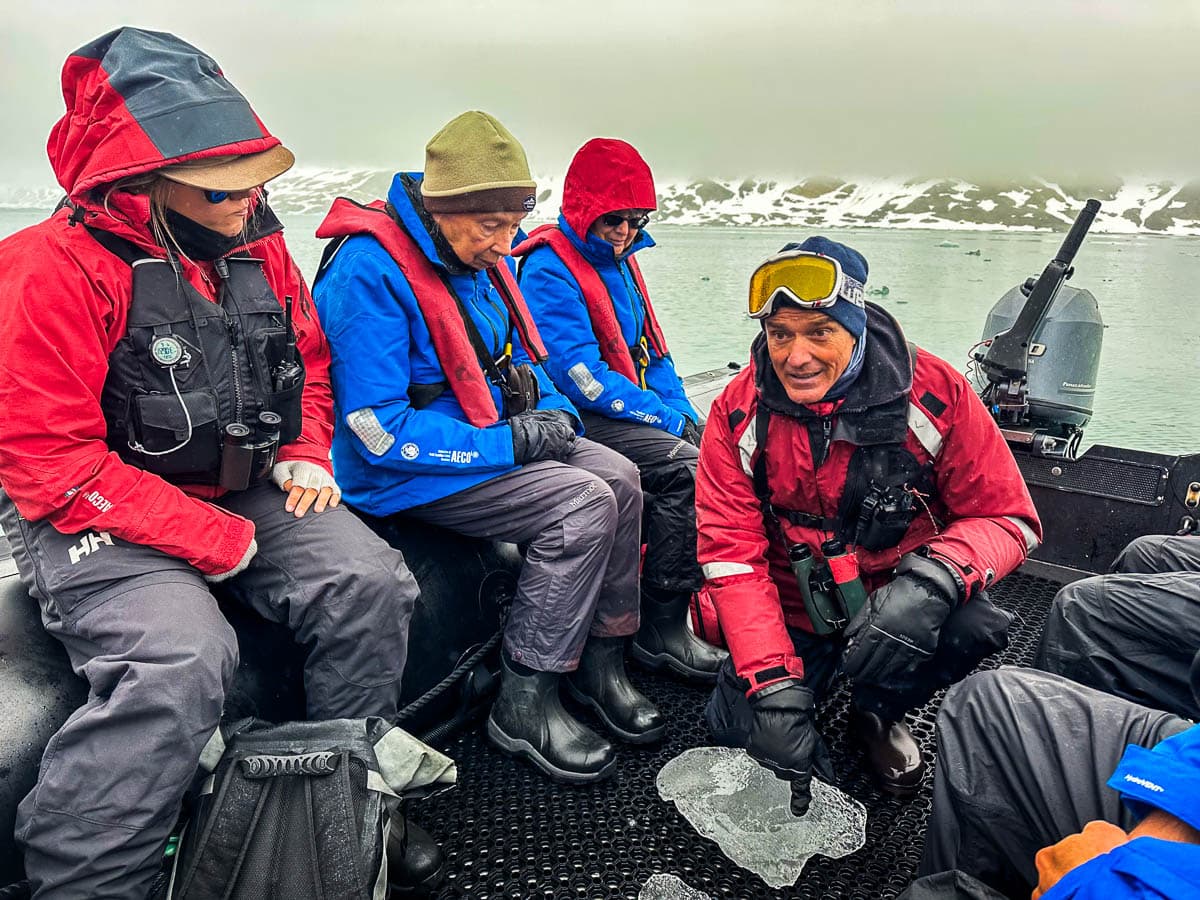
The expedition staff did a really good job of making information engaging and accessible to all of the passengers onboard. The guests on our ship ranged in age from 8 to 88 and seemingly, everyone stayed entertained throughout the voyage.
Activities
There were usually two expeditions each day, unless weather conditions weren’t cooperating.
Zodiac cruises
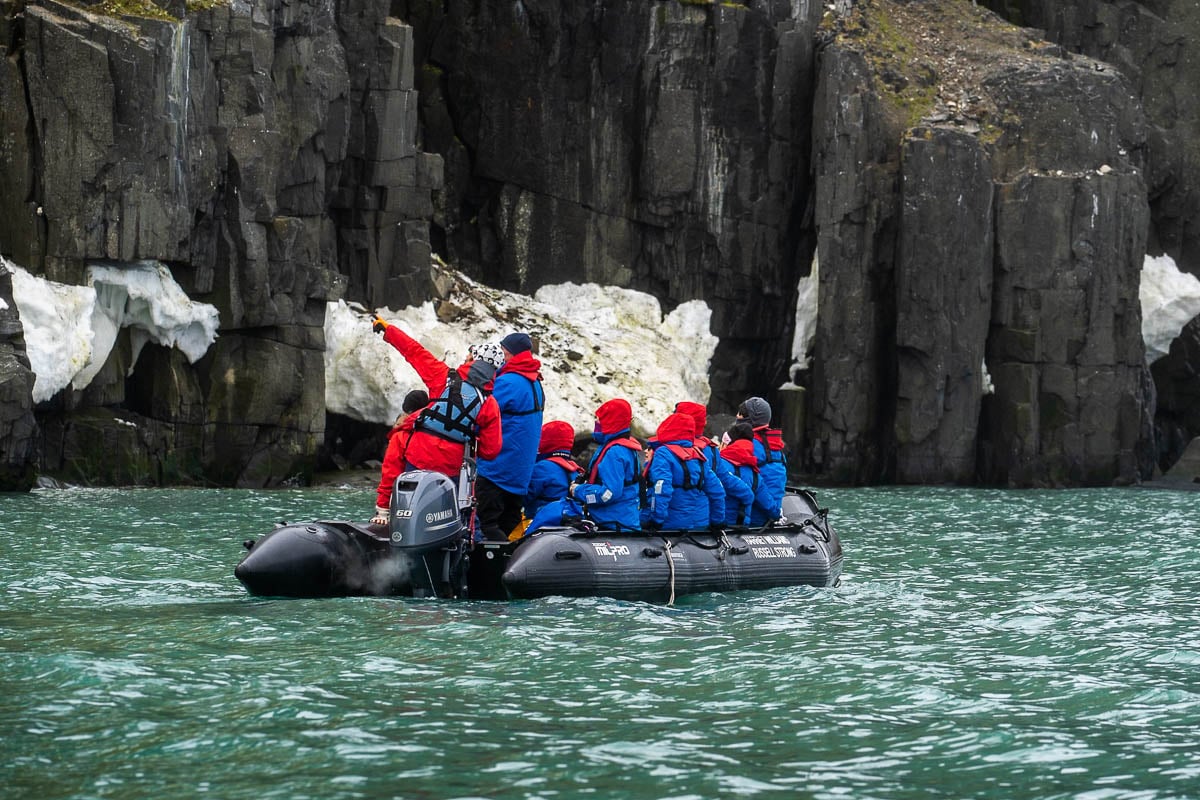
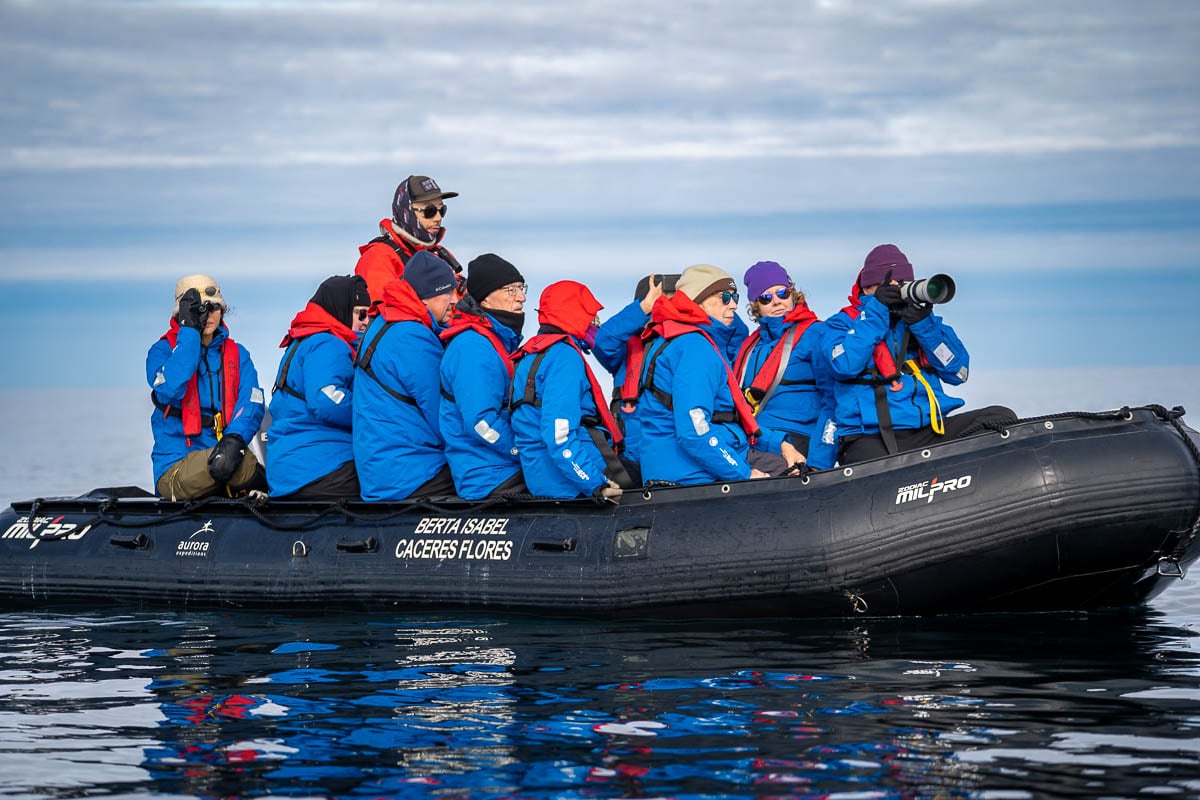
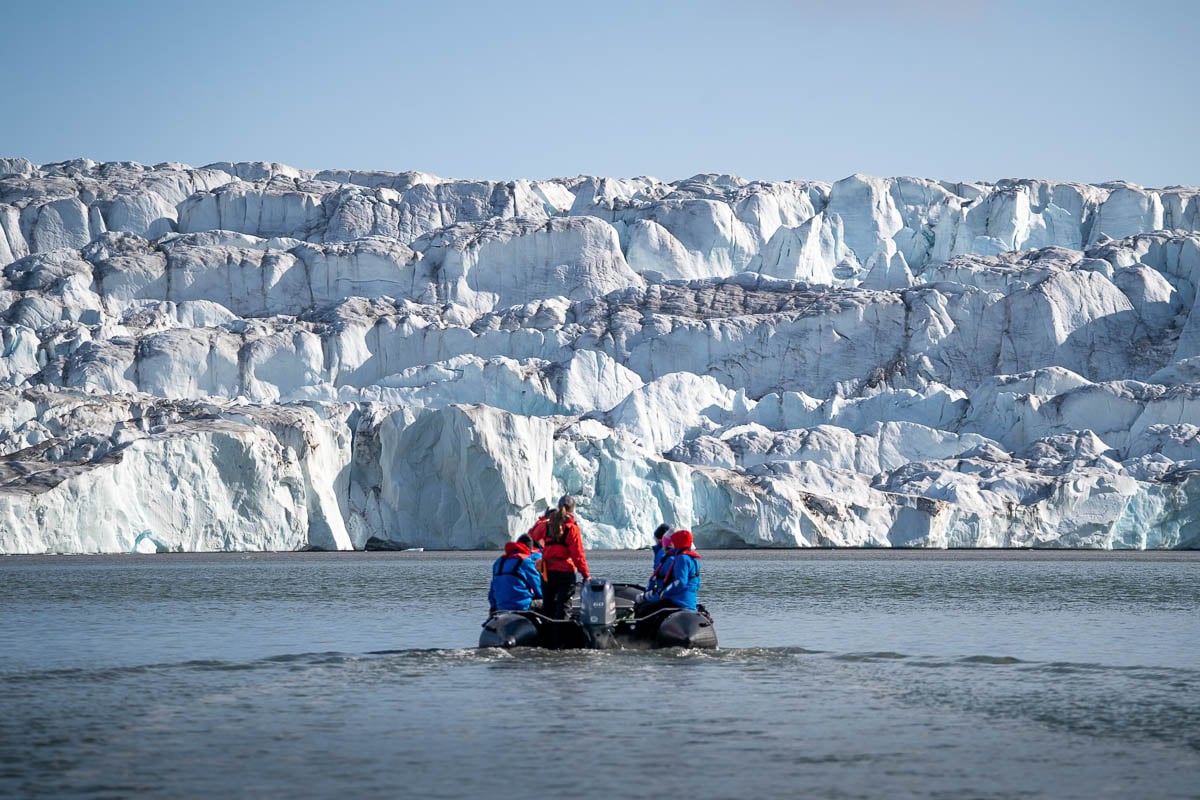
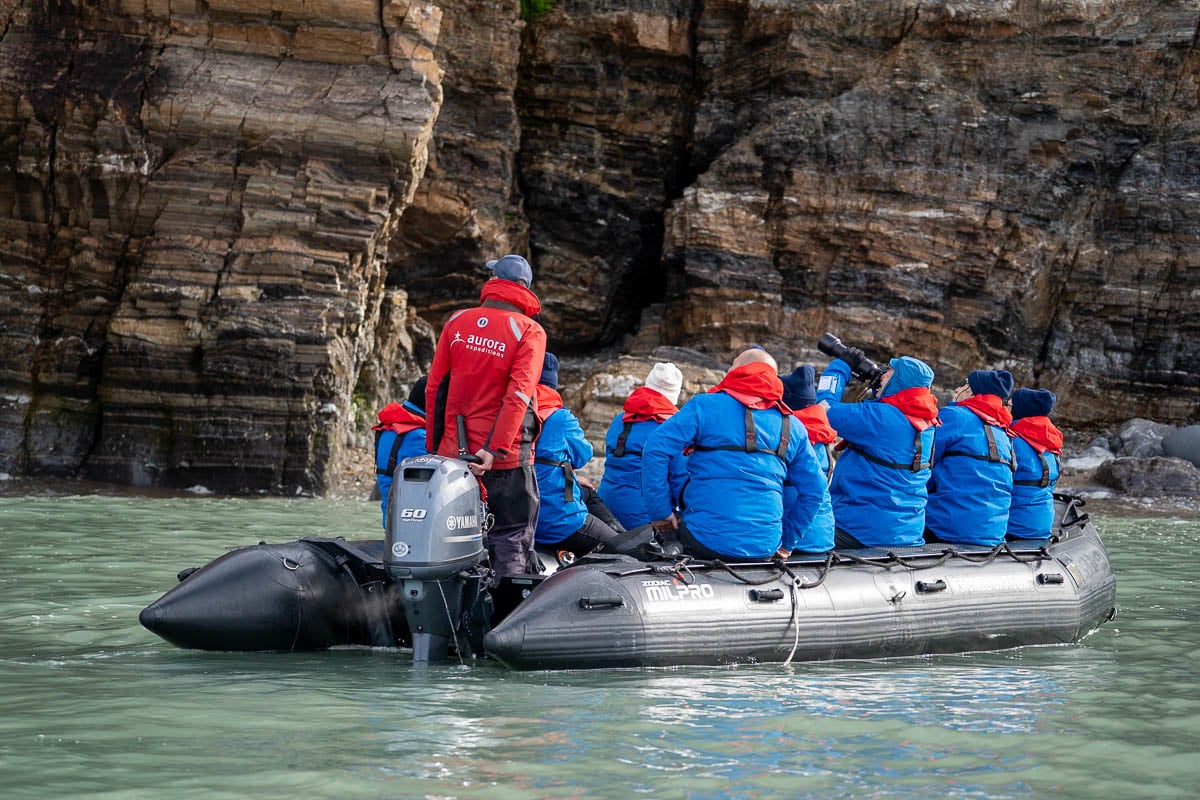
Svalbard has recently seriously cracked down on the number of sites that ships are allowed to have landings at. Accordingly, the vast majority of our expeditions were Zodiac cruises, zipping past glaciers, enjoying the epic scenery, and scouting for wildlife, all while our expedition staff pointed out unique features and shared interesting information with us.
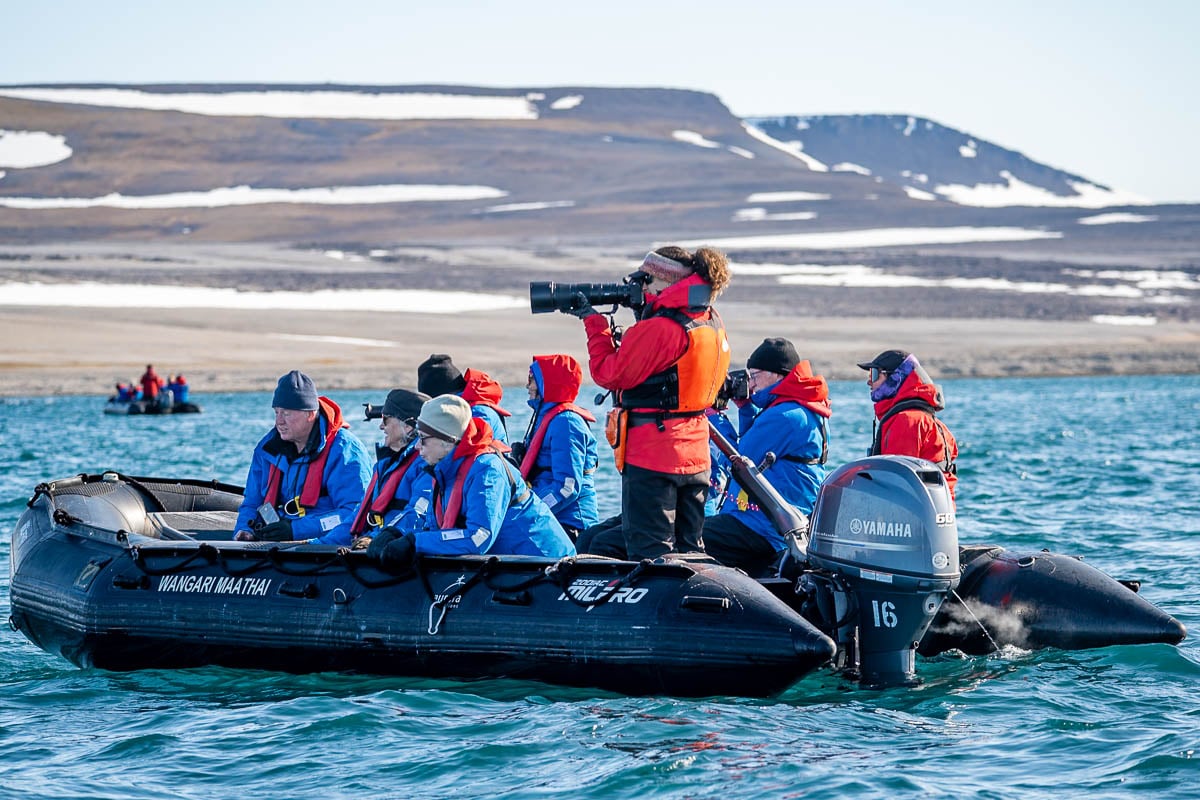
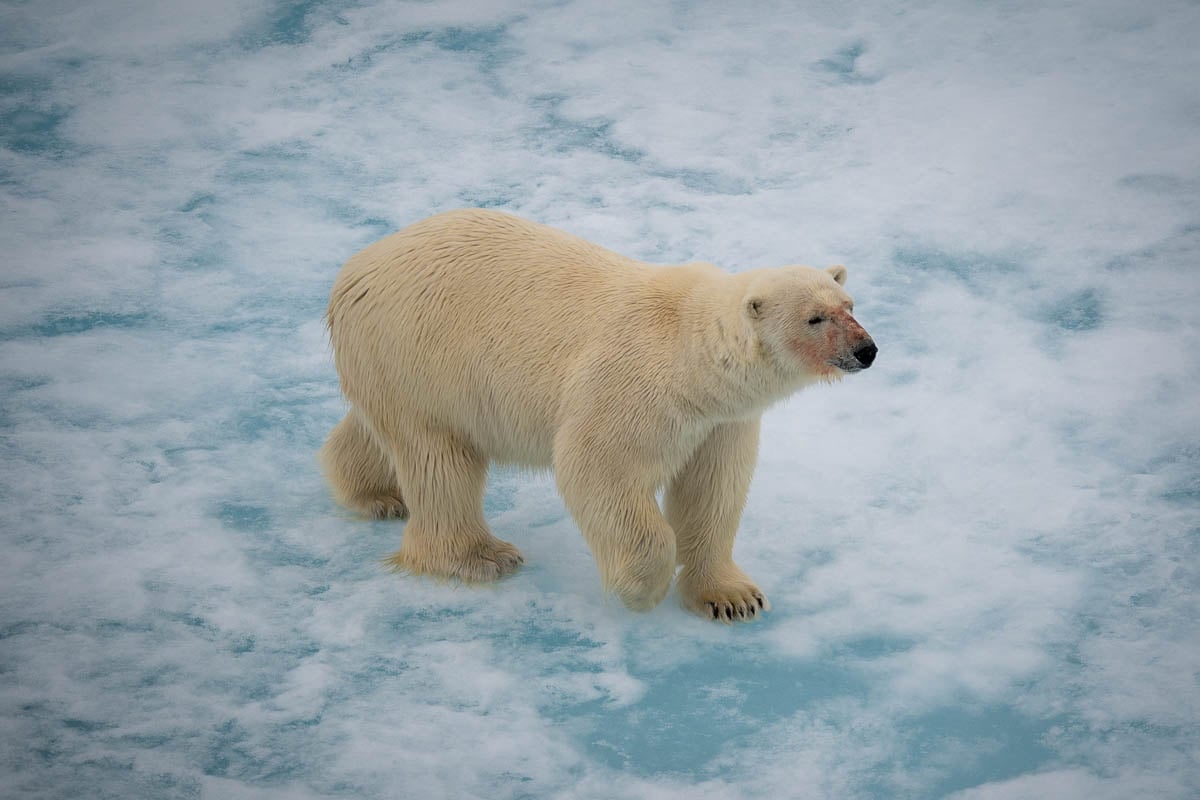
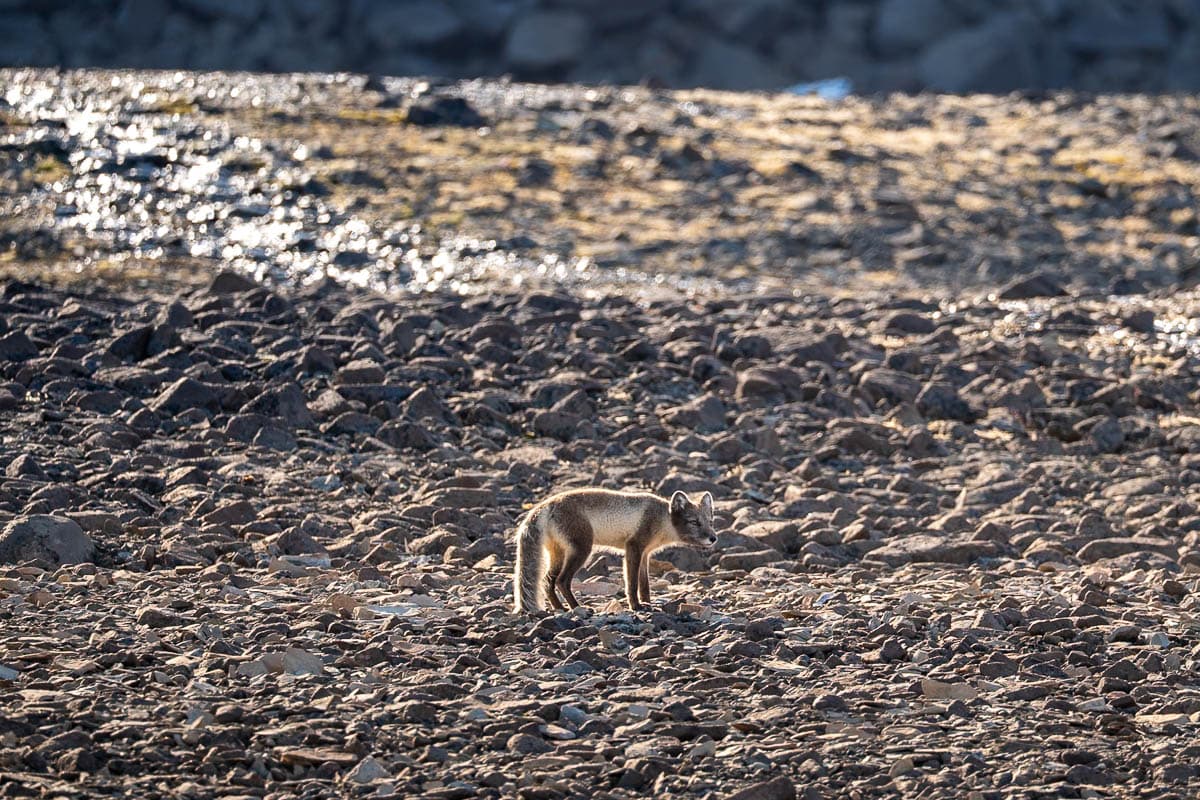
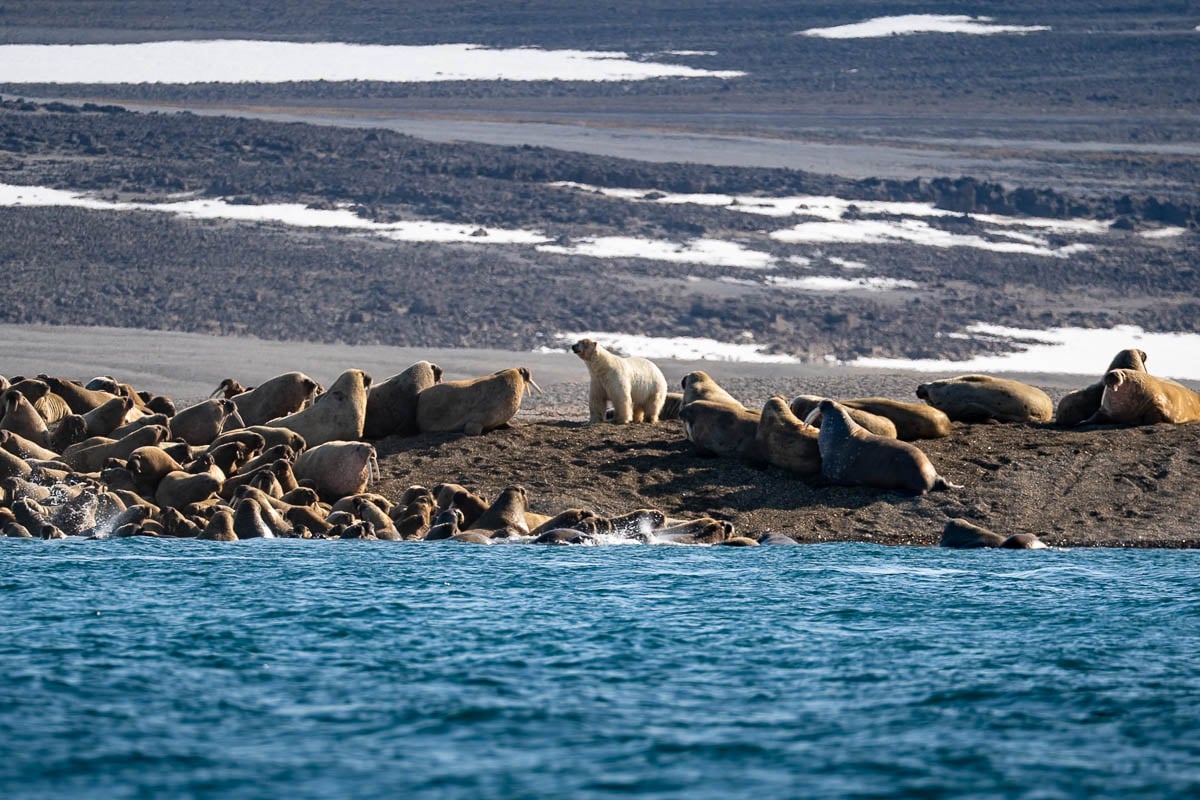
Boy howdy, did we EVER see wildlife—19 polar bears, more than 50 walruses, and four arctic foxes, plus seemingly countless reindeer, puffins, harp seals, and other seabirds.
It’s worth mentioning, though, that Svalbard has pretty strict laws about how far you have to stay away from wildlife while viewing them from a Zodiac. For example, depending on the time of the year, you have to be either 300 or 500 meters away from a polar bear at all times, which is pretty darn far away.
So, it can be a bit on the challenging side to get a good photo or even view of wildlife here. Be sure to bring your binoculars and your longest lens along with you—we had our 400mm Sigma lens for our Sony A7iii and wish we had brought something WAY longer!
In addition to the “standard” Zodiacs, there were a number of times that specialty cruises were also offered.
For example, there were several photography Zodiacs, led by our onboard photographer, where he provided tips to the passengers on capturing wildlife or landscapes and focused on areas that were particularly photogenic.
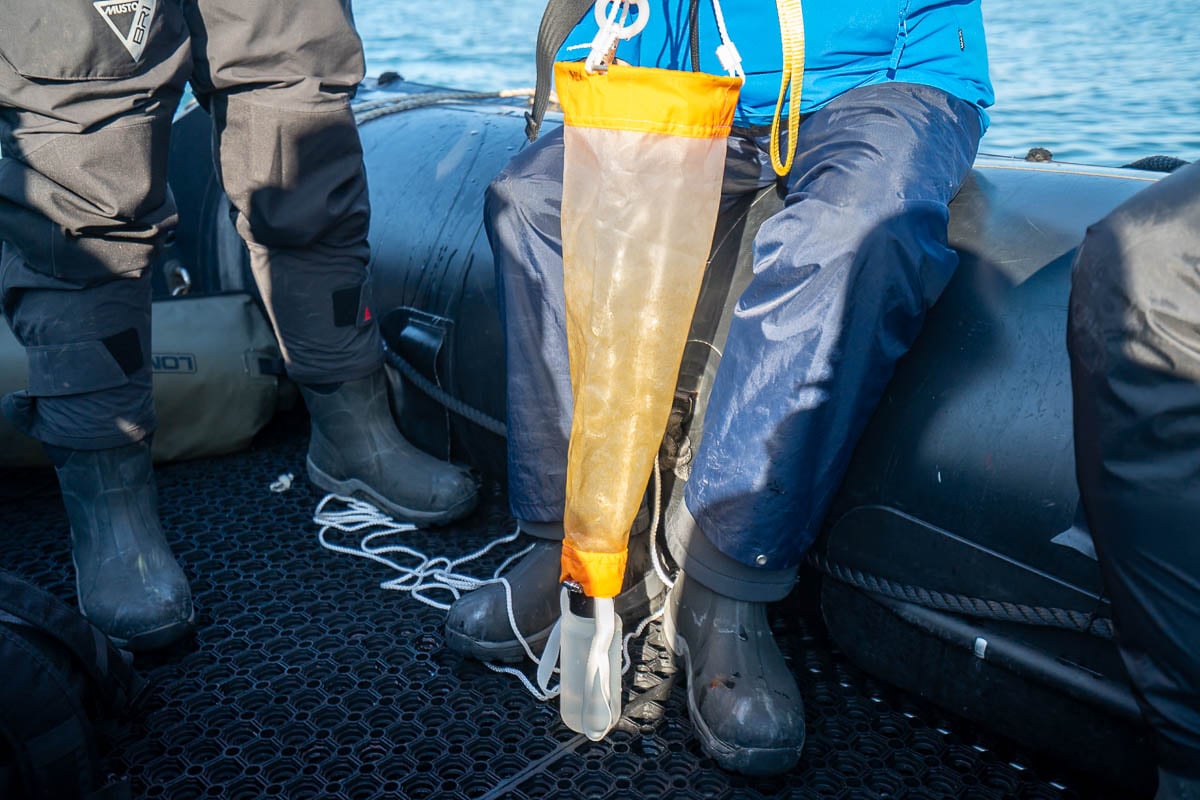
We also joined a citizen science Zodiac, where we collected data for several long-term global studies, ranging from counting bird populations to measuring phytoplankton and glacial density. After the citizen science Zodiac, we went back to the ship’s lab and looked at some of the phytoplankton we collected under the ship’s microscopes—the two kids onboard (and several adults, including ourselves!) were INTO it.
Landings
Additionally, we did make a handful of actual landings, where we got to see Arctic wildflowers, observe reindeer calves (so frickin’ cute!), and even drink straight from a glacier.
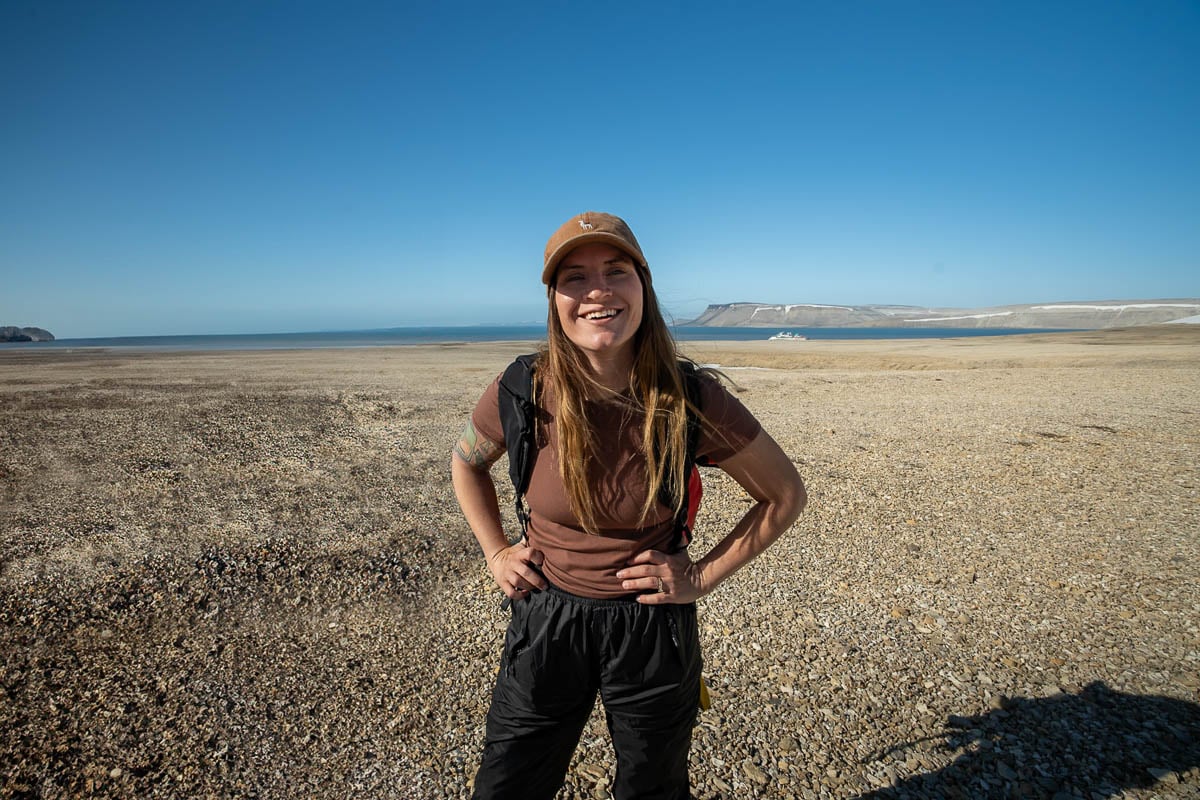
During these landings, guests selected which of three walking groups they wanted to join—long, medium, and “contemplative”. We generally joined the long walkers group, which typically hiked at a decent clip and sometimes walked pretty far—we walked over five miles during one landing!
On our very last landing of the trip, we joined the medium group instead and MUCH preferred the pace, given that we take a lot of photos and videos for our job. So, if you’re a big photographer, maybe consider going on the medium (or even contemplative!) walk.
In any event, it’s great that Aurora offers options for guests of all fitness levels.
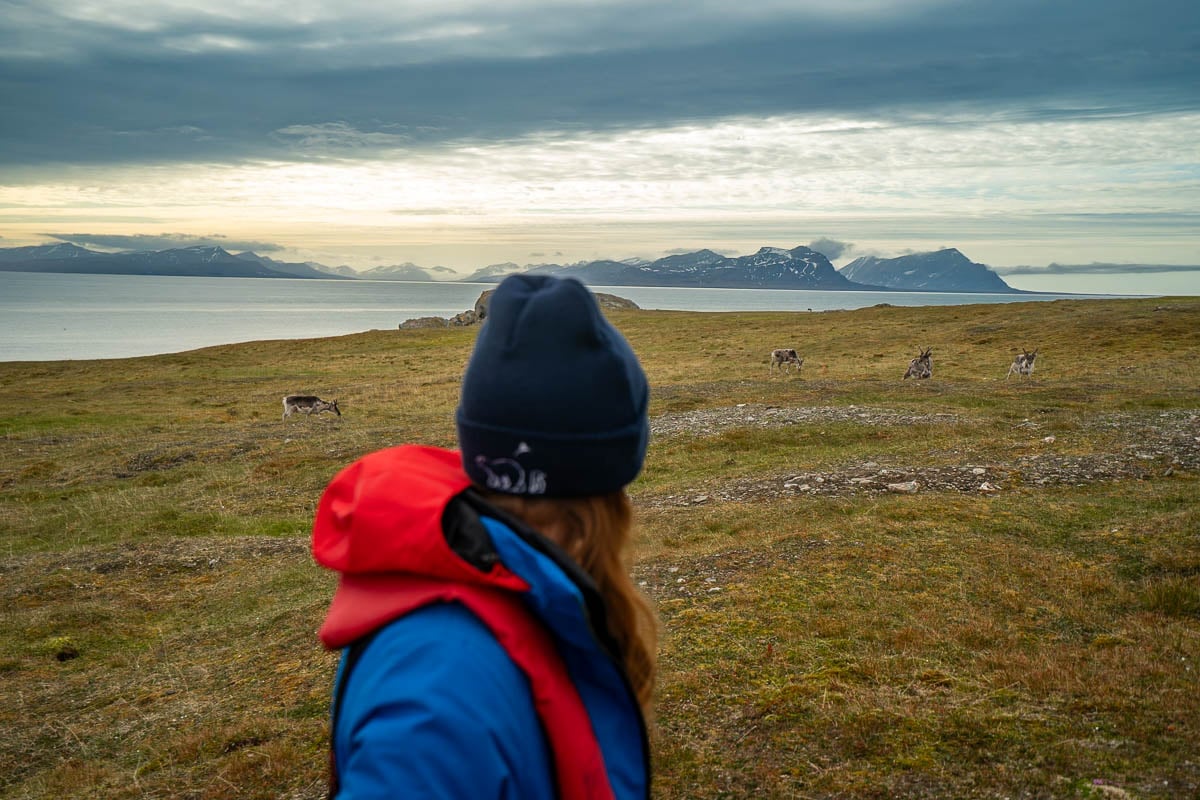
It’s worth mentioning that this trip is pretty physical—getting into and out of Zodiac boats, bouncing around and twisting on the boats to see and photograph wildlife, and walking on rocky and uneven terrain.
You definitely don’t have to be an Olympian or in tip top shape to do this expedition (the aforementioned 88 year old had an absolute BLAST!), but you should be aware of any physical limitations you might have and consult with Aurora to see if it will impact your ability to participate.
Other types of activities
Most of our daily expeditions were Zodiac cruises or landings, but we did have a few outliers, such as the two days that we sailed up to the pack ice above the 80th parallel, where the Arctic Ocean basically becomes nothing but sea ice for hundreds of miles up to the North Pole. This was definitely our favorite thing we did while onboard the Sylvia Earle, even though the “activity” just consisted of standing on the observation deck and keeping a lookout for bears.
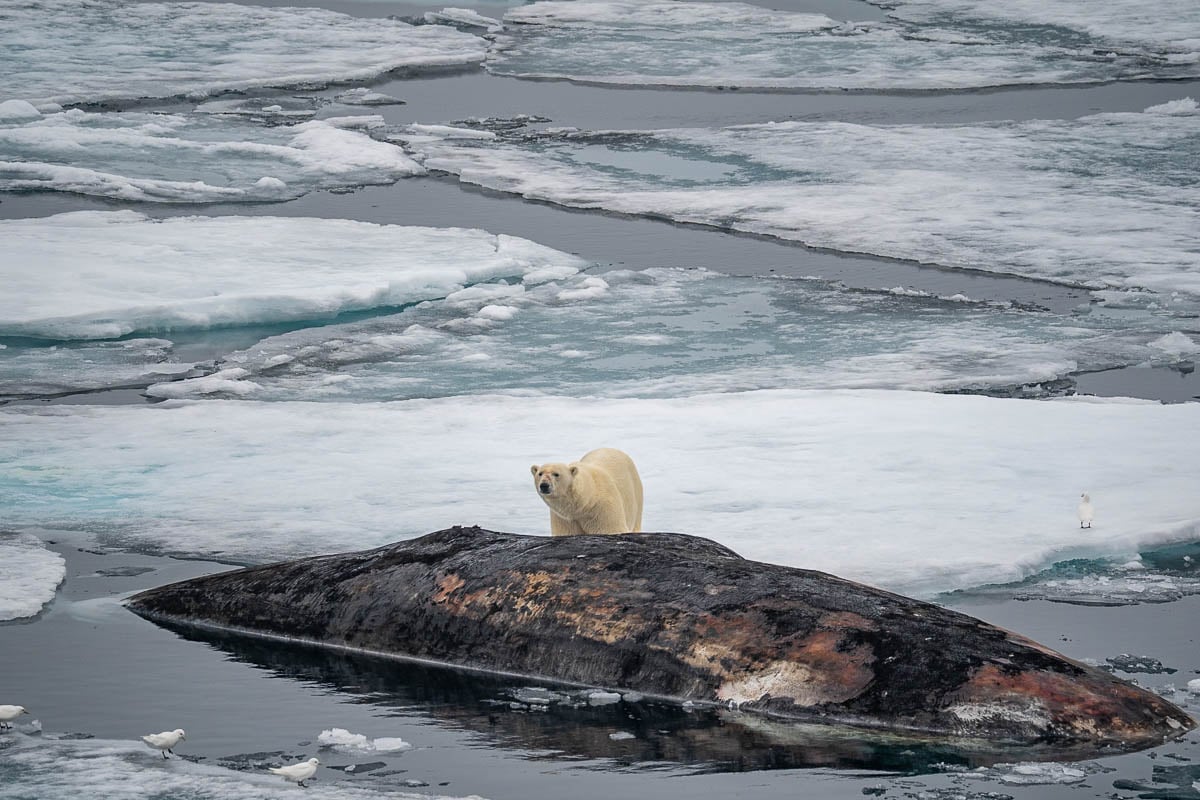
While this may theoretically sound not the most engaging, over the course of our two days here, we saw scenes that felt straight out of a David Attenborough documentary, with four polar bears hunting from an icefield full of THOUSANDS of harp seals or multiple bears fighting over the carcass of a sperm whale amongst massive pieces of swaying sea ice. Just a totally wild experience that’s unlike anything we’ve ever previously witnessed (or are likely to witness again)!
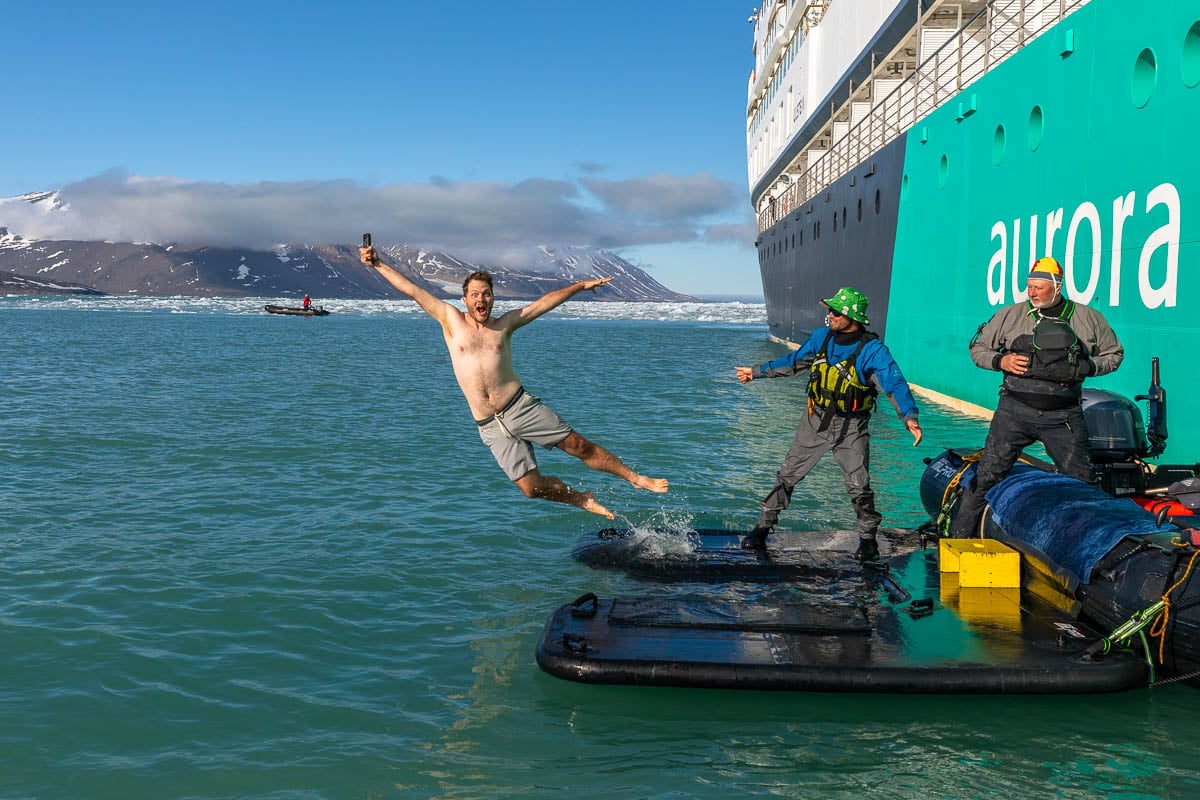
And, like any good Arctic adventure, there was the polar plunge for the hardy and brave (or, if you’re like us, those that have a chronic case of FOMO).
Expedition gear
Aurora provides a complimentary parka, with an inner puffy jacket and outer waterproof shell, as well as the use of insulated muck boots while you’re onboard. If the sizes that you order ahead of time don’t fit for whatever reason, the expedition staff are happy to help you find the right size of gear.
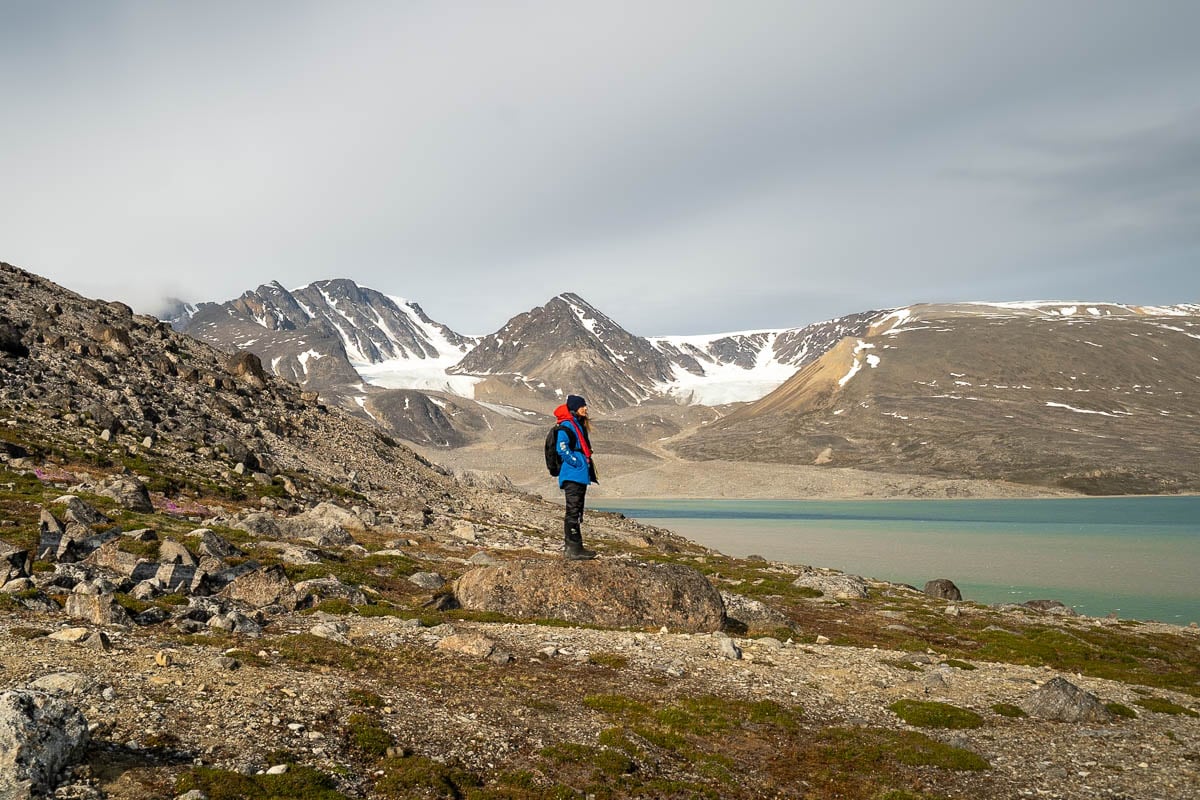
Some expedition cruise companies actually make you rent or separately purchase this kind of gear, so it’s really nice that these are included in your cruise fare and that you have the ability to swap sizes onboard if necessary.
Pssst... if you're not sure what to bring for your trip, be sure to check out our complete Svalbard cruise packing list, with everything that you need to take with you and what you should leave at home.
Kayaking program
In addition to the included onboard activities, guests also have the option to sign up for an incremental fee for a kayaking program, where passengers get to go out and kayak during pretty much every expedition, so long as weather and wildlife conditions allow (e.g., you cannot kayak if there are polar bears or walruses around).
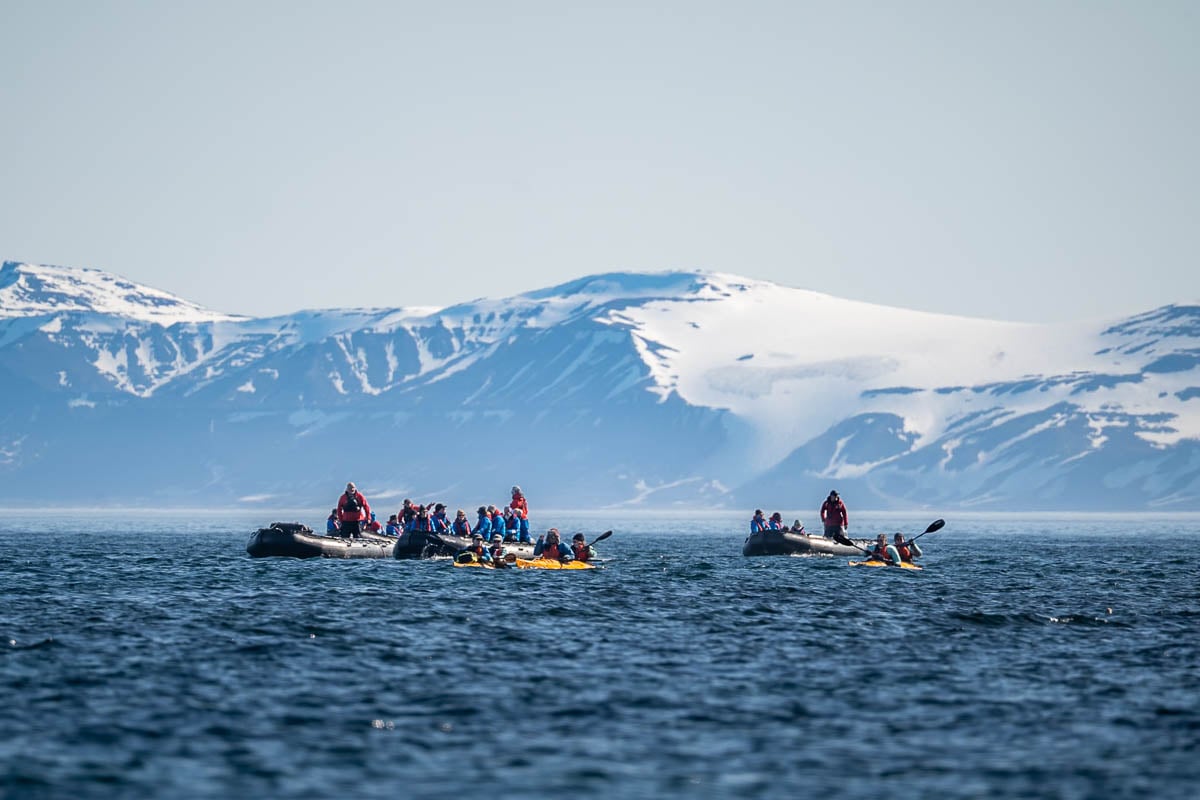
To be honest, I wish there was an option where people could choose to add on just one kayaking outing (I like kayaking, but not THAT much!), but it seems like a great fit for people who are REALLY into paddling.
We made friends on the cruise who were part of the kayakers and LOVED it—they said the experience was much more immersive and they enjoyed the tightknit community the kayakers formed on the trip.
Guests
Given that you’re stuck on a ship for two weeks with a small group of people, the overall vibe and demeanor of the other guests can definitely impact your experience.
Generally, we LOVED the other guests on Aurora, which were primarily older couples, but also a handful of solo travelers and younger families and couples mixed in.
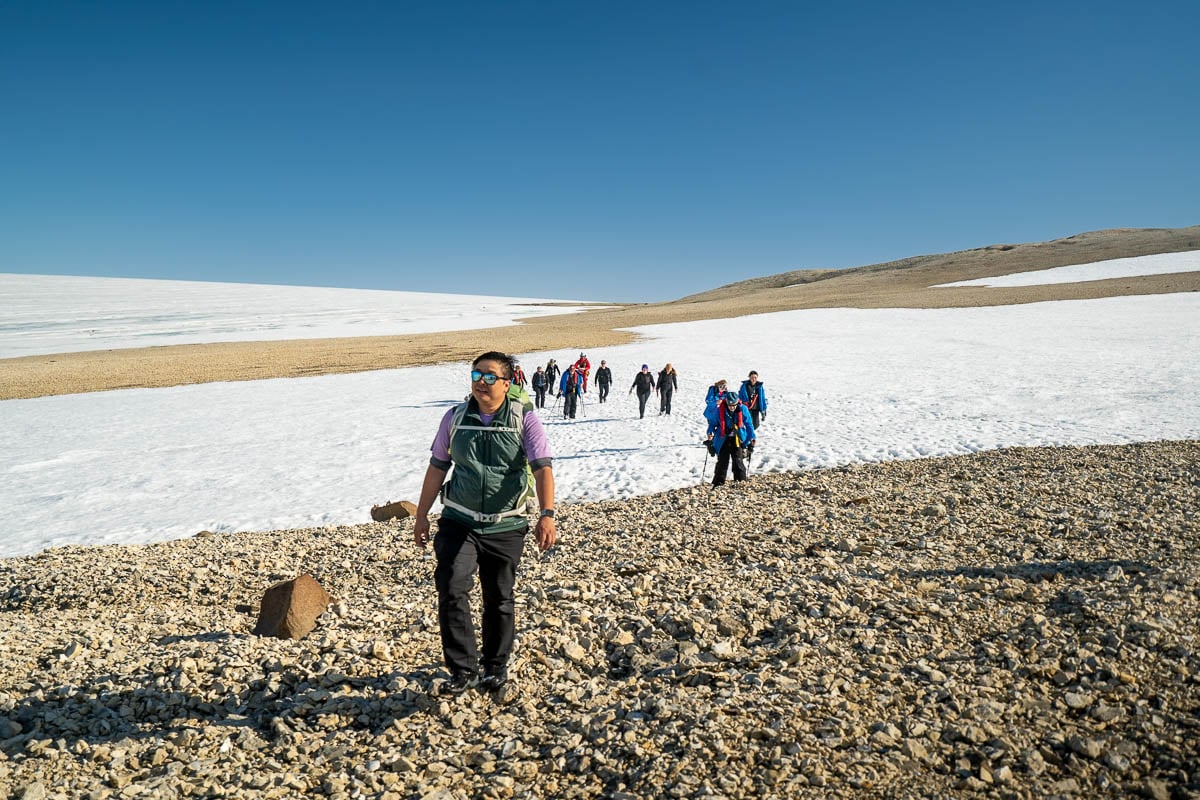
They honestly kind of mirrored the vibe of many Australians we meet along our travels (and, perhaps, that’s because a healthy percentage of the passengers onboard were Australian)—the perfect mix of adventurous and inquisitive, while still being laidback.
For example, when we couldn’t go out on the aforementioned foggy days, no one had a hissy fit or a meltdown. Instead, people showed up to the scientific lectures, excited to learn about Svalbard and its unique ecosystems from our expedition guides, and happily chatted over afternoon cookies and tea. And no one complained when a bit of water splashed into our Zodiac on a particularly choppy day and, rather, cracked jokes with the driver about it. Everyone just seemed to be down for the *adventure* of it all.
We have been on a few cruises that have billed themselves on the more luxurious side of things, which, for better or worse, largely attracts a clientele that expects a totally seamless experience from start to finish. There’s nothing seamless about Arctic expeditions, so being surrounded by other guests who can roll with the punches makes the experience much more enjoyable.
Another thing that stuck out to me was the sheer number of repeat customers that were on Aurora—well over half of our boat had sailed with them in the past (which is WAY more than any other operator we’ve done in the past). So it’s clear that Aurora attracts and retains a certain clientele, which helps maintain the adventurous, flexible vibes that we enjoyed so much.
Onboard the Sylvia Earle
Okay, turning now to our onboard experience.
The Sylvia Earle is a 342 foot expedition ship that’s the second newest in Aurora’s lineup, with sleek chandeliers, tons of huge, airy windows, and a modern interior that’s nautical-themed.
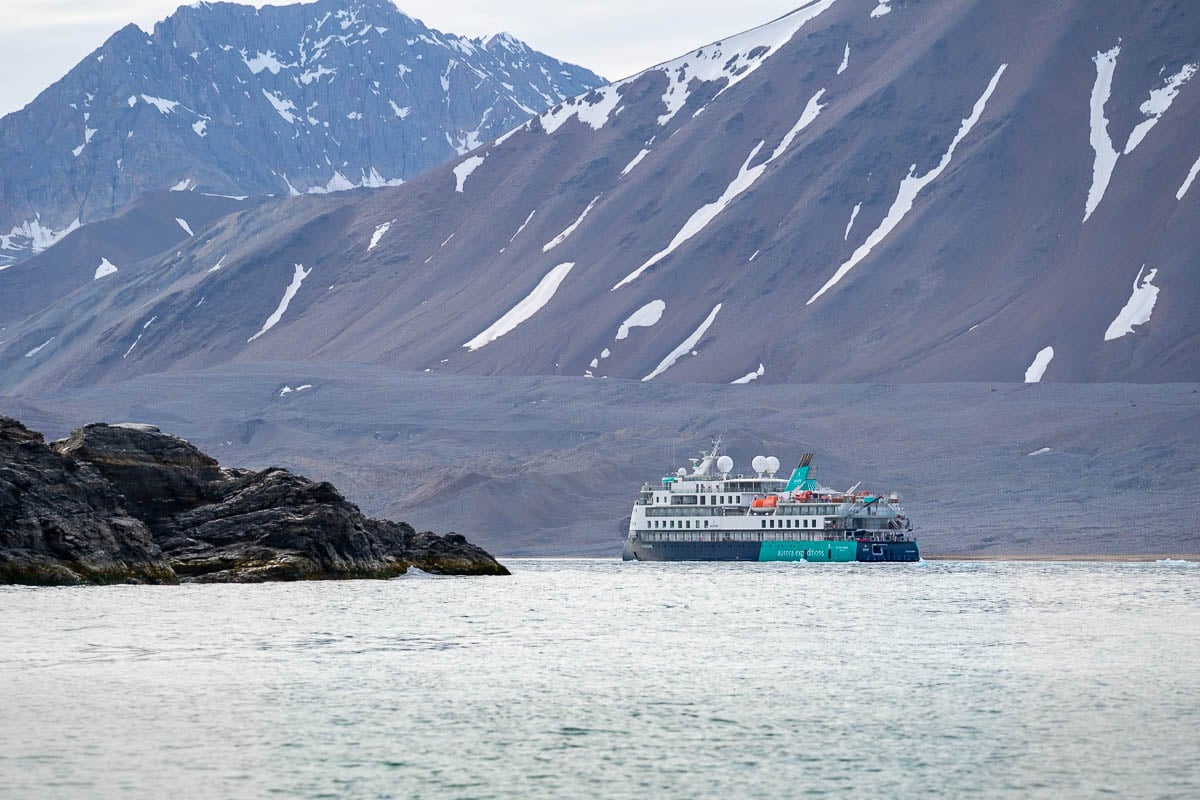
The ship’s walls are adorned with stunning photographs of wildlife and landscapes, but my favorite inclusions are those that highlight important women in science and conservation.
The ship itself is, of course, named after Sylvia Earle, who is the leading marine biologist and oceanographer of our time. But, beyond that, each deck is dedicated to and features photos of an important woman to the exploration or protection of our oceans, like the marine biologist, Dr. Asha de Vos, or conservationist, Dr. Carden Wallace AM.
The cabins
The Sylvia Earle offers a wide variety of cabins, ranging from those purpose-built for solo travelers to triple shares and the “Captain Suites.” All of the cabins are pretty spacious, with the most economical being 180 square feet, ranging all the way up to 437 square feet, complete with a massive balcony, double sinks, and separate lounge area. There’s also a selection of wheelchair accessible and adjoining cabins.
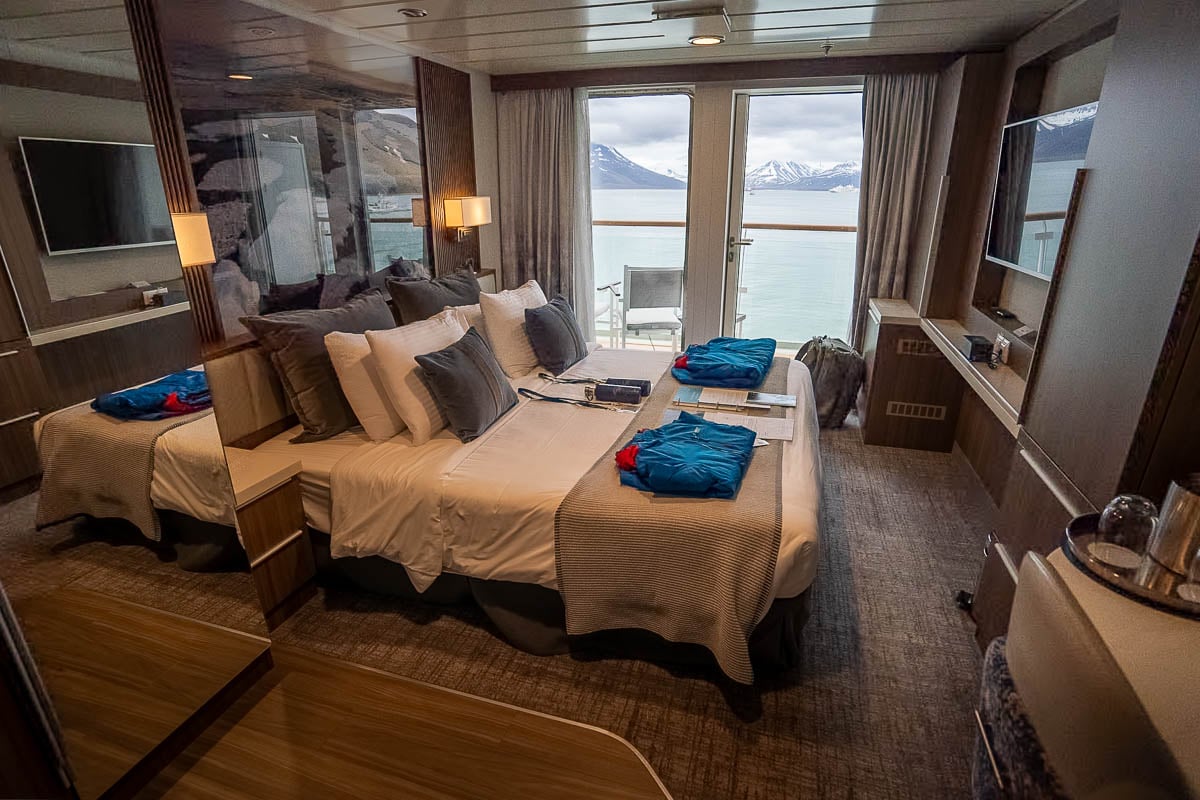
We were in the Balcony Stateroom Category C, the most economical option that fits up to two people. Even with this option, the room was plenty spacious, with plush carpeting, room-controlled thermostat AND heated bathroom floors, and, best of all, our own private balcony (actually, all rooms, except for the two triple cabins, come with a private balcony!). There was plenty of storage space and there were several thoughtful touches, like universal electrical outlets and an insulated reusable water bottle.
The bathroom was on the smaller side, but had everything we needed, including a HOT shower with awesome pressure and a clothesline to dry our clothes (always a nice touch, in our opinion!).
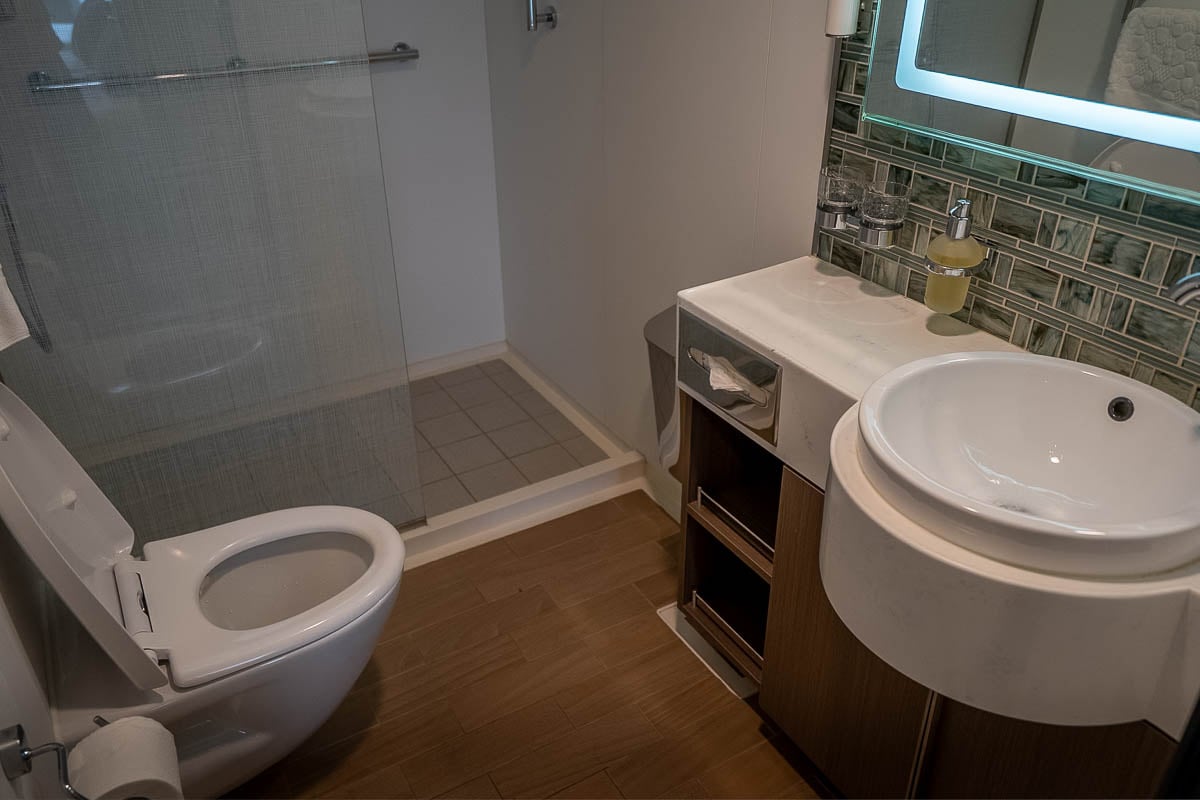
We were overall really impressed by the cabins, although we had a few nitpicky things we wish we could change.
The black out curtains on the balcony did not totally reach the floor, meaning that darn Midnight Sun seeped in (we just used the excess pillows to block out the light) and, as mentioned above, the movies on the onboard entertainment system could perhaps use a refresh. Still, you’re not really onboard to catch up with Hollywood’s latest offerings anyway, right?!
Dining rooms, food and drink
The Sylvia Earle has two onboard dining rooms—the Gentoo, the larger option that primarily has large tables to encourage guest interactions, and the Rockhopper, a smaller specialty offering.
In Gentoo, breakfasts and lunches are typically served buffet style, with both cold and hot stations offering a mix of Western classics and international fare. A three course a la carte dinner is served here every evening as well, which typically includes more upscale offerings than the other two meals.
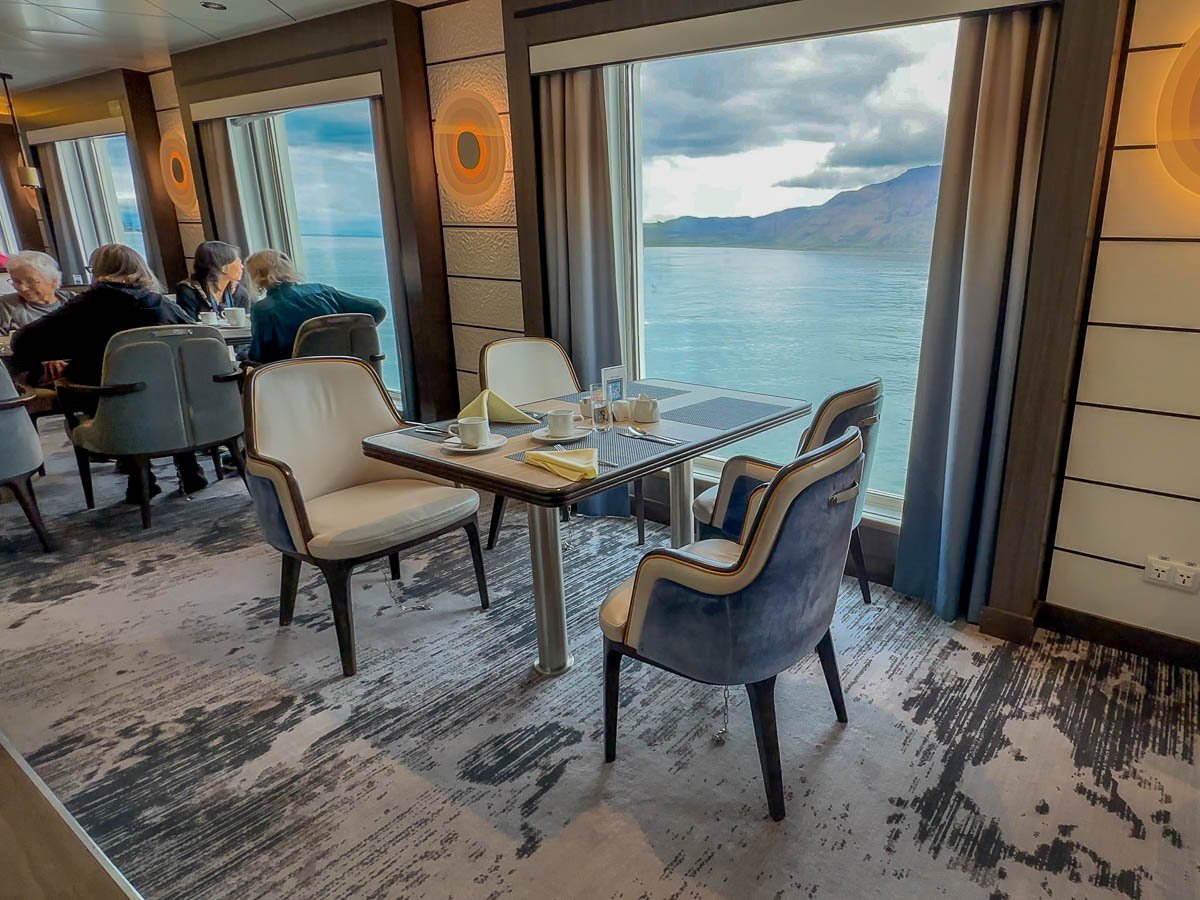
All meals at the Rockhopper are served a la carte, with the restaurant turning into an included but reservations-only steakhouse in the evenings.
The food was generally good, but, amidst an extraordinary voyage in basically every aspect, this was probably be the weakest part of our personal experience on the Sylvia Earle.
That being said, the last day we were onboard, we learned that the ship (and all of the other ships in Svalbard) had reportedly only received 10% of the provisions it had ordered before our sailing, due to food not being properly delivered to the archipelago. So, I’m not sure that our dining experience was representative of what you can usually expect.
With that context in mind, I’m super impressed by the wide array of dishes they were able to offer at each meal.
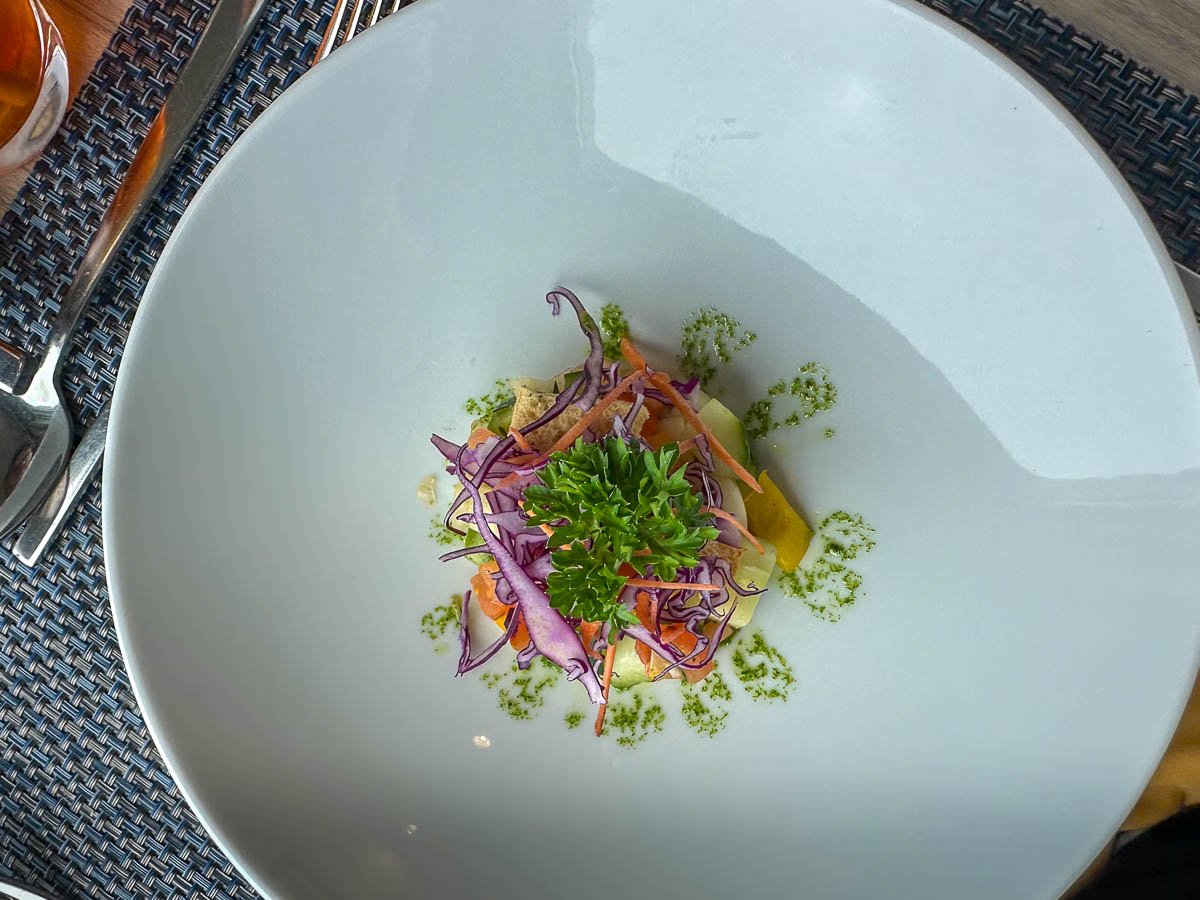
House beer and wine are included with dinner, but otherwise, all other alcoholic beverages cost extra.
However, the two bars that are onboard, the Tektite Bar and the Observation Bar, provide a pretty extensive wine and cocktail menu at extremely reasonable prices (usually under $8 USD per drink, which is an absolute steal nowadays). There’s also a daily happy hour before the nightly recap and briefing, where you can get the featured drink of the day for just $6 USD.
At first, I was a bit disappointed that alcoholic beverages outside of the offerings with dinner were not included, but the servers at dinner definitely are quick to refill your wine glass and, to be honest, our 30-something year old bodies can really only handle a couple of glasses of wine per night anyway.
It might be a bigger deal if you were on a voyage where you spent a TON of time lounging around onboard, but that really isn’t the case with most of Aurora’s cruises.
Other areas of the Sylvia Earle
There are tons of public areas on the ship for people to meet and socialize.
Every night, there’s a recap of our day’s adventures and a briefing for the following day in the lecture hall, which offers a variety of tables, couches, chairs, huge windows, and TV screens with cool, interactive features. The lounge-like seating made these daily recaps and briefings feel much more social and interactive, instead of being in a more traditional lecture theater. And, even more importantly, this area features an on-demand coffee machine, hot chocolate dispenser, and bottomless jars of cookies.
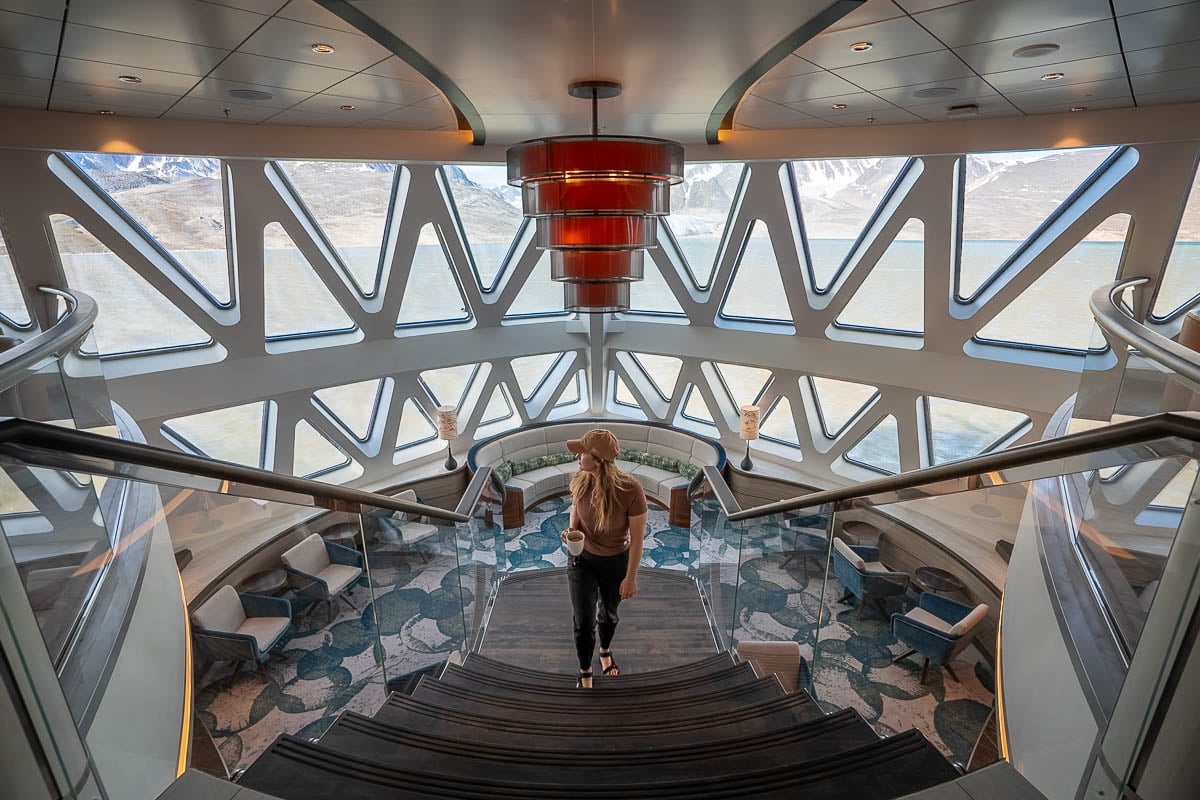
There’s also a science center, with the aforementioned microscopes, and a library with a variety of different desks, chairs, and couches to choose from. Justin and I had to work onboard quite a bit and LOVED the library’s enormous triangular shaped windows—it makes the ship feel like a work of art!
The observation lounge on the top deck offers a bar, panoramic windows, and lots of cushy seats to choose from. It seems like most guests that had the energy to stay up past dinner generally hung out here, playing board games or chatting over a glass of wine.
Amenities
For a company that does not bill itself as a luxury operator, the Sylvia Earle has some BOUGIE amenities, including:
- Two infinity hot tubs
- Heated salt water pool
- Sauna (with a BEAUTIFUL panoramic window)
- Spacious fitness center
- Wellness center that offers massages and facials
- Doctor’s office, which is generally complimentary (Justin injured his foot while onboard and the onboard physician was super nice!)
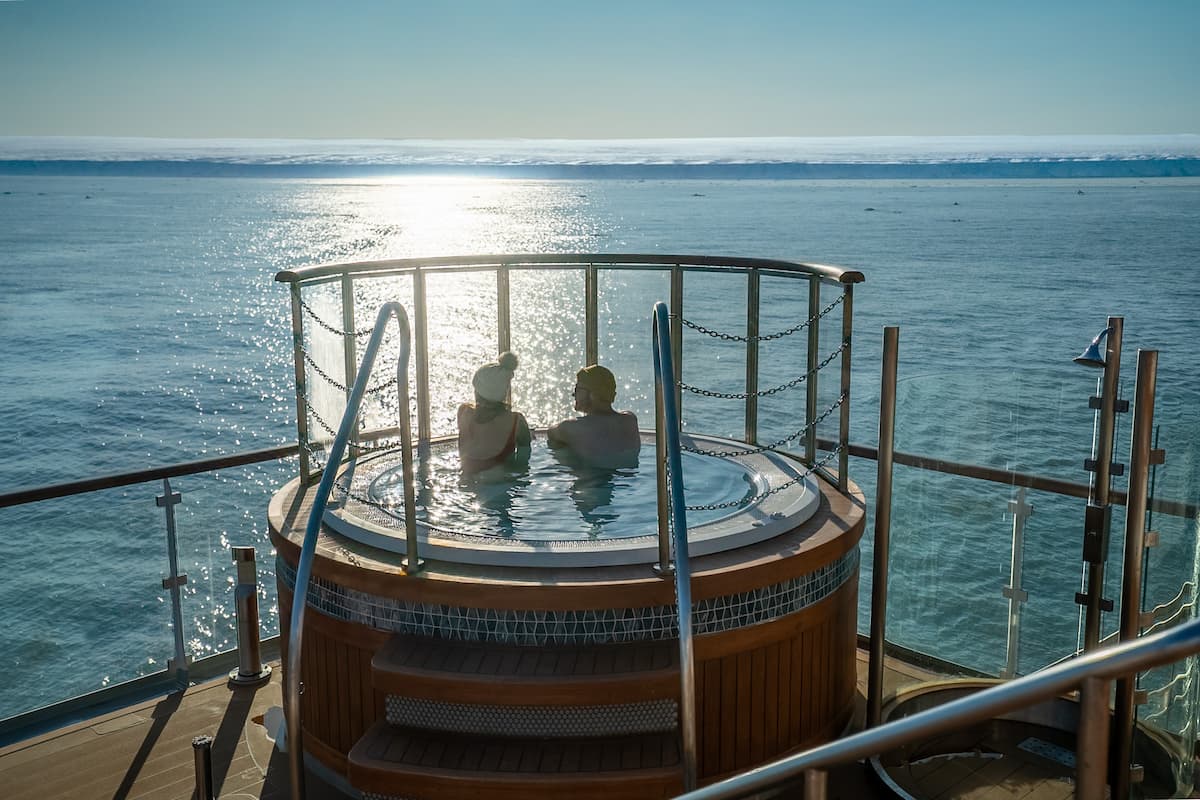
I honestly can’t think of anything else that would make the public spaces of the ship feel more comfortable or luxurious—it really has everything you need for a killer Arctic expedition!
Service
The onboard staff was definitely one of the many highlights of our time onboard the Sylvia Earle. Most of the staff had learned our names by the second or third day and even took note of our behaviors and preferences (like Justin pounding a ridiculous amount of iced tea during lunchtime or the fact that we lined the bottom of our balcony door with our extra pillows every night).
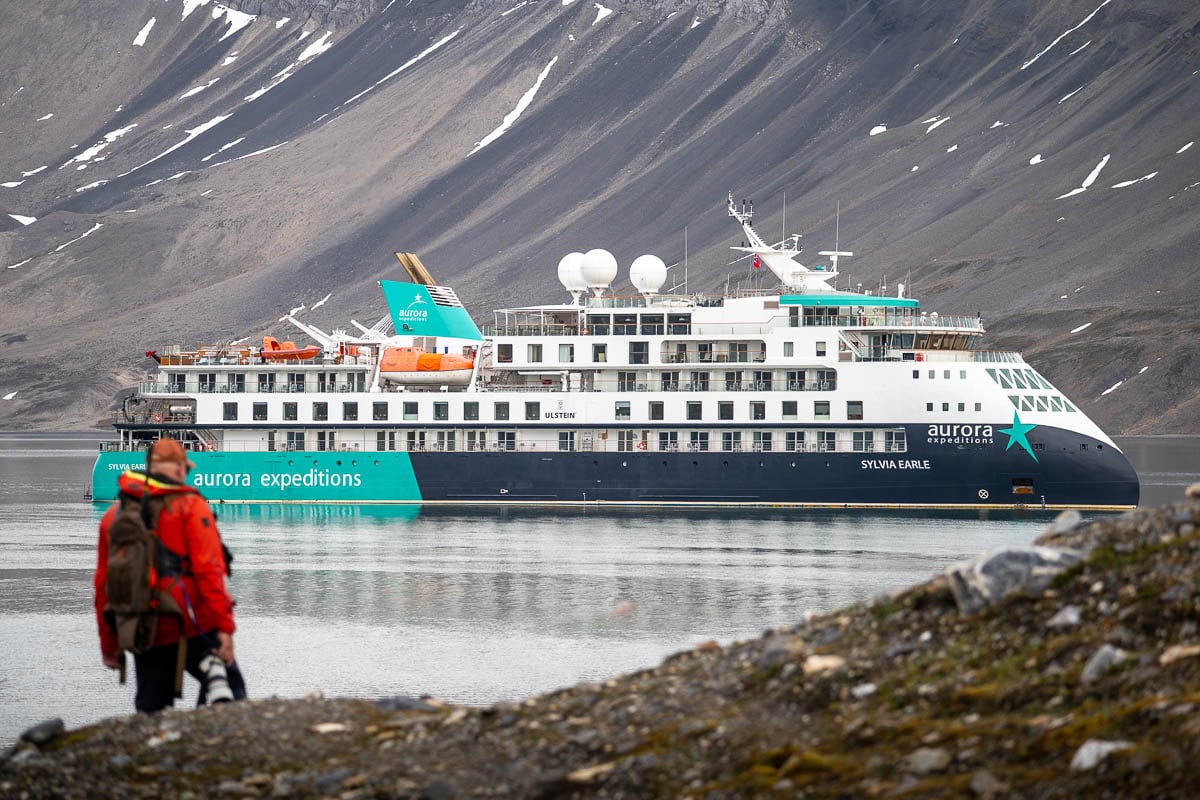
The service definitely feels more aligned with what you’d expect on a luxury cruise operator, as compared to a more expedition-focused company.
Entertainment
Like most expedition cruise operators, Aurora doesn’t offer much by way of nightly entertainment—there’s no pianist or any other kind of musical act.
We were always so pooped by the end of the day that we didn’t care AT ALL about this aspect, but it is something to be aware of if you’ve previously cruised on giant ships and have come to expect onboard Broadway musicals or Cirque du Soleil-esque performances.
Most of the onboard activities consisted of lectures by the expedition staff, which covered the history or geology of Svalbard or took a deeper dive into different Arctic wildlife we had observed that day. I really enjoyed these offerings—many of the expedition staff included personal anecdotes (like how one guide’s uncle was a trapper in remote parts of Greenland!) or photos and videos that they had personally taken on their Arctic adventures.
Other than lectures, there are also some more *fun* events onboard, like an outdoor barbecue, complete with mulled wine, 80s dance music, and silly hats, and a party to cheer on the polar plungers (if you’re not one of the brave souls making the leap into the water!).
Wi-Fi
As people who run multiple online businesses, we were a bit worried about being on a ship in the Arctic Ocean for two weeks.
Turns out, we didn’t have much to be worried about!
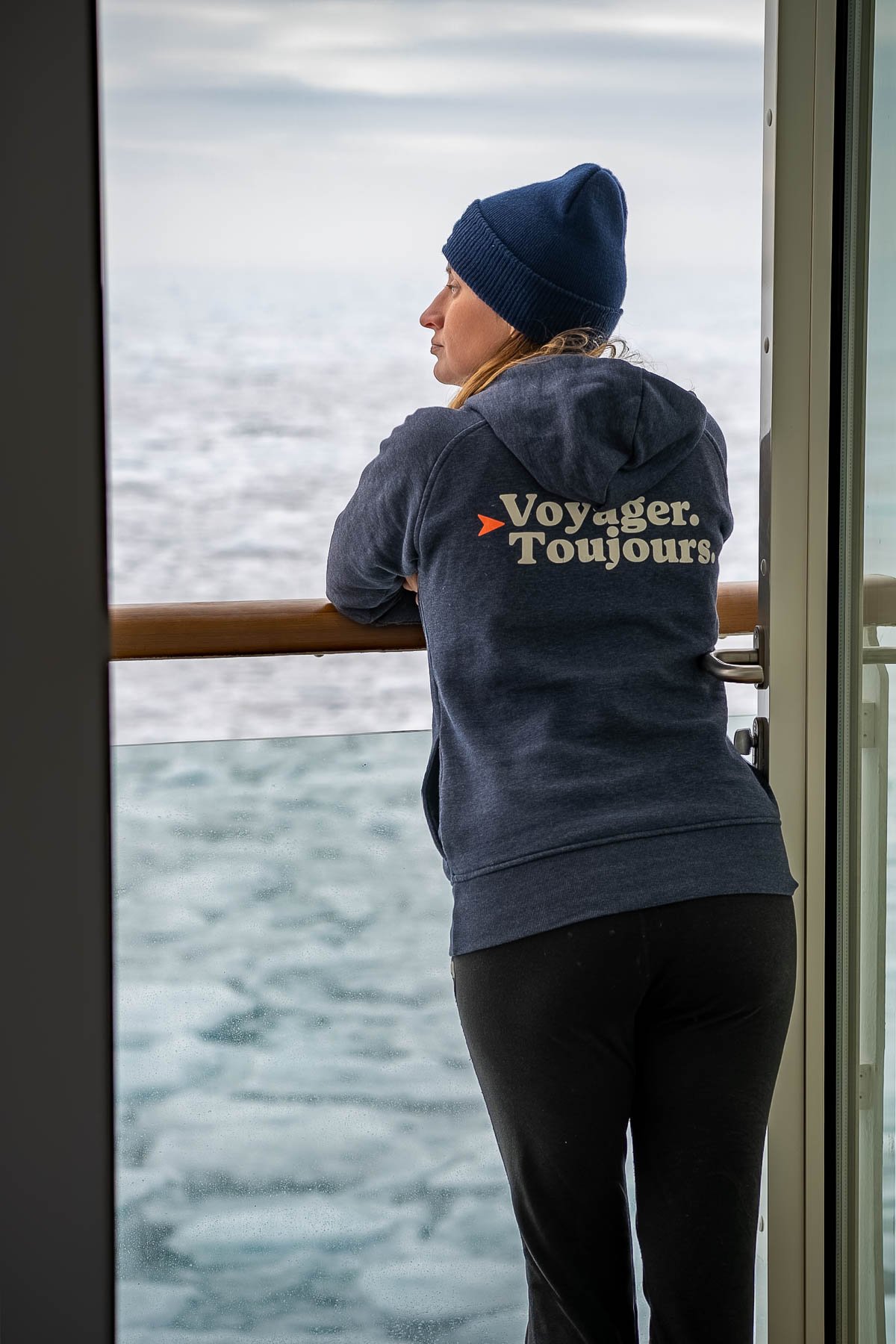
All passengers are provided complimentary Starlink Wi-Fi that’s sufficient to check email, peruse social media, and do lightweight uploads and downloads. That being said, I wouldn’t schedule any super important Zoom meetings or intense gaming sessions—the service was definitely on the slower side, especially around times when lots of passengers were using their devices.
Considering the fact the internet was complimentary and the sheer remoteness of our expedition, I found the Wi-Fi to be impressive and more than sufficient to meet most passengers’ needs while onboard.
Would we recommend Aurora Expeditions Svalbard Cruises?
If it wasn’t obvious already, YES, we’d absolutely recommend taking a Svalbard cruise with Aurora Expeditions. They’ve fine-tuned offering adventurous cruises for travelers that truly want to dive in and explore the Arctic, all while having an extremely comfortable onboard experience.
Pssst... if you have any questions about Aurora's itineraries, please reach out to reservations@auroraexpeditions.com.au and use the referral code "JUSTIN&JESS"!
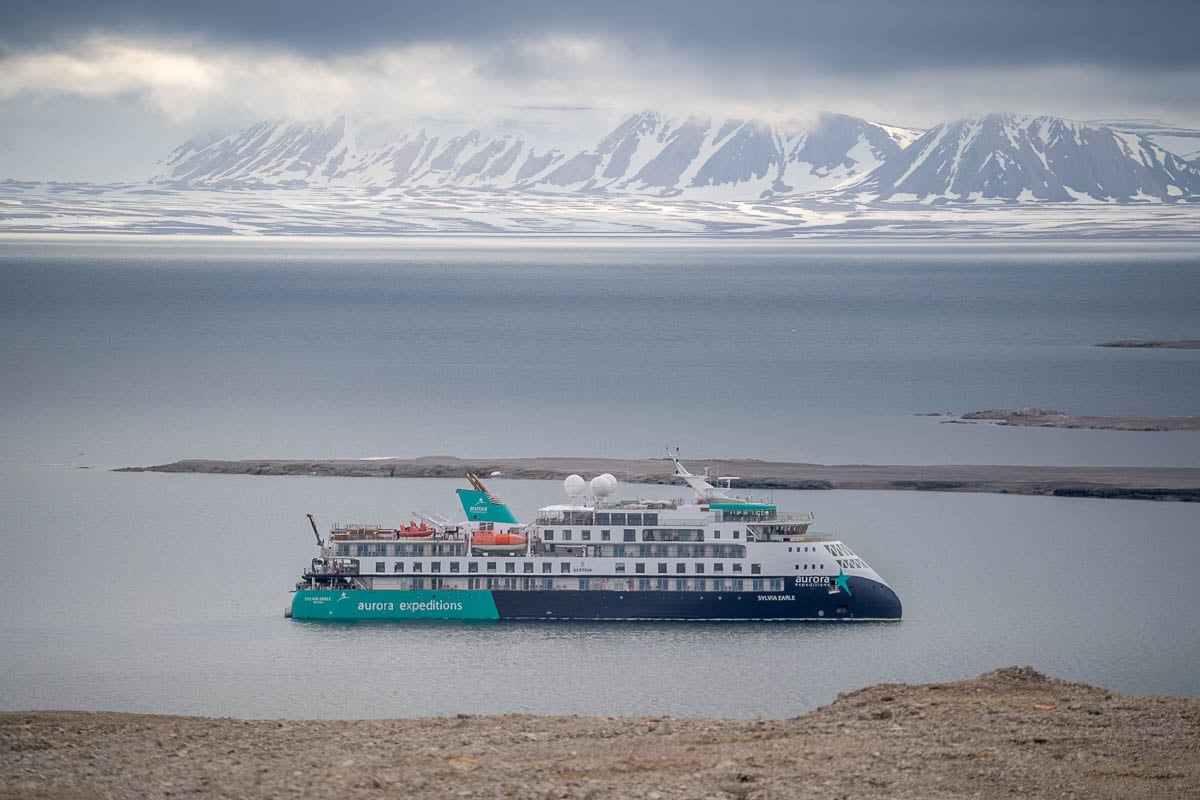
The only kind of traveler that I can imagine not vibing with Aurora’s offerings are those that are expecting an ultra-luxe experience, like 24/7 room service, onboard butlers, and nightly entertainment.
If that’s your primary objective, I’d actually suggest skipping Svalbard altogether (I can’t readily find any operators that bills itself as a luxury cruiseline with Svalbard itineraries I’d recommend) and, instead, sailing around someplace like Iceland with an operator, like Silverseas or Scenic. But you’d definitely be missing out on this incredibly special corner of the planet!
Do you have any questions about our time aboard the Sylvia Earle, exploring Svalbard, or Aurora Expeditions as a whole? Let us know in the comments below!
Thank you for reading our post! Check out our latest stories here and follow us on Instagram (@JustinAndJess_), YouTube, TikTok, or on Facebook to see what we’re up to next!
All wildlife photos in this post were taken with a 400mm lens and cropped in post-production. All wildlife were observed in accordance with applicable regulations to protect us and the animals.
