

Día de Muertos, or Day of the Dead, is one of the most beloved holidays in Mexico, where family and friends honor loved ones that have passed. A handful of cities in Mexico have become well-known for their elaborate Day of the Dead celebrations, especially the beautiful city of Oaxaca in southern Mexico. If you’re interested in observing this incredibly spiritual and moving festivity, here’s everything you need to know about visiting Oaxaca for Day of the Dead.
This post may contain affiliate links. If you make a purchase through them, we may receive a small commission, for which we are extremely grateful, at no extra cost to you.

What is Día de Muertos or the Day of the Dead?
Many people mistakenly believe that Día de Muertos is some kind of Latin American version of Halloween, with spooky skulls, ghouls, and goblins.
This is definitely incorrect— rather, Día de Muertos (also called Día de los Muertos in other Latin American countries) is a holiday that’s traditionally celebrated on November 1 and 2 that’s dedicated to remembering and celebrating your loved ones that have passed on. It’s actually believed that, at midnight on November 1, the veil between the living and the dead temporarily lifts, allowing the souls of the dead to rejoin Earth for a short period of time, to dance, drink, and be with their loved ones once again.
Academics still argue about the origins of Día de Muertos, but many believe that it’s a fusion of an Aztec tradition of a month-long celebration of the goddess of death, Mictecacihuatl, with the Catholic tradition of All Saints’ and All Souls’ Day, after the Spanish’s conquest of Mexico in the early 1500s.
Regardless of its true origins, Día de Muertos generally paints death in a more reverent and celebratory tone, as opposed to something that’s purely somber, with people remembering goofy anecdotes or traits of their deceased friends and family. As a white lady from the United States, it was definitely interesting to visit a graveyard on Día de Muertos and see a full-blown karaoke party happening on someone’s grave—not something we see back at home, that’s for sure!
When to visit Oaxaca for the Day of the Dead
As mentioned above, Día de Muertos falls on November 1 and 2—it is believed that the souls of deceased children can rejoin the physical world once it strikes midnight on November 1 and adults on the following evening.

However, many of the celebrations actually happen in the week leading up to November 1, with Oaxaca’s Magna Comprasa (or Grand Parade) officially kicking off the festivities. The date of the Magna Comprasa changes every year, but, for the past few years, it’s been on October 30th. While the Magna Comprasa is one of the largest Día de Muertos parades, there will be small parades and celebrations throughout the city, starting around October 28th or so.
Accordingly, if you want to experience all of the events related to Día de Muertos, I’d suggest planning your stay between October 28 and November 2.
Is it ethical to celebrate Day of the Dead in Oaxaca?
I try as best as I can to be a responsible traveler and, accordingly, think about things like cultural appropriation and whether it’s appropriate to observe and celebrate holidays that are outside of my culture, like Day of the Dead.
From our experience chatting with locals here, they actually love when visitors participate in festivities—our favorite night during the Day of the Dead celebration was walking with one of the smaller, local comprasas, dancing with total strangers as they poured mezcal and homemade liquors into our mouths.
What they do not love, however, is people who are straight-up disrespectful of the holiday—who treat it as Halloween or just as an excuse to get super wasted.
Remember to have common courtesy when attending Día de Muertos events. While there is definitely a party aspect to some parts of Día de Muertos, there are also people who are still dealing with grief and the loss of their loved ones. Be respectful while taking photos and pay attention to how locals around you are acting—there are times where it’s appropriate to be drinking and dancing and others where it definitely is not.
With that context in mind, it’s important to note that I’m just a gringa from the U.S., so I’d recommend chatting directly with locals, hearing their first-hand perspective, and forming your own opinion about your participation and behavior here.
Wearing Día de Muertos makeup
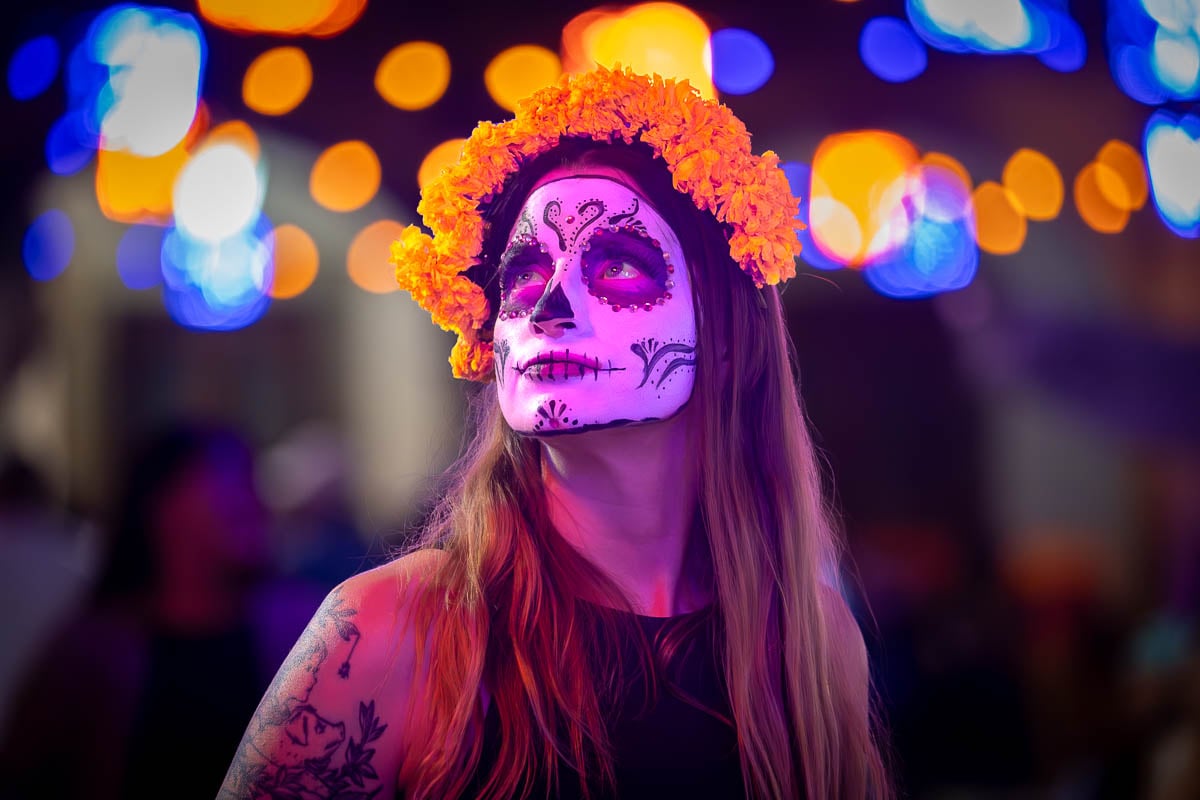
The iconic Día de Muertos make-up is actually called La Calavera Catrina (which translates to “the dapper skull”). It originated in the early 20th century to mock wealthy indigenous people that were adopting European customs and abandoning their traditional ways of life. Over time, the famous skull imagery became associated with Día de Muertos, with the idea that death is democratic and happens to us all, regardless of whether we’re rich or poor.
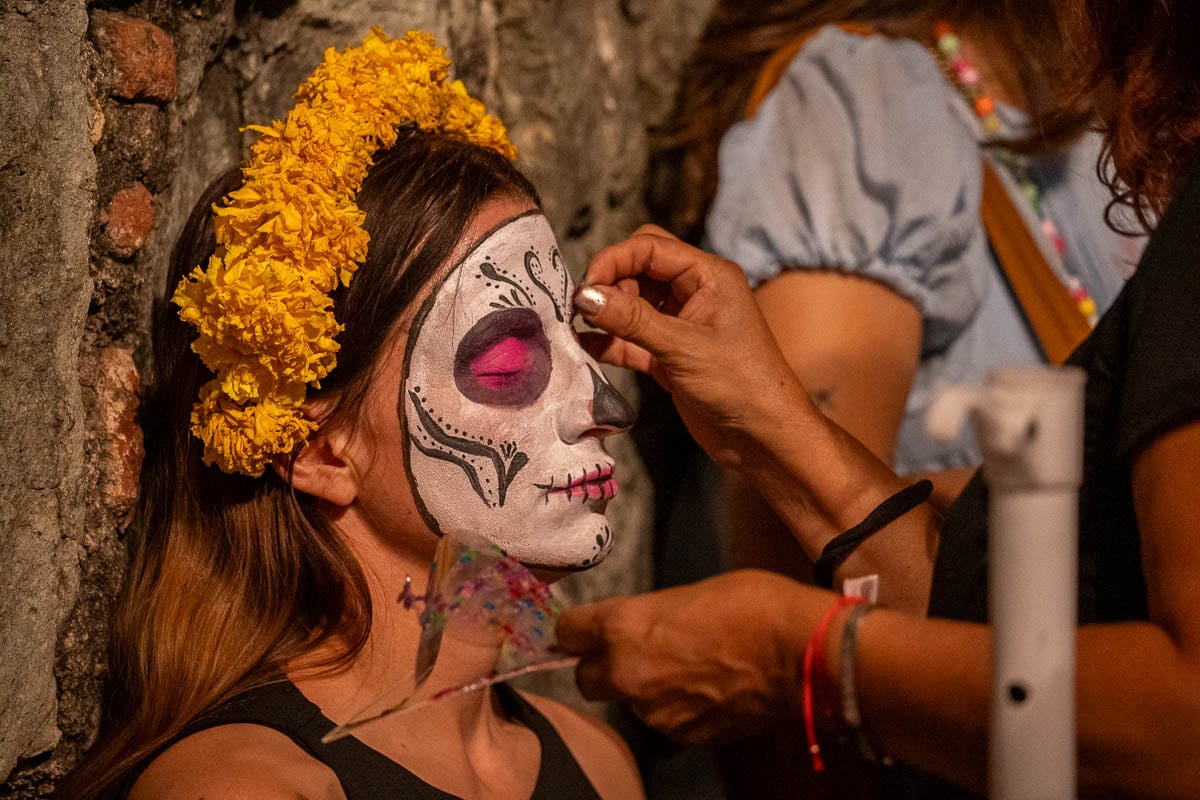
Now, during Día de Muertos in Oaxaca, you’ll find stalls all over the city offering services to paint your face. In our experience, visitors are encouraged to paint their faces for Día de Muertos, just as they’re encouraged to dance in comprasas or visit cemeteries.
On November 1, I got my face painted right outside of the Zócalo de la Ciudad de Oaxaca (i.e., the busiest and most touristy part of the city), which cost about $10 USD. It was REALLY fun to participate in Día de Muertos activities with the traditional makeup on–it definitely helps in getting into the festive spirit!
Things to do in Oaxaca for the Day of the Dead
Okay, so you’re in Oaxaca for Día de Muertos—what is there to do exactly?
1. Attend a comprasa
As mentioned above, one of the most popular ways that Oaxacans celebrate Día de Muertos is with comprasas, which can range from one small marching band to hundreds of musicians, dancers, mojigangas (large paper mache puppets), floats, and small-scale (questionably safe) fireworks. As the parade walks by, onlookers are often encouraged to join in with the marchers, dancing your way through the streets of Oaxaca.
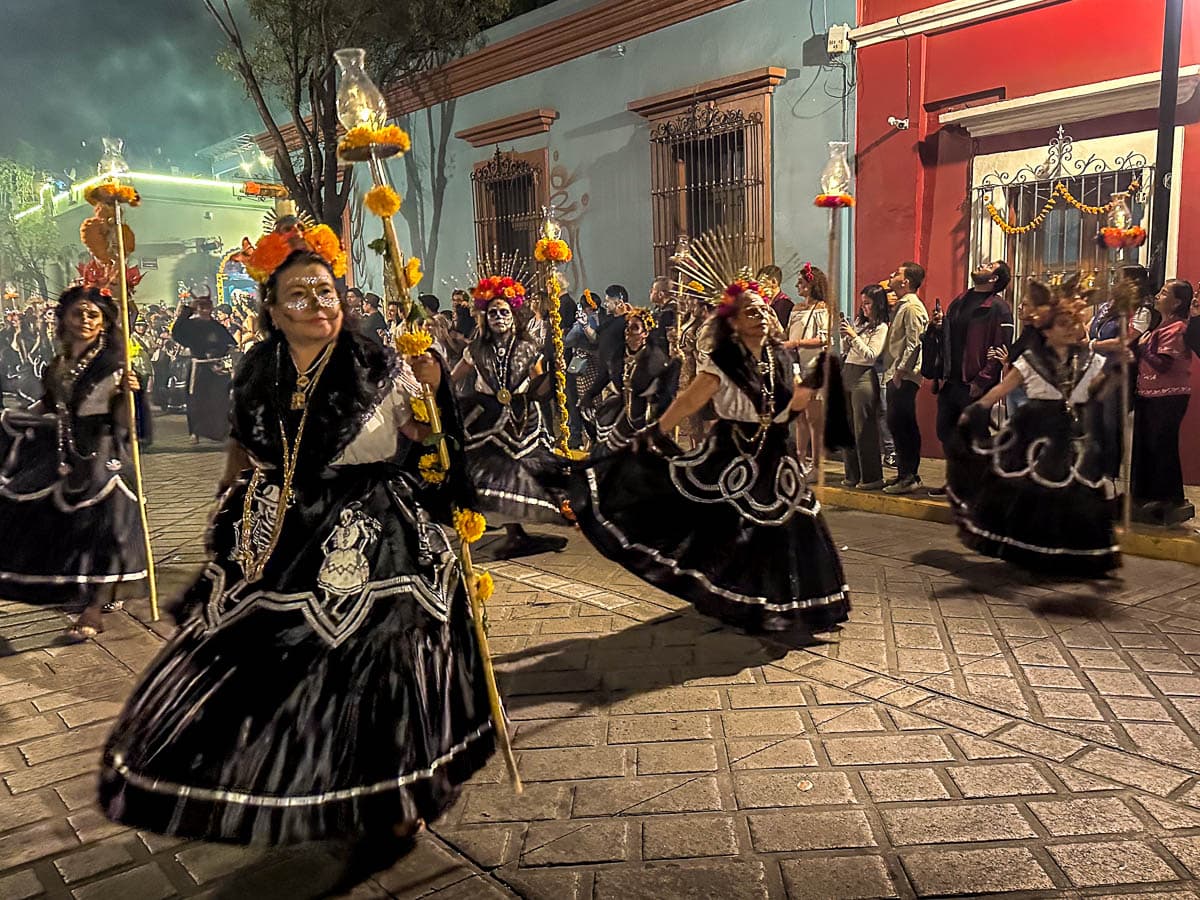
The Magna Comprasa is the largest of the parades, to kick off the Día de Muertos festivities, and has the most elaborate mojigangas, costumes, and performances. It’s also a great example of how Día de Muertos is not just a familiar event, but also a communal one—everyone, young and old, rich and poor, come together in the city for this unique celebration of life and death.
If you happen to miss the Grand Comprasa, though, not to worry—there’s parades that happen every evening, from around October 28 through November 2.

As popular as visiting Oaxaca for Día de Muertos is, there’s unfortunately no public website that reliably publishes a schedule of the various parades ahead of time. When we visited Oaxaca, there were schedules for the main parades and performances in the city displayed in the arrivals hall at the airport and on billboards around the city, but, if you want to plan ahead, I’d suggest keeping an eye on the Oaxaca Events website.
Otherwise, I’d suggest just planning on being out and about in the Centro neighborhood in the evenings, from October 30th through November 2. It would be impossible for you not to run into a parade!
2. Explore the Centro neighborhood
Decorations play a significant role in Día de Muertos and Centro Histórico, the historical center of Oaxaca, truly gets dolled up to the nines for the holiday.

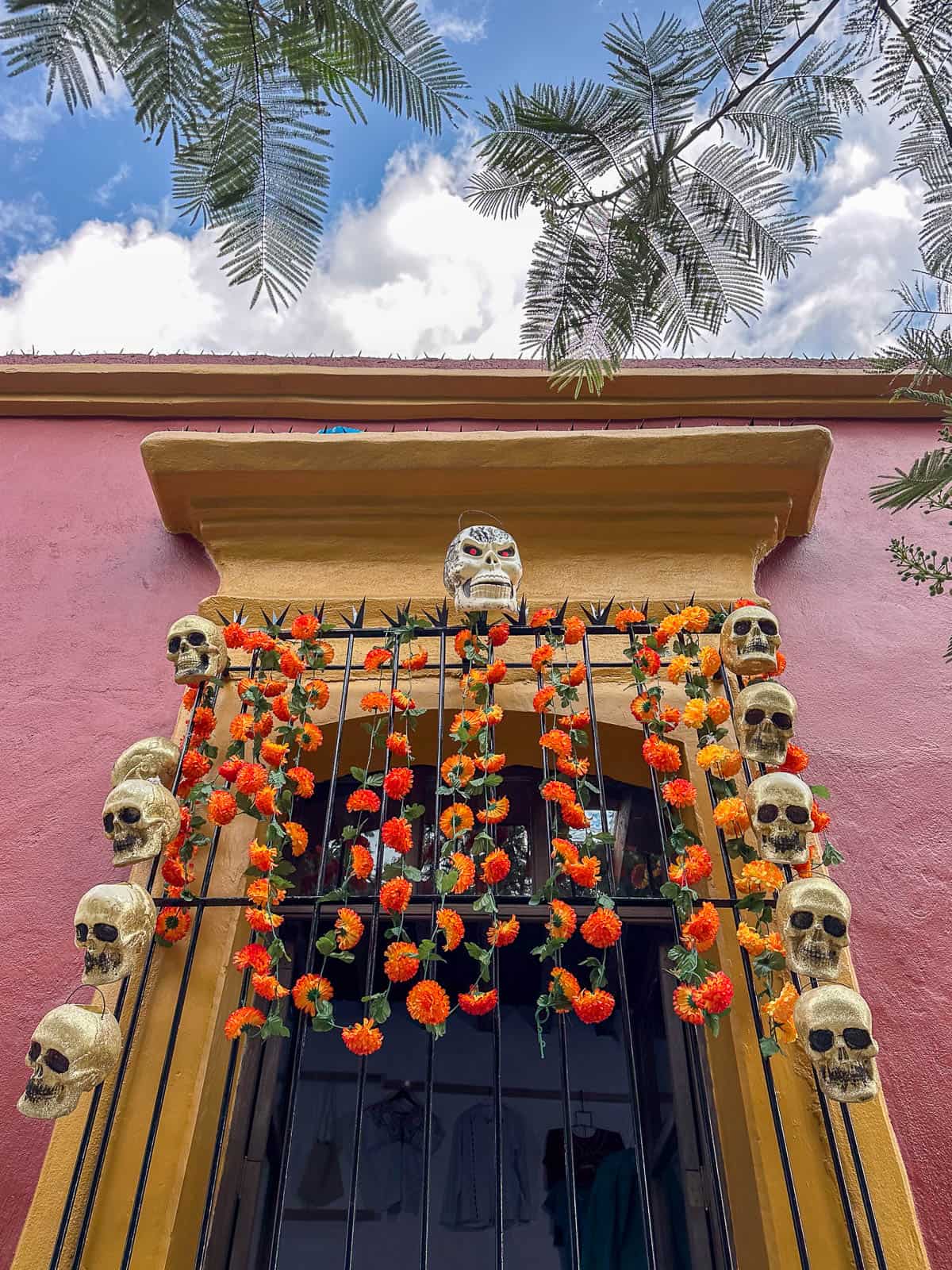
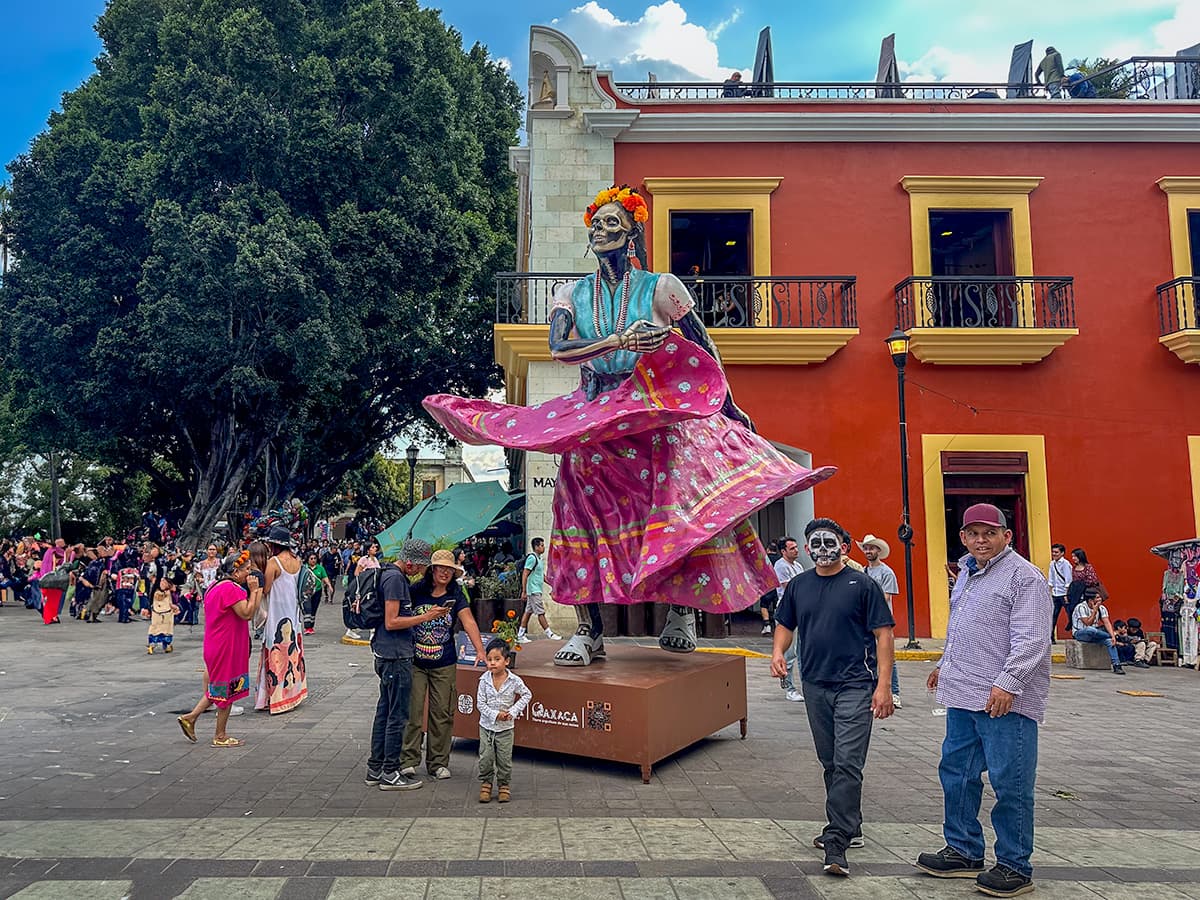
Throughout the neighborhood, you’ll find buildings decorated with marigolds, whose vibrant color and strong odor are meant to guide the spirit world back to the living, as well as skulls, candles, and other decorations. As a starting point, I’d suggest heading to Andador Turístico, a pedestrian street that stretches from the Zócalo to Santo Domingo de Guzmán Church, which will be decorated with large skeleton statues, papel picado, and other decorations.
Additionally, the city of Oaxaca organizes a number of parades, live music, and dance performances, most of which are concentrated in Centro. So don’t be surprised if you stumble upon an opera performance, where all of the performers are dressed as skeletons (which is what we saw during our visit!) or a random raucous parade.
3. See an ofrenda
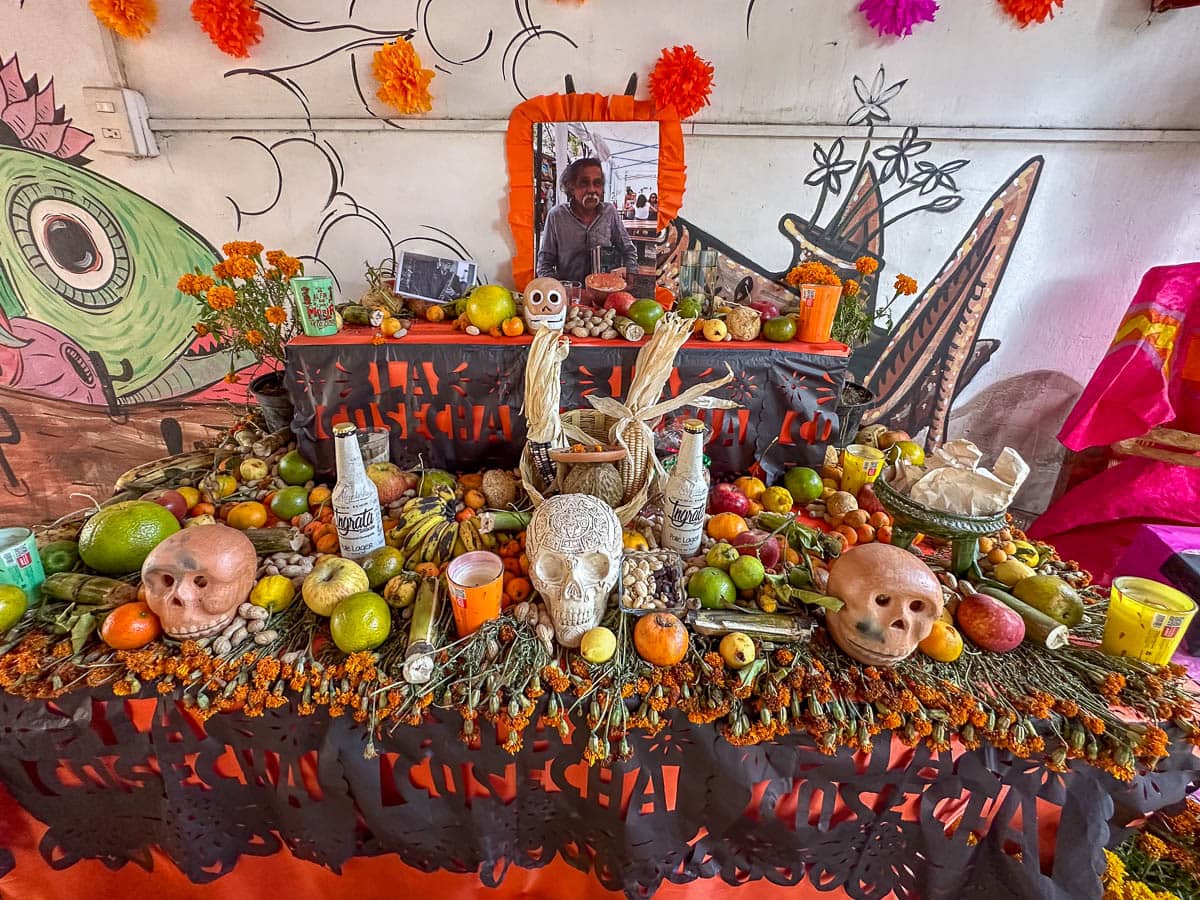
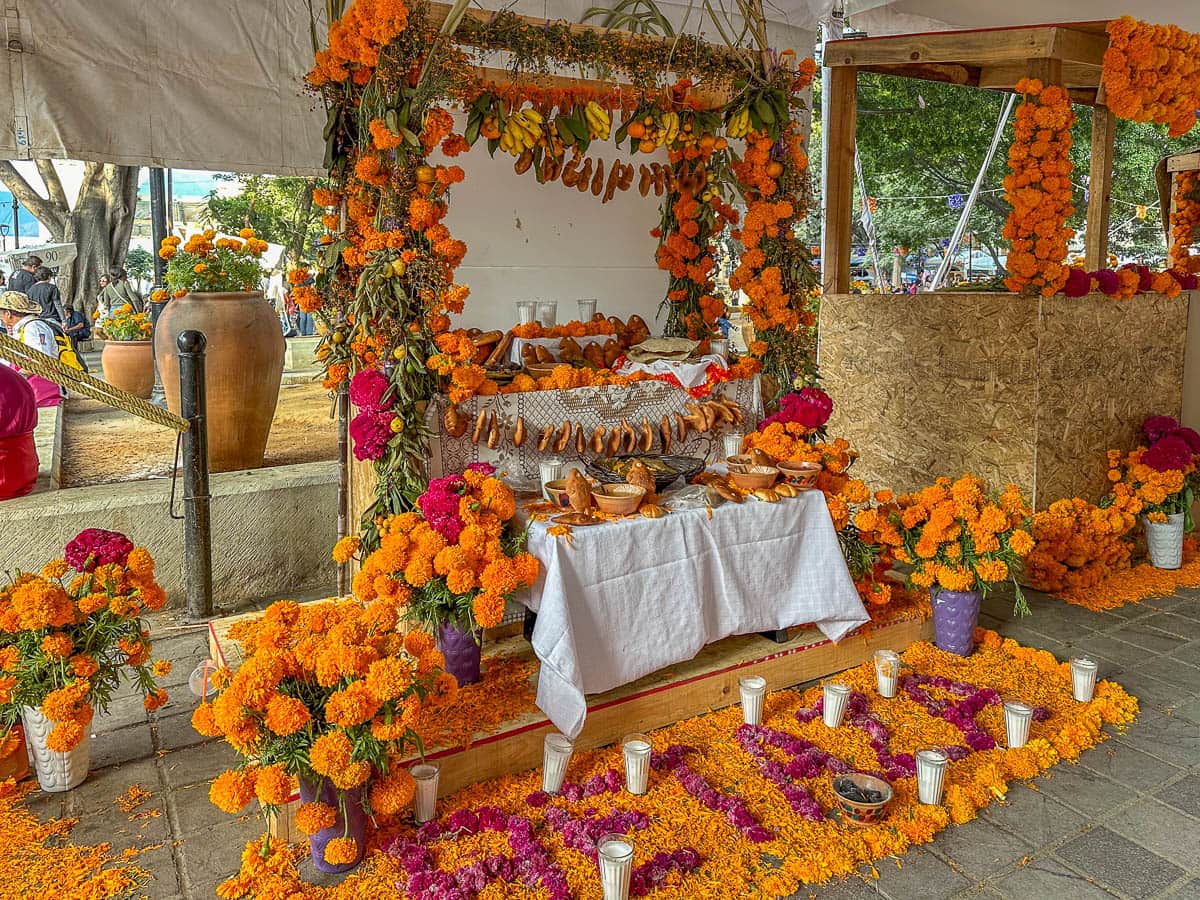
One of the important ways that locals celebrate Día de Muertos is by building ofrendas, which is an altar of sorts to honor their deceased loved one and is supposed to help guide them back to the living world.
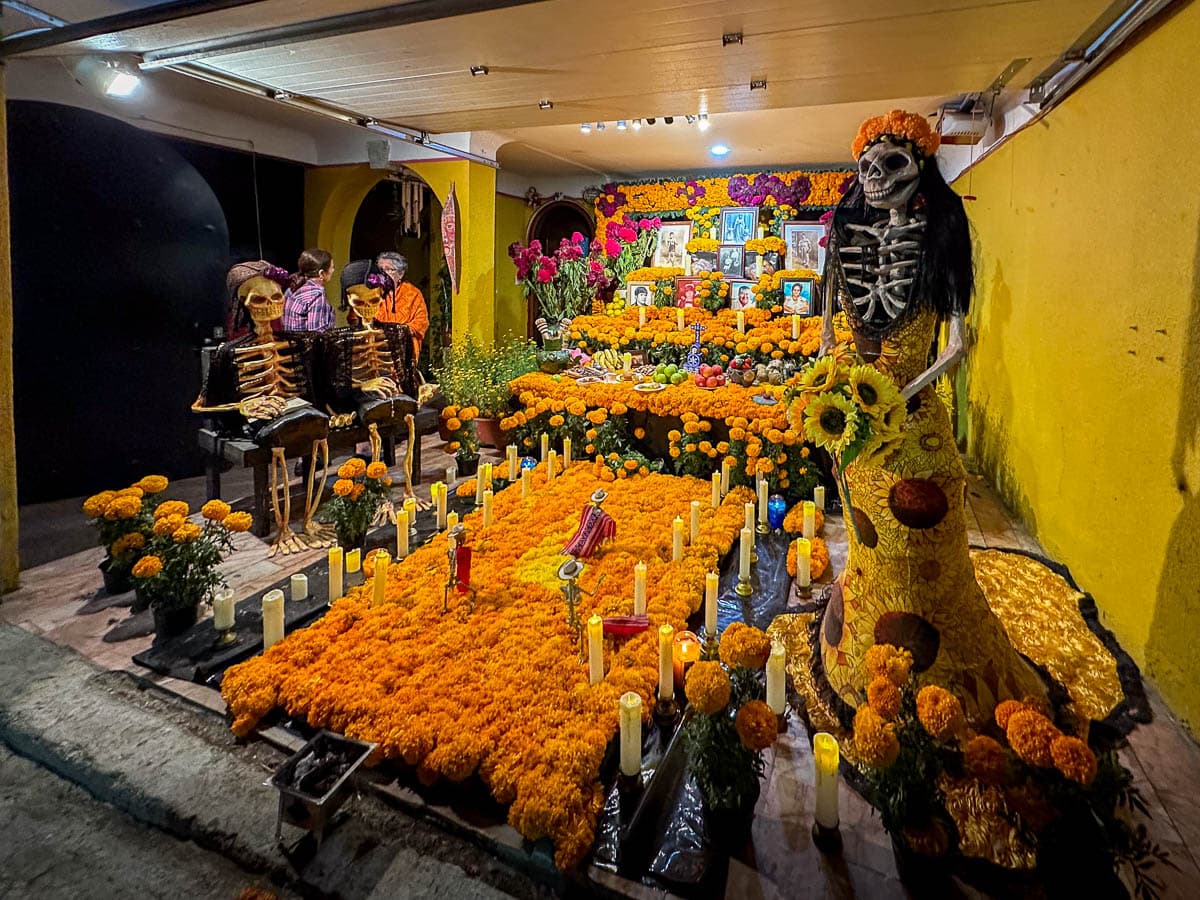
Ofrendas are typically found in locals’ homes, but, during Día de Muertos, there are several large ofrendas displayed around the Zócalo, as well in businesses and hotels around Oaxaca.
Ofrendas typically include a portrait of the deceased person, as well as the four elements:
- Fire, which is represented by burning candles
- Water, which is represented by small jugs of water or the deceased person’s favorite drink (it’s not unusual to see a can of Coke or handle of tequila on an ofrenda!). This offering is supposed to help quench the deceased person’s thirst after their long journey from the spirit world.
- Earth, which is represented by pan de muertos or the deceased’s favorite type of food
- Air, which is represented by papel picado, colorful and intricately cut paper flags
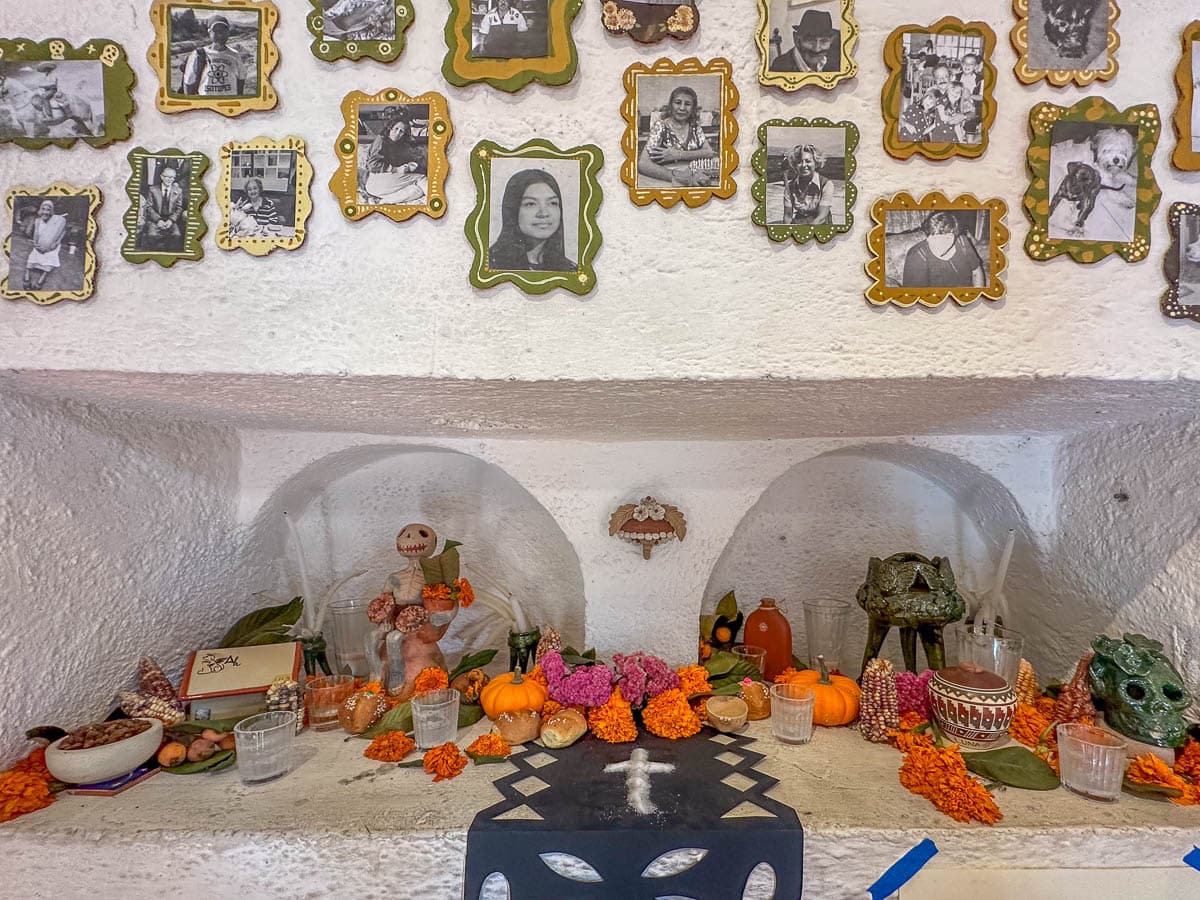
There’s also a handful of other components that are frequently used in ofrendas, including marigolds and copal, a type of incense whose strong odor is meant to help the souls find their way back to the living, and sugar skulls, which represent the sweetness of life.
4. Find tapetes de arena
Another iconic decoration of Día de Muertos is tapetes de arena, which are unique murals that are created out of sand, sawdust, seeds, and other natural materials directly on the ground. Artists in Oaxaca will meticulously craft this artwork, which typically depict skeletons, religious iconography, or other imagery that honors the dead.
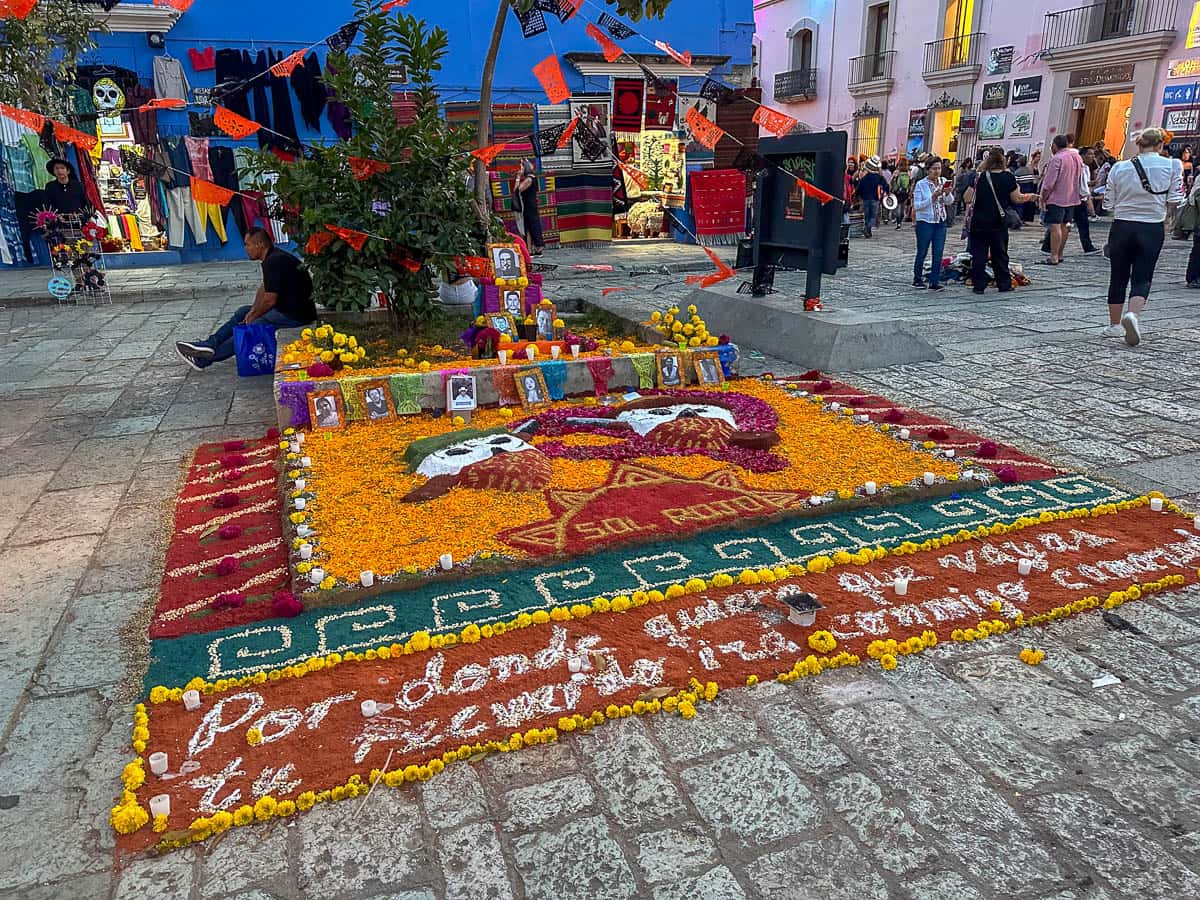
It’s believed that tapetes originated with the Zapotec and Mixtec cultures and were later used by Christian missionaries, seeking to convert the indigenous people of Mexico, to more easily connect with them.
Nowadays, there’s typically a huge display of tapetes in front of the Edificio de Gobierno del Estado de Oaxaca, as well as on other streets around the Zócalo and in Centro.
5. Visit a marigold field
Millions of marigolds (or cempasúchil) are used to decorate ofrendas, buildings, and other decorations throughout the city. And most of them come from fields in the surrounding area.
Cultivos El Viejo is the most popular flower farm around Oaxaca, located about 45 minutes south of the city. You can pick your own marigolds here for a very reasonable price and, if you visit on weekends, there’s sometimes a handful of food and drink vendors.
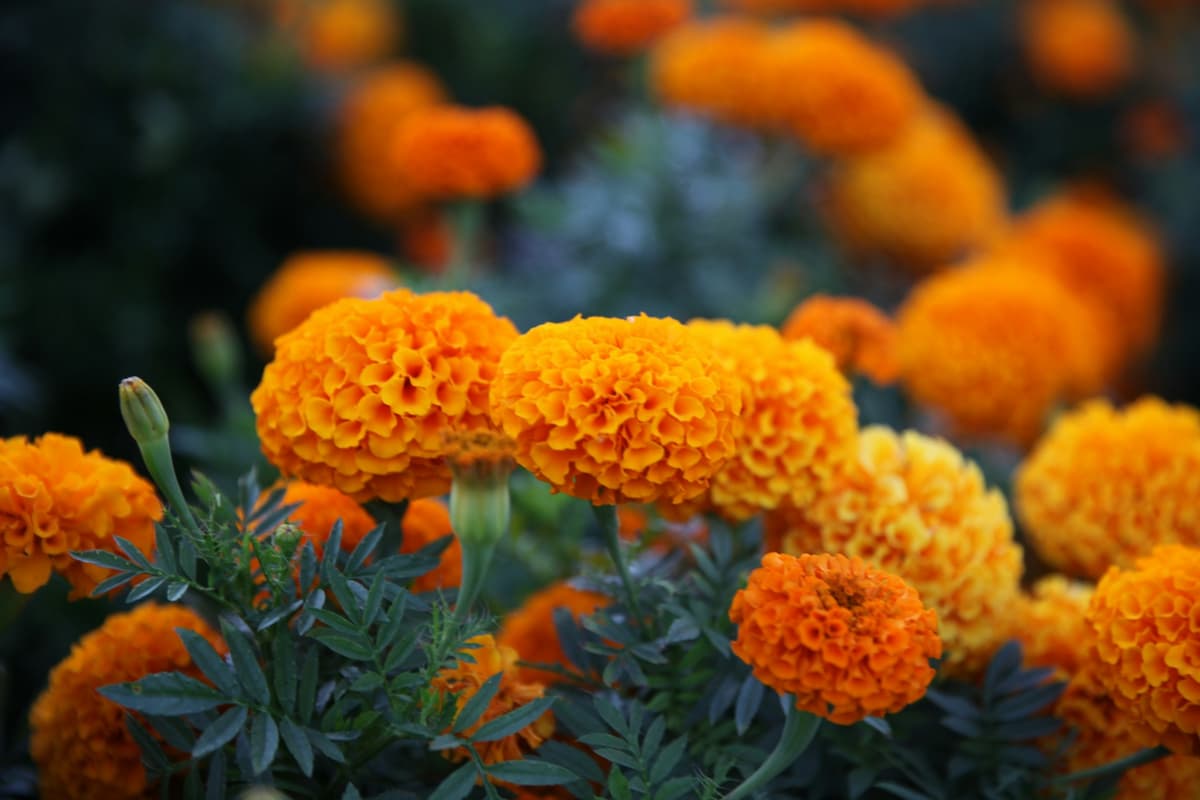
I’d really only recommend making the trek out here if you happen to be visiting a week or so before Día de Muertos. By the end of October, almost all of the marigolds have been picked and are being used in ofrendas around Oaxaca!
If you don’t have a rental car of your own, you can either try to book a private driver through your accommodations to take you out to the fields or join a tour, like this one, that takes you to a marigold field and into a local family’s home, where you’ll have lunch and participate in building an ofrenda.
6. Visit a cemetery
As you might guess, a lot of Día de Muertos festivities happen in cemeteries, where locals decorate their loved ones’ gravesites with marigolds, candles, papel picado, and the deceased’s favorite items.
We witnessed locals partaking in all kinds of behavior in cemeteries on the evenings of October 31 through November 2—some were stoically grieving, while most had a more festive vibe, with families sharing food and drink, as well as singing or even dancing by their loved one’s grave.
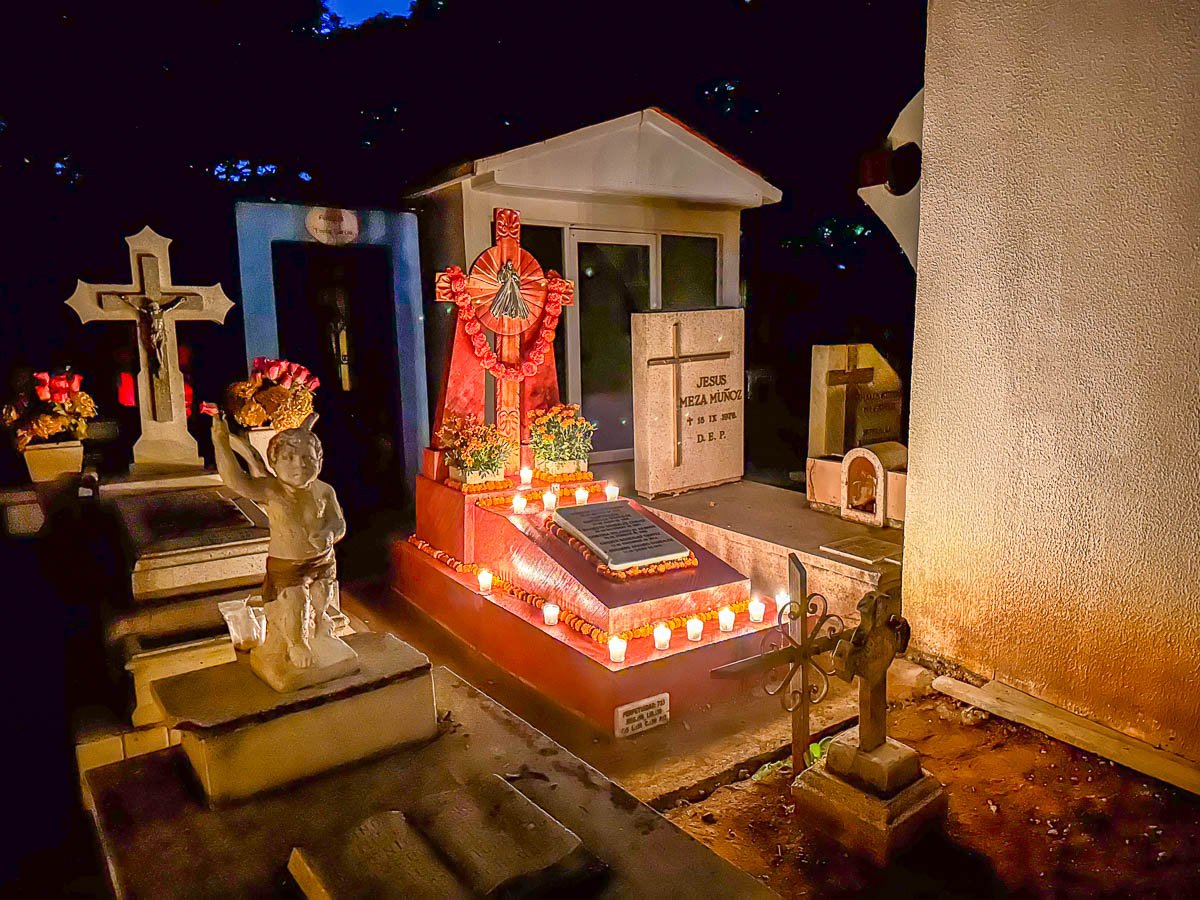
As mentioned above, please be respectful of locals (i.e., PLEASE don’t walk on top of graves and give the right of way to locals that are carrying armfuls of marigolds or other decorations) and be mindful of the range of emotions on display here.
The most popular one to visit is the main public cemetery of Oaxaca, Panteón General, which is just a short walk from Centro. During the evenings of Día de Muertos, it transforms into a beautiful, spiritual environment with thousands of flickering candles, marigolds, and musical performances.
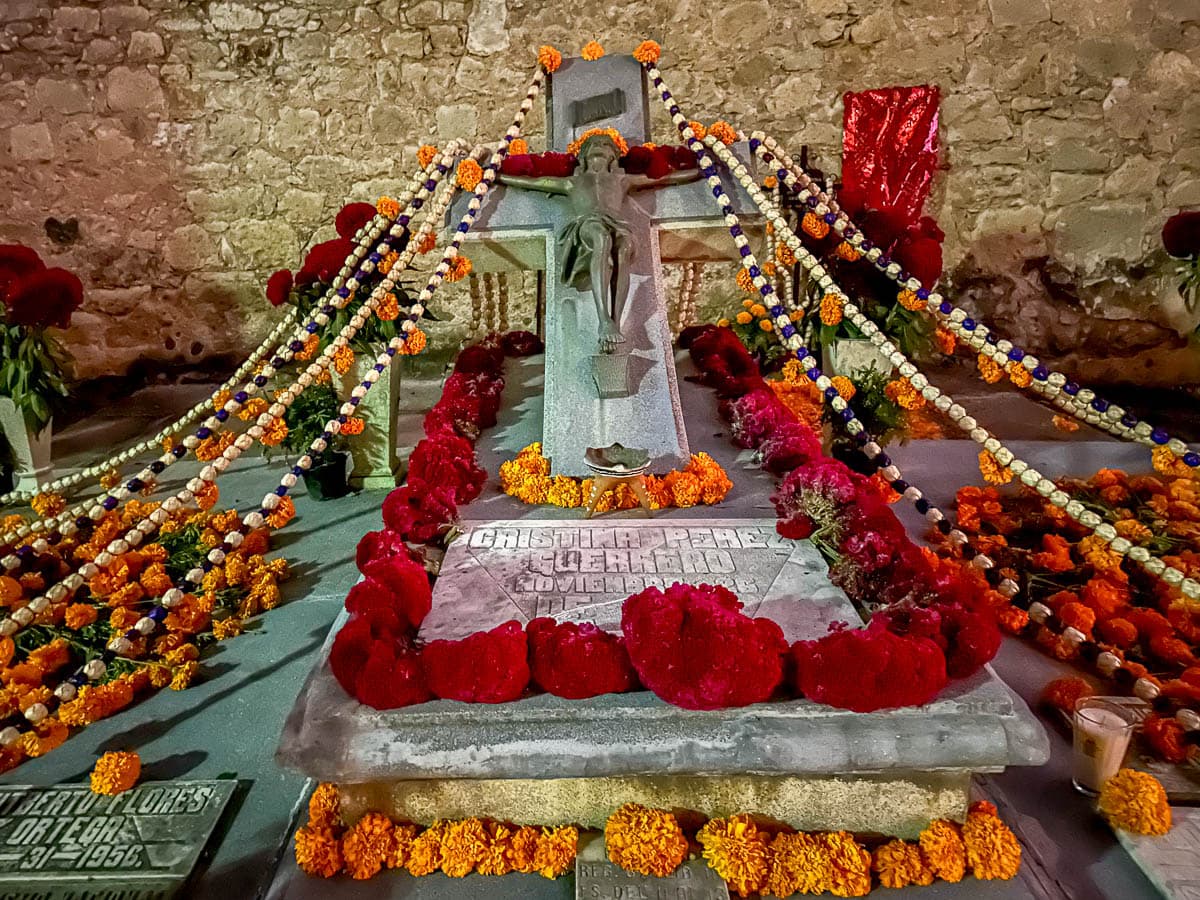
Given its proximity to Centro, Panteón General tends to be a bit on the touristy side during Día de Muertos (weird to say about a cemetery, right?), so if you’d prefer to have something a bit more “authentic”, the locals nearby town of Santa Cruz Xoxocotlán are known for going all out with decorating the gravesites of their loved ones during this time period.
There are two cemeteries that are worth a visit here—Panteón Xoxo, which absolutely transforms into a magical world of flickering candles, marigolds, and copal straight out of Coco (although it can, at times, draw significant crowds), and Panteón Viejo de Xoxocotlán, which offers a quieter, more authentic experience.
Santa Cruz Xoxocotlán is about a 20 minute drive from Centro, so you can either take a taxi or, if you’d prefer to learn more about the traditions and culture of Día de Muertos, you can join a tour, like this private option.
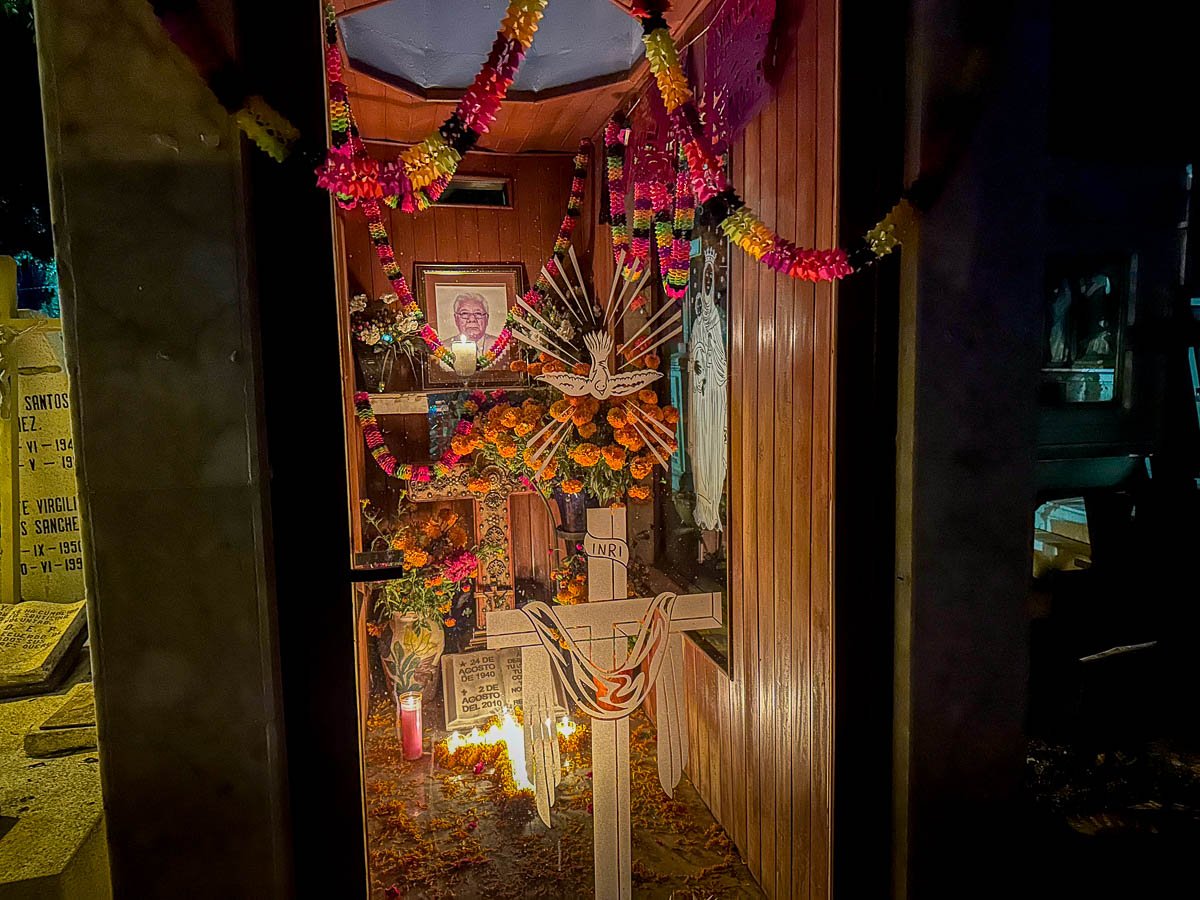
One very unique aspect of cemeteries in Oaxaca around Día de Muertos is that they usually have some sort of carnival, with food, rides, loud music, and other vendors, right outside of its gates. Given how somber death is treated in my culture, it was a bit jarring for me to see the juxtaposition of a cemetery right next to a carnival, but it is a good example of how Día de Muertos uniquely shines a more jovial light on death.
7. Get your make-up done
As mentioned above, one of the most iconic aspects of Día de Muertos is the Calavera Catrina makeup. This makeup isn’t intended to be scary or ghoulish and, instead, is meant to reflect the spiritual world’s return to the living for this short period of time. Everyone—men, women, and children; locals and visitors alike—are all encouraged to have their faces painted.
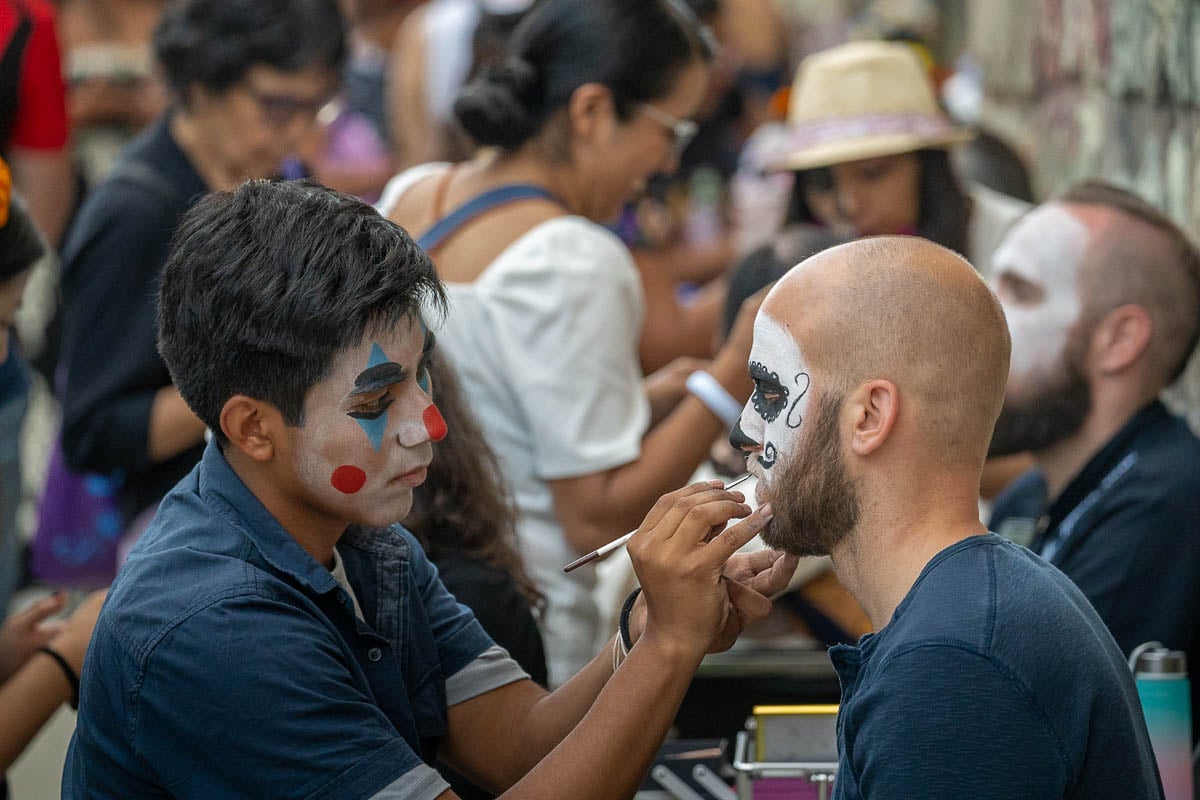
You’ll find tables randomly sprinkled throughout the streets of the city, as well as a handful of beauty salons offering facepaint (look for signs that say “maquilla”). There’s also usually an entire side of the Zócalo that has dozens of make-up stalls—just be prepared to pay a premium here!
Get your make-up done, buy a marigold crown from one of the vendors wandering around (I bought mine for $5 USD on October 30th and used it for the duration of Día de Muertos), and lean into the festivities!
8. Check out the live performances
In the evenings, there’s a stage near El Templo de Santo Domingo de Guzmán that hosts live music, dance, or theatrical performances related to Día de Muertos. As a bonus, this beautiful church serves as the perfect backdrop to take photos in your Día de Muertos garb.

The performances will be listed in the official Día de Muertos schedule that’s published and advertised around the city, but, if you want to plan ahead, the Oaxaca Events website often updates its schedule first.
9. Experience Día de Muertos in Etla
If you’re looking to experience the more raucous side of Día de Muertos, the nearby Etla communities, especially San Agustín Etla, are known for their all-night parties throughout the streets of the village, which are filled with revelers in elaborate make-up and costumes, marching bands, and merrimakers, typically with lots and lots of mezcal.
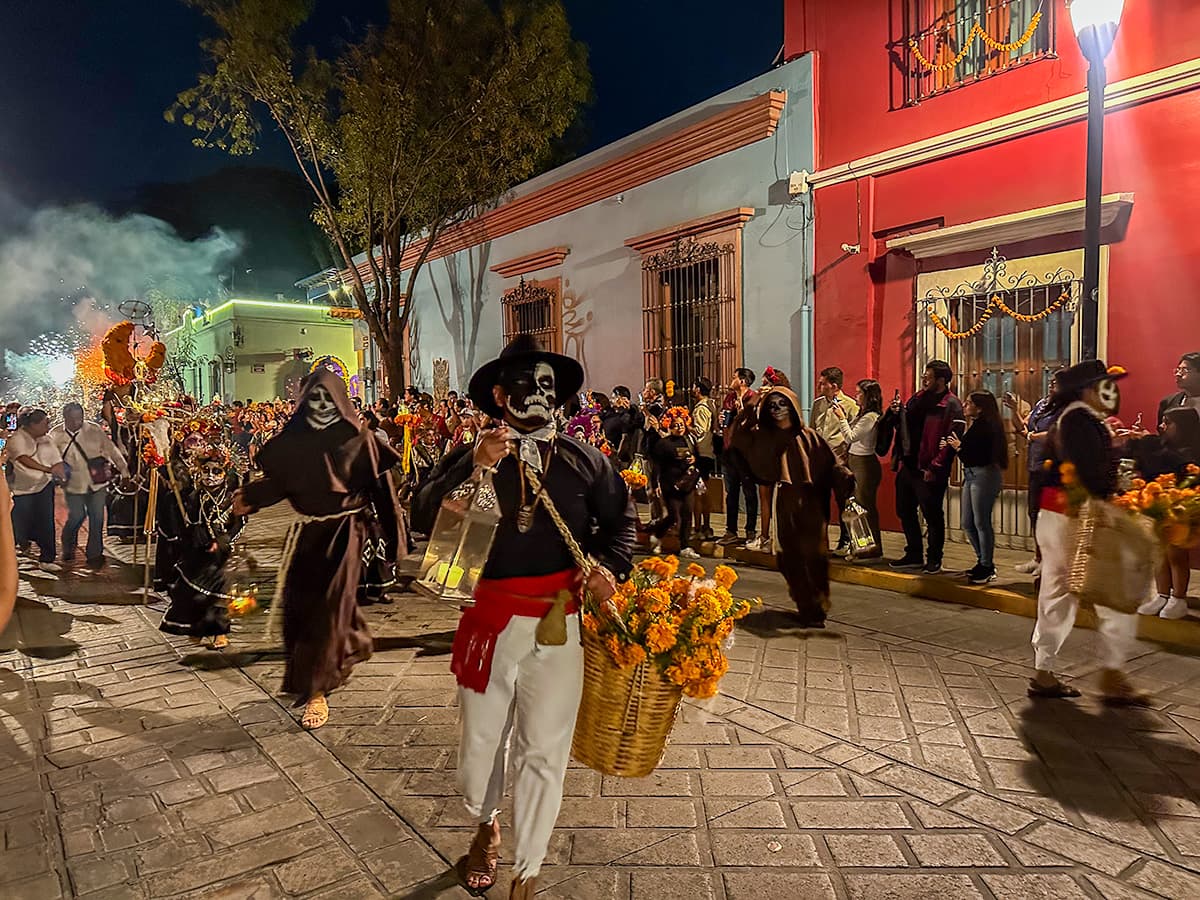
The party usually begins around 10 PM or so on the night of November 1, where locals will gather outside of someone’s home, drinking, eating, and dancing, until they’re ready to march on to the next destination. This party generally continues on until 9 AM or so in the morning—so come well rested!
Etla is about a half hour northwest of the city. There are colectivos that go to and from Etla at the Mercado de Abastos (be sure to double check with the driver whether the colectivo is headed to San Agustín Etla, as there’s multiple communities that have both San Augustín and Etla in the name) or, if your Spanish isn’t the best, you might want to consider joining a tour here, like this option.
10. Try pan de muertos
There’s a handful of foods that are associated with Día de Muertos in Oaxaca, like tamales and mole, but the most famous is definitely pan de muertos, a sweetened bread with hints of anise and orange.
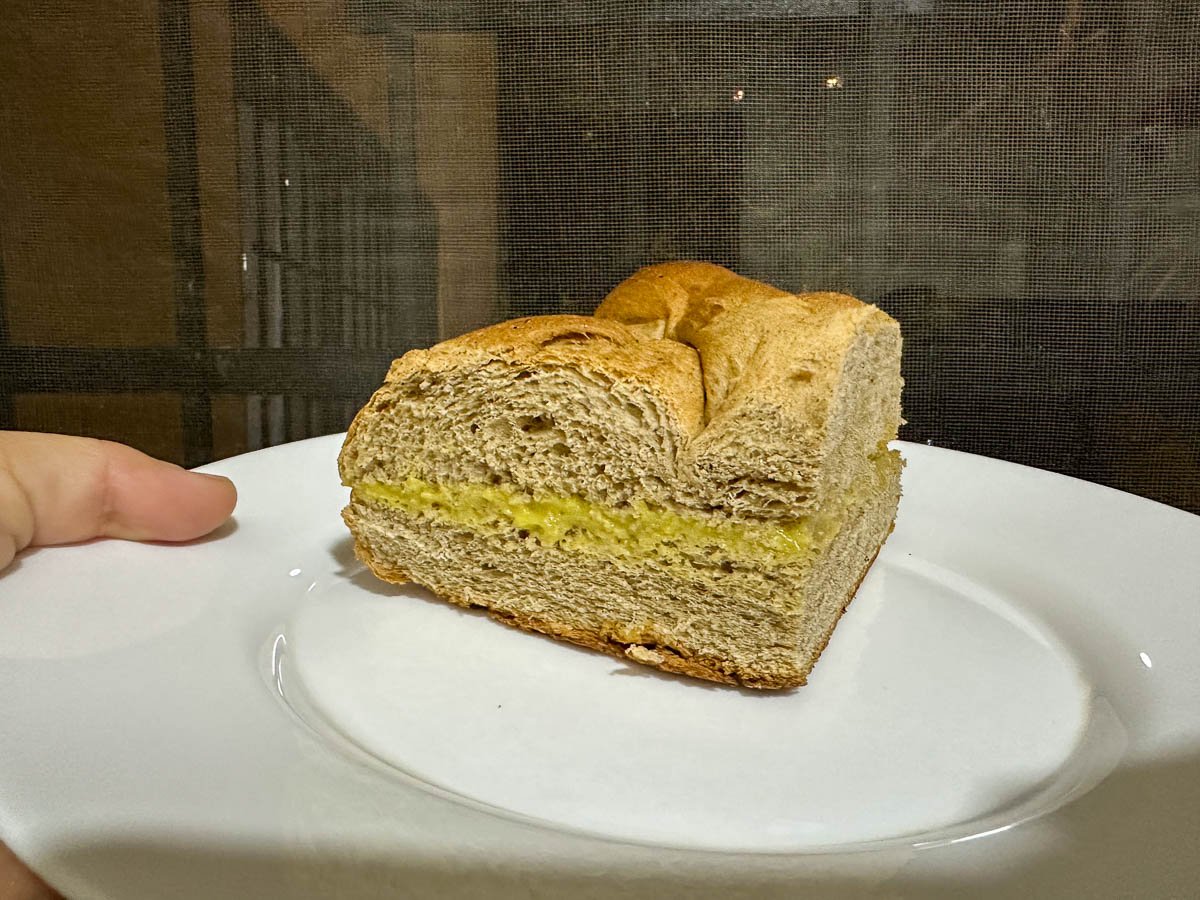
There are more than 400 varieties of pan de muertos throughout Mexico, but Oaxaca’s version is quite unique—it’s the only one with a carita (or a “little face”, typically a skull figurine) that’s baked into the center of the bread. The bread is typically used on ofrendas to feed the souls that return to Earth during Día de Muertos, but they’re also consumed by the living as well.
You’ll find them at any of the markets sprinkled throughout Oaxaca. We stayed in the colorful Jalatlaco neighborhood and walked to this market, which had several stalls selling pan de muertos.
11. Drink some mezcal
Oaxaca is actually the birthplace of mezcal and is still considered the “World Capital of Mezcal”, given the fact that over 90% of the world’s mezcal is produced here.
While the spirit is enjoyed here all year round, mezcal is used in a variety of different ways during Día de Muertos—you’ll find a bottle of mezcal in the hands of many revelers, pouring it directly into their friends’ and strangers’ mouths, as well as on ofrendas or other altars. Mezcal is often used by local shamans for religious and ceremonial traditions and is considered, by some, to be a beloved common thread between the living and the dead.

If you want to dive in and learn more about this special liquor, this tour takes you to agave fields, a mezcal distillery, and to a local restaurant (with unlimited tastings of mezcal along the way). Alternatively, there are tons of bars that specialize in mezcal throughout the city, like Cortijo La Mezcaleria, El Espacio, and El Hijuelo Mezcalería.
12. Visit a local market
If you’re looking to pick up something to remember your time in Oaxaca or if you want to try some authentic Oaxacan food, I’d suggest heading to one of the local artisan markets.
During Día de Muertos, there’s a pop-up market by the Templo de Santo Domingo that features artisans, jewelers, and other clothing.

Alternatively, one of my favorite places we stopped at in Oaxaca is the La Cosecha Mercado Organico, a small market of food stalls that specializes in organic and sustainably-grown Oaxacan food. There’s a stall there that serves the best tejate (a pre-Hispanic drink made from cacao and mamey) on the planet, as well as other vendors with specialities from this region, like memelas (fried or toasted masa cakes that are topped with cheese or other ingredients) or tepache (a DELICIOUS fermented pineapple drink).
13. Try Oaxacan cuisine
Oaxaca is world-renowned for its food scene—in fact, it’s one of the only cities in Mexico that Anthony Bourdain deigned to highlight twice in his television series.
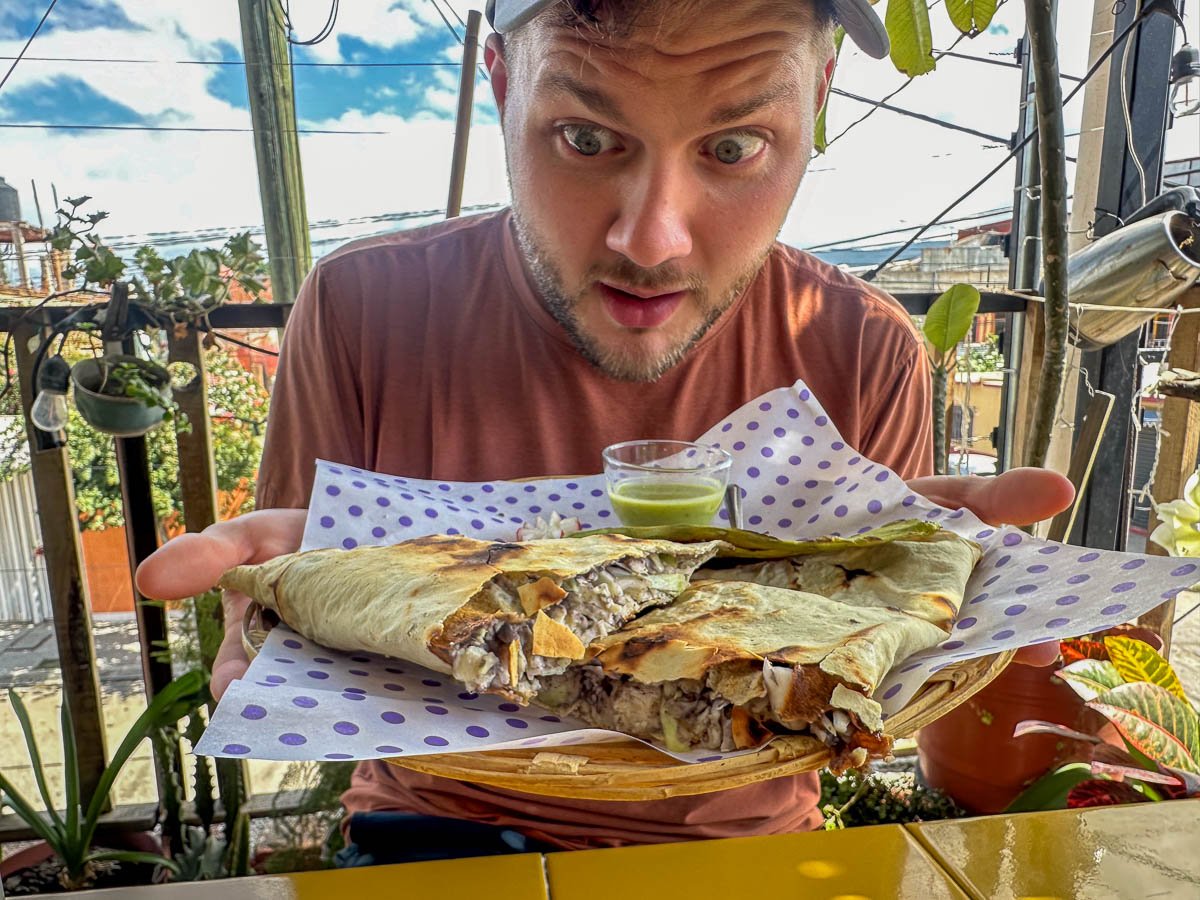
The city is known for a variety of foods, including tamales (some of which are wrapped in banana leaves instead of corn husks, as is traditional throughout most of Mexico), tlayudas (tortillas which are topped with beans, cheese, and protein), and tetelas (masa pockets that are stuffed with quesillo, a special Oaxacan cheese, and refried beans).
However, its largest claim to fame is mole, a sauce that usually contains chiles, chocolate, and up to 40 different ingredients. There are actually seven main different types of mole (ojo, coloradito, amarillo, verde, negro, chichilo, and manchamantel), although, given that every abuela and chef has their own personal mole recipe, there are technically endless varieties of mole.
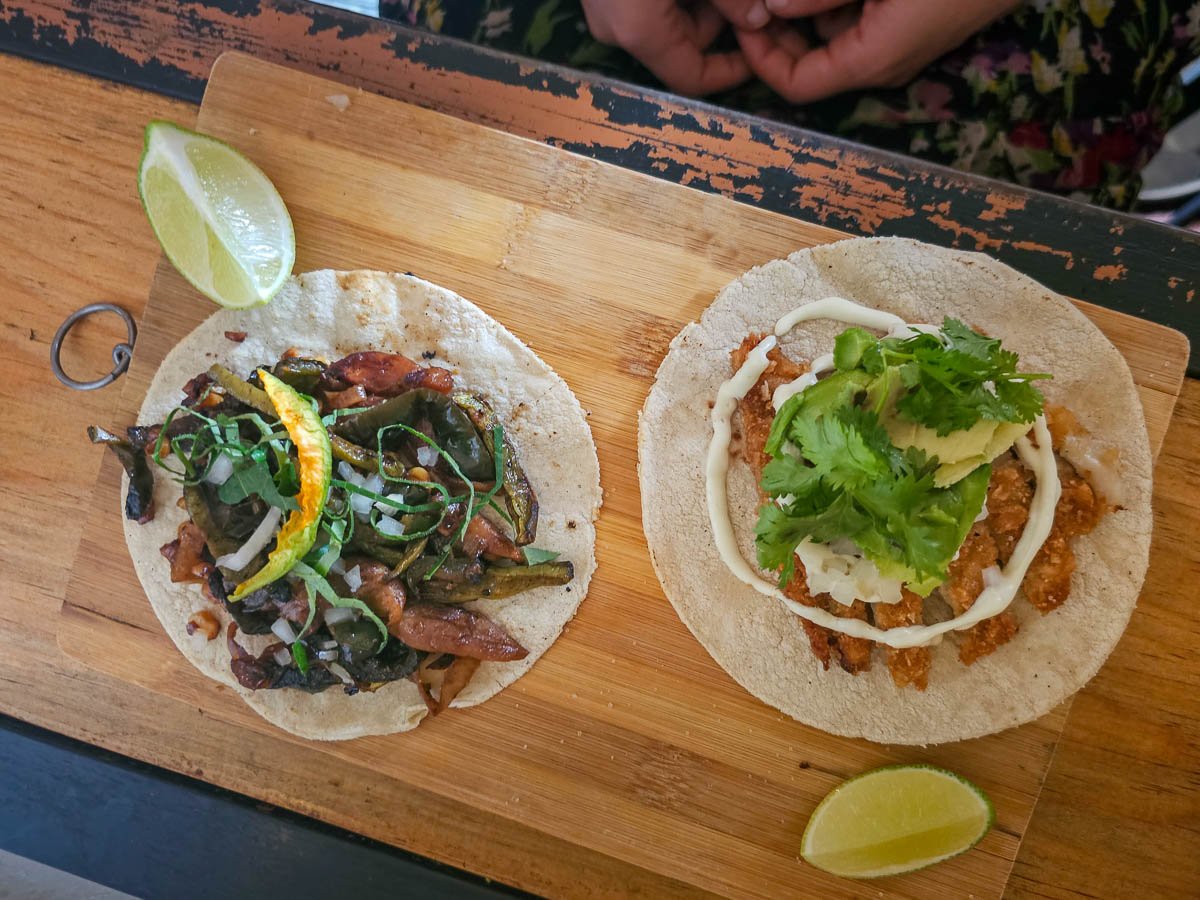
Mole has long been associated with Día de Muertos. It’s a time-consuming dish to create—it can take days to cook—and cooking it can symbolize the care and dedication that loved ones have for the deceased. In fact, it’s frequently placed on ofrendas throughout the city.
If you’re interested in a hands-on experience with this unique dish, you can join this cooking class, where you’ll tour a Oaxacan market and make (and, of course, eat) a traditional mole with a local chef. Alternatively, there are endless places in Oaxaca to try different moles, but some of our favorite restaurants are El Escapulario, Los Pacos (which offers a sampler of different moles on the house), and La Casa de la Abuela.
Where to stay in Oaxaca for the Day of the Dead
I’d either recommend staying in Centro, where most of the large, city-organized parades and performances are held, or the Jalatlaco neighborhood, directly to the east of Centro.

We stayed in Oaxaca for two weeks around Día de Muertos in the Jalatlaco neighborhood and LOVED it—it’s got an artsy, hipster vibe, while still feeling a bit more local and authentic than the more touristy Centro neighborhood. Jalatlaco is also home to lots of colorful murals with skulls, skeletons, and other Día de Muertos symbols, so it’s the perfect atmosphere to get in the festive spirit.
One of my favorite memories of Día de Muertos is retiring to our apartment on the night of November 2 with the intention of going to bed, but having a wild marching band-fueled dance party, complete with several mojigangas, appear directly below our balcony. Of course, we HAD to get out of bed to go join the party, which continued to parade around Jalatlaco to the wee hours of the morning.
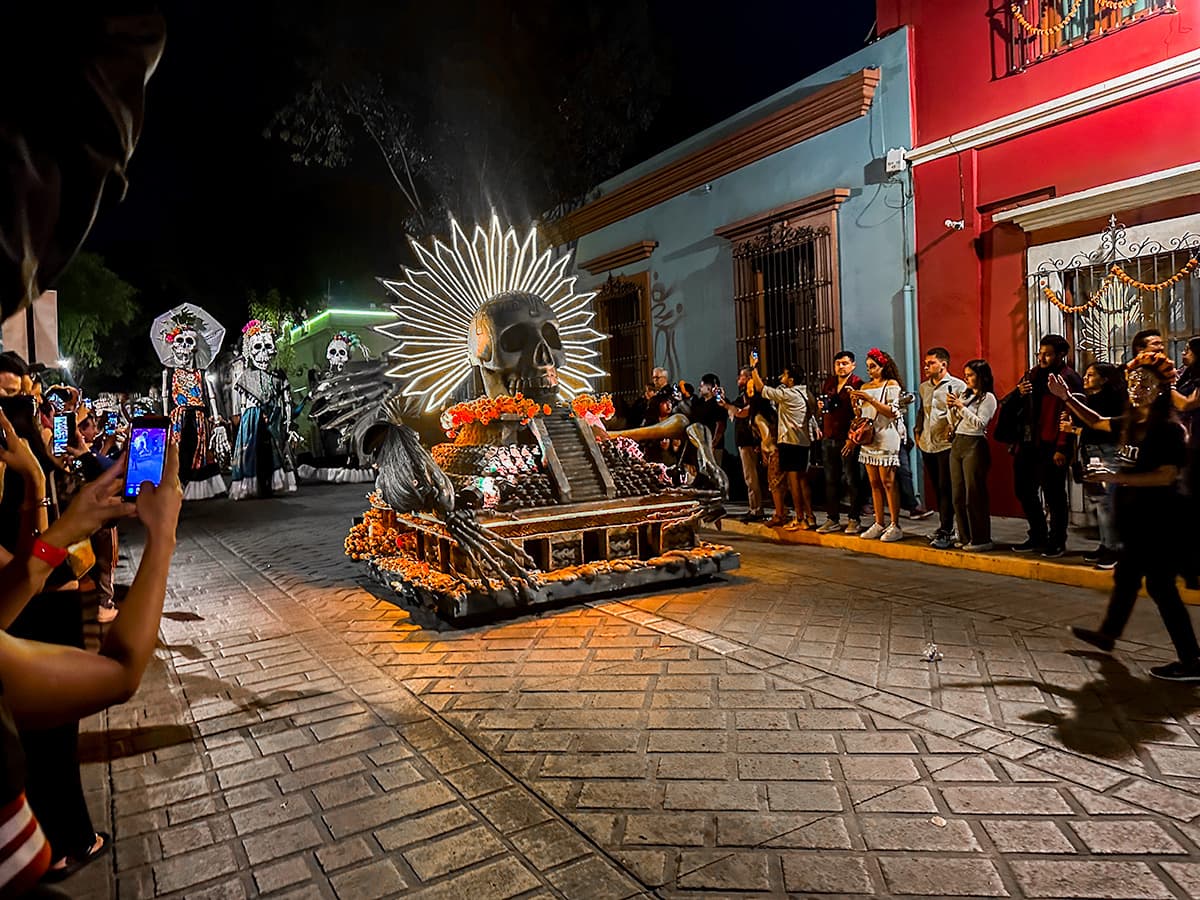
So, I might be a bit biased, but my go-to choice would be Jalatlaco. If you’re interested in staying there, I’d suggest checking out:
- Niyana Oaxaca: This budget-friendly hotel has a cool bohemian vibe, with weekly yoga classes, and a focus on sustainability. There’s lovely sun terraces for each room and a shared kitchen space to enjoy your coffee every morning.
- Hotel Casa las Mercedes: This beautiful hotel has a friendly staff, an onsite restaurant with complimentary breakfast, and spacious rooms that are kept immaculately clean.
- Casa Naila Hotel Boutique: If you’re looking for something a bit more bougie, this boutique hotel is a great option that makes you feel like a VIP, with nightly turndown service (including sweet treats left on your pillow!), a complimentary car service within two miles of the hotel, and an excellent complimentary breakfast.
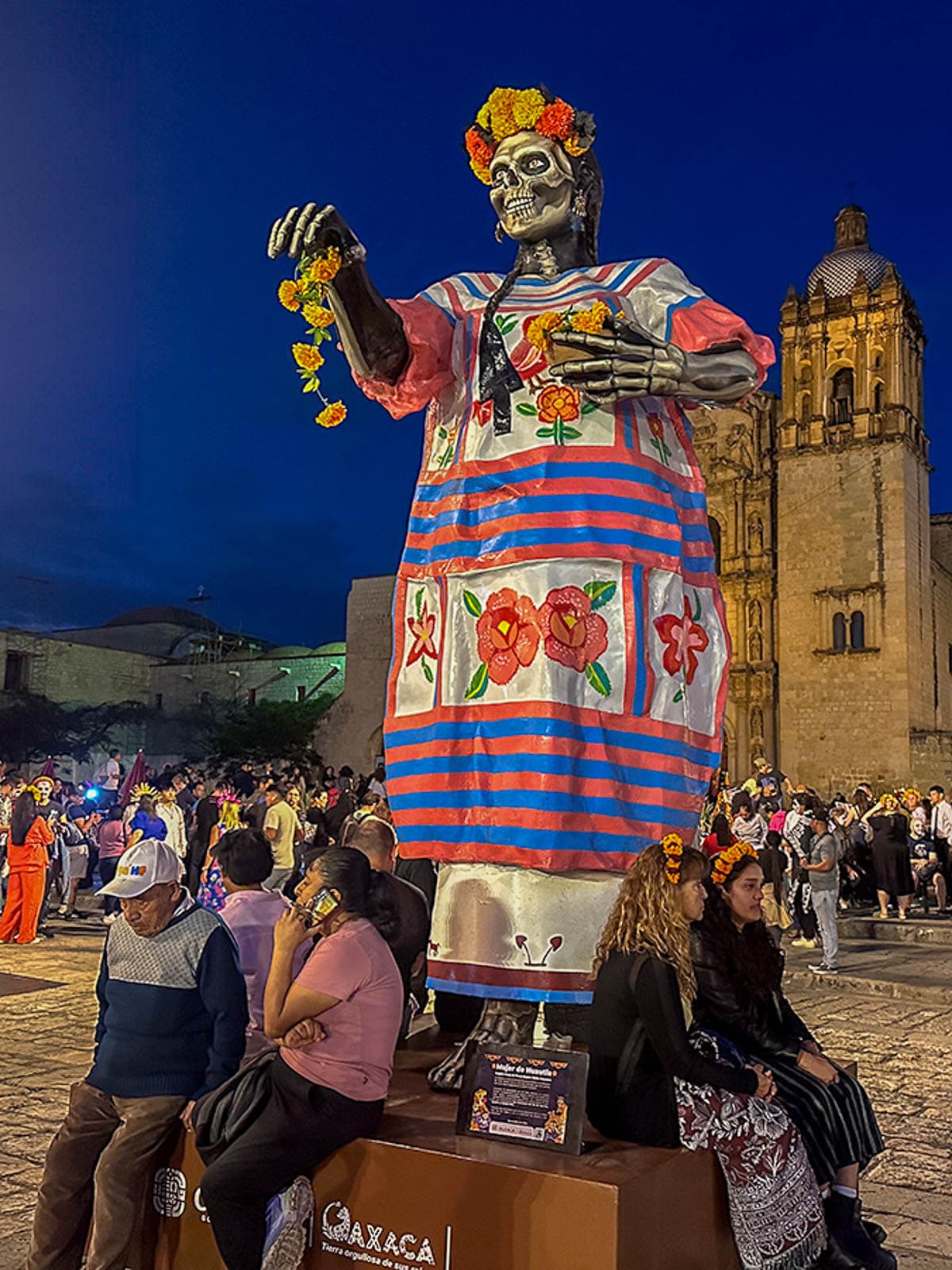
Alternatively, if you’d prefer to be close to the center of the action, here’s where I’d recommend staying in Centro:
- Selina Oaxaca: On the more budget-end of the spectrum, Selina typically caters to the digital nomad and bougie backpacker crowd. The decor has an airy, bohemian vibe and there are lots of features that cater to Selina’s standard clientele, like a coworking space, lively bar (with a free welcome drink!), and activities, like yoga classes.
- Casa 1800 Oaxaca Boutique Hotel: This boutique hotel has lots of modern amenities (including air conditioning, which isn’t always a given in Oaxaca, and a sun terrace), while maintaining the historical charm of the colonial building, which dates back to 1800.
- Boulenc: This bed and breakfast is beautifully designed, with a colorful and modern vibe. The beds here are so comfortable and the property definitely lives up to its bed and breakfast status, with an incredible homemade breakfast every morning (seriously, the pastries are to die for!).
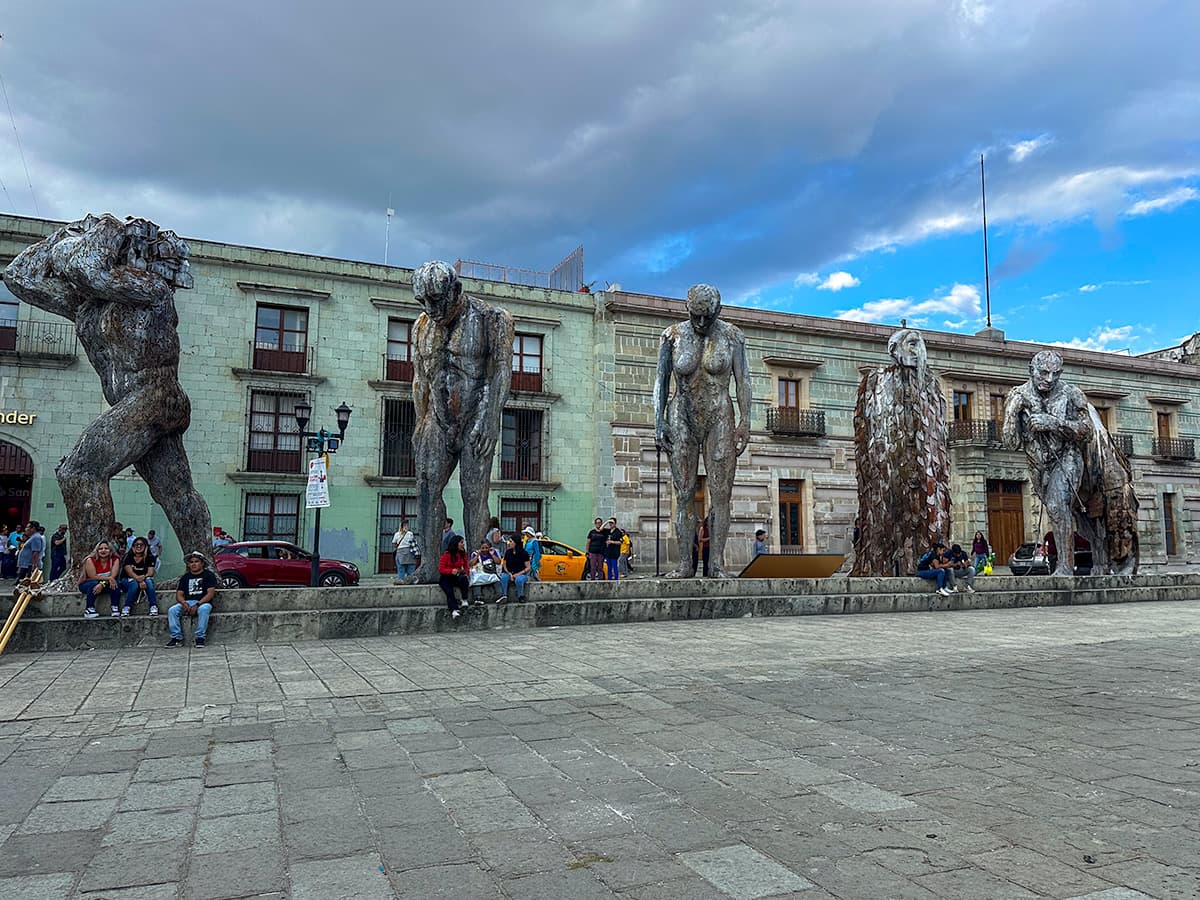
Insider tip: Be sure to book your accommodations and your airfare to Oaxaca for Day of the Dead as far ahead of time as possible—I legitimately made our reservations a year in advance! Día de Muertos is the most popular time of the year to visit Oaxaca and accommodations, especially the more affordable ones, book up fast.
How to get to Oaxaca
Oaxaca City is located in the state of Oaxaca in the southern part of Mexico. There’s several ways that you can reach this thriving metropolis, which is home to over 270,000 residents.
Flying
The city is home to the Oaxaca International Airport. There are 10 cities with direct flights to Oaxaca, most of which are domestic, but with a handful from U.S. cities, like Houston, Dallas, or LA.
From the airport, it’s about a half hour drive to Centro or Jalatlaco. We tried to go the budget-friendly route using a colectivo and a public bus to get to our accommodations, but I really wouldn’t recommend this, unless you’re super familiar with navigating cities in Mexico and with Spanish.
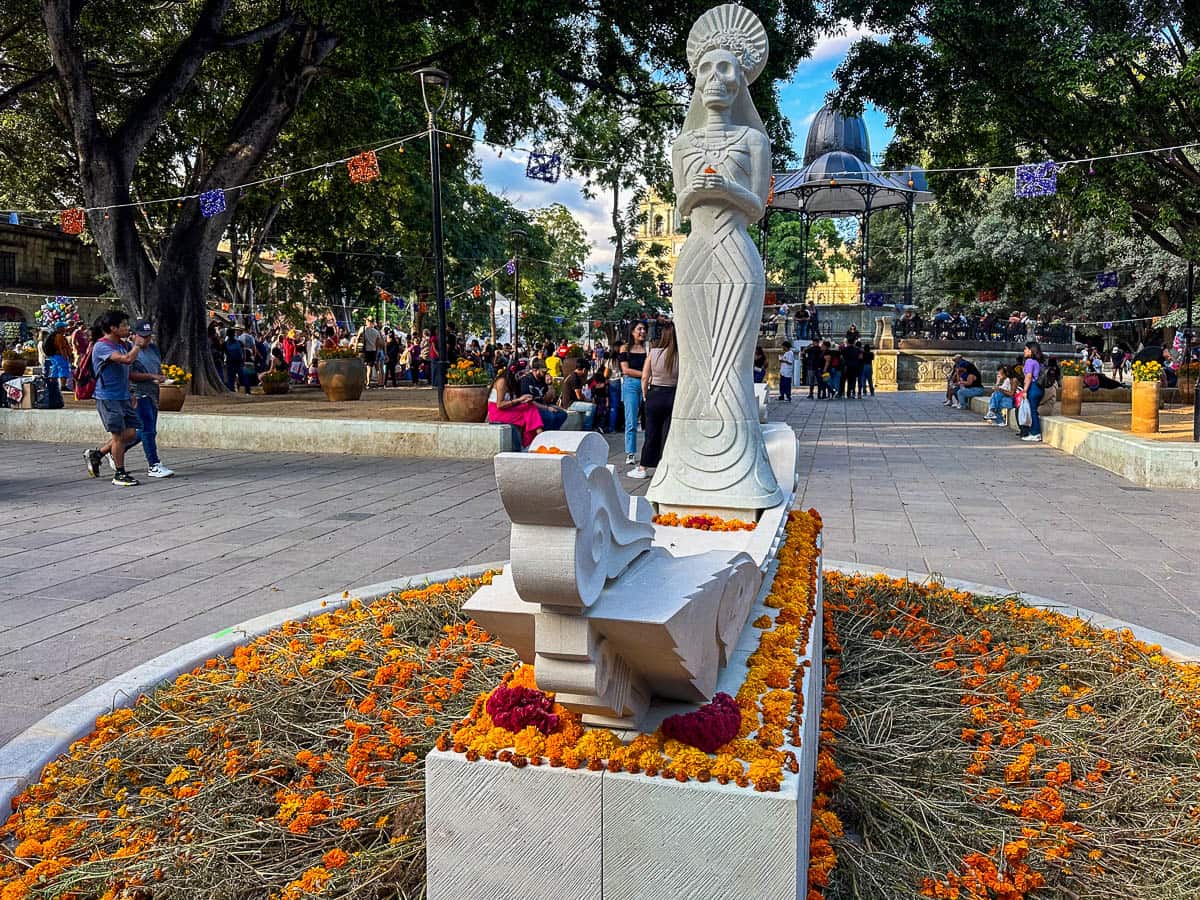
After spending two weeks in Oaxaca, we’re still not totally sure how public buses work (I think you need to flag them down?). In any event, we wound up sitting on a REALLY packed bus with our massive backpacks and had to walk really far, because we had gotten on the wrong bus line.
Instead, I’d recommend either taking a taxi or a transfer from the airport, like this option or this private option.
Taking a bus
If you’re traveling around Mexico for a while, many travelers opt to use buses, which are typically quite affordable and comfortable.
Here are some of the cities from which it’s popular to bus to Oaxaca:
- Puerto Escondido to Oaxaca (3 hours away)
- Mexico City to Oaxaca (7 hours away)
- San Cristobal de las Casas to Oaxaca (13 hours away)
We’ve taken a few different bus operators to travel around Mexico and have found ADO to be a reliable and safe way to zip around this massive country.
There you have it—everything you need to know about visiting Oaxaca for the Day of the Dead. Do you have any questions about participating in this unique festivity? Let us know in the comments below!
Thank you for reading our post! Check out our latest stories here and follow us on Instagram (@JustinAndJess_), YouTube, TikTok, or on Facebook to see what we’re up to next!
