

Trying to find a trailer hitch ball mount for your rig can be nerve-wracking—there’s a LOT to consider, from figuring out the correct height to picking the right hitch ball. Plus, if you accidentally purchase the incorrect one for your rig, you can have an unstable and, more importantly, unsafe towing setup.
Over the last five years, my husband, Justin, and I have had four different trailers that we’ve lived and traveled in full-time and have had to figure out the right trailer hitch ball mount for each of them. So, after lots of trial and error, here’s everything you need to know about choosing the right trailer hitch ball mount for your towing setup.
This post may contain affiliate links. If you make a purchase through them, we may receive a small commission, for which we are extremely grateful, at no extra cost to you.

etrailer graciously sponsored this article, but all opinions are our own.
What is a trailer hitch ball mount?
If you’re towing a trailer for the first time and aren’t sure what exactly a trailer hitch ball mount is in the first place, you’re not alone! It’s pretty confusing, with interrelated parts that are often referred to with different names.
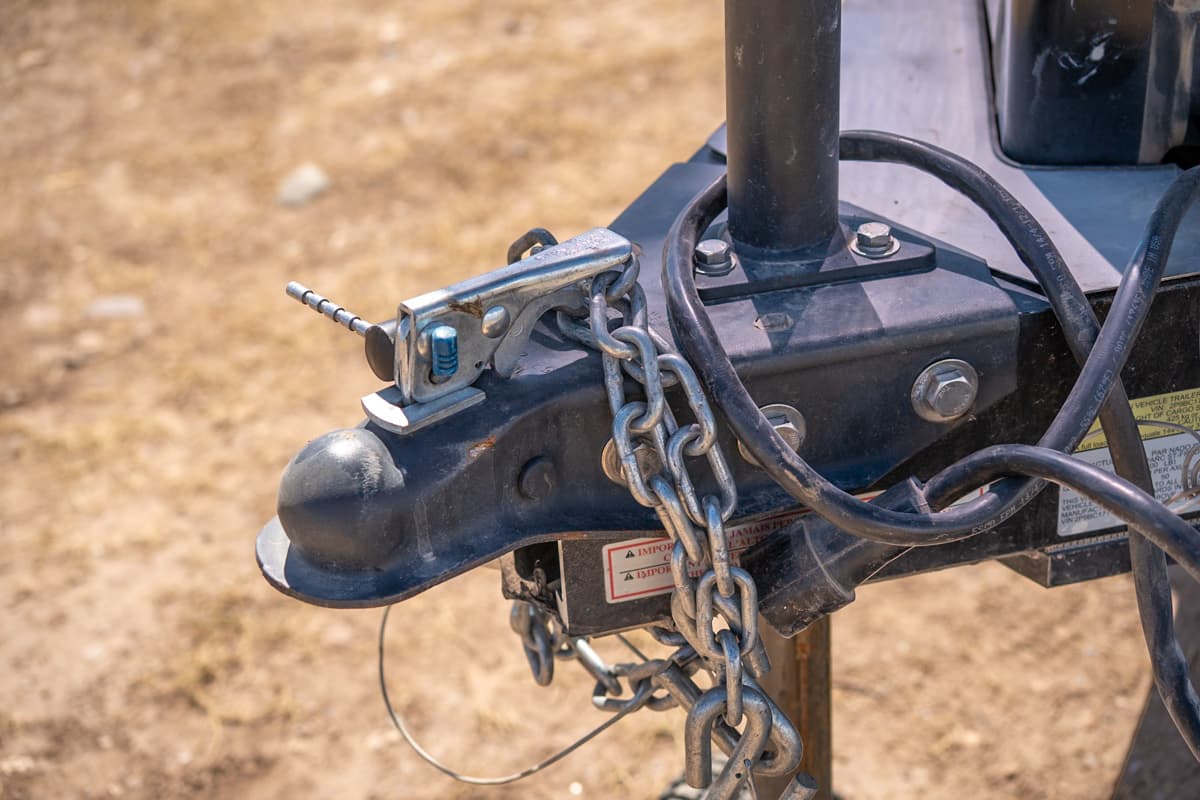
Let’s go over the basic parts of the hitch that allows you to attach your vehicle to your trailer:
Hitch receiver
A hitch receiver (also called a receiver tube) is a metal tube that connects directly to the frame of your vehicle and is used to attach hitch-mounted accessories.
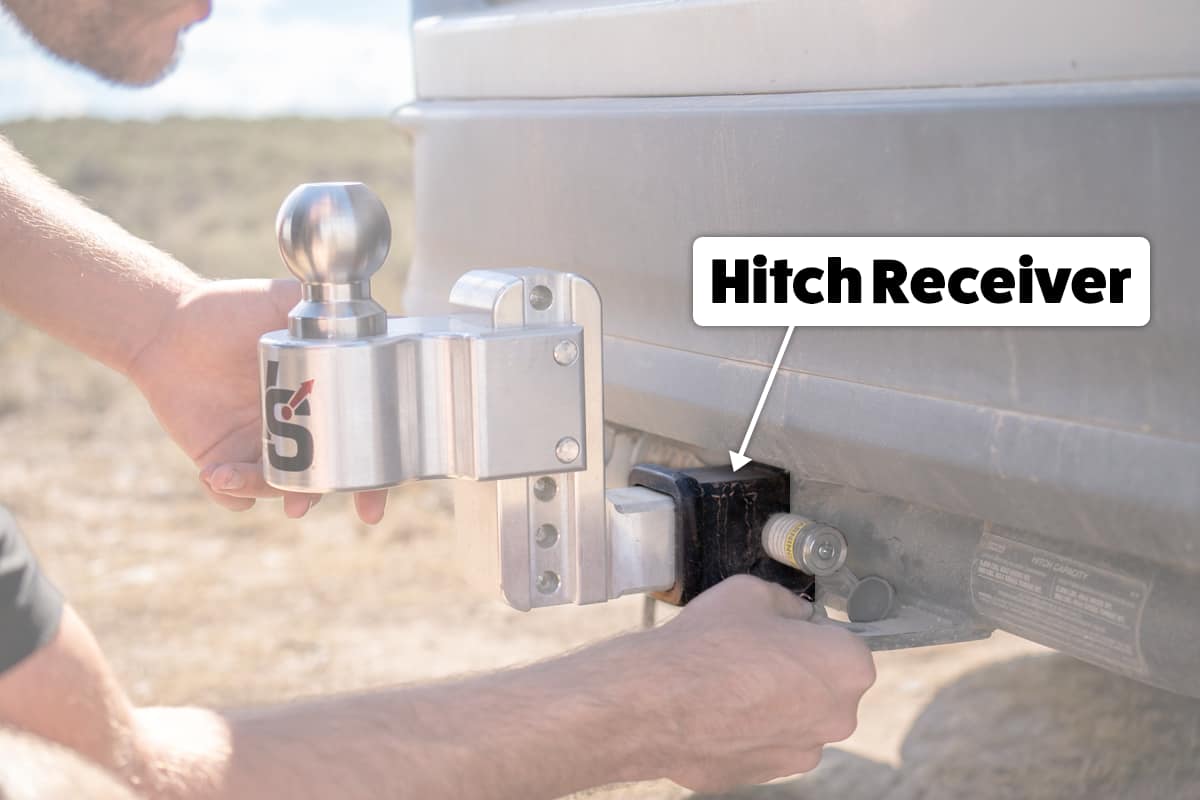
Many SUVs and trucks come with built in hitch receivers and the necessary wiring to operate the brakes and lights of a connected trailer (i.e., “tow packages”).
Even if your vehicle doesn’t come with a tow package, you can pick up a hitch receiver, like this one, and have it welded to the frame of your vehicle. You’ll also have to have the appropriate wiring installed.
Ball mount
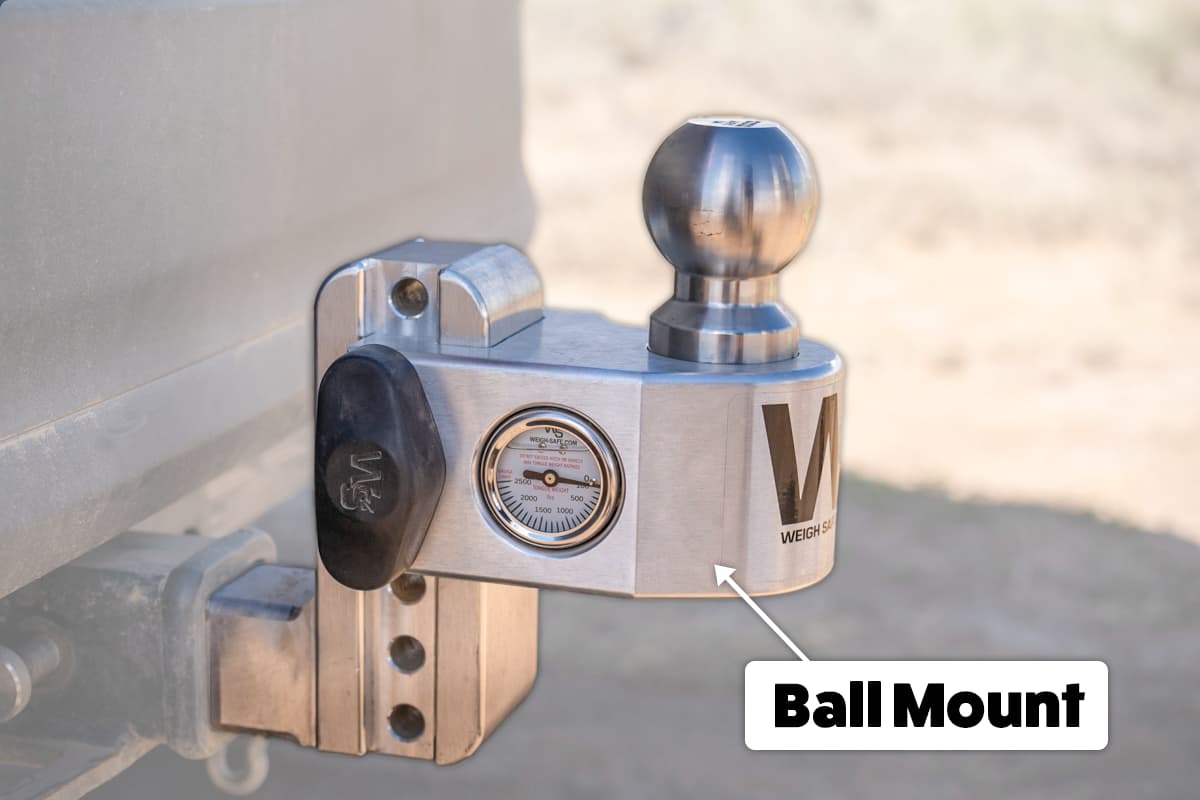
A ball mount (or a “trailer hitch ball mount”) is a removable accessory that slides into your hitch receiver. It consists of a shank, which is held in place with a receiver hitch pin, as well as a flat platform for a hitch ball.
Hitch ball
This is the little spherical metal accessory on the end of a ball mount that directly connects with your trailer’s coupler and allows you to drive while safely connected to your trailer.
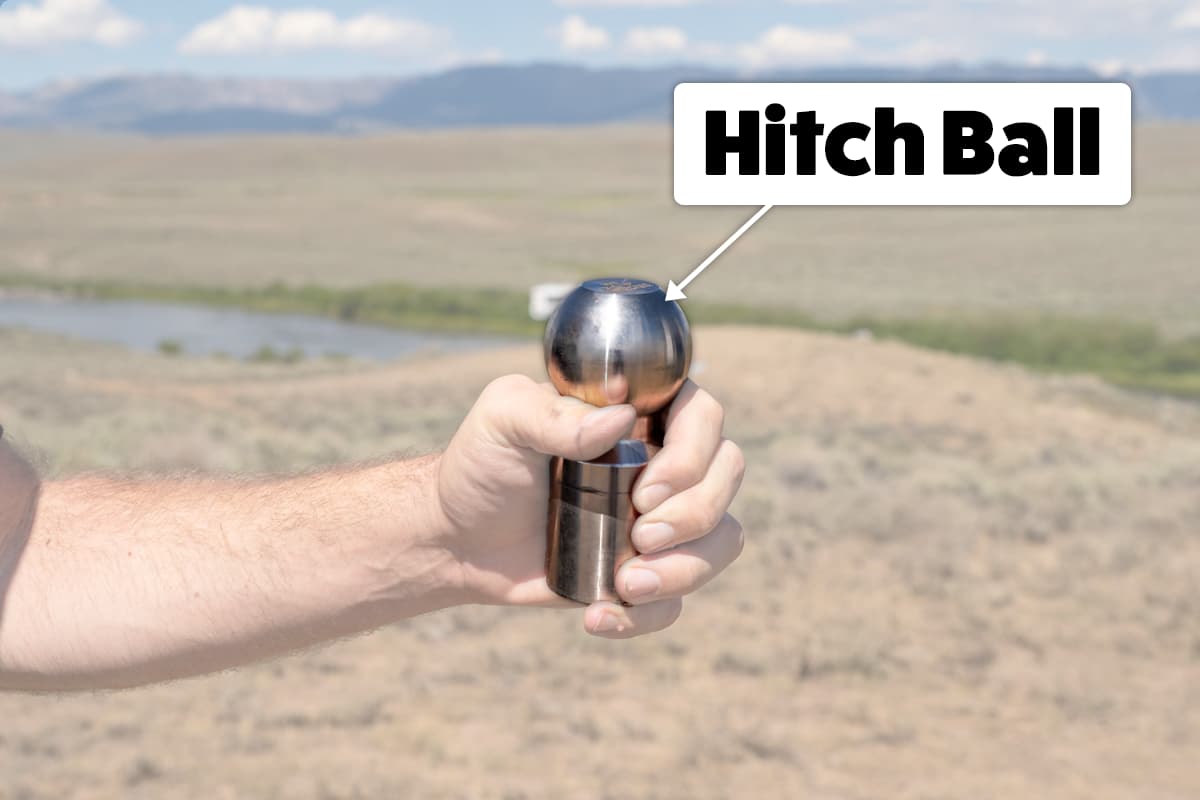
Hitch balls (also called “tow balls”) vary in size, depending on your trailer’s size and weight. Accordingly, most ball mounts do not come with hitch balls, so that you can install an appropriately sized one into the shank of your ball mount.
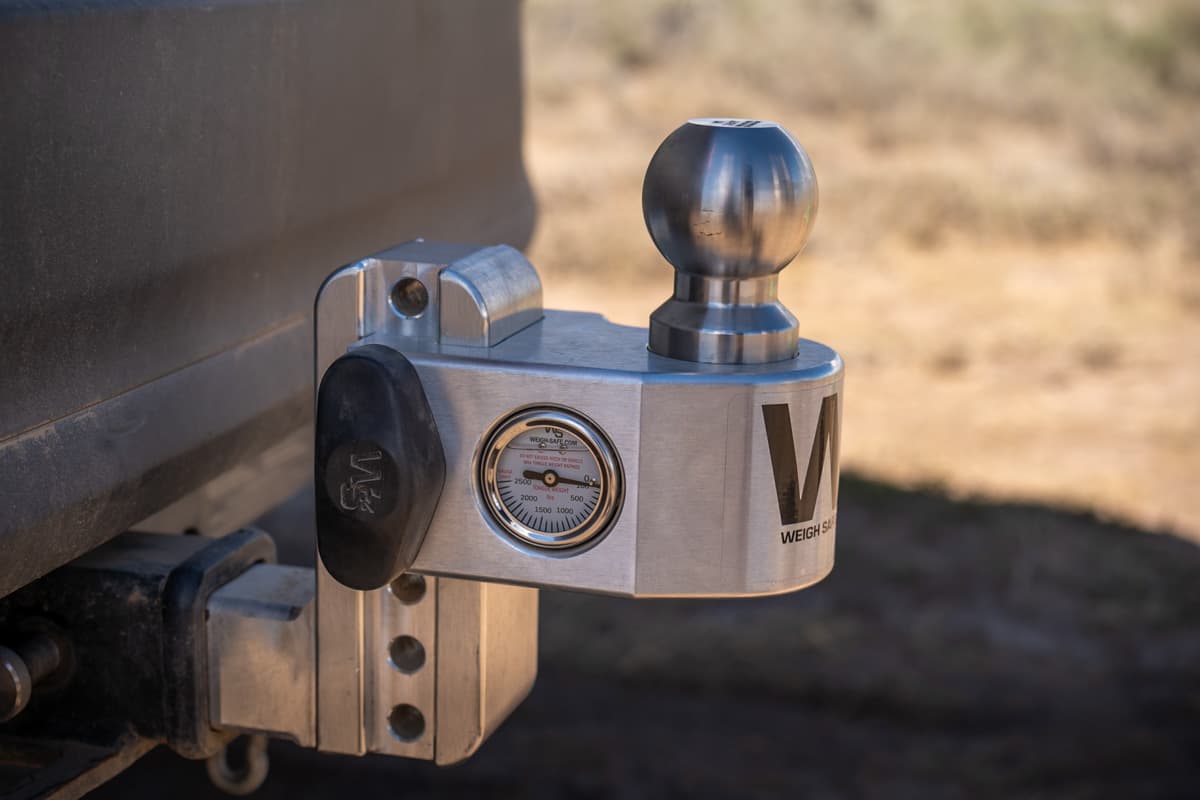
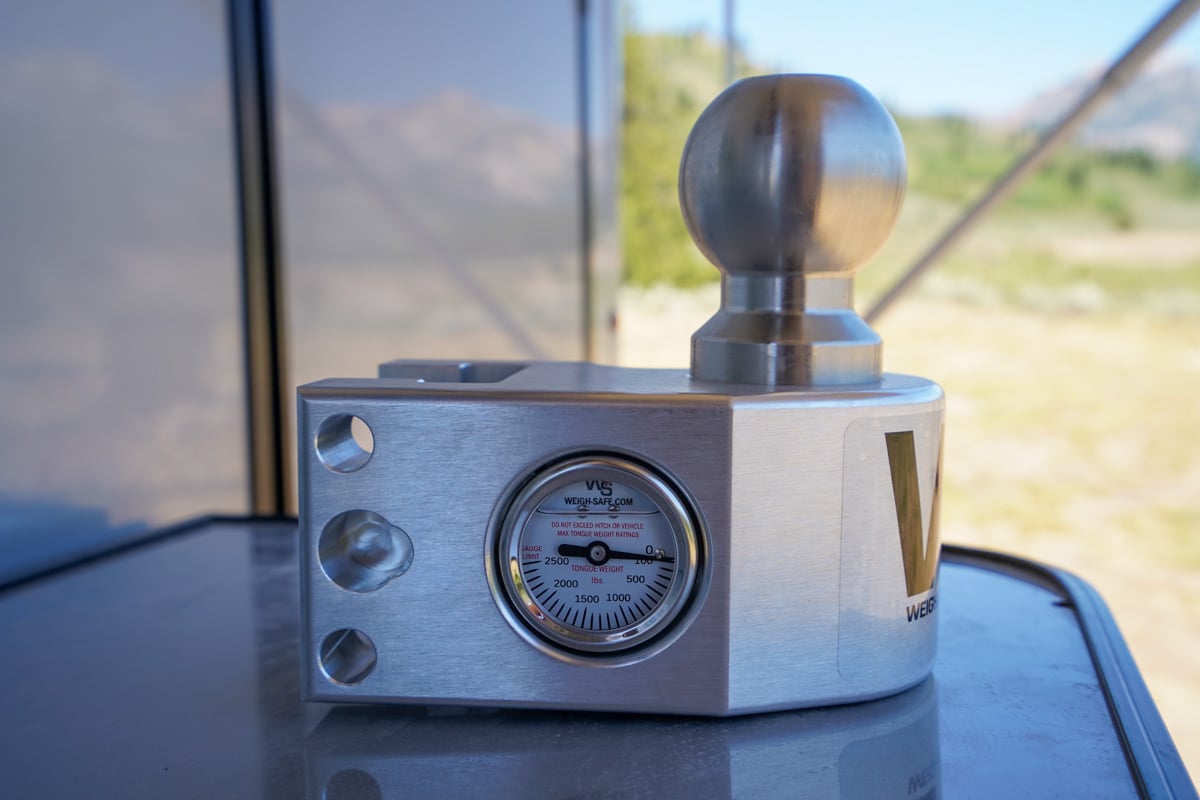
However, we recently picked up this Weigh Safe trailer hitch ball mount from etrailer, which actually comes with two hitch balls of different sizes (both a 2″ and 2-5/16″). This is awesome for people, like us, who wind up towing a couple of different trailers around!
You can also buy adjustable ball mounts, like this option, that come with two or three different hitch balls, which allow you to simply rotate it so you can use the right one for whatever you’re towing.
Picking the right ball mount for your trailer
There are several different steps you need to go through to pick the right trailer hitch ball mount for your particular set-up.
Here’s what you need to evaluate to pick the right ball mount for your trailer and vehicle set-up:
- Step 1: Figure out the proper rise or drop of the ball mount, so that your trailer is level.
- Step 2: Figure out the right shank size.
- Step 3: Figure out your weight capacity.
- Step 4: Choose the right hitch ball.
Let’s get into each of the steps.
Step 1: Figure out the proper rise or drop of the ball mount.
It’s important that your ball mount allows for your trailer to be towed level to ensure the components of both your trailer and car work properly.
For example, if your trailer’s coupler is too low, its tongue will put more weight onto the rear of your tow vehicle, which can make your vehicle’s steering system and brakes not work safely and put unnecessary strain on your rear suspension. Conversely, if your trailer’s coupler is too high, more weight will shift to the back of your trailer, which can cause dangerous swaying and instability, plus uneven wear on your tow vehicle’s tires.
To figure out the correct rise or drop needed for your ball mount, you are going to need to:
- Measure the distance from the ground to the top inside edge of your hitch receiver (for the sake of this article, we’ll call this “hitch receiver height”).
- Measure the distance from the ground to the bottom of your trailer’s coupler, while the trailer is level (we’re calling this “coupler height”).
- Subtract the hitch receiver height from your coupler height to get your drop (if the number is negative) or rise (if the number is positive).
By way of example, let’s say our SUV’s hitch receiver height is 22 ½ inches, whereas the coupler height for our trailer is 16 ¾ inches. When we subtract the hitch receiver height from our coupler height, we find that we need a ball mount with a drop of 6 inches (you should round your rise or drop to the nearest whole number).
There is no “standard” rise or drop needed for a ball mount, given that it will vary between every trailer and vehicle.
If you’re planning on towing multiple trailers or just want to avoid all that math, many ball mounts have adjustable drops. For example, our trailer hitch ball mount can be adjusted in one inch increments, up to a 6” drop, or it can be flipped around to be used up to a 7” rise, accommodating trailers with up to an 11” difference in their coupler height.
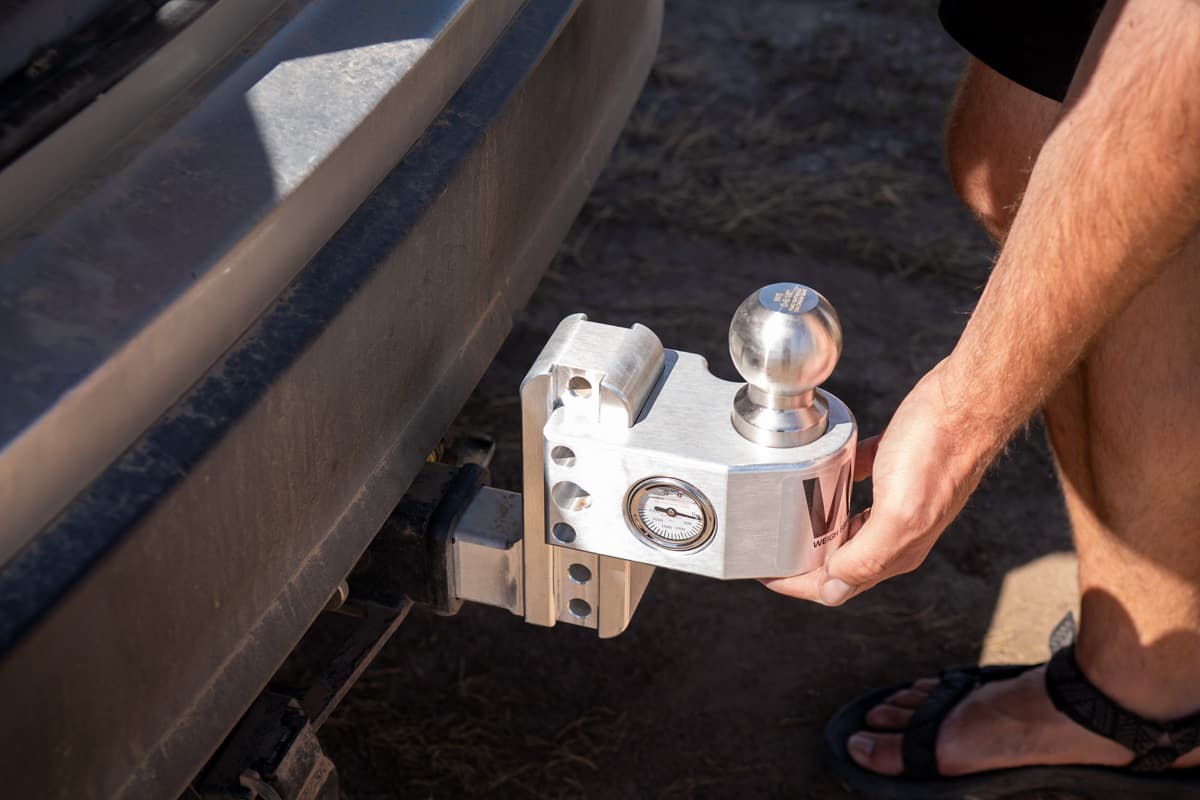
Not all ball mounts can be used in both the drop and rise orientation, so be sure to double check whether yours is safe to do so before towing!
Step 2: Figure out the right shank size for your receiver tube.
Good news—for the most part, the math lessons are done for the day!
The next thing you need to figure out is what shank size you need, based on how big your receiver tube is.
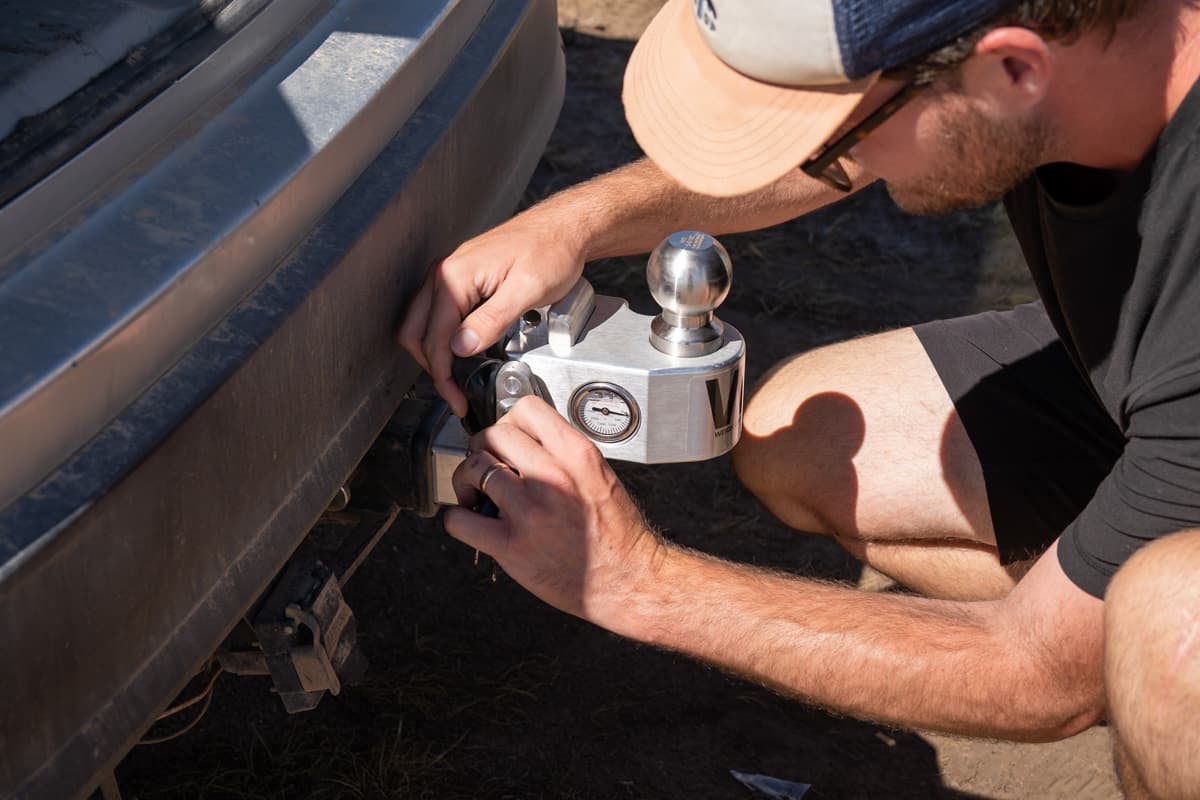
To do this, you simply measure the inner edges of your receiver tube.
There are only four different shank sizes: 1-1/4″, 2″, 2-1/2″, and 3″. These correspond with hitch classes:
- Class I–II (light to medium duty): Smaller cars and SUVs (1.25” shank)
- Class III–IV (heavy to extra heavy duty): Mid-size SUVs and pickups (2” or 2-½”)
- Class V (commercial vehicles): Commercial trucks and vehicles (2-1/2” or 3”)
If you’re an RVer like us, most receiver tubes intended for travel trailers are typically 2” or 2-½”.
Step 3: Figure out your weight capacity.
Next, you need to choose a ball mount that’s strong enough to tow the weight of your trailer.

There are a few numbers to consider when determining how much weight capacity your trailer hitch ball mount needs:
- Gross trailer weight (GTW): This is the total, real-world weight of your trailer, including all of its add-ons, gear, and liquids that are onboard.
- Tongue weight (TW): This is the weight that your trailer’s tongue exerts down onto your vehicle’s hitch ball. Your trailer’s manufacturer will generally publish its tongue weight, which is based on its dry weight only. Once your trailer is all loaded up, its tongue weight will be heavier than the figure published by its manufacturer.
- Towing capacity (TC): This is how much weight your vehicle is rated to safely tow (obviously, your GTW should be less than your TC). This includes the weight of your trailer, passengers, and cargo.
You should get a ball mount that’s rated for at least as much weight as your gross trailer weight and your tongue weight. However, I’d generally just recommend purchasing a ball mount that’s rated for at least as much as your vehicle’s towing capacity, so that you can use it for the full range of trailers that your vehicle is rated to tow.

Most ball mounts are rated for somewhere between 3,000 and 8,000 pounds. However, there are definitely heavy duty options, too—our Weigh Safe ball mount is actually rated to tow a trailer with a GTW of up to a whopping 21,000 lbs!
Step 4: Choose the right hitch ball.
Finally, you need to make sure that your ball mount has the right hitch ball on it.
For this, you simply just need to look at your trailer’s coupler, which should be stamped with what size hitch ball you need (e.g.,1-7/8”, 2″, or 2-5/16”). Most travel trailers or utility trailers have a 2” coupler, while heavier duty trailers, like dump trucks, have a 2-5/16” one.
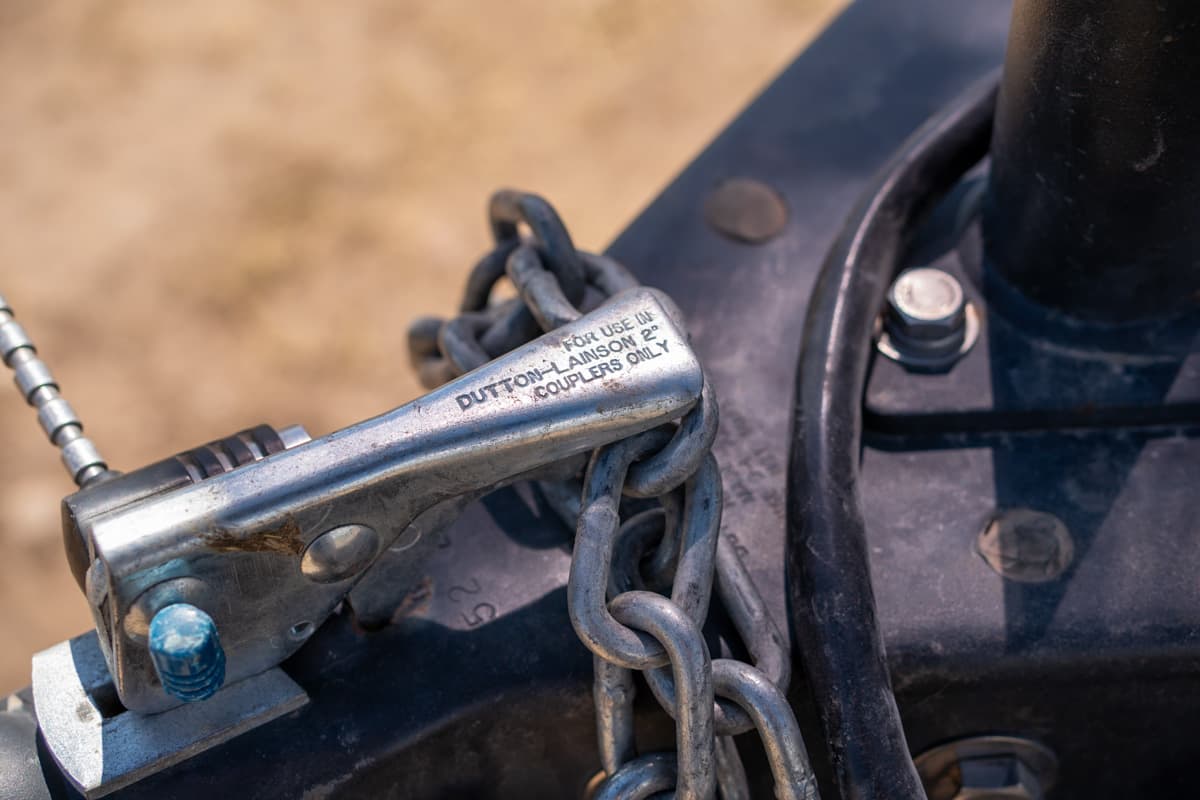
It’s critically important that you get the correct hitch ball size for your coupler. Using a ball that’s too big or small means that your trailer’s connection to the hitch ball is loose, which could result in the trailer actually coming unhitched while you’re towing on the road.
You should also be sure that the hitch ball is appropriately weighted for your GTW (and, ideally, your TC).
Most hitch balls are bolted into ball mounts. It’s important that you use the appropriate torque (e.g., at least 250+ ft-lbs) to prevent the hitch from rattling loose on the road. Alternatively, our hitch ball is actually held into our ball mount with a pin that’s locked into place—no potential rattling loose or torque wrench required!
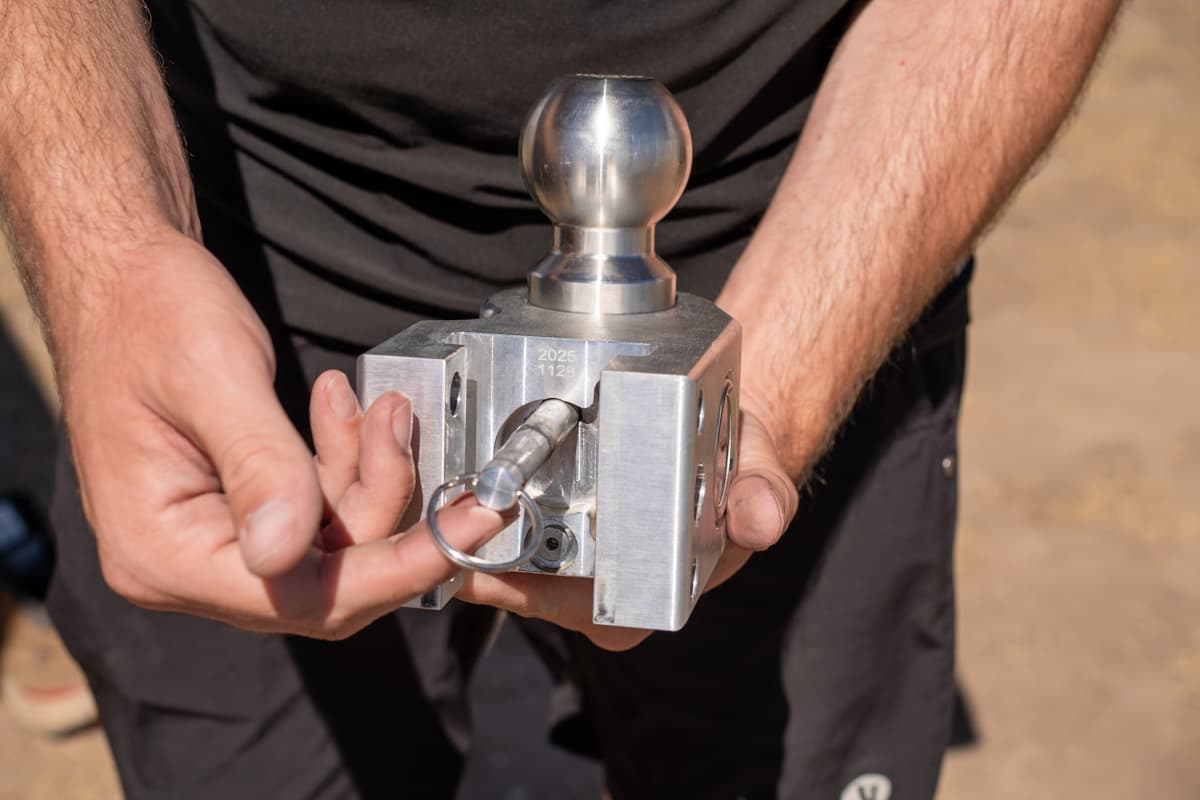
That’s everything you need to know about picking the right ball mount for your rig!
Pssst… if you’re not sure what trailer hitch ball mount to choose for your towing setup, I’d highly suggest reaching out to etrailer, who can assist you with picking the right gear.

We’ve been SO impressed with their customer service—you’ll have to do some of the work (like figuring out the drop or rise of the ball mount that you need), but they’ll hold your hand through picking the right product for you. They can even connect you with a local dealer that can take care of the installation for you.
Tips for choosing a trailer hitch ball mount
Consider getting a ball mount with a built-in tongue weight scale
The tongue weight (TW) of your trailer seriously impacts how safely you can tow. If your TW on your ball mount is too high, it can negatively impact several systems in your tow vehicle, including your steering, braking, and suspension, making it unsafe to drive and potentially damaging your vehicle.
For lots of people who are towing, like most RVers, your TW shouldn’t change that much between trips.

However, if you’re somebody who hauls a variable amount of weight, your TW can change a LOT, depending on what you’re hauling that day and where the heavy items are located in your trailer. Here are some examples of people whose TWs might change a lot between tows:
- Someone who pulls a toy hauler that intermittently has an ATV or other heavy gear stored in it;
- Someone who uses a flatbed trailer to haul around equipment of different weights, like a lawn mower, tractor, or golf cart; or
- Someone who is modifying their trailer and adding heavy items to the manufacturer’s initial design, like lithium batteries or a refrigerator
If you are someone whose TW changes frequently, I’d suggest getting a ball mount with a built-in tongue weight scale, like this one that we have. Thanks to the built-in tongue weight scale, you can know your exact TW of your trailer that day and, if needed, redistribute weight to make sure that it’s under your vehicle’s maximum capacity.
If you have multiple vehicles that you tow with, you can alternatively consider getting a stand-alone tongue weight scale to more readily move the scale between vehicles. I love that with this option, you can even add a SnapPad (our favorite RV jack pads!) to the bottom for extra traction and stability on asphalt or concrete.
Consider whether you need weight distribution bars
Weight distribution bars (also referred to as a weight distribution hitch or WDH) are different from ball mounts, but since they’re directly related to your towing setup, it bears mentioning here.
True to their name, weight distribution bars help distribute weight more evenly between the front and back of your tow vehicle to reduce sway and instability.
You should use weight distribution bars if your trailer weighs more than half of your tow vehicle’s gross vehicle weight rating (GWVR), which is essentially the maximum safe weight of your vehicle, including the car itself, people inside of it, gear, and the tongue weight from an attached trailer.

So, for example, a Rivian pickup truck has a GWVR of 8,532 pounds. If you’re hauling around a trailer with a Rivian pickup, you should use weight distribution bars if you’re hauling around a trailer that weighs more than 4,266 pounds. In fact, Rivian requires that owners use a weight distribution hitch for trailers over 5,000 pounds up to its maximum towing capacity of 11,000 lbs.
Similarly, you should always reach out to your vehicle’s manufacturer to confirm whether or not you should or can use a weight distribution hitch. While some require them, other vehicles can not use them due to compatibility issues with variable ride-height systems. Even if your RV dealer recommends weight distribution bars, you should always confirm with the manufacturer of your tow vehicle. We’ve seen examples of RV dealers that sell WDHs to customers whose vehicles would be damaged if it was used on their vehicle.
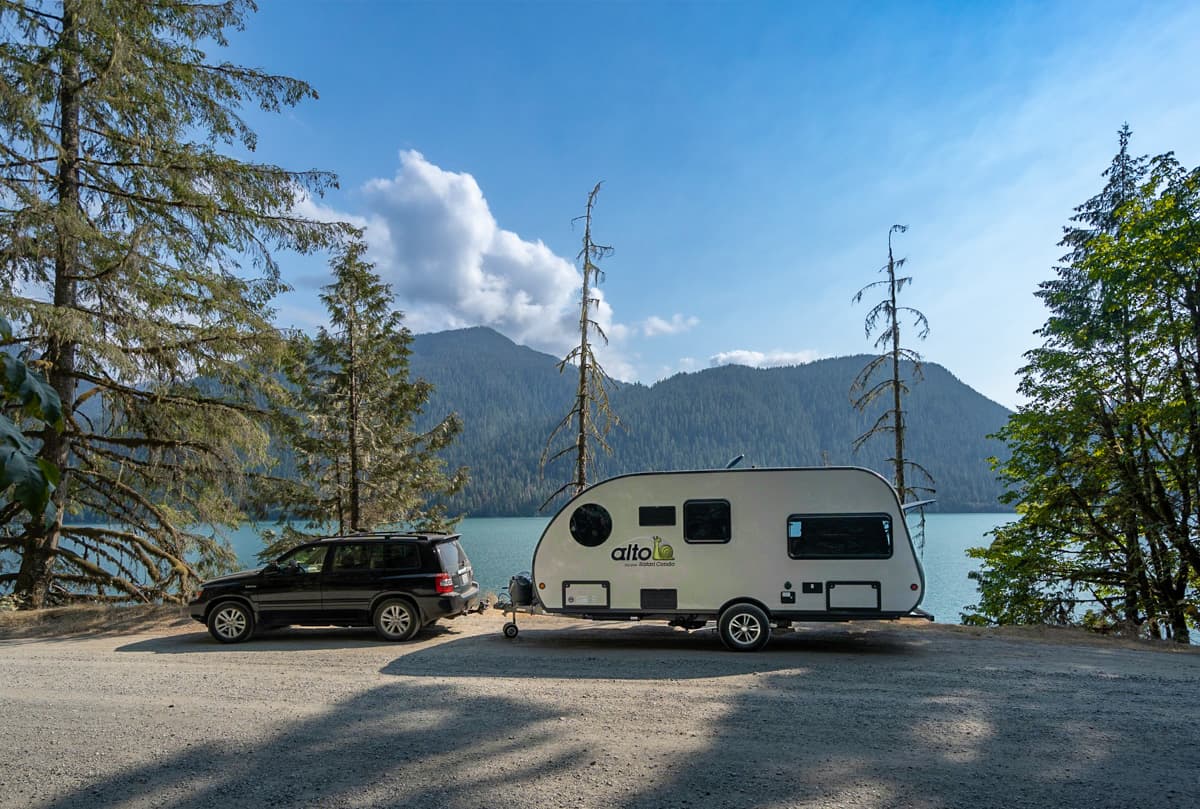
We don’t always use weight distribution bars, especially if we’re hauling a lighter trailer, like our Safari Condo Alto R1723, but we do use this one when we tow heavier trailers, like our Safari Condo Alto F2114.
In full transparency, they have some annoying downsides, like they’re heavy and prevent us from backing up with them on (this isn’t universally true and depends on the sway control system you use), but they can make for a smoother, safer, and more stable ride.
Plus, as referenced above, they’re usually required by vehicle manufacturers if you’re hauling a trailer that weighs more than 5,000 pounds. So, if you don’t use them, you may void your vehicle’s warranty or increase your potential liability if you ever get into an accident.
There you have it—I hope you feel a bit more confident about choosing the right trailer hitch ball mount for your rig! Do you have any questions about choosing the right ball mount? Let us know in the comments below!

Great Videos on YouTube also. I’m in the process of trying to buy (July 2026) a Alto F2114 from Four Courners RV in Colorado (we are in Sunnyvale, CA). Will be pricy with all the features added on (Base Price $54,000 USD. Added Features push it up to $65,000. Federal USA “Tariff” taxes might be $10,000+. California Sales tax 10% (so $6500). Then fees and fees (add in $12,000). I guessing $94,000 total. Good news, used ones are nearly impossible to find so Guess i can sell it for $75,000 in a few years.
Thanks so much for the kind words and for watching and reading! Altos are indeed on the pricy side, but their quality and resale value make them worth it.
If you haven’t already, I’d suggest taking a look at the Altoistes Marketplace on Facebook: https://www.facebook.com/groups/348814702673127. You can oftentimes find great deals on used Altos (or, at least, more affordable than the $94,000!
Let us know if you have any questions about towing or Altos and wishing you all the best!
Jess