

My husband, Justin, and I are full-time RVers and wind up camping on all kinds of funky surfaces—sand, gravel, grass, you name it! While we love camping in off-the-beaten path places, we don’t love the issues that can come with parking our camper on uneven terrain, like instability, having trouble leveling our trailer, or even sinking into the ground.
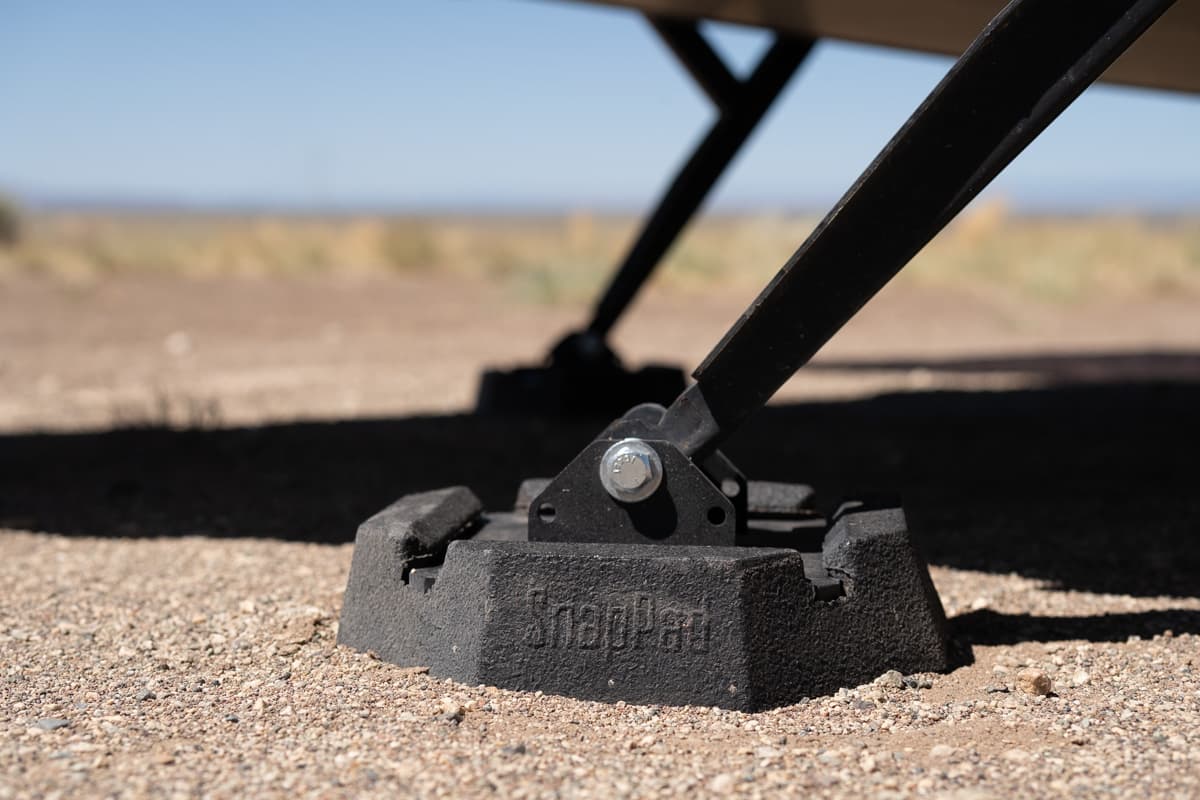
That’s why we recently decided to pick up some RV jack pads to help better level our trailer and offer additional protection when we’re camping on uneven terrain. After doing a TON of research, we wound up getting the RV Stabilizer Jack Pads by SnapPad and are really impressed by them. So, if you’re in the market for RV jack pads, here’s everything I’d recommend looking for in a product before making your purchase.
This post may contain affiliate links. If you make a purchase through them, we may receive a small commission, for which we are extremely grateful, at no extra cost to you.

Thanks to etrailer for sponsoring this article. All opinions are our own.
What is an RV jack pad?
There are essentially two different types of RV jack pads—one for stabilizing jacks (typically for travel trailers and fifth wheels) and one for leveling jacks (typically Class A and Class C RVs, as well as larger fifth wheels and trailers).
Let’s take a look at each of them.
Stabilizer Jacks
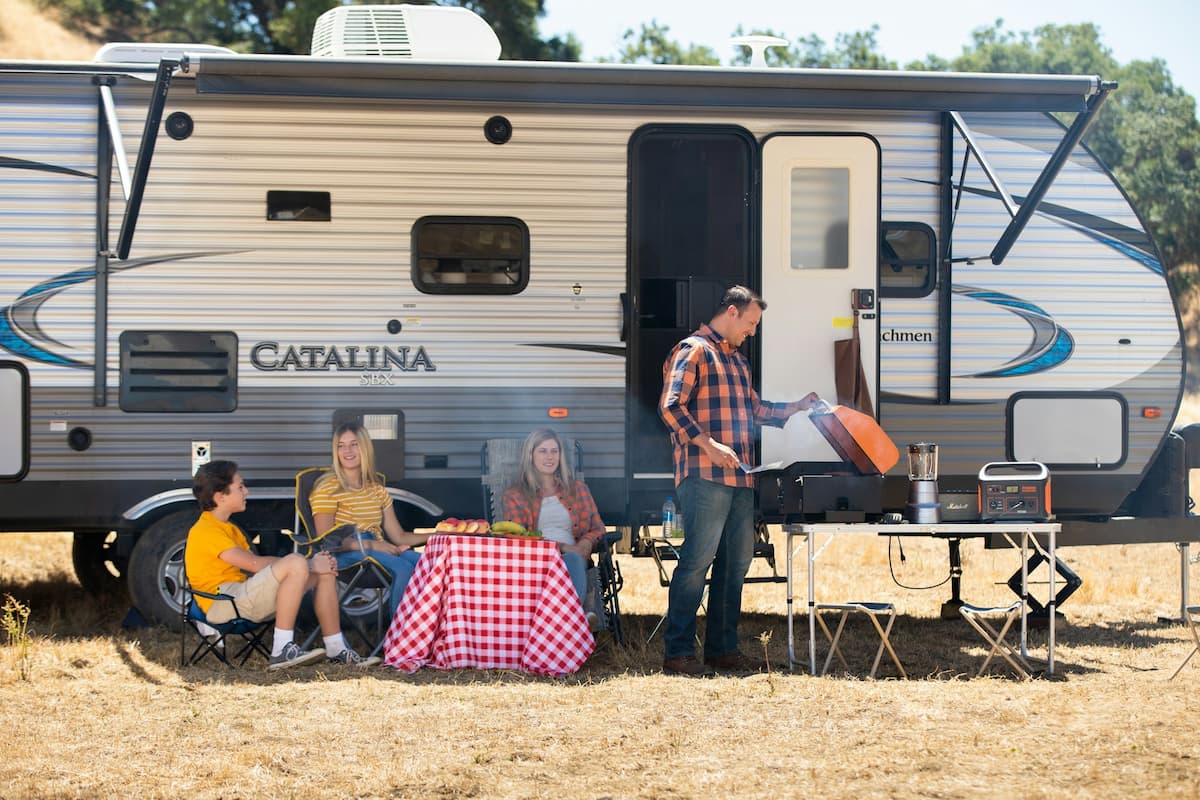
Most travel trailers have three points of contact with the ground when they’re parked—the two wheels and the front tongue jack. So, most trailers also come with four stabilizer jacks (commonly referred to as stabilizers) on each of the corners to provide additional, well, stability!

Once you’ve leveled the trailer, the stabilizers create a more solid foundation for the RV and reduce the swaying or bouncing sensation when you’re walking around the trailer or the rocking sensation that can happen in heavy winds, making your rig feel more like a stationary home. Putting the stabilizers down also helps protect the frame of your trailer from twisting or flexing repeatedly, which eliminates unnecessary strain on its seals and structure.
Pssst…. stabilizers are NOT meant to lift your trailer. You can seriously damage your stabilizers and even your trailer by trying to do so!
Leveling jacks
Leveling jacks are heavy-duty devices specifically designed to raise, stabilize, and level your RV from front-to-back and side-to-side. Having a level RV is important for appliances, like refrigerators or showers, to work properly, as well as to make your home-on-wheels feel a bit more comfortable (I can speak from personal experience that no one likes sleeping with their head pointing downhill!).
Unlike stabilizers, leveling jacks are specifically designed to bear the full weight of the RV and actively raise the frame off the ground to make it completely level.
How RV jack pads support stabilizers and level jacks
While stabilizers and leveling jacks are great and all, their footprint is usually quite narrow—for example, our stabilizers measure just two and a half inches wide.
And, with the average trailer in the United States weighing between 7,000 to 10,000 pounds (and the average Class A weighing in at over 20,000 pounds!), that’s a LOT of weight to put on a narrow piece of metal. Concentrating such a huge amount of weight in a small surface area limits your stability and surface traction and even increases the risk of punching a hole through the pavement you’re parked on.
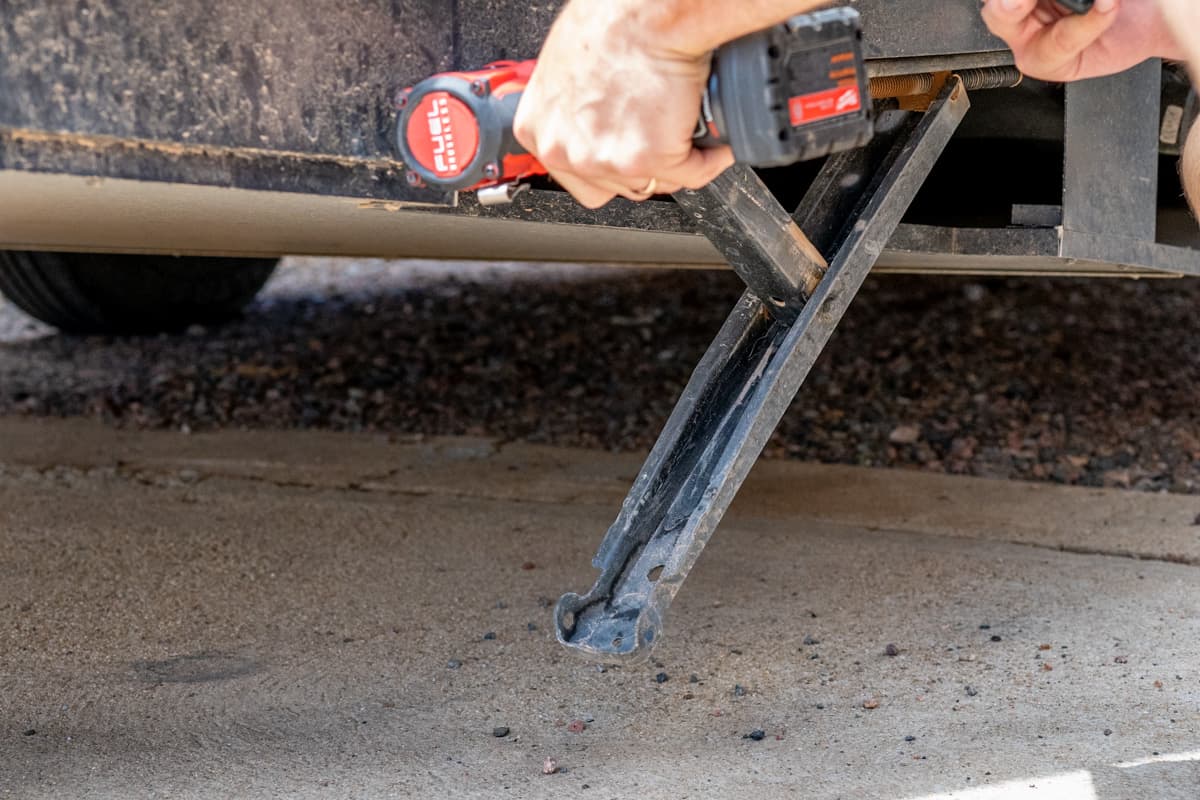
That’s where RV jack pads come in! They’re usually thick circular or octagonal-shaped pads that permanently attach to the bottom of your stabilizers or leveling jacks and provide a wider base to more evenly distribute the weight of your RV.
What are the benefits of using RV jack pads?
Let’s take a look at why you’d want to use RV jack pads in the first place.
1. They provide a more stable base for your RV
As mentioned above, RV jack pads attach to your stabilizers or leveling jacks and provide a much wider footprint for contact with the ground.
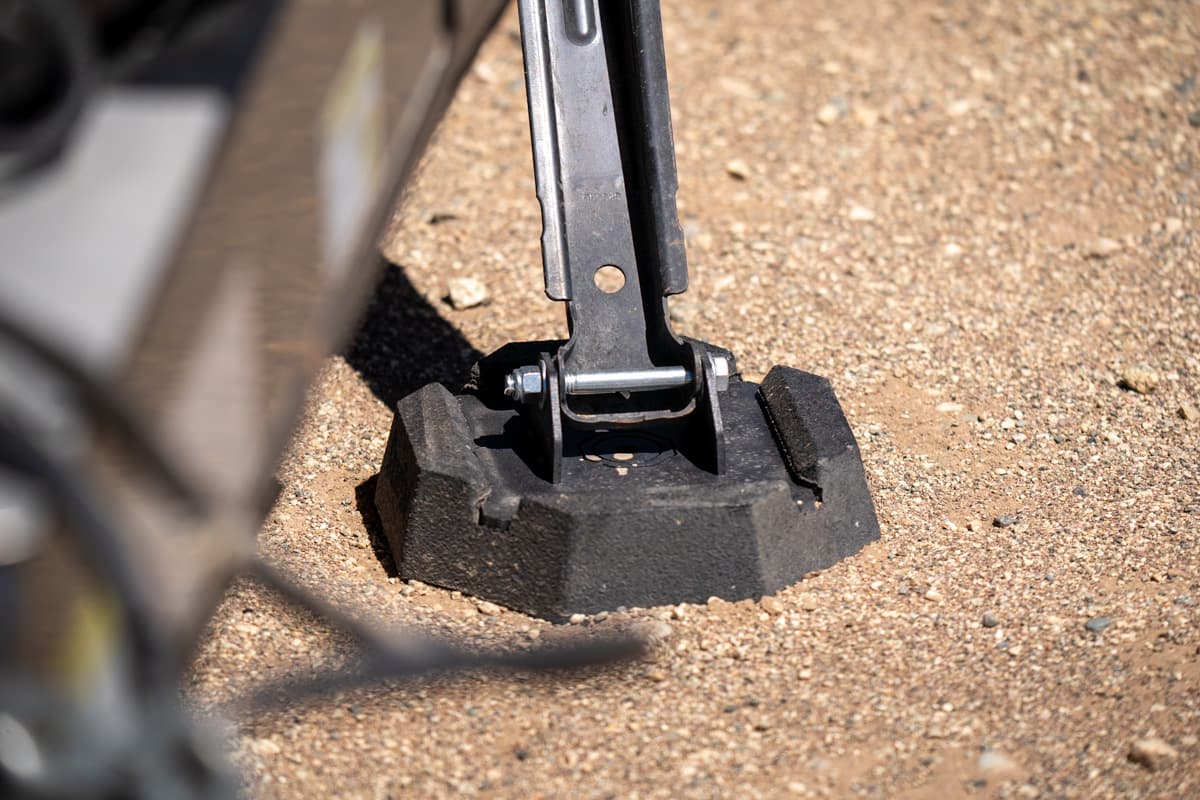
For example, our SnapPad RV Stabilizer Jack Pads have a surface area of approximately 53 square inches per pad, as compared to the five square inches of our stabilizers’ footpads on their own. Similarly, the equivalent product for Leveling Jack Pads has approximately 64 inches of surface area per pad, as compared to the average 20 square inch surface area of a leveling jack footpad.
This wider base helps better distribute the weight, decreases the risk of your RV sinking into the area that you’re parked on, and lessens any rocking or swaying that you might feel while you’re inside.
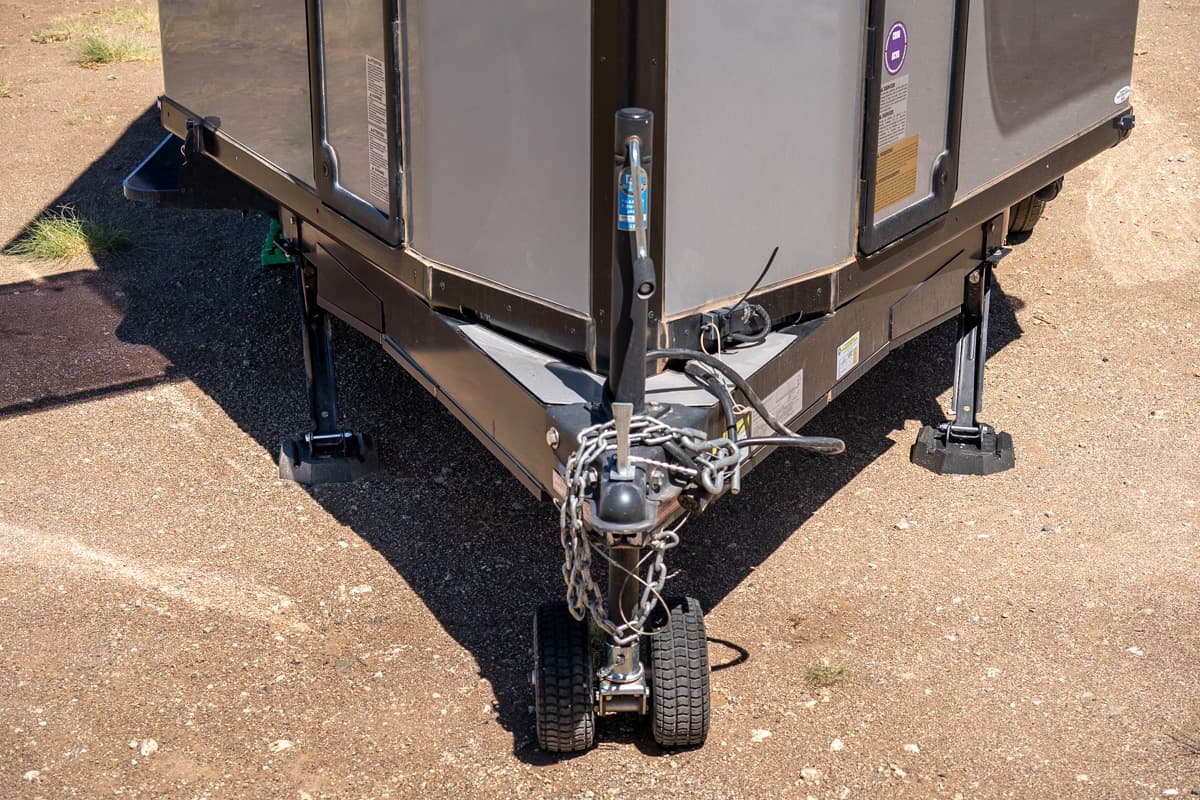
The SnapPads that we have on our trailer are actually made out of recycled tire crumb, which helps better absorb any bouncing around better than some of the other jack pad options on the market, which are made of plastic.
2. They decrease the likelihood of damaging concrete or asphalt
Many campsites consist of a thinly poured slab of concrete on top of the ground.
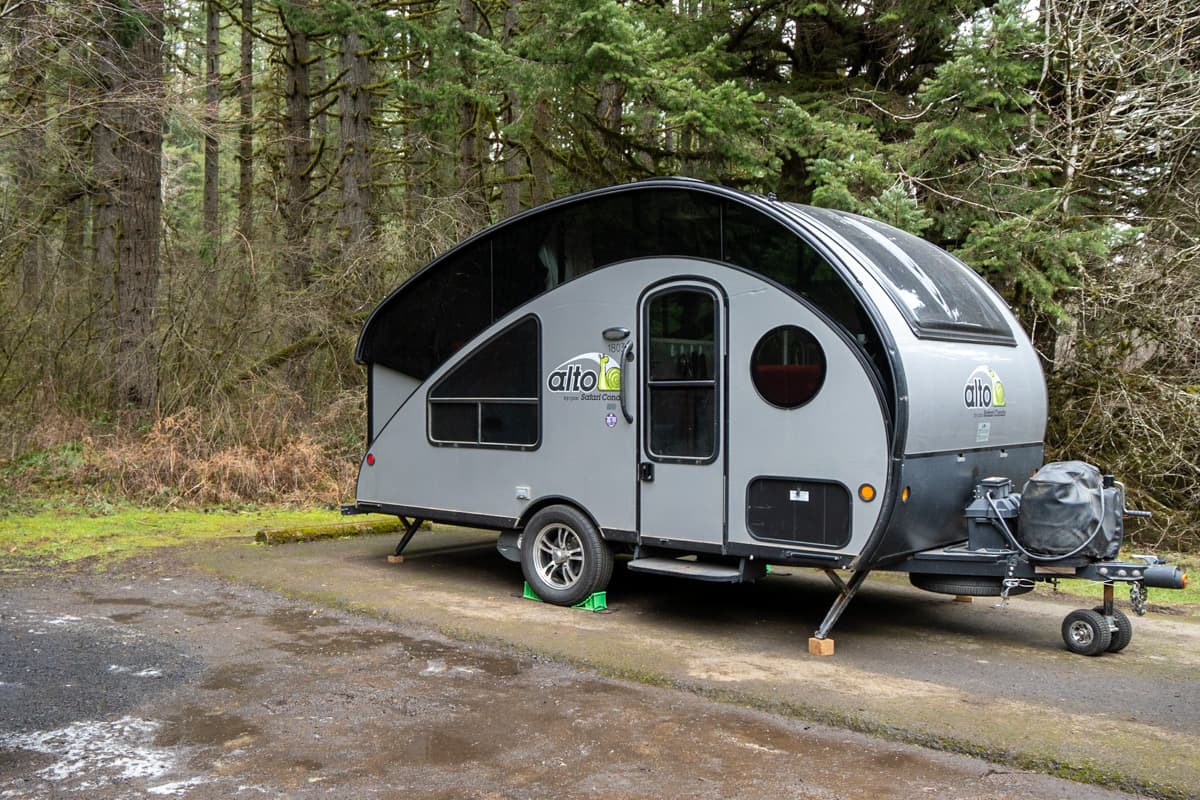
Now, imagine having THOUSANDS of pounds of pressure from your RV’s weight concentrated on the narrow footprint of your stabilizers or leveling jacks on a thin slab of concrete—and it might start making sense why you’ve seen campsite pads that have a bunch of holes punched through them.
Accordingly, lots of campgrounds require that you have some kind of pad under your stabilizer (we’ve personally stayed at several KOAs that strictly enforce this requirement!). And while you might not care that much if you leave scuffs, cracks, or holes behind at RV parks, I’m SURE you care more about whether you accidentally damage your driveway at home.
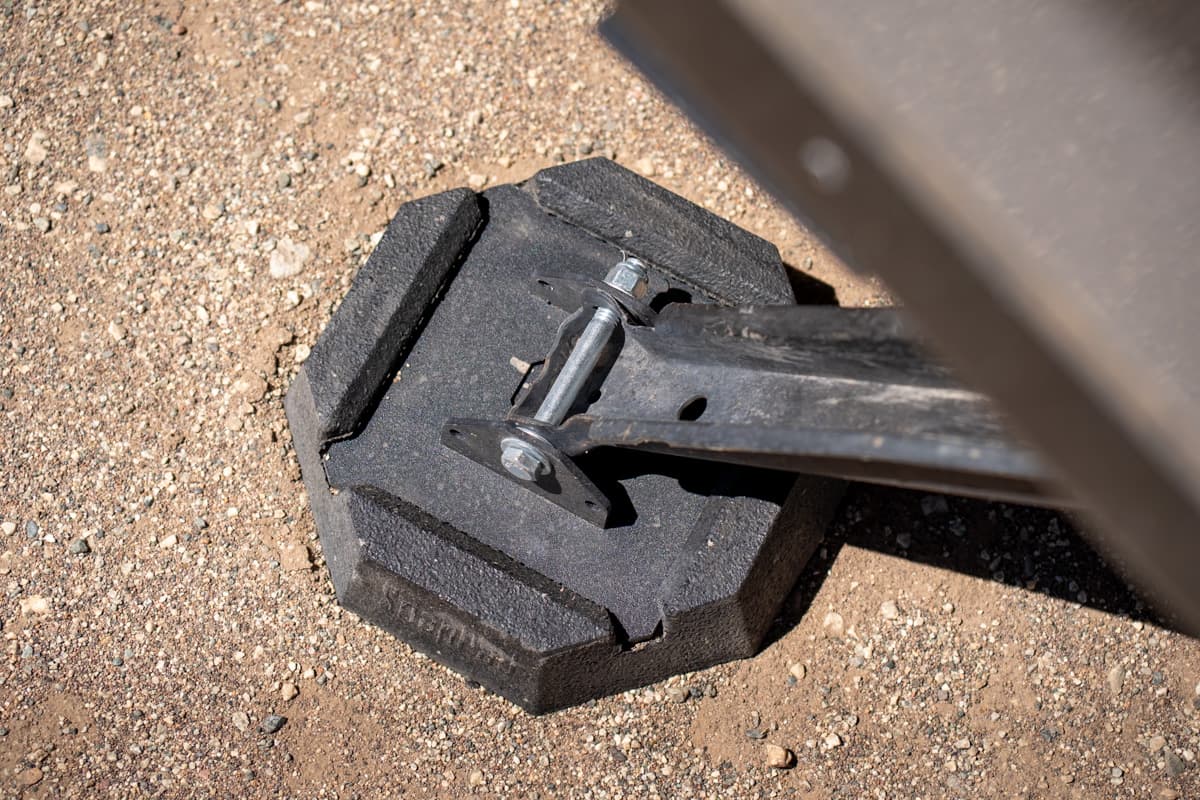
With RV jack pads, the weight of your RV will be more widely distributed and is much less likely to cause damage to any concrete or asphalt that you put your stabilizers or leveling jacks down on.
3. They eliminate the need for plastic or wood blocks under your RV.
Of course, there are other solutions to distribute your RV’s weight under your stabilizers or leveling jacks than just RV pads—for example, we previously used our leveling blocks under our stabilizers or, if we were at a super uneven site that used most of our leveling blocks, we’d sometimes just bust out regular ol’ wooden blocks.

This generally wasn’t a huge issue, but there have definitely been times when we’ve had to crawl around on the ground to pick up these blocks in less than ideal conditions when we’re ready to leave a campsite.
As just a few examples, we’ve had blocks that are crawling with fire ants in Florida (definitely would not recommend!) or when they become encased with wet sand or with mud, in the event of rain. In these instances, we always have to clean the blocks off before putting them in the exterior storage of our RV or the back of our SUV.
With RV jack pads, on the other hand, they’re permanently attached to your stabilizers or leveling jacks, so you don’t have to pick or clean anything up. They just neatly retract under your RV, along with your stabilizers or leveling jacks and stay there during transit. This is definitely a huge plus if you have any kind of mobility challenges or simply don’t prefer to bend down and fart around with stuff on the ground.
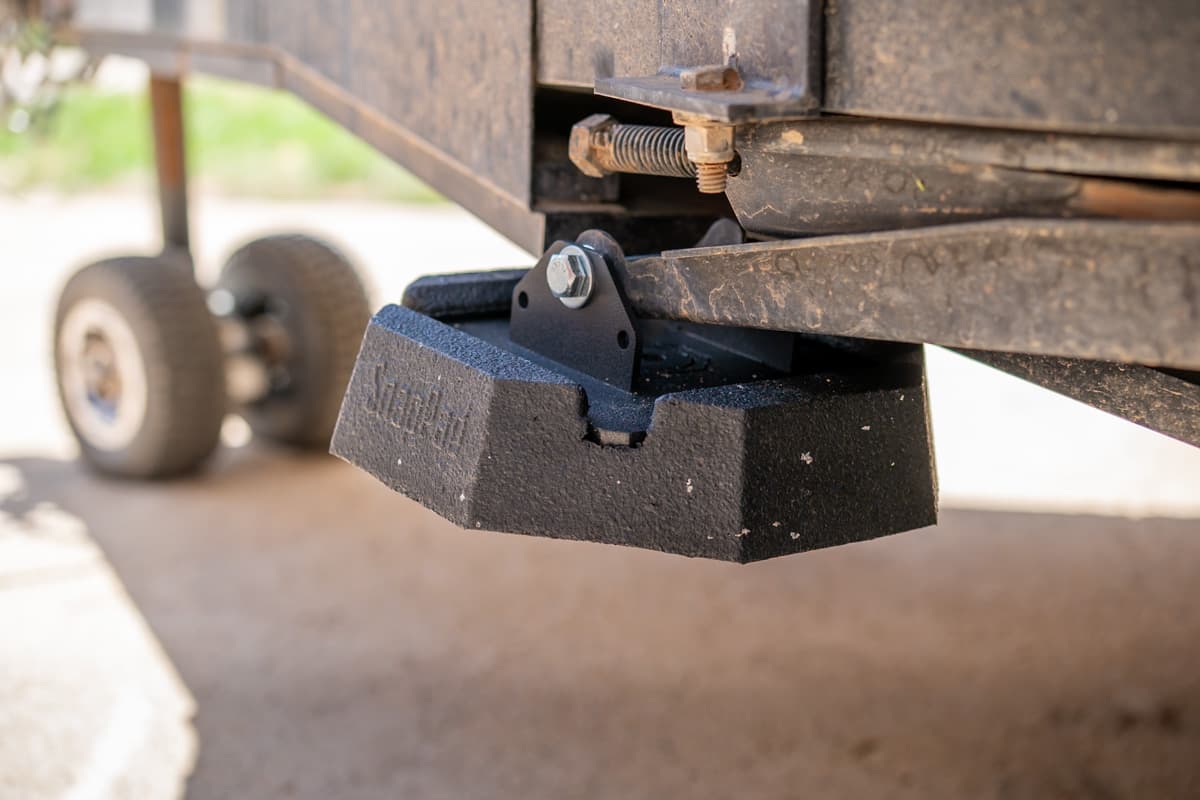
Insider tip: Ensure that your rig has enough ground clearance after retracting your stabilizers or leveling jacks if you choose to keep them attached permanently. You wouldn’t want them to make contact with ground on steep transitions or when hitting bumps on the road at high speeds.
4. They protect your stabilizers or leveling jacks from damage.
Finally, since stabilizers and leveling jacks have a narrow, metal footprint, it’s not uncommon for them to get dents, scratches, rust, or other damage, from being retracted up and down, supporting thousands of pounds of weight on uneven ground, over the years. This is potentially a HUGE problem for leveling jacks, given that RVs with this equipment generally require that the levelers work properly in order for some of its appliances to work and for it to feel comfortable inside your RV.
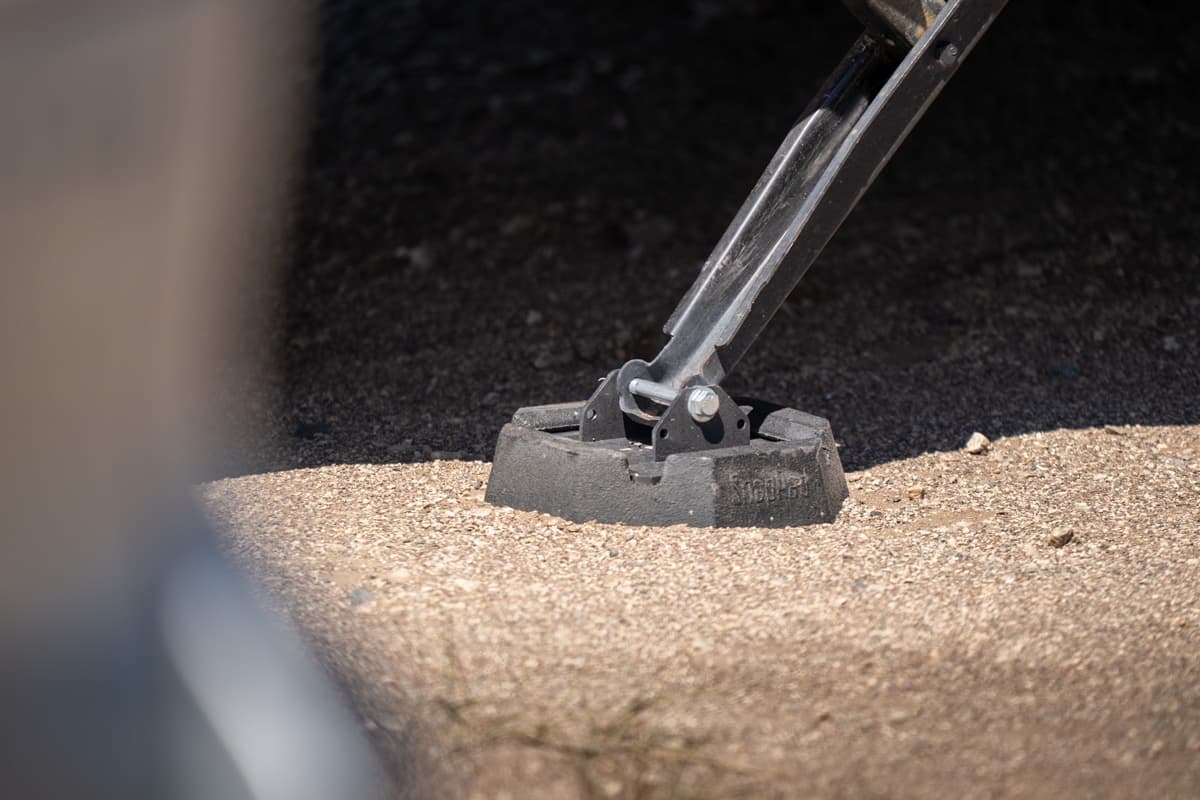
RV jack pads serve kind of like a horseshoe for your stabilizers or leveling jacks, protecting them from wear and tear, providing extra traction on uneven surfaces, and protecting their footprint.
What are the best RV jack pads on the market?
After running into some of these issues with our stabilizers one too many times, we decided to upgrade to some RV jackpads and after falling down a rabbit hole of different options, we wound up selecting the SnapPad RV Stabilizer Jack Pads (here’s an equivalent product if you have leveling jacks instead of stabilizers). We’ve been using them for the last few months and have fallen in LOVE with them.
Here’s a couple things that we like about this particular product.
Pssst… There are a TON of different RV jack pads to choose from, depending on whether you have stabilizers or levelers, what kind of leveling system you have, and how heavy your RV is. We picked up ours from etrailer.com, who have an incredible customer service team who are happy to answer any questions you might have about what kind of RV accessories are compatible with your rig.

We needed to get helper springs for our suspension springs to help our car’s suspension, but weren’t sure if it would fit our particular model of car. Their customer service not only scoured HUNDREDS of reviews of a particular product to see if it would work for our car, but they even reached out to the manufacturer on our behalf!

So, if you’re not sure what product to get or where to start, I’d definitely recommend connecting with their customer service team, who can help you wade through all of the options and pick the best RV jack pads for your setup!
They’re made out of recycled rubber
One of the main reasons we were drawn to these particular RV jack pads was that they’re made out of recycled tire material.
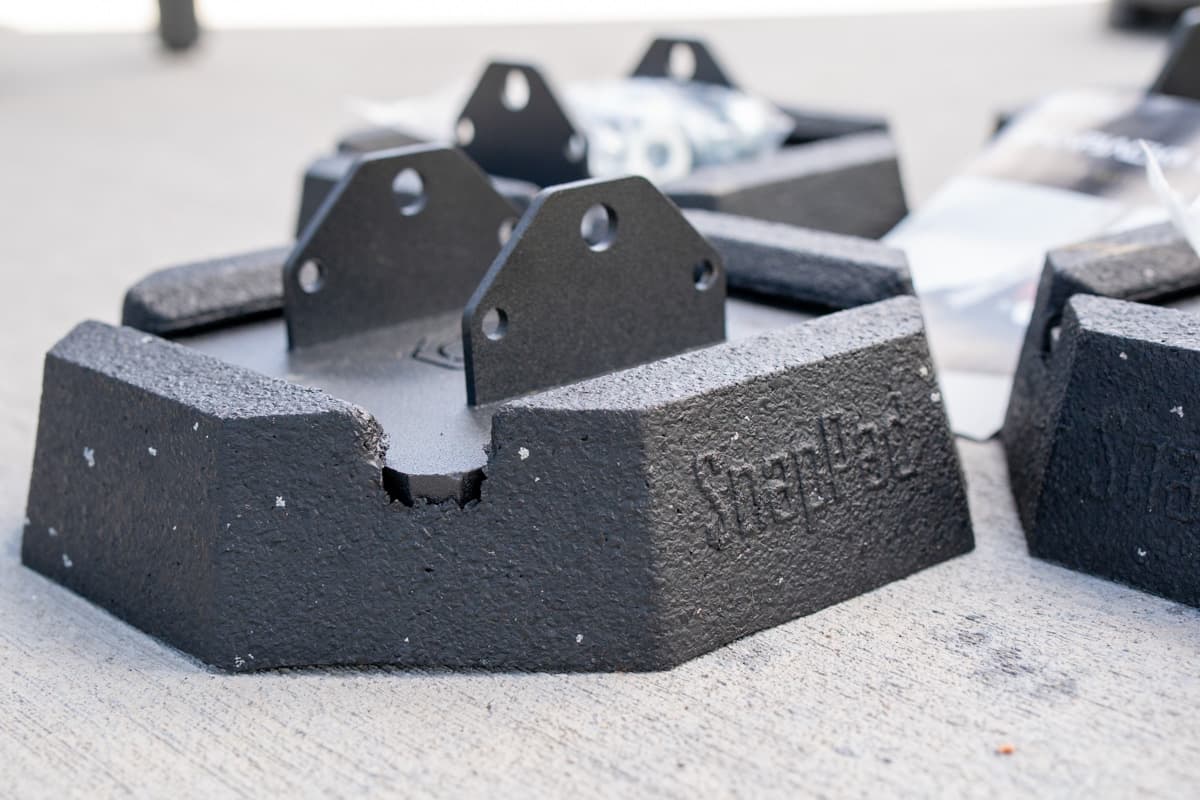
As crunchy people, we, of course, love that it’s using recycled materials, but rubber is just better than most other jack pad materials on the market, like plastic or wood. It’s more durable to take the weight of your RV year after year; it provides more grip and traction if you’re putting the stabilizers down on a rocky or uneven surface; and absorbs more of the RV’s sway and rocking when we’re moving around in it.
There’s a one-time easy installation
These RV jack pads come with all of the hardware you need to attach them to the bottom of your stabilizer and they’re incredibly easy to install.
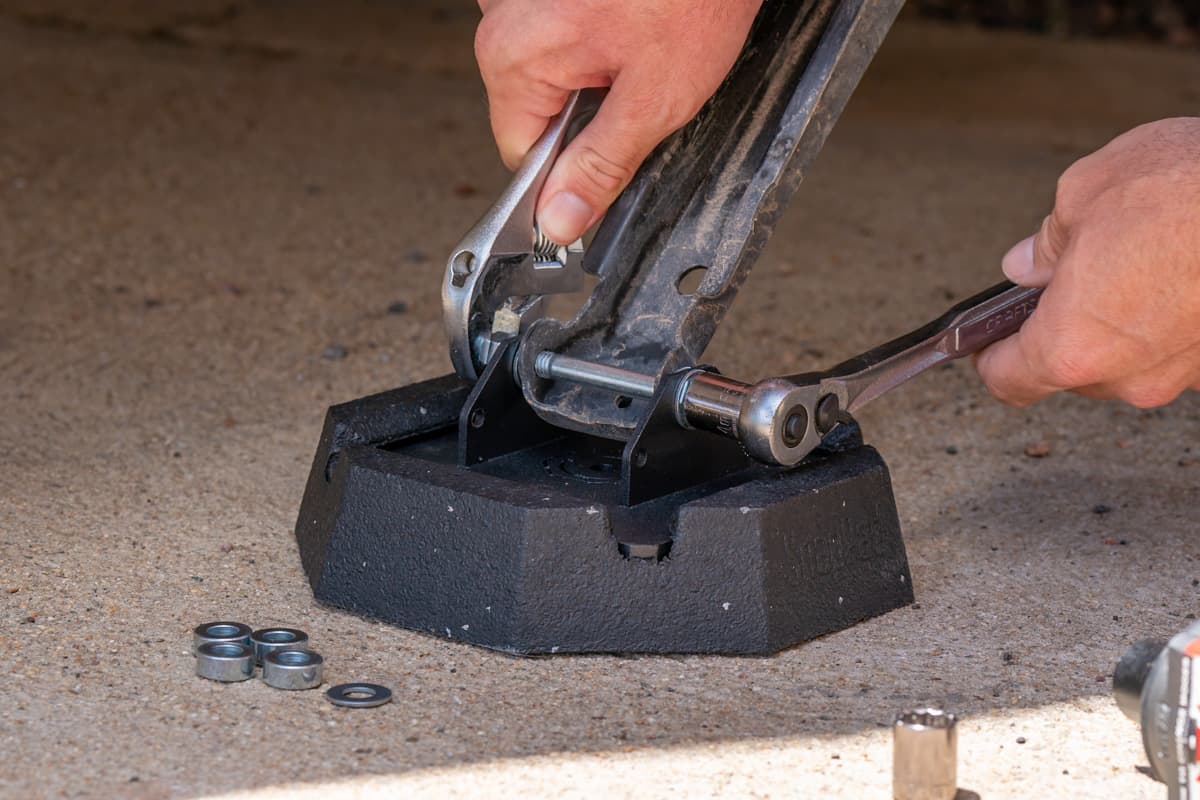
It took Justin about five minutes per pad to install them once—and that’s it! No more crawling around on the ground, putting leveling or wooden blocks under our stabilizers, after a long day of driving our rig! We actually don’t even carry around wooden blocks anymore.
Plus, we love that if you happen to wear down the rubber material, you can purchase replacement pads that simply snap onto the jack foot.
They’re thoughtfully designed
Beyond just being constructed out of a durable material, the design of the SnapPad RV Stabilizer Jack Pads is kind of brilliant.
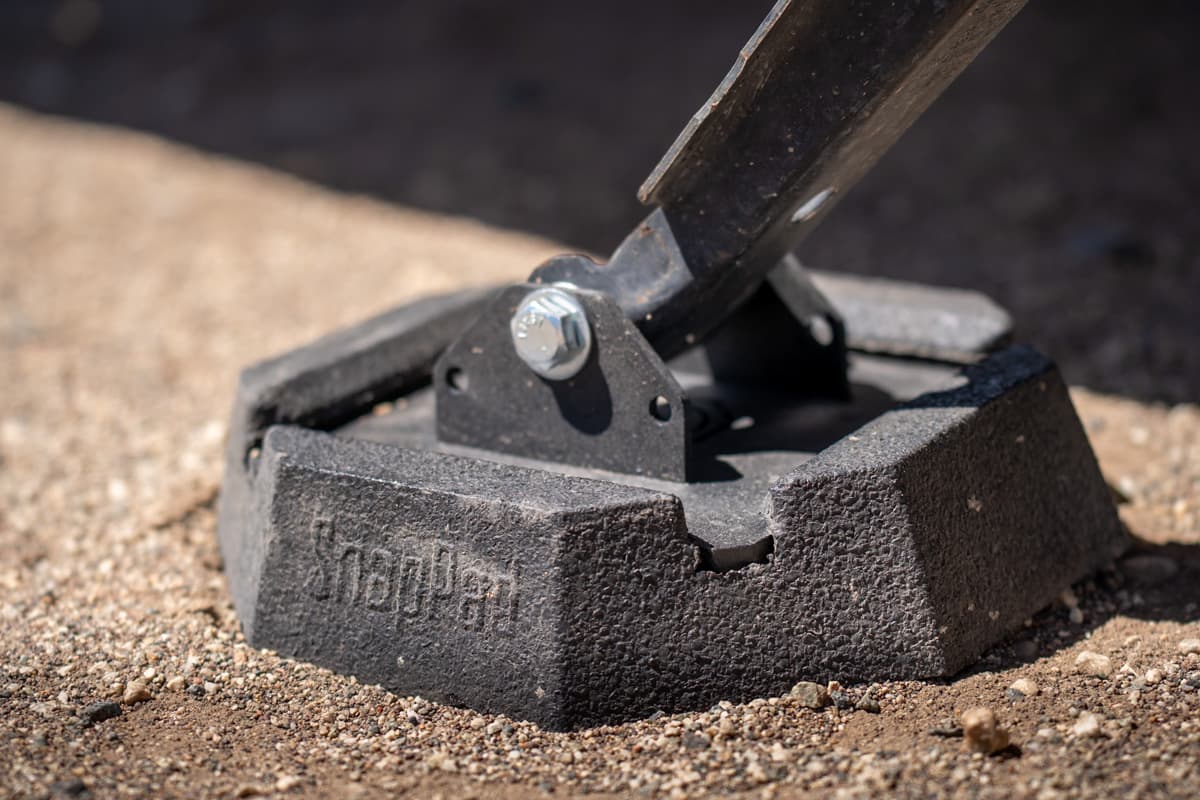
Beyond just having 53 square inches of surface area per pad to disperse our trailer’s weight, it’s also pretty thick (at 2-3/4″ tall), meaning that we don’t have to worry about overextending our stabilizers if we’re in a particularly unlevel spot. The jack pads are also designed with little channels carved into the side, to funnel any water or melted snow that might gather on top of them, preventing your footpads from rusting.
I hope you find the right RV jack pads for your rig—they’ve been SUCH a nice addition to our trailer! Do you have any questions about RV jack pads or our experience using them? Let us know in the comments below!
Thank you for reading our post! Check out our latest stories here and follow us on Instagram (@JustinAndJess_), YouTube, TikTok, or on Facebook to see what we’re up to next!
