

The Tour du Mont Blanc is one of the most bucketlist-worthy treks on the planet, looping 105 miles through some of the most stunning scenery of French, Italian, and Swiss Alps. But what exactly do you need to pack for 10+ days on this trail?
After doing TON of research on how to plan and pack for this hike, my husband, Justin, and I recently completed the entire Tour du Mont Blanc over the course of 10 days, staying at mountain refuges each night. Here’s our tried-and-true Tour du Mont Blanc packing list if you’re hiking the trail hut-to-hut, including everything you need to bring and what you can leave at home.
This post may contain affiliate links. If you make a purchase through them, we may receive a small commission, for which we are extremely grateful, at no extra cost to you.

What is the Tour du Mont Blanc?
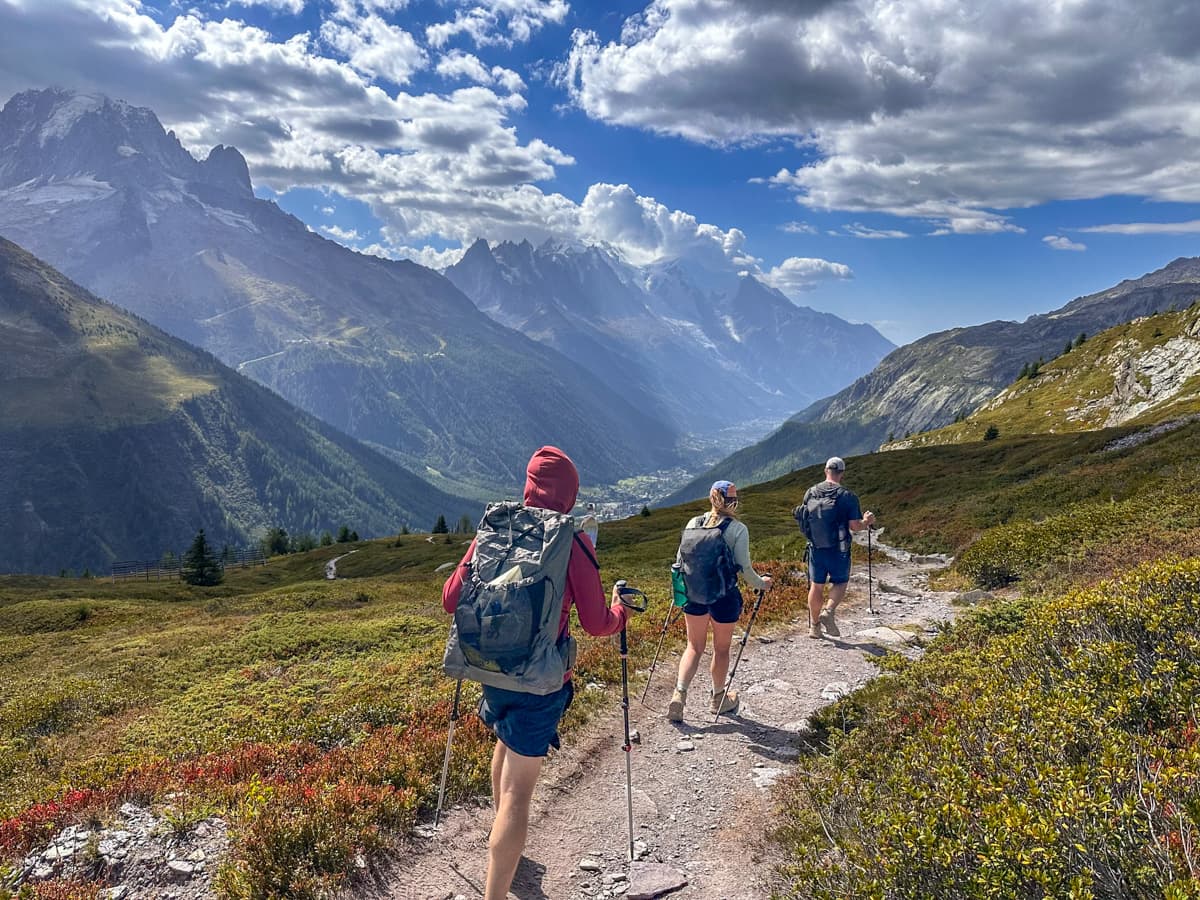
The Tour du Mont Blanc (also called the “TMB”) is hiked as a multi-day trek through Italy, Switzerland, and France, looping around Mont Blanc, which is the tallest mountain in the European Union. Along the way, you get to hike past massive glaciers, explore fairytale alpine villages, and eat all kinds of fun foods, ranging from pistachio croissants to homemade gnocchi.
The TMB is traditionally hiked over the course of around 11 days. However, there are literally endless ways that you can adjust the itinerary, depending on how much time you have and your abilities. We actually wrote a whole post about planning your Tour du Mont Blanc itinerary here!
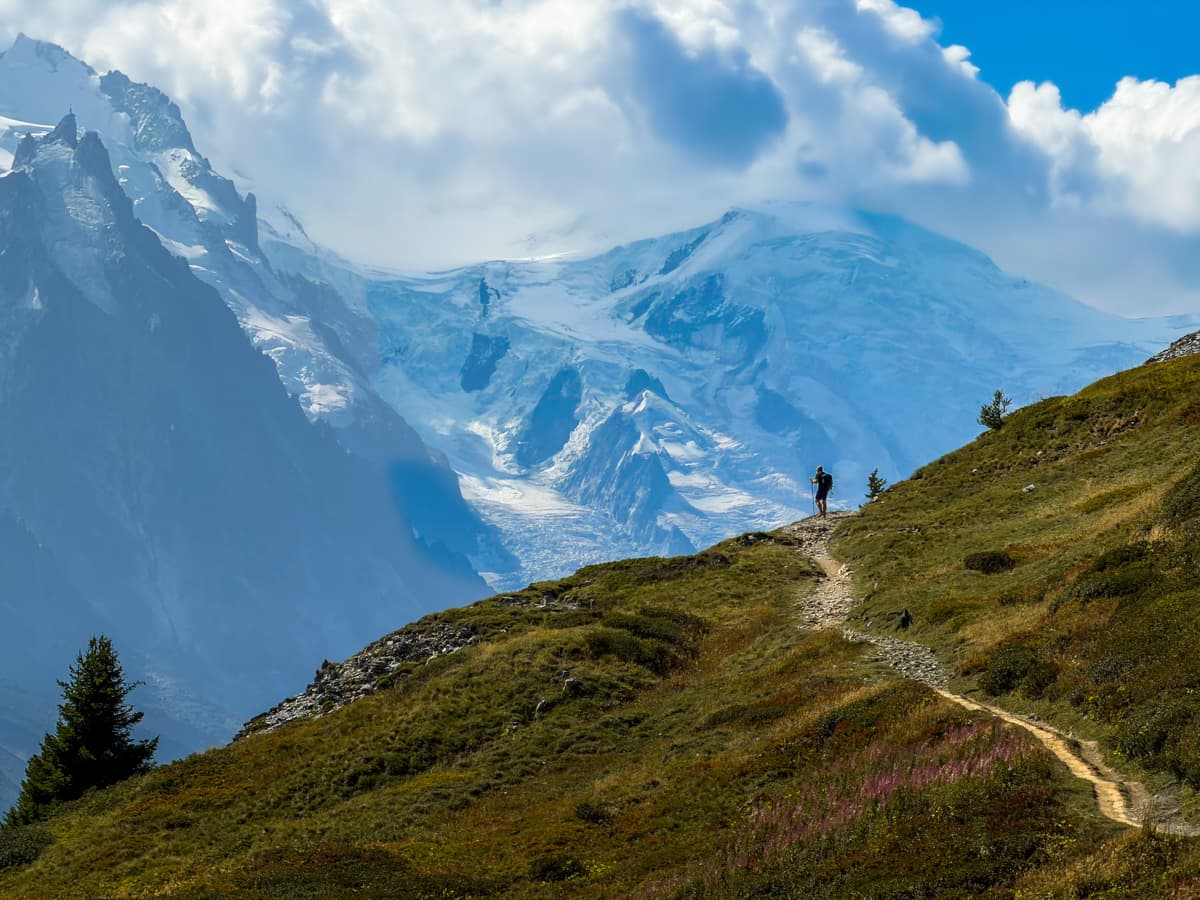
An estimated 90% of hikers, including us, complete the trail as a hut-to-hut trek, staying at mountain refuges along the way that offer everything from comfy beds and delicious meals to cold beer and hot showers. The remaining 10% of hikers complete the trail while camping, carrying tents and other camping gear, from campground to campground every day.
Besides the obvious perks of getting to stay at a cozy mountain refuge, one of the biggest benefits of hiking the Tour du Mont Blanc as a hut-to-hut trek is that you don’t need to pack and carry any heavy camping gear or worry about setting up and tearing down your tent every night. However, there are a few unique things that you need to bring for your stay at mountain refuges that you might not necessarily bring on most of your hiking adventures.
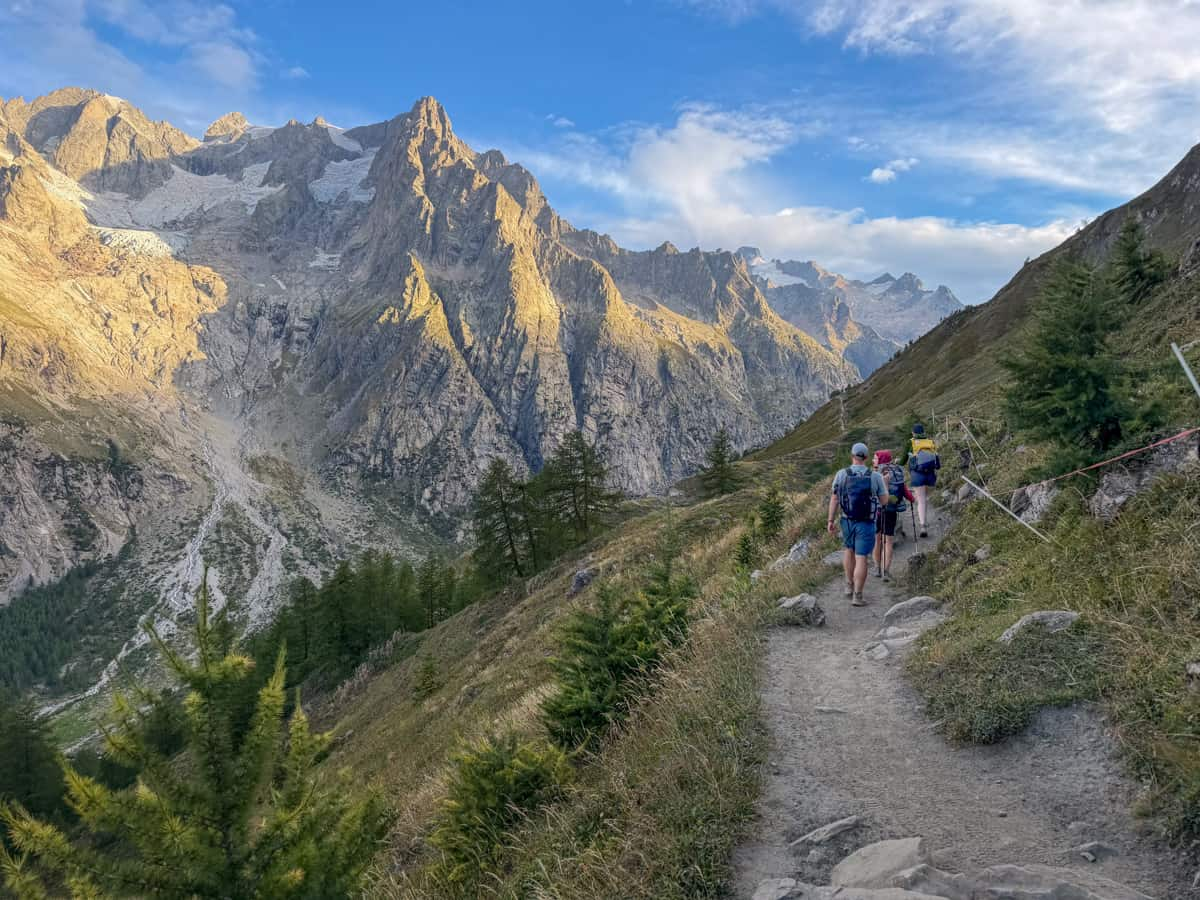
With that, let’s get into it!
Tour du Mont Blanc packing list (for hut-to-hut hikers)
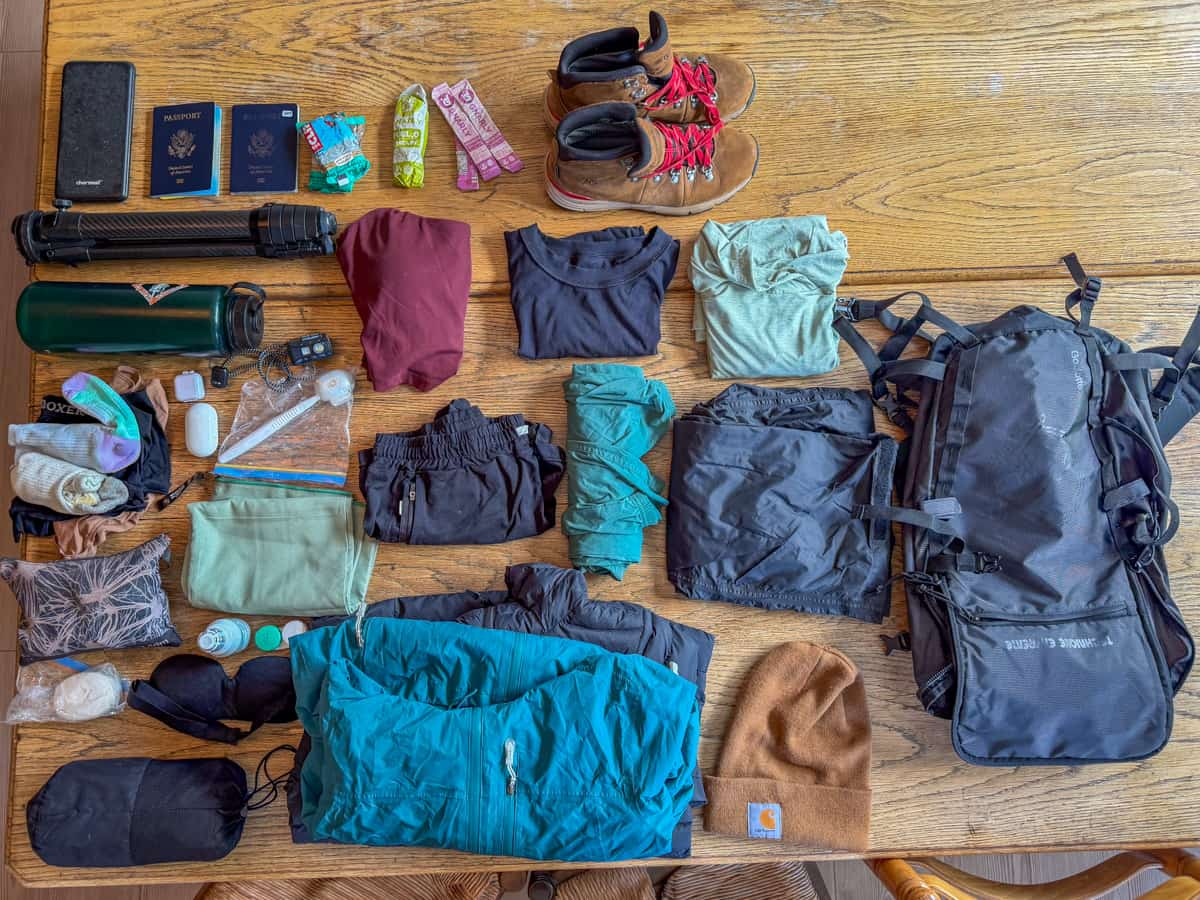
For our packing list below, I’ve provided some context as to why we recommended bringing certain items along on the Tour du Mont Blanc, based on our personal experience on the trail.
But, if you’d just prefer to look at a straightforward bulleted list of what to pack for the Tour du Mont Blanc, you can just jump straight to that here.
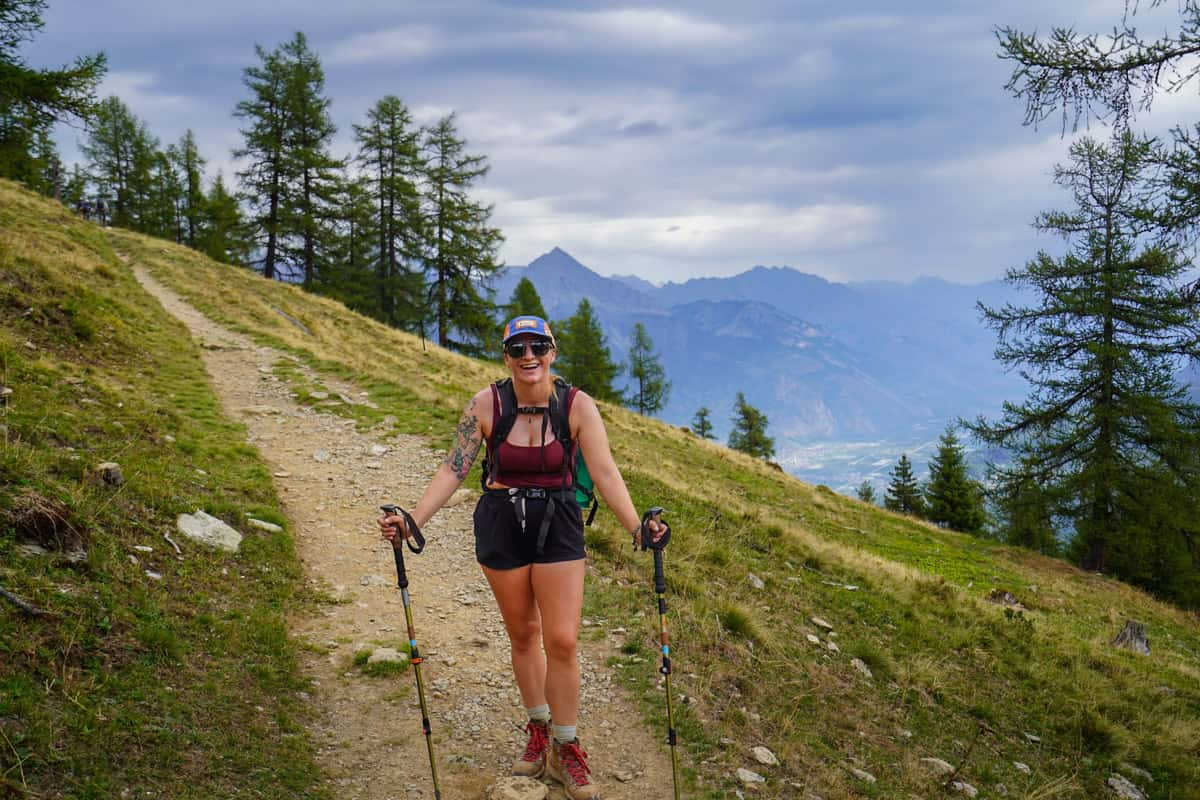
Backpack
- For women: Osprey Kyte 38L
- For men: Osprey Talon 33L
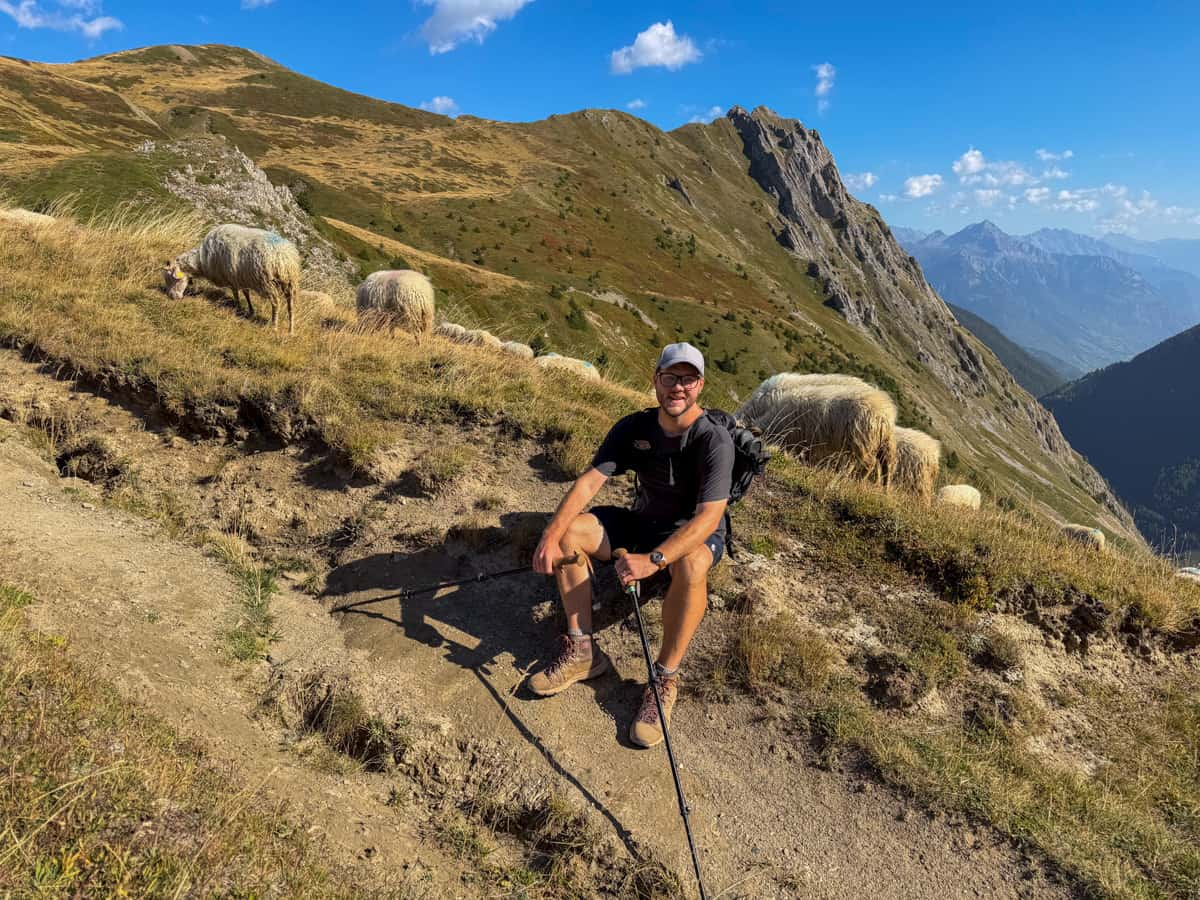
We’d recommend bringing along a backpack that is between 30-40L, which is big enough to carry everything you need (plus your lunch, if you need to pack it!), but compact enough to ensure you don’t bring along too many unnecessary items.
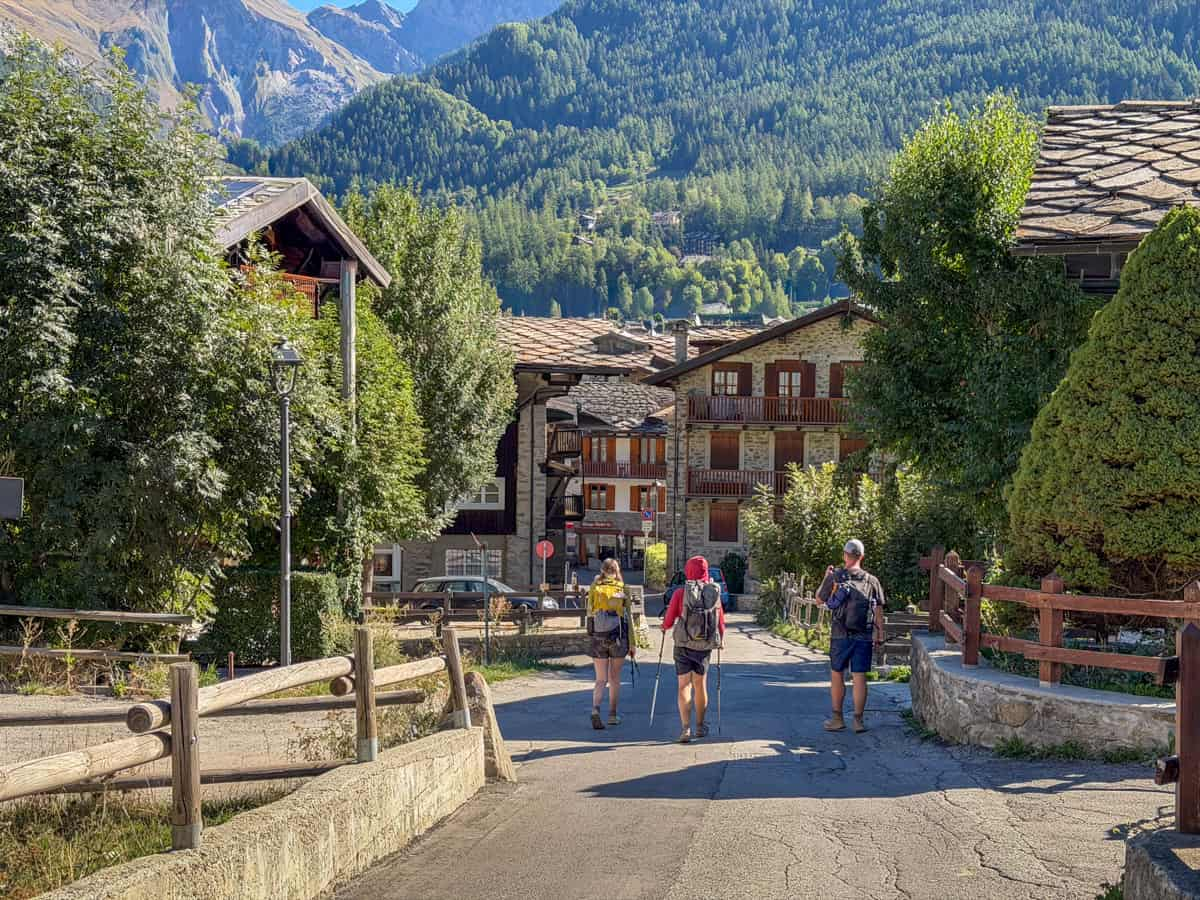
I’d also recommend making sure your backpack has water bottle pockets (or with a reservoir sleeve, if that’s your jam) for easy hydration and at least a few extra pockets for organization.
Due to our travel plans after the Tour du Mont Blanc, we were not able to pack along our usual hiking backpacks.
We picked up some cheap 28L backpacks for the trek from Technique Extreme in Chamonix, which is a great place to buy any last minute hiking gear you might need. These backpacks did the job just fine (we were actually quite pleased with their size!), but definitely were missing some key features that are helpful for the hike, like water bottle pockets.
Clothes
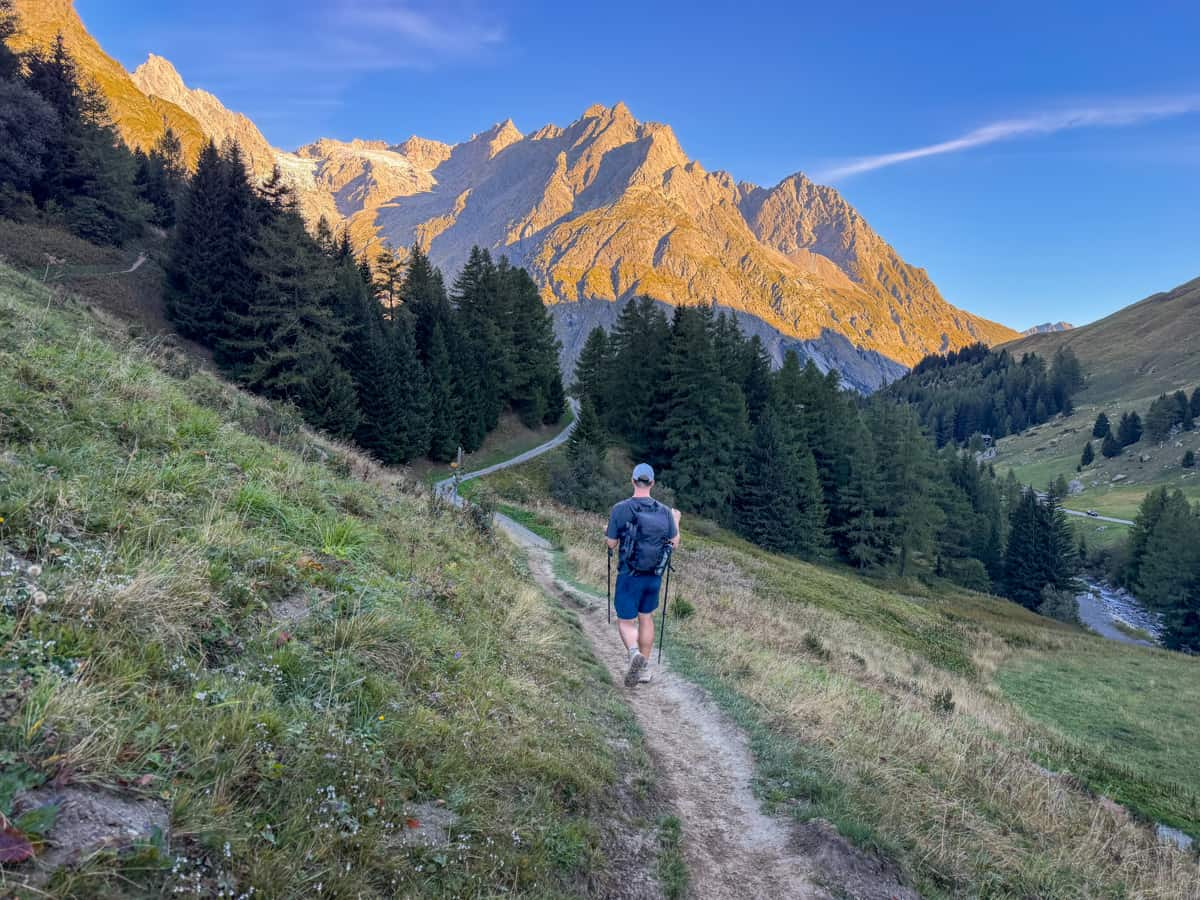
One of the most important things to keep in mind while packing for the Tour du Mont Blanc is to try to make your backpack as light as possible.
With that goal in mind, I’d really only recommend bringing one outfit that you hike in every day (i.e., a t-shirt and shorts) and one “clean” outfit to wear around the mountain refuges at night.
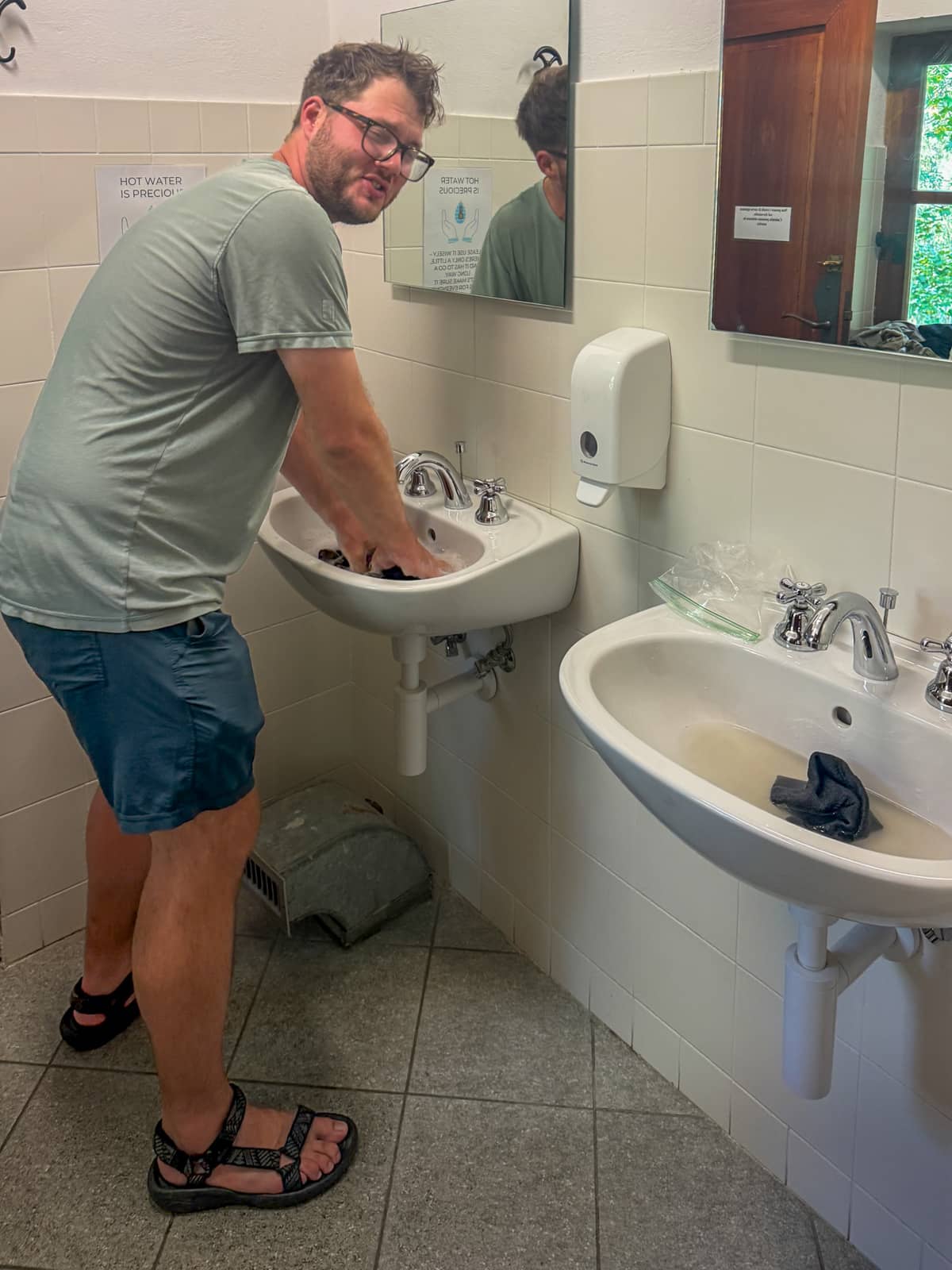
I know this sounds kind of weird or gross, but bringing along extra clothes adds unnecessary weight and bulk. Plus, it’s easy—and very normal on the trail—to hand wash your hiking clothes every afternoon at the mountain refuges.
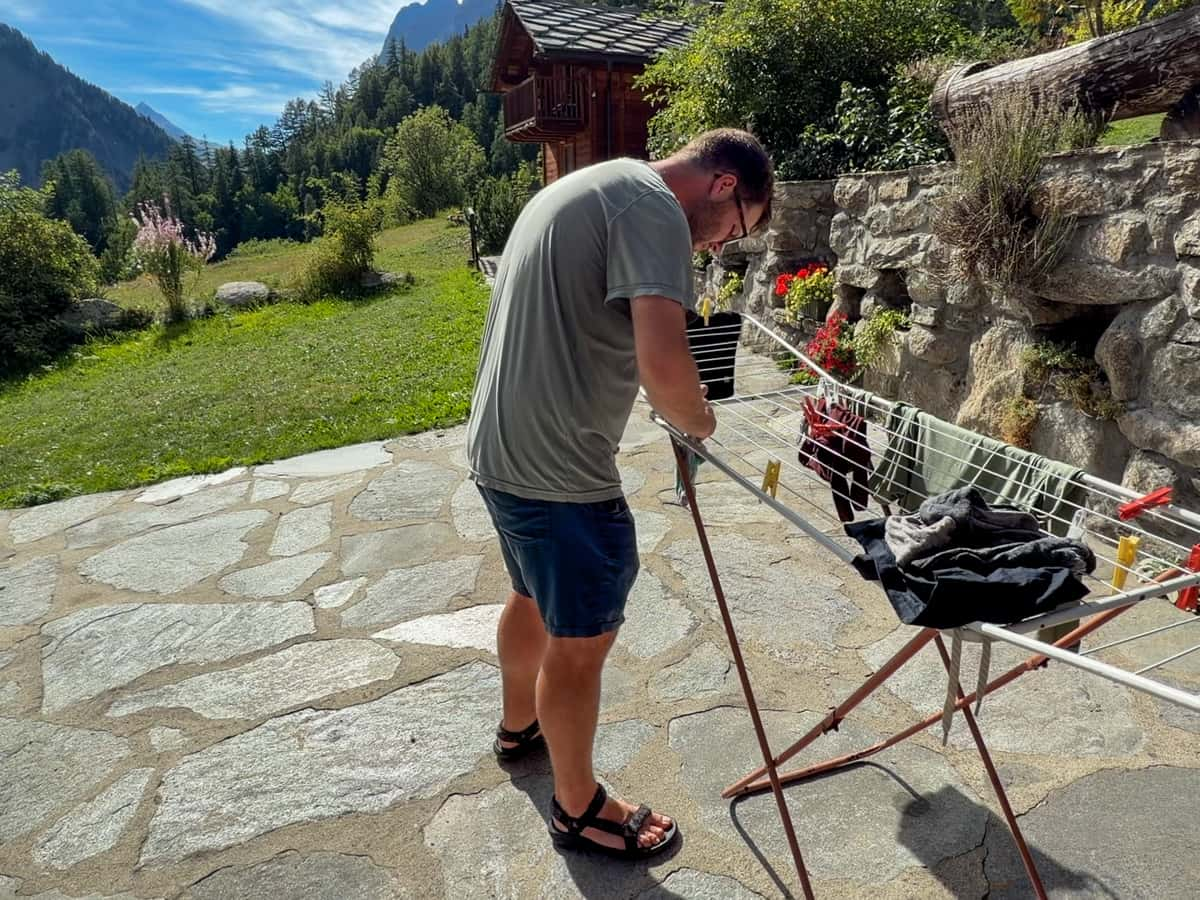
For the clothes you wear around the mountain refuges at night, I’d also recommend choosing an outfit you can theoretically hike in. There were a few times along Tour du Mont Blanc where our regular hiking clothes hadn’t dried enough from washing them the evening before, and we were able to wear our “mountain refuge” outfit while hiking the trail that day.
Plus, hiking clothes tend to be pretty comfy and perfect for lounging, anyway!
So, with that in mind, here’s what I’d recommend bringing:
Women’s clothing
1. Tank top (x1)
2. Hiking t-shirt (x2)
Try to pick shirts made from moisture-wicking and quick dry materials.
I have a couple of these hiking t-shirts and LOVE them. They’re really flattering and are super breathable, even while you’re huffing and puffing up a mountain!
3. Sun hoodie (x1)
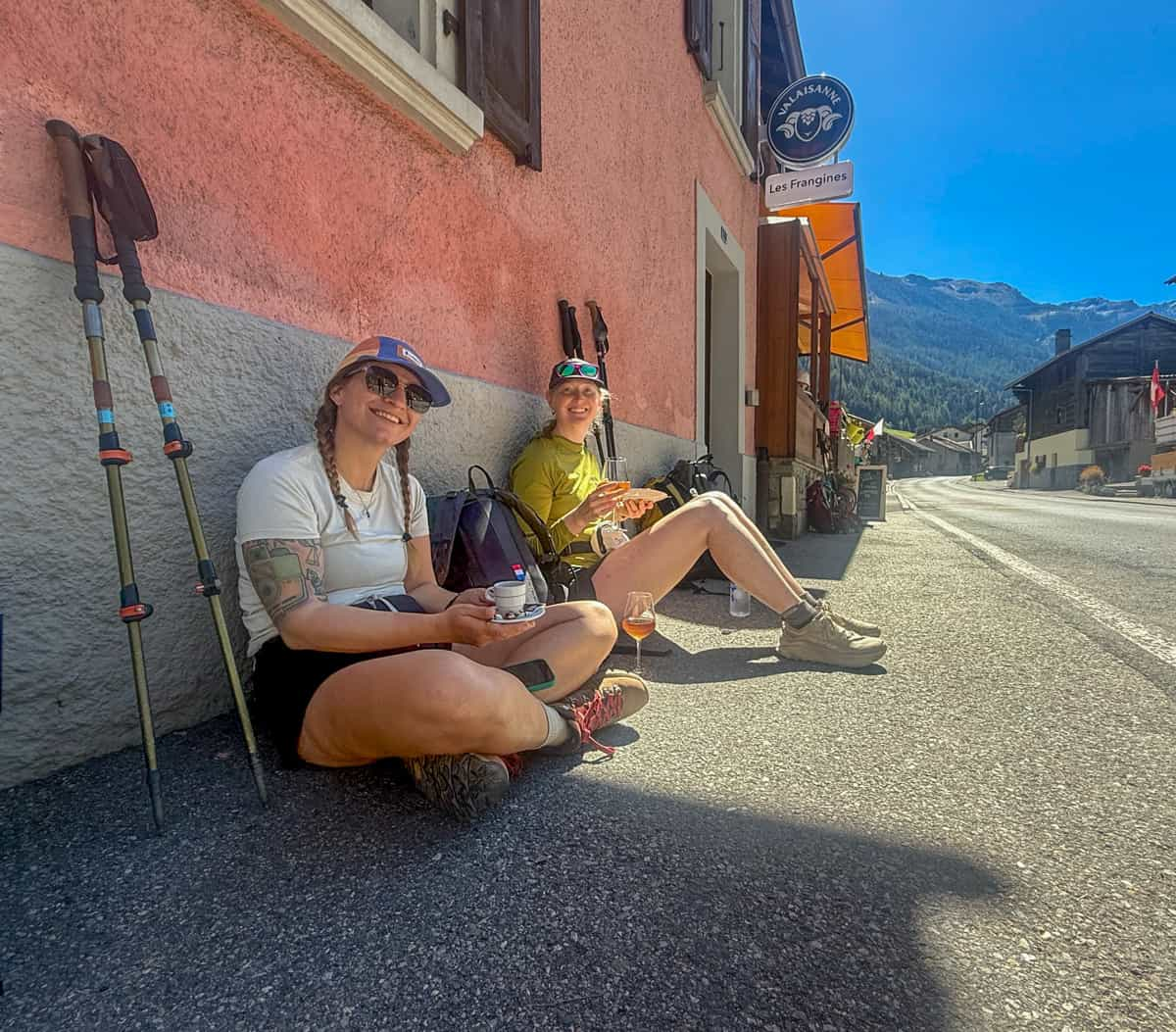
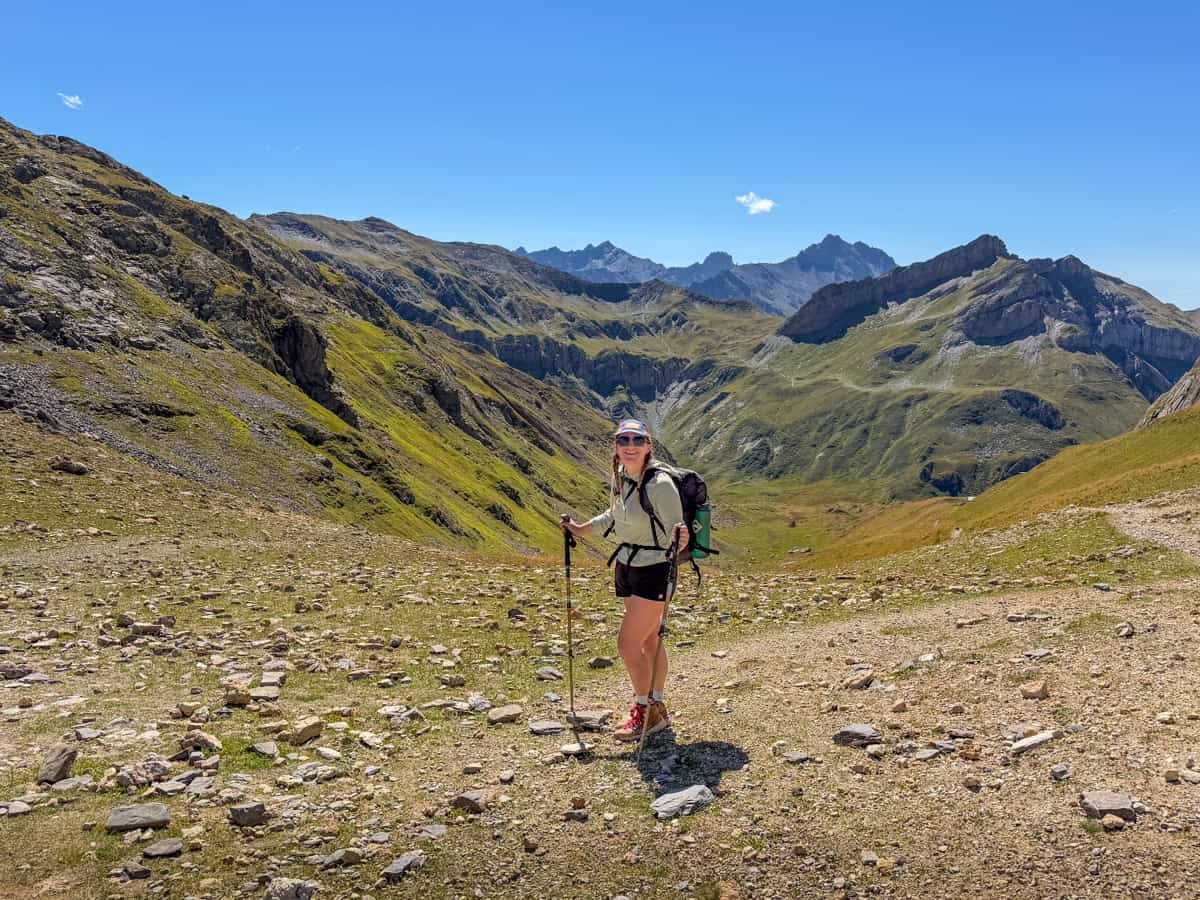
For the Tour du Mont Blanc, a sun hoodie is a MUST HAVE, in my opinion.
I previously hadn’t owned a sun hoodie, but we completed the incredible Cirque of the Towers Trail right before the Tour du Mont Blanc, as a training hike. That particular trail has a TON of sun exposure and, by the end of our two days backpacking on it, I felt like my skin was burnt to a crisp (despite putting tons of sunscreen on).
So, I bought this sun hoodie for the Tour du Mont Blanc and wore it pretty much the entire time on the trail. It’s light and breathable, while still offering sun protection, plus it offers a little bit of extra warmth during cooler parts of the day, like the early morning or evenings.
Our two friends who hiked the Tour du Mont Blanc wore their sun hoodies pretty much 100% of the time we were on the trail, as well!
4. Shorts (x1)
Again, prioritize quick-dry fabrics!
5. Lightweight hiking pants (x1)
I used these comfortable pants to wear around the mountain refuges, which tended to be chilly at night. But you can also wear them hiking, if your shorts don’t quite dry from being washed or get dirty on the trail.
6. Socks (x3)
7. Underwear (x3)
8. Baseball hat
To protect your eyes and face from the sun on the long stretches of exposed trail.
9. Beanie
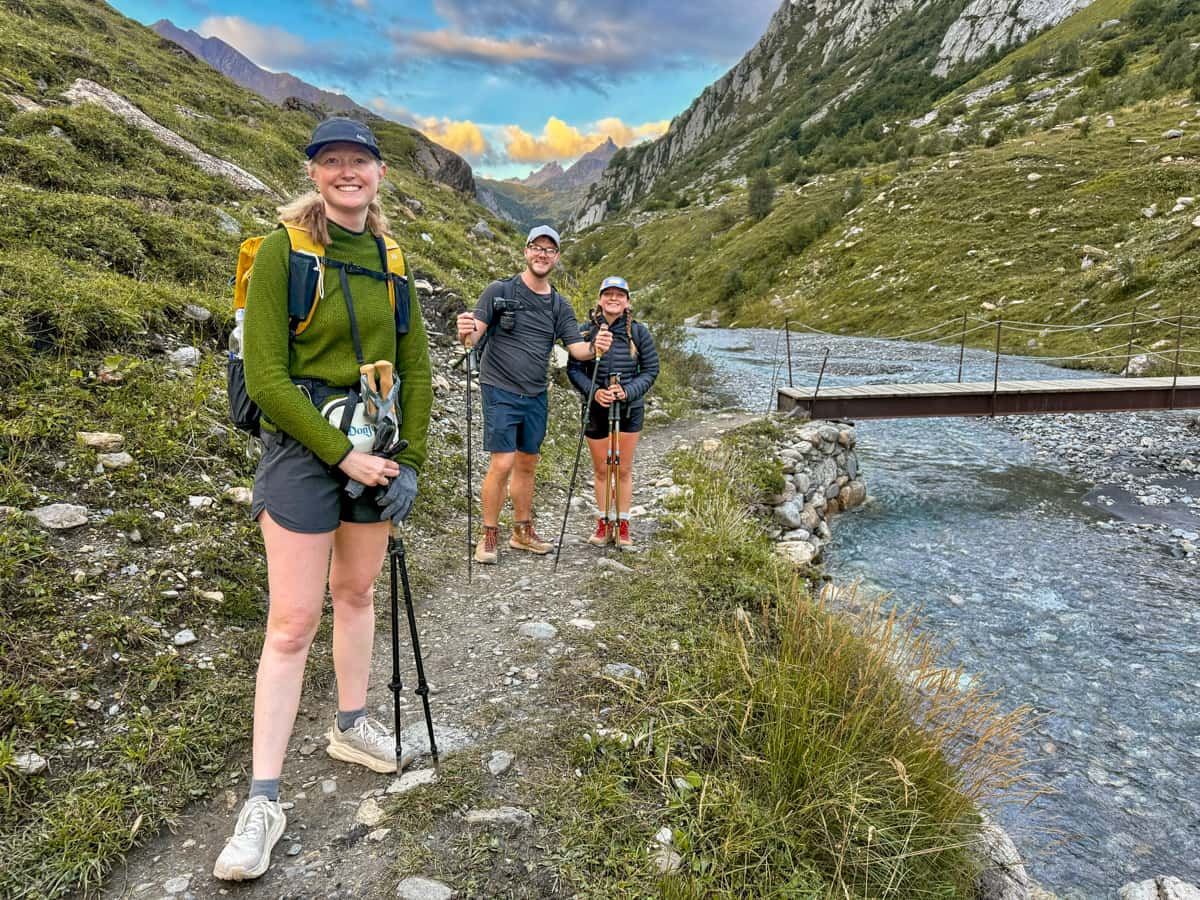
To be honest, this was, by far, my least used article of clothing, despite the fact that we hiked in September, which is the coolest month on the trail.
Still, I’d definitely recommend bringing one along, just in case you encounter unusually cool weather at the high altitudes along the trail.
10. Sports bra
11. Puffer jacket
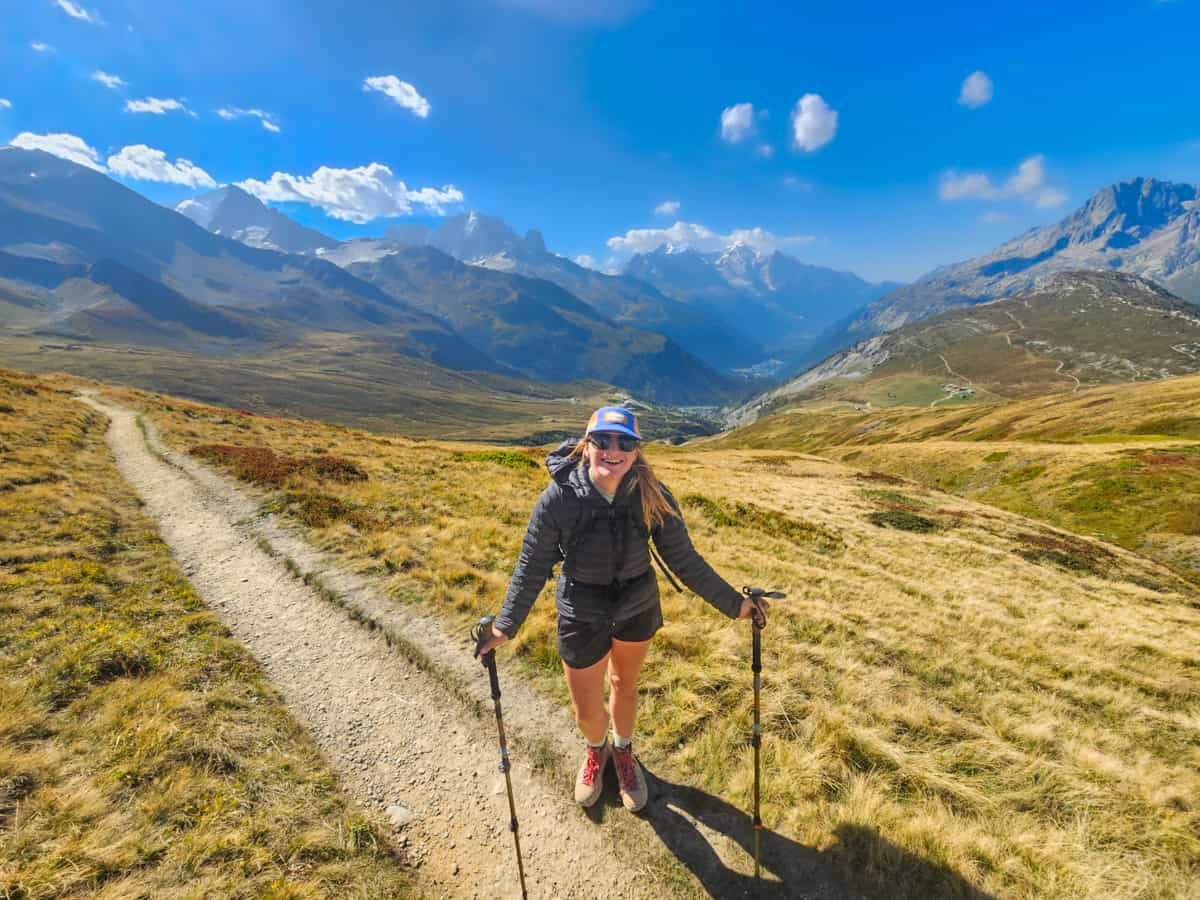
I’ve seen quite a few Reddit posts questioning whether a puffer jacket is really necessary when you’re hiking the Tour du Mont Blanc. And the indisputable answer is YES, regardless of which month you’re hiking the Tour du Mont Blanc, you absolutely should pack a puffer jacket.
I wore my puffer jacket literally every day, as soon as we reached our refuge for the night and even several times on the trail, especially if we started early in the morning or on downhill portions that weren’t as physically demanding.
Even Justin, who runs much hotter than me, commented several times how happy he was that he packed along his puffer!
12. Rain jacket
13. Rain pants
Weather along the Tour du Mont Blanc can be unpredictable and a little all over the place. And, with the cooler temperatures you might experience at higher altitudes, not having waterproof clothing can lead to uncomfortable and even downright dangerous situations.
We lucked out with glorious weather for nine out of the ten days of our hike, but, unfortunately, had a cold, heavy downpour for most of our last day on the trail. I was SO glad that we had packed our rain jackets and rainpants—it would have been a MISERABLE slog to be freezing cold and soaking, whilst hiking for hours on end!
14. Hiking boots
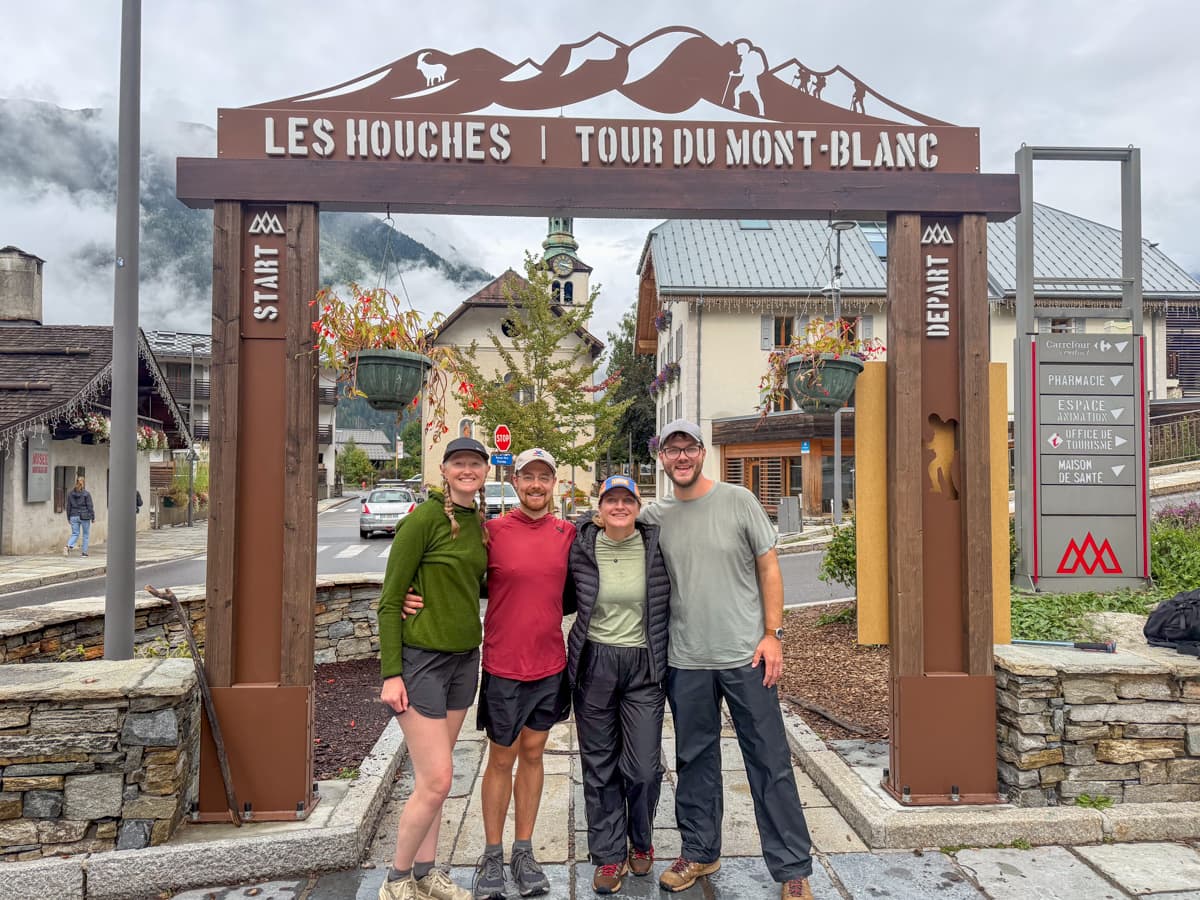
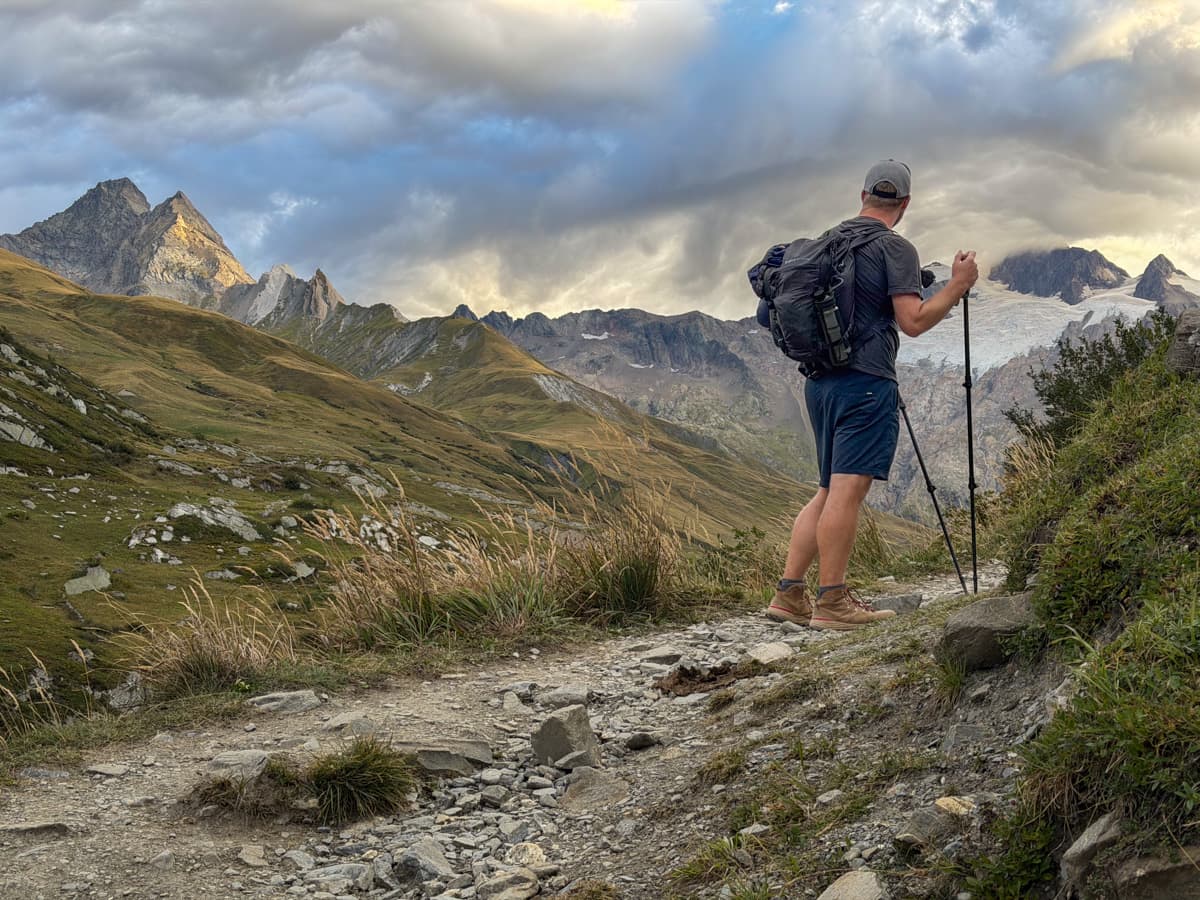
This hopefully goes without saying, but be sure to have proper hiking boots, ideally some that are waterproof, have plenty of traction, and that offer ankle support. Additionally, your hiking boots should be nice and broken in before you start the Tour du Mont Blanc!
Justin and I both have had this pair of hiking boots for years and LOVE them—they’re waterproof, comfortable, cute, and actually resoleable!
15. Hiking sandals
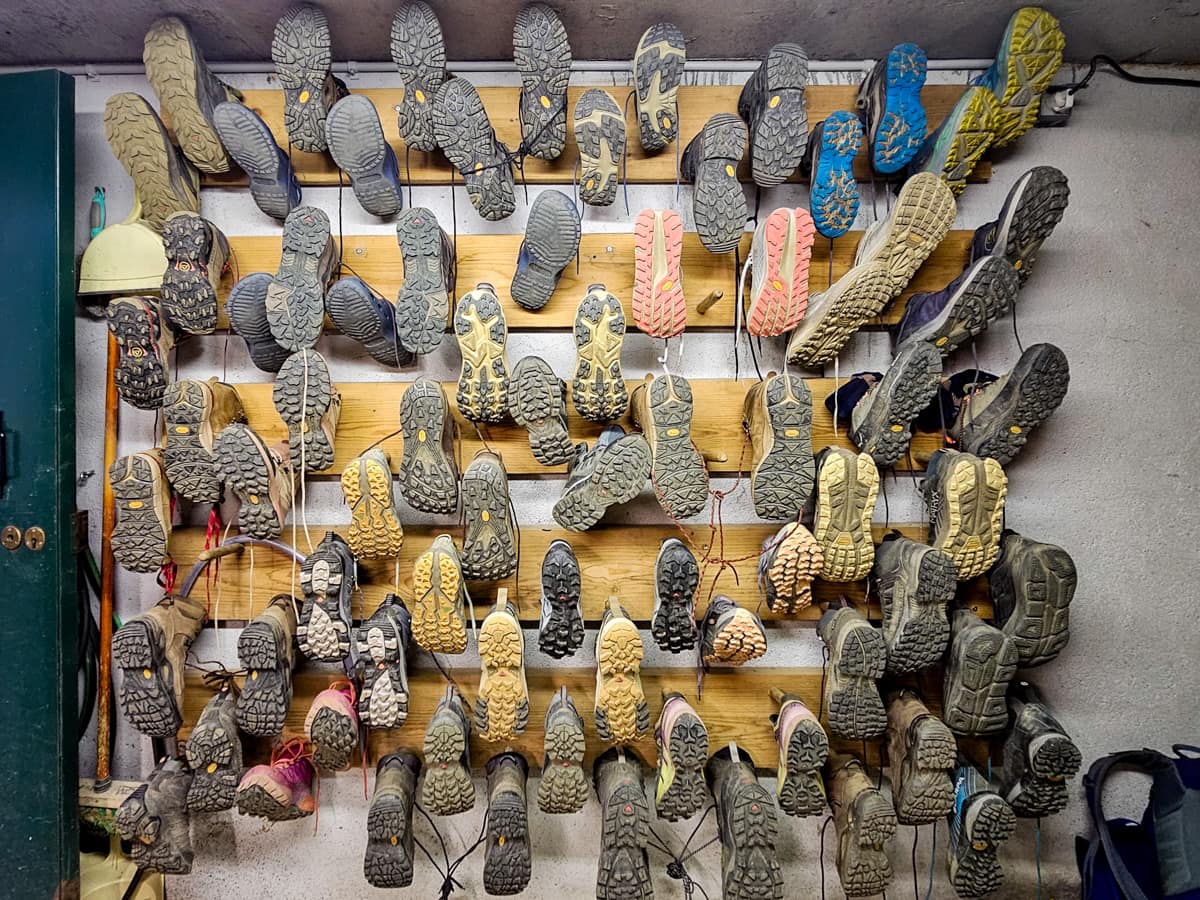
Most refuges do not let you wear your hiking boots inside, and a handful even actually require that you have some kind of sandal or slippers, other than your standard hiking boots. So, it’s nice to have a reasonably lightweight extra pair of shoes that are easy to slip on and off that you can wear once you get to a mountain refuge.
Justin and I each brought Tevas, while our two friends who hiked with us brought lightweight slippers to cut down on weight. I personally LOVED having Tevas, as we could wear them to walk to grocery shops, bakeries, or other stores that we might need to pop into in the evenings, after checking into our refuge (whereas our friends had to change back into their hiking boots to do, which sounds decidedly unfun to me).
16. Swimsuit (optional)
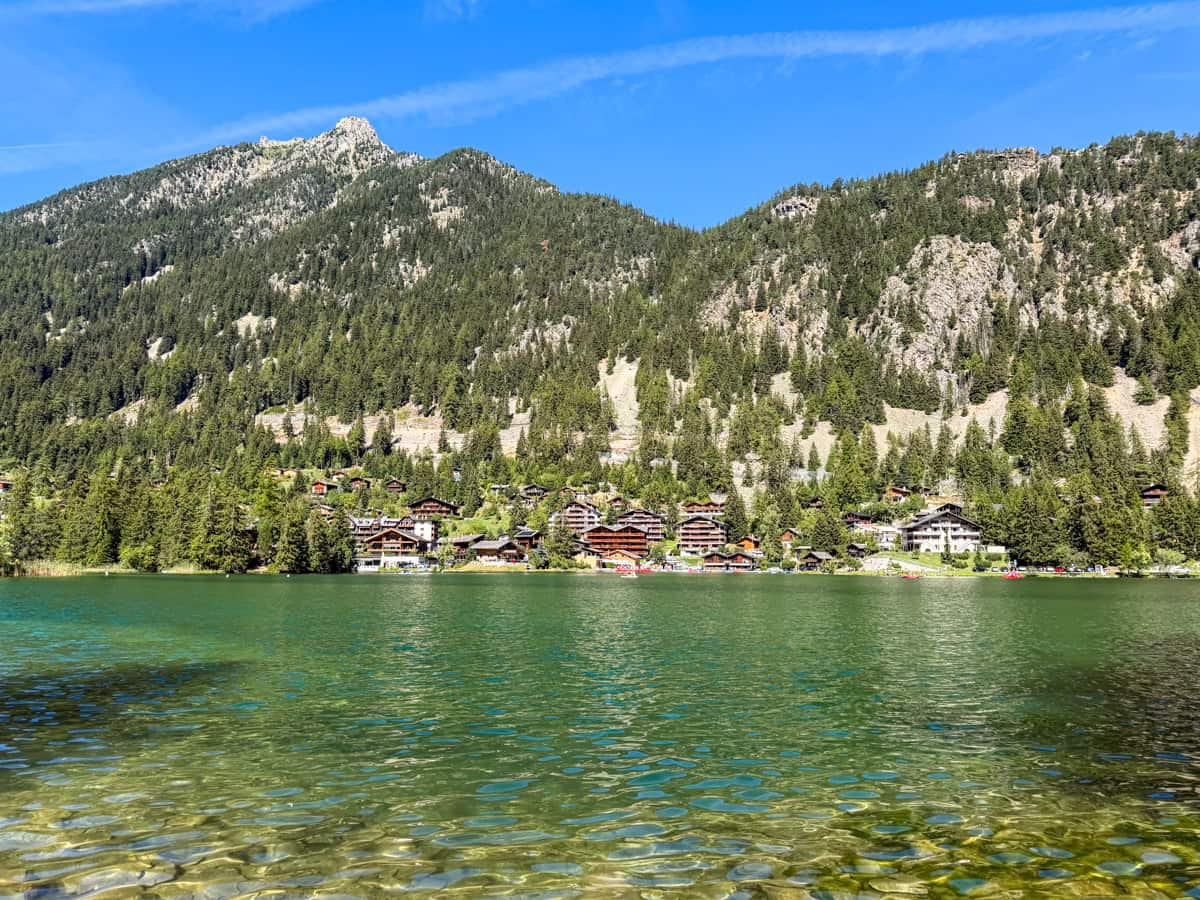
During Stage 7 of the Tour du Mont Blanc, you’ll spend the afternoon at Lac du Champex, a beautiful alpine lake in Switzerland that’s popular with European tourists for sunbathing, swimming, and other water sports.
This is a proper alpine lake, so the water is quite chilly. I just took a VERY quick dip with my sports bra and shorts on, which did the job just fine. However, we saw lots of other hikers we recognized from the trail, soaking up the sun and jumping in the water, with proper swimsuits.
It personally wasn’t worth it to me (or any of the other three people I was hiking with) to carry along a swimsuit for the entire trek for just a couple of hours at the lake.
However, if you’re a big water lover; if you plan on enjoying a rest day at a hotel with a pool (like Hotel Maison Saint Jean in Courmayeur, Italy); or if you’re visiting during one of the hotter months, it might be worth it to you!
Men’s clothes
1. T-shirts (x2)
If Justin was a cartoon character, these t-shirts would definitely be part of the outfit that he wears all the time. He literally has five of thm in different colors, thanks to their flattering cut and moisture-wicking and quick-dry fabric.
2. Sun hoodie
3. Shorts (x2)
Justin also has several pairs of these shorts in different colors. They have a soft and breathable boxer-brief liner for support, are made of a quick-dry fabric, and can double as swim trunks at Lac du Champex, in a pinch!
4. Socks (x2)
5. Underwear (x2, if your shorts aren’t lined)
6. Baseball hat
7. Beanie
8. Puffer jacket
9. Rain jacket
10. Rain pants
11. Hiking boots
12. Hiking sandals
Toiletries
1. Toothbrush
2. Travel toothpaste
3. Floss
4. Travel deodorant
5. Sunscreen
Sunscreen is CRAZY expensive in Chamonix (we paid something like €15 for a 3 ounce bottle) and it’s even more expensive in the smaller towns along the Tour du Mont Blanc. So, I’d definitely recommend packing plenty from home!
6. Dr. Bronner’s soap
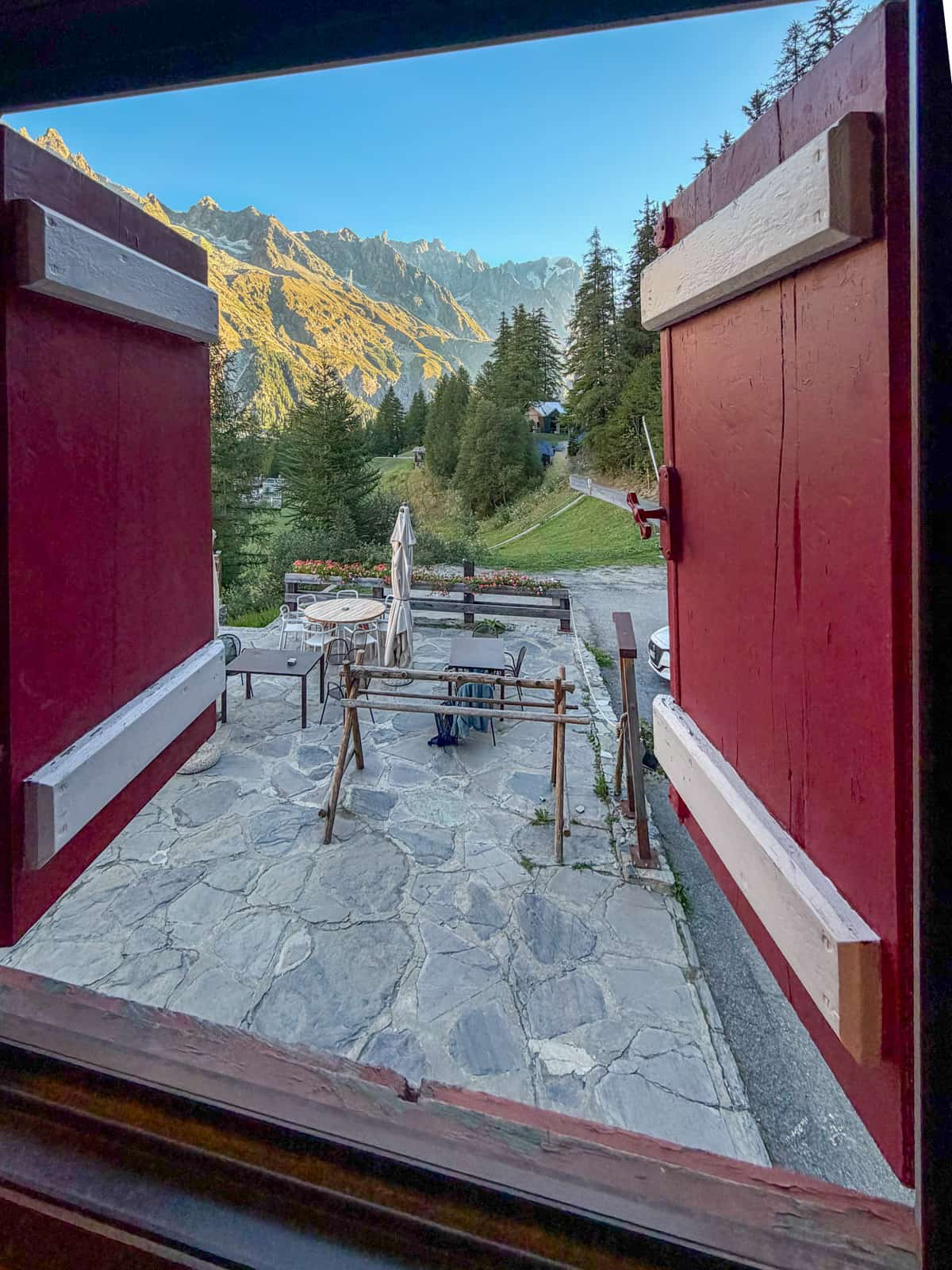
Dr. Bronner’s is a MUST HAVE on the Tour du Mont Blanc.
First of all, most refuges and public toilets don’t have soap at the bathroom sinks. We saw SO many people use the bathroom and just walk out without washing their hands, which is even more vomit-inducing when you consider how often all of the hikers are touching the same serving utensils at breakfast, doorknobs, and other surfaces. So bringing along a small bottle of soap that you can tuck into your pocket and whip out after using the bathroom is a necessity.
Additionally, most refuges do not provide any kind of shampoo or shower gel, which Dr. Bronner’s can easily double as.
Finally, you can also use Dr. Bronner’s as laundry detergent to wash your clothes in the sink. Justin and I brought a bar of soap on the TMB, which was challenging to wash our clothes with, and wound up constantly stealing drops of Dr. Bronner’s from our friend that brought some.
It’s really impressive how a little bit of Dr. Bronner’s goes a long way!
7. Chapstick
8. Glasses, contact case, and travel bottle of contact solution (if needed)
9. Ibuprofen
I wish we had brought WAY more ibuprofen. My feet were pretty sore for the vast majority of the hike and, unfortunately, we ran out of ibuprofen just a day or two into the trail.
There are a handful of pharmacies along the Tour du Mont Blanc, but they’re few and far between and have limited hours—so I’d recommend packing any over the counter medicine that you anticipate you might need.
10. Antihistamine
Justin got stung by about 20 bees while on the TMB, when a hive that was tucked into a tree hollow became agitated when we walked past it. At 36 years old, it was his first ever bee sting(s) and he wasn’t sure whether he would have any kind of allergic reaction to them.
No one in our group had antihistamines and there weren’t any pharmacies around for dozens and dozens of miles. So, if he was allergic to bees, he would have been in some serious trouble.
Luckily, it turns out he isn’t allergic, but it was a good lesson to keep some antihistamines on hand, just in case someone runs into a similar situation on the trail!
11. Hand sanitizer
Did I mention there’s typically no soap in the bathrooms?!
12. Melatonin
I’d especially recommend bringing some of this if you’re traveling from overseas, to help you get on the right time zone, or if you’re sleeping in non-private rooms.
13. Body Glide
Not today, chub rub!
14. First aid kit
Miscellaneous
1. Sleeping bag liner
Many of the mountain refuges, especially in France, require that you have a sleeping bag liner, as the sheets are not typically washed every day.
We wound up using our sleeping bag liners even at the refuges that didn’t require them, as they felt a bit more hygienic than trusting when the sheets were last washed.
2. Nalgene bottle
We prefer Nalgene bottles to hydration bladders, as they’re easier for us to clean. However, bring whatever works for you!
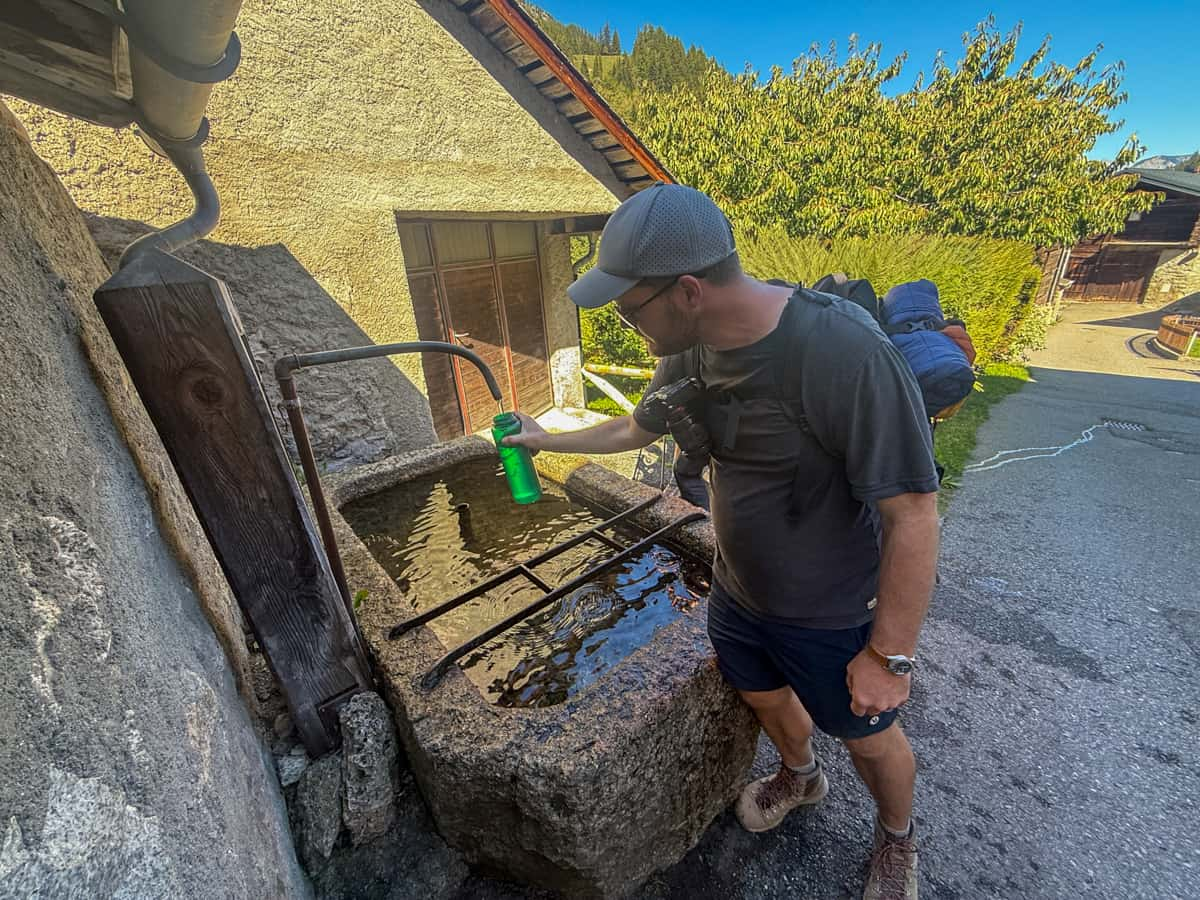
Justin and I each hiked with about 1.5L of water each. There were fountains with potable water at most refuges and sprinkled along the trail, so this worked fine the vast majority of the time. However, I probably would recommend bringing closer to 2 or 2.5 liters per person, especially if you’re hiking in the warmer months of July or August.
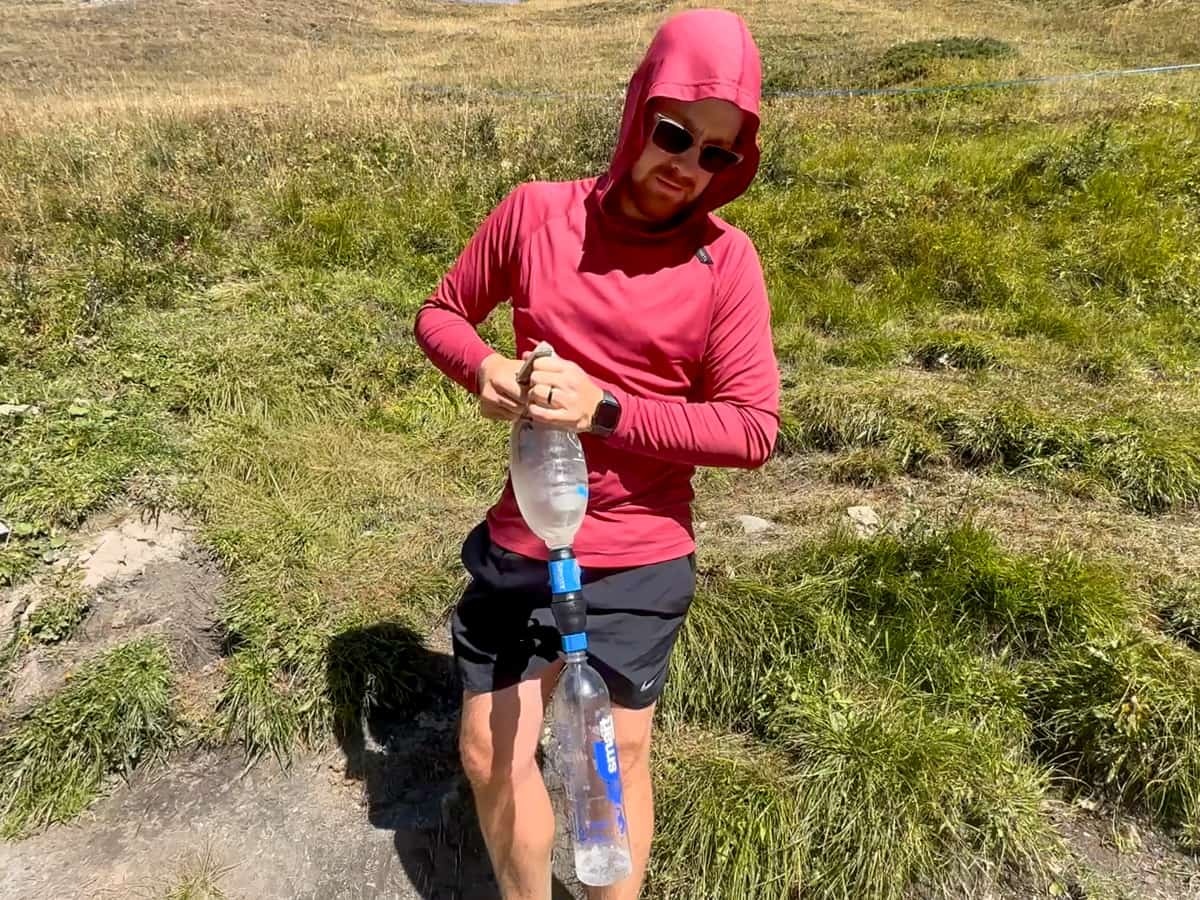
3. Water filter and 1L bottle to filter from
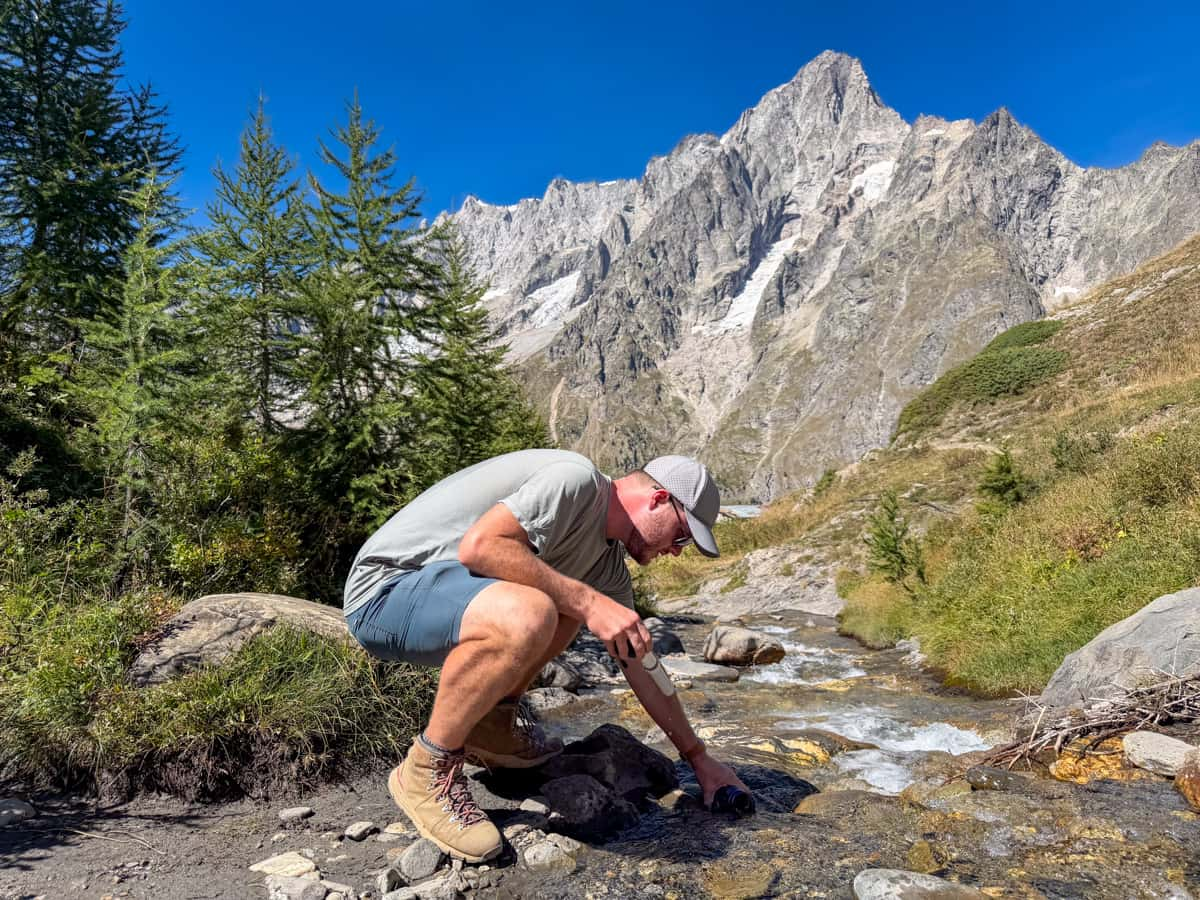
As mentioned above, there are tons of water fountains along the trail, so we only had to use our water filter a handful of times.
Still, I’m glad we brought it—we honestly would have been in trouble if we hadn’t packed it along!
4. Sunglasses
5. Passport
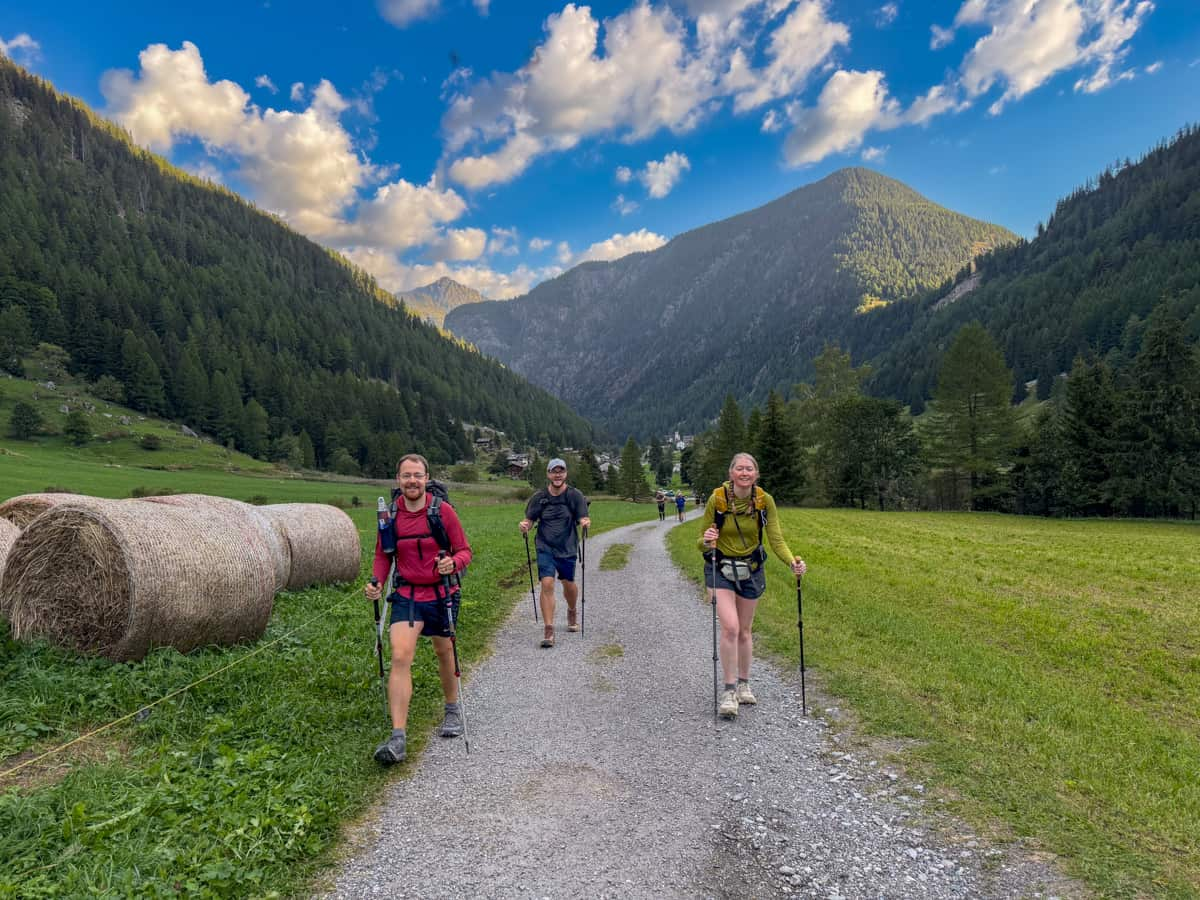
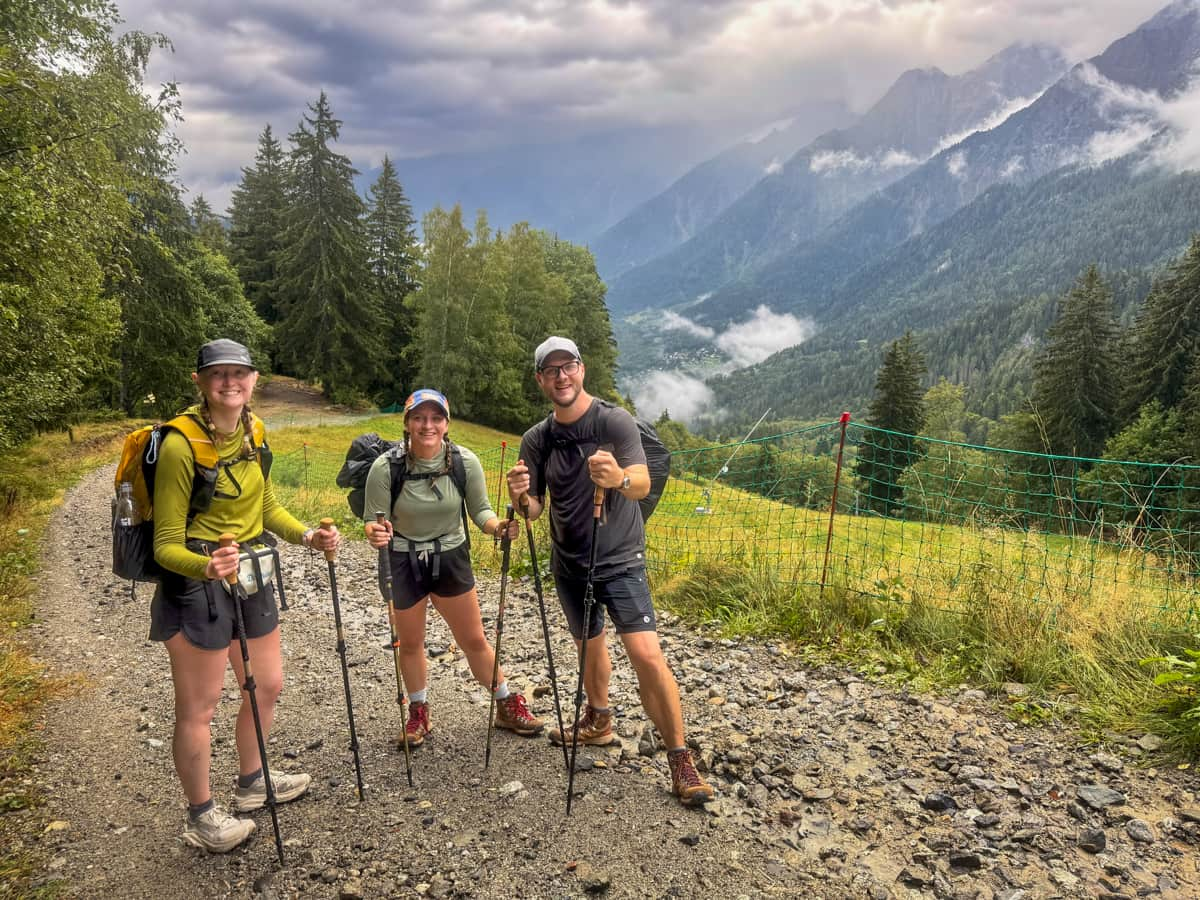
6. Trekking poles
Remember that you can generally only pack trekking poles in checked luggage.
If you aren’t checking a bag, you can also stop by hotel reception desks in Chamonix or Les Houches, France, before you start your hike to see if anyone’s left any trekking poles behind that you can borrow for the Tour du Mont Blanc.
Alternatively, we found the most affordable pair (€30) in Chamonix at Technique Extreme.
7. Debit and credit cards
8. Cash
Before hiking the trail, we weren’t totally sure how much money we needed to have on the trail.
We wound up taking out €500 from an ATM, which was WAY too much money, as the vast majority of businesses along the trail take credit cards.
There are a handful of mountain huts, like Rifugio Bonatti, that are cash only, so it’s good to check ahead with your lodges and confirm whether or not they accept cards. But, for us, €300 would have been more than enough, to cover our two-person stay at Bonatti for the night, plus additional snacks and drinks along the way from cash-only businesses.
It’s also worth mentioning that, even though Switzerland uses the Swiss Franc (and not the Euro), all of the businesses that we passed along the trail there happily accepted Euros!
9. Ear plugs
Especially if you’re going to be staying in any dorm rooms.
10. Eye Mask
11. Trash bag (x5)
We each used a trash bag as a packliner (which was especially helpful to provide extra waterproof protection for our electronics when it rained) and as actual trash bags to carry out waste from lunches or snacks we had along the trail.
12. Ziploc baggies (x10)
This sounds silly, but one of the biggest things we regret not packing was some Ziploc baggies. You can use them to carry out small bits of waste (like toilet paper you might need to use along the trail) and also to store open packets of food or snacks, like nuts or raisins, that you don’t finish.
We didn’t have any Ziploc baggies, so, at the end of our lunches, I’d just fold over a half-eaten packet of chocolate or dried fruits and shove it in a pocket of my backpack. By the end of our trip, I had a TON of tiny bits of crushed up snacks at the bottom of my bag—which would have been totally avoidable with a handful of baggies!
13. Quickdry lightweight towel
Virtually none of the mountain refuges have towels, so, unless you intend to air dry after a shower, be sure to pack one!
14. Offline maps
In general, the Tour du Mont Blanc is well-marked, but it’s also a LONG trail, with a zillion variants, shortcuts, and necessary off-trail walking to mountain refuges or grocery stores. So having offline maps is a must!
I’d recommend downloading an offline map of the towns and roadways around the Tour du Mont Blanc in Google Maps, as well as getting an offline version of the Tour du Mont Blanc stages on either FarOut or AllTrails.
Prior to hiking the TMB, I was unfamiliar with FarOut, but our friends that were hiking with us introduced us to (and LOVE) this app, which is primarily focused on longer, multi-day hikes.
FarOut has guides to specific trails, including the Tour du Mont Blanc, which include tons of information, including water sources, public transportation pick-up spots, restaurants, recent user comments and more. It also allows you to build a custom route to figure out what your distance and elevation gain will be for each day on the trail.
On the other hand, Justin and I have been devout AllTrails fans for years and years. AllTrails has a Tour du Mont Blanc guide, which offers individual maps of each of the traditional stages of the hike (each of which you can download for offline use), plus other helpful information, like the locations of mountain refuges, cable cars, and viewpoints.
To use offline maps on AllTrails, you need to have AllTrails+, a premium membership of AllTrails, to download offline maps, but luckily, we got the hookup for our readers, with 30% off your annual subscription. All you need to do is use this link and use the promo code "UPROOTED30" at check out!
15. Toilet paper
We read conflicting things before hiking the Tour du Mont Blanc, regarding how much toilet paper you should pack. Some people said to not pack any, whereas others suggested packing an entire roll.
I’d suggest packing about a quarter roll, in case you need to go while you’re on the trail or there’s a toilet in a mountain refuge or public bathroom without toilet paper, which occasionally happened to us. If you wind up using your quarter roll, you can always grab a bit of extra toilet paper at your nightly mountain refuge and restock, as necessary.
16. Backpacking trowel (optional)
Before hiking the TMB, we also weren’t completely sure what the bathroom situation was going to be like on the trail. How often would we be passing bathrooms while we were hiking? And, more specifically, would it be necessary to poop in the woods?
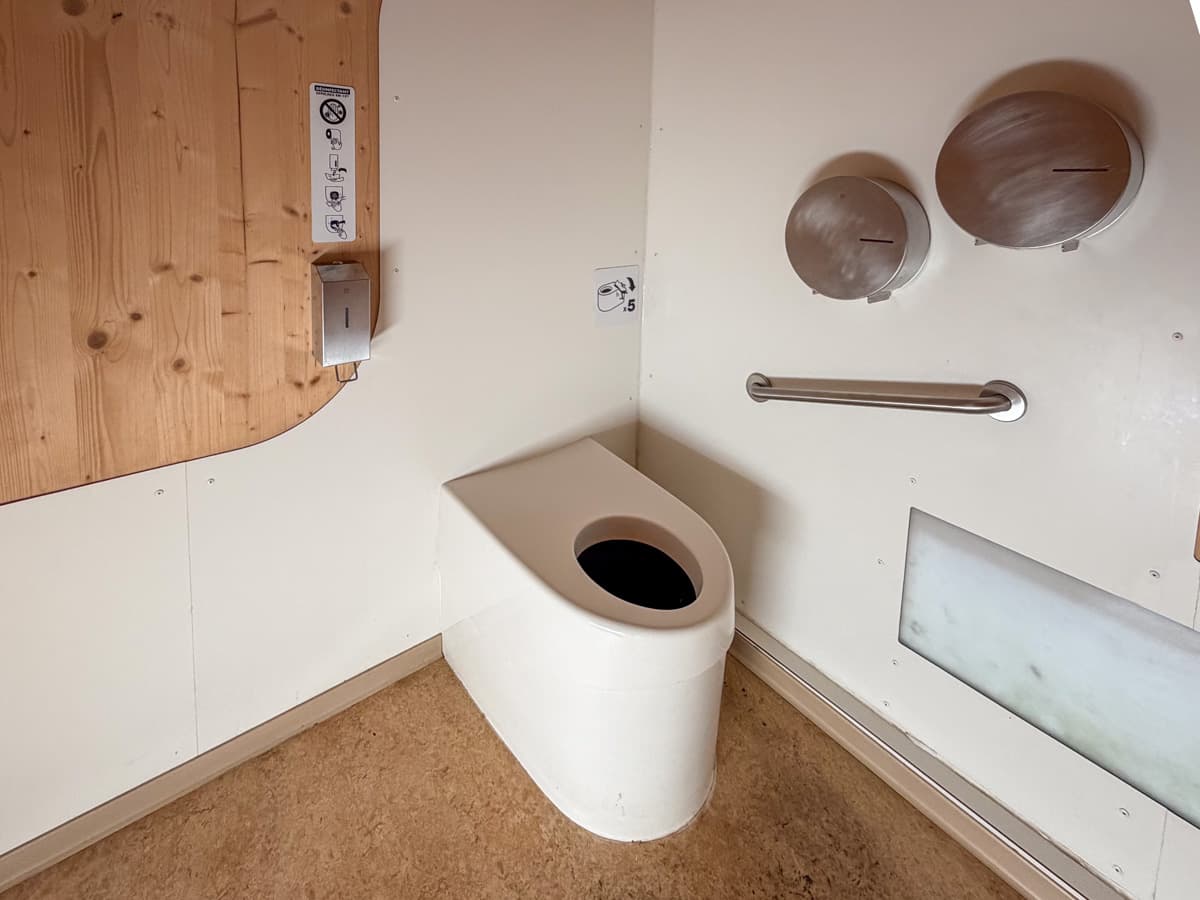
It turns out that we generally passed a bathroom every few hours, either at a mountain refuge, at a portapotty/vault toilet, or some other kind of business, like a cafe or restaurant. So, while all of us had to pee outside along the trail a few times, none of us ever had to poop outside (and, therefore, did not need a trowel).
However, if you’re someone who needs to poop frequently or urgently, it’s probably not a bad idea to throw a lightweight backpacking trowel in your backpack, just in case. Please just remember to follow the Leave No Trace principles, dig your cathole at least 200 feet from any water source, and pack out any of your used toilet paper.
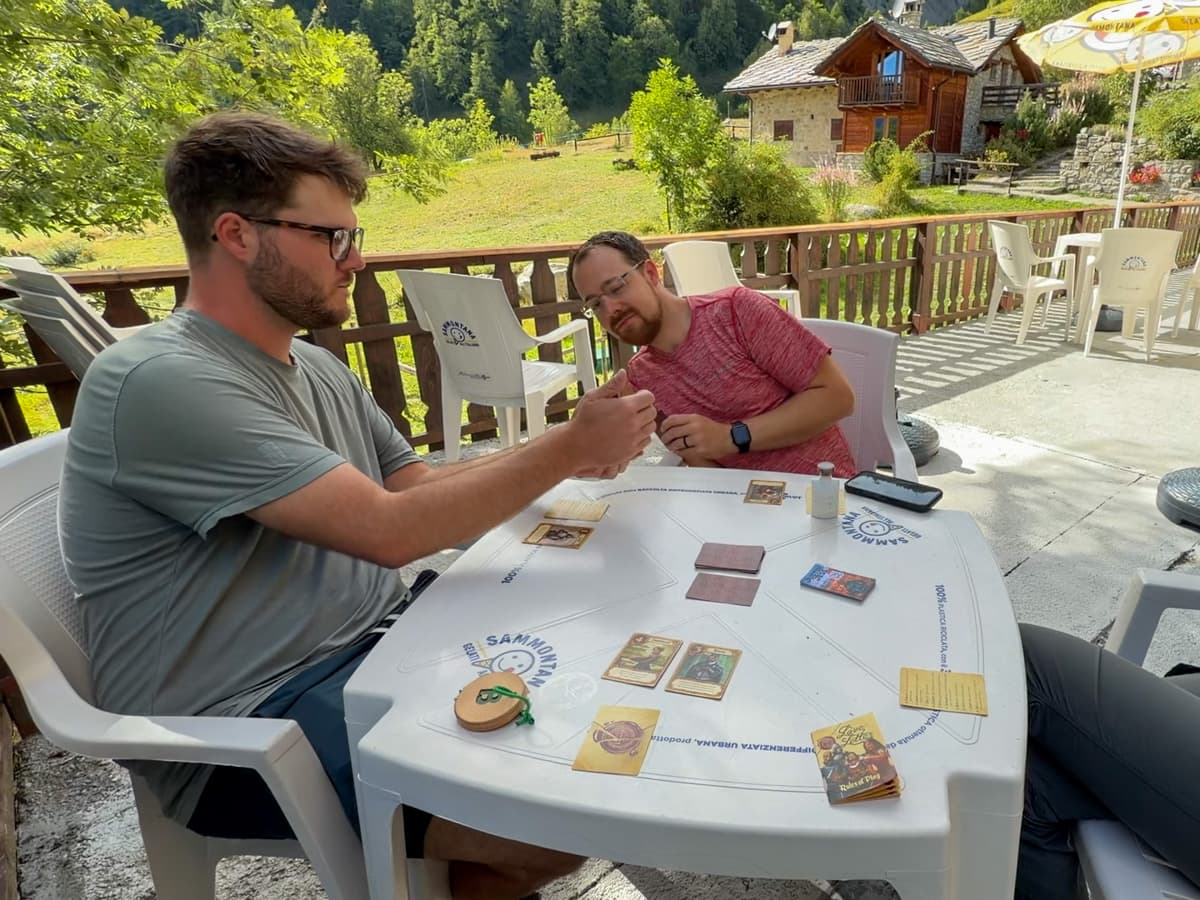
17. Deck of cards
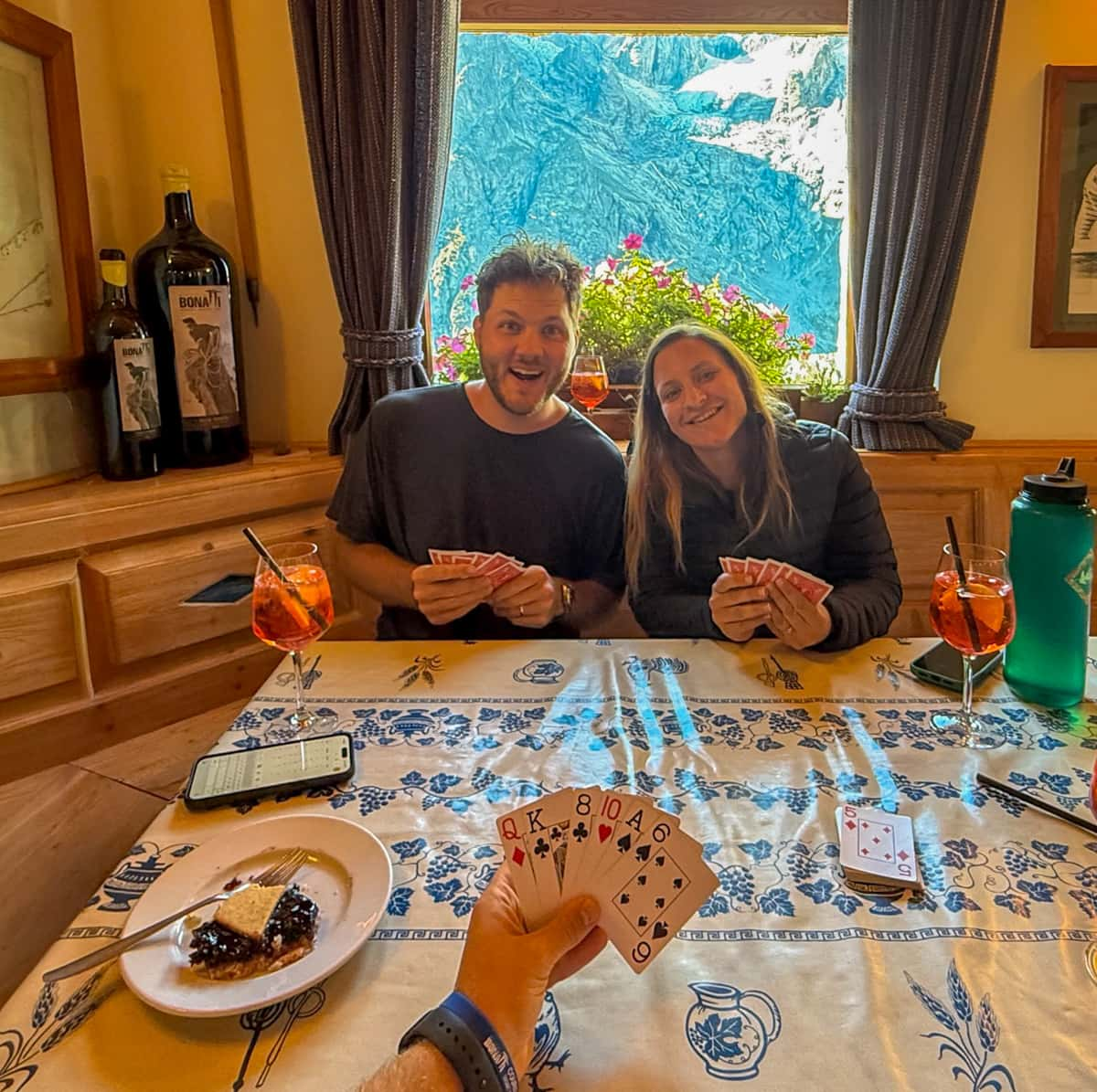
We typically got to our mountain refuges around 1 or 2 PM in the afternoon and often had several hours to kill before dinnertime.
So, bring along some form of entertainment, like a deck of cards or some other kind of card game (we’ve brought along this card game for a couple of multi-day trips and have really enjoyed it) to pass the time.
18. Travel insurance
Hopefully, it’s fairly obvious that, along a 100+ mile hike through a remote area, you should have travel insurance that will help cover any medical care that you theoretically might need. The chances of you getting injured along the trail aren’t small—we actually met someone who broke their leg along the TMB!
I’d recommend checking out Insure My Trip, which is an insurance broker that offers a variety of travel insurance plans that you can easily compare, whether you’re looking for a plan that just covers emergency medical care or if you’d prefer something more comprehensive that covers issues, like lost baggage or delayed flights.
Tech gear
1. Cell phone
2. Charging cables
3. Battery pack
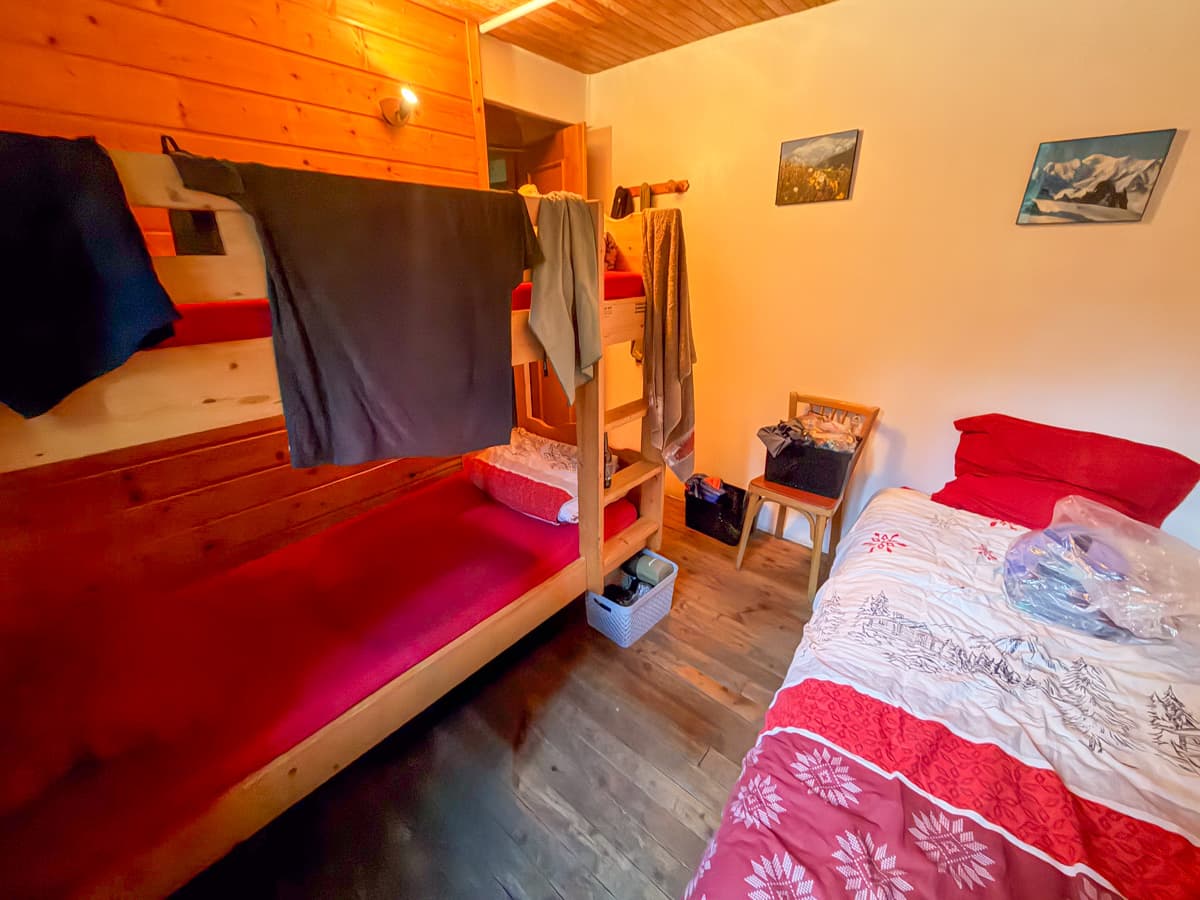
If you stay mostly in dorm rooms, it can be a challenge to snag an electrical outlet near your bed to charge your devices. We’d recommend bringing along a battery pack so, in the event you have to duke it out for a plug, you have some backup power at the ready.
4. Wireless headphones
5. Headlamp
To be honest, we never used ours, but it’s an important safety item to have, just in case!
6. European power adapter
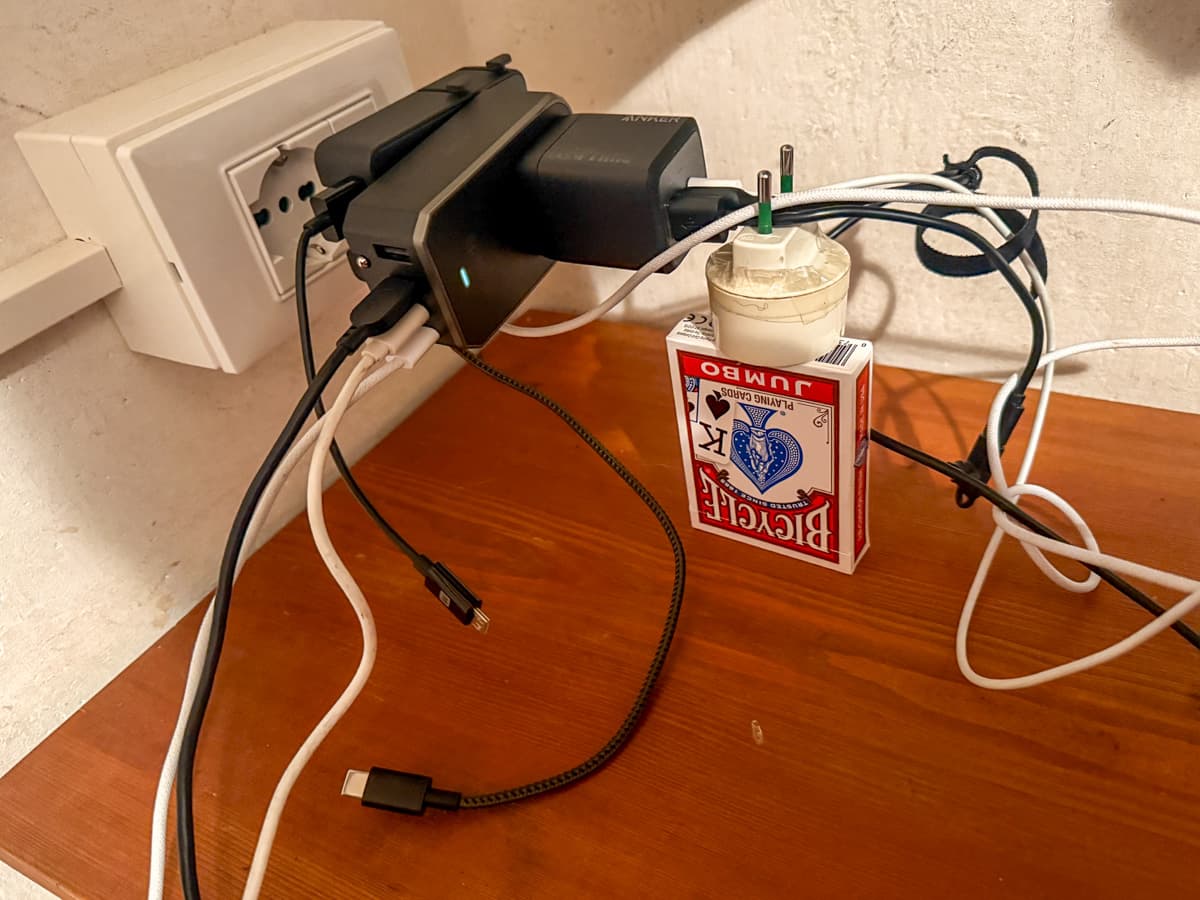
All of the refuges we stayed at had standard European plugs. Accordingly, if you’re traveling from overseas and are going to need to plug something in at some point during your time on the trail, this is a must have!
7. eSIM
We each got a regional plan for Europe, which seamlessly worked the second we landed at the Geneva Airport and every time we crossed a country’s borders along the trail.
Pssst… you can get 15% off this eSIM when you use the code “JUSTINJESS”!
Tour du Mont Blanc packing checklist
If you just want a packing list, without my yapping in between, here you go!
Backpack
- For women: Osprey Kyte 38L
- For men: Osprey Talon 33L
Clothes
Women’s Clothing
- Tank top
- Hiking t-shirt (x2)
- Sun hoodie
- Shorts
- Lightweight hiking pants
- Socks (x3)
- Underwear (x3)
- Baseball hat
- Beanie
- Sports bra
- Puffer jacket
- Rain jacket
- Rain pants
- Hiking boots
- Hiking sandals
- Swimsuit (optional)
Men’s clothes
- T-shirts (x2)
- Sun hoodie
- Shorts (x2)
- Socks (x2)
- Underwear (x3)
- Baseball hat
- Beanie
- Puffer jacket
- Rain jacket
- Rain pants
- Hiking boots
- Hiking sandals
Toiletries
- Toothbrush
- Travel toothpaste
- Travel deodorant
- Floss
- Sunscreen
- Dr. Bronner’s soap
- Chapstick
- Glasses, contact case, and travel bottle of contact solution (if needed)
- Ibuprofen
- Antihistamine
- Hand sanitizer
- Melatonin
- Body Glide
- First aid kit
Miscellaneous
- Sleeping bag liner
- Nalgene bottle (or hydration bladder)
- Water filter and 1L bottle to filter from
- Sunglasses
- Passport
- Trekking poles
- Debit and credit cards
- Cash
- Ear plugs
- Eye Mask
- Trash bag (x5)
- Ziploc baggies (x10)
- Quick dry lightweight towel
- Toilet paper
- Backpacking trowel (optional)
- Offline maps, on Google Maps and FarOut or AllTrails
- Deck of cards
- Travel insurance
Tech gear
- Cell phone
- Charging cables
- Battery pack
- Wireless headphones
- Headlamp
- European power adapter
- eSIM
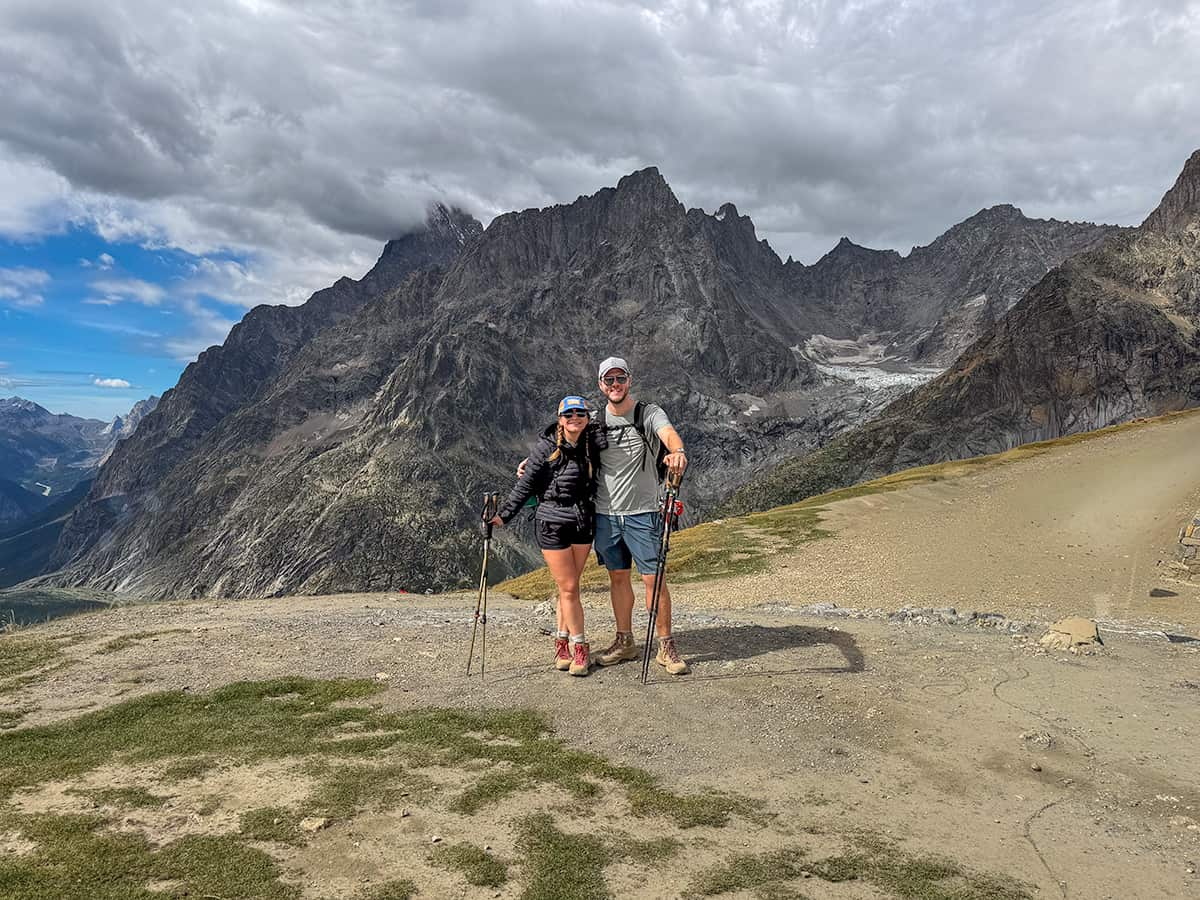
Tips for packing for the Tour du Mont Blanc
Don’t overpack
I can’t overstate how important it is to try to make sure your backpack is as lightweight as possible (ideally, under 20 pounds and the lighter, the better!).
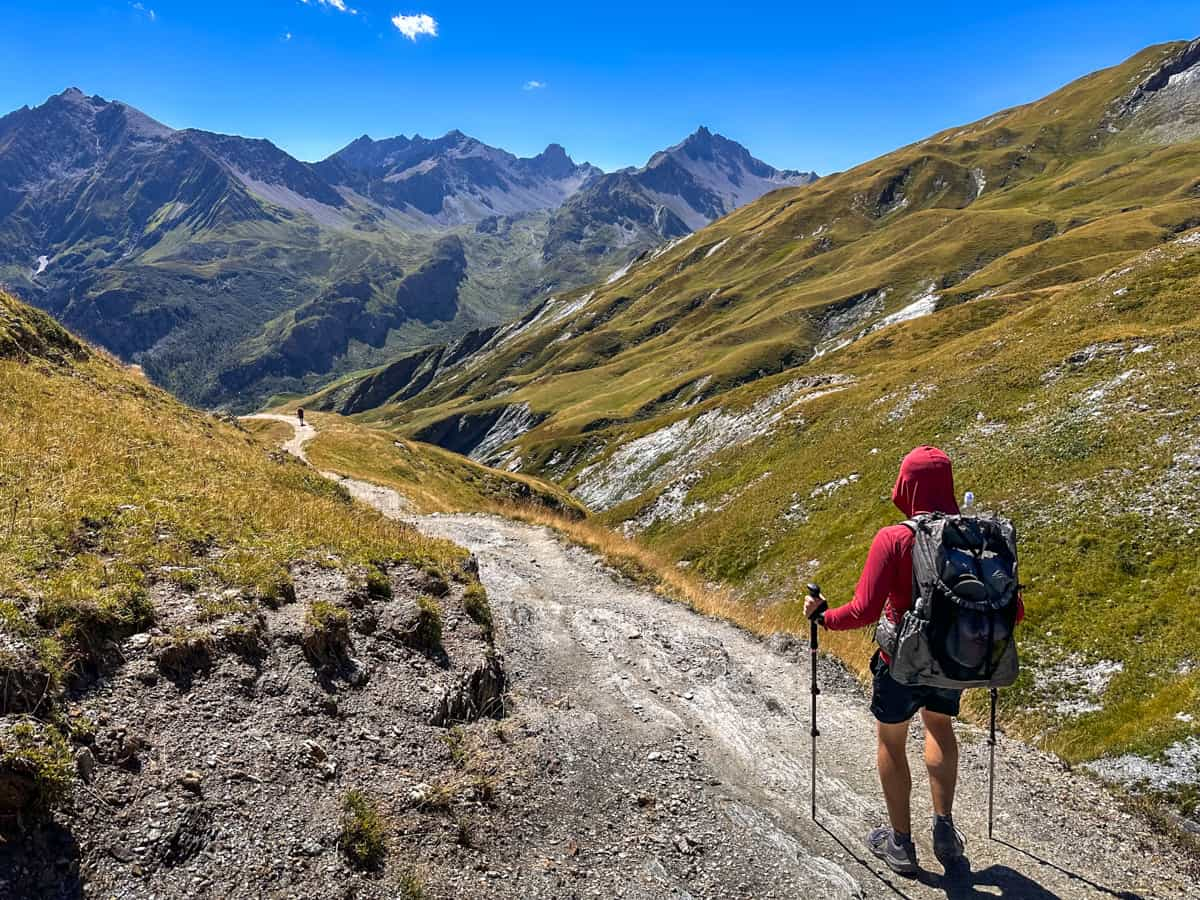
Be ruthless about what you’re packing and question whether you want to carry each item that you put in your backpack for over 100 miles. While adding an extra sweatshirt or some extra Clif bars might not seem like it will add that much weight, things add up QUICKLY and a couple extra pounds can seriously be the difference between you being able to complete the trail or not.
Coordinate with the folks that you’re hiking with
If you’re hiking with others, there are lots of items that really only need to be packed by one person in your group, like toilet paper, trashbags, a backpacking trowel, and a water filter, and can be shared, as needed.
Try to coordinate ahead of time who is packing what ahead of time and distribute these items amongst your group to cut down on weight.
Consider luggage transfer services
If you are concerned about your ability to carry a backpack for such a long distance, there are luggage transfer services that will move your bags from any road accessible mountain refuge to another, like Peak+ or Chamonix Valley Transfers.
This is on the pricier side, costing upwards of €60 per bag per transfer.
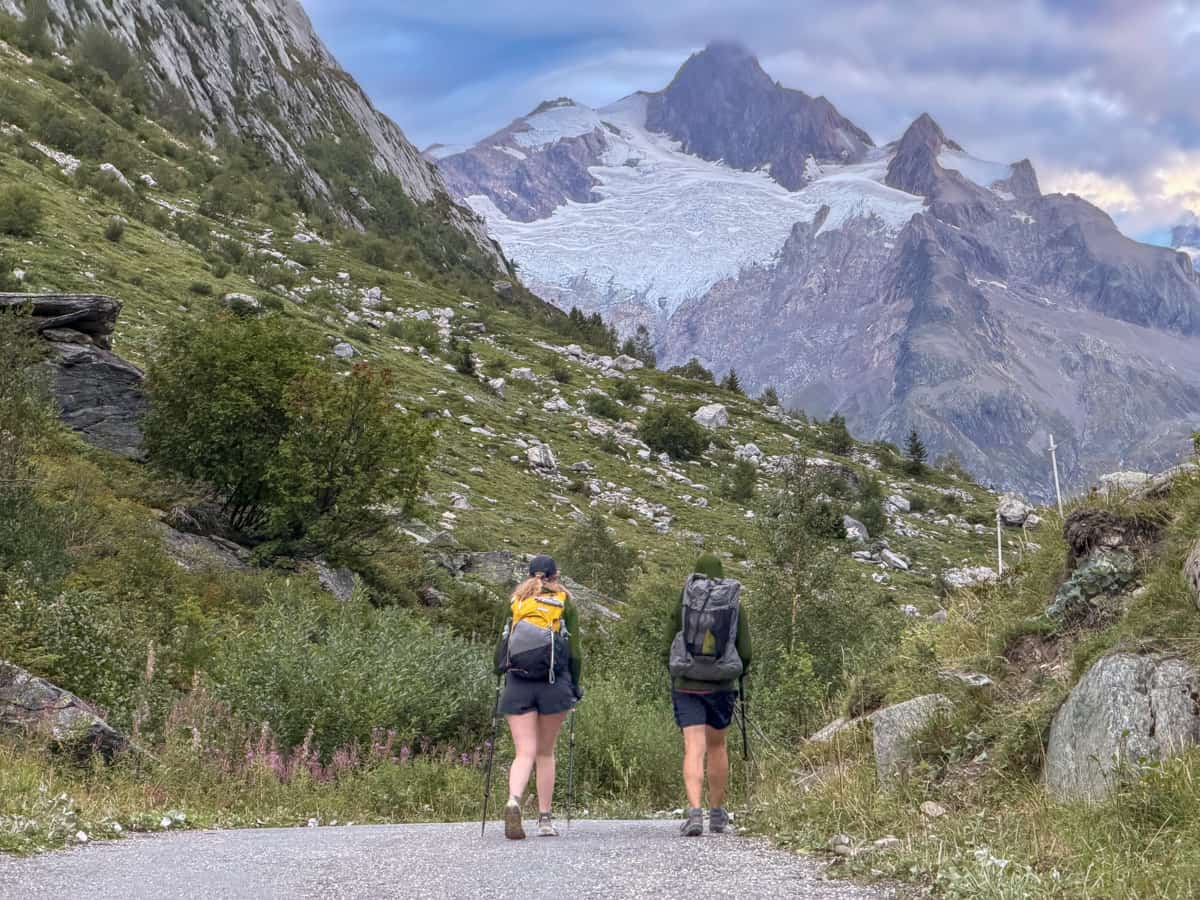
However, we met several folks along the trail that used different methods of cutting down costs, like pooling items from your group into one bag and splitting the cost. Another method is, before you begin your hike, to pack a couple of different bags with fresh clothes and have a new bag delivered to your mountain refuge a few times throughout the trip.
We personally felt luggage transfer services were not necessary for us, but it can be a good option if you’re worried about your physical ability to complete the Tour du Mont Blanc or if you need to carry a particularly heavy item for some reason.
There you have it—the Tour du Mont Blanc packing list I wish I had before we hit the trail. Do you have any questions what you need for this trek? Let me know in the comments below!
