

Ljubljana, the vibrant capital city of Slovenia, has plenty to offer visitors, from its historic Old Town and edgy Metelkova neighborhood to its array of world-class bars and restaurants. However, thanks to the city’s central location, it also makes the perfect springboard to explore the rest of this beautiful country, with everything from the sun-drenched Adriatic coastlines to tiny alpine villages, tucked away in the Julian Alps, just a couple of hours’ drive away.
Here are 8 best day trips from Ljubljana, letting you squeeze in all of the highlights of Slovenia in just a short trip.
This post may contain affiliate links. If you make a purchase through them, we may receive a small commission, for which we are extremely grateful, at no extra cost to you.
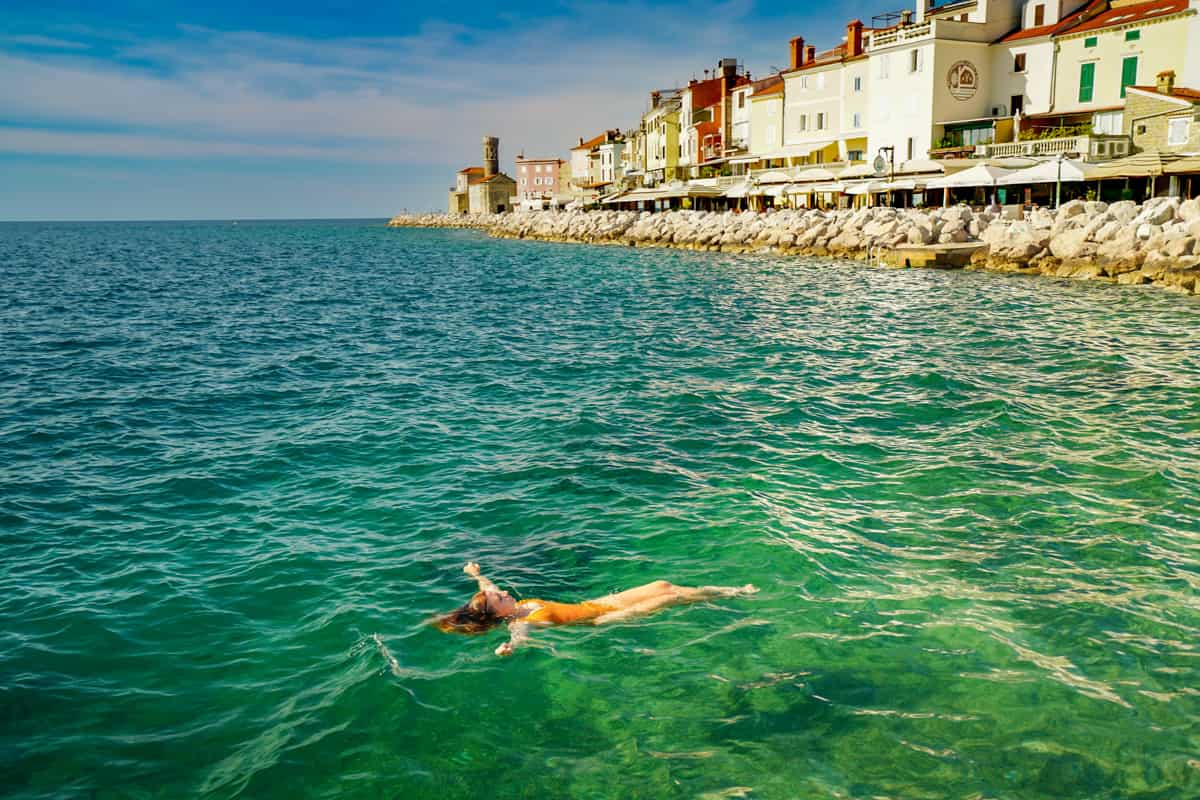

Day trips from Ljubljana
There are tons of cool things to do in Ljubljana, like riding a bike through Tivoli Park or taking in the views of the city at the watchtower at Ljubljana Castle.
However, my favorite thing about Slovenia is the diversity of areas that you can explore in a country that’s smaller than New Jersey, ranging from coastal cities with Mediterranean vibes to some of the most dramatic mountainscapes in the Alps. So, regardless of how long you have in the country, it’s absolutely worth taking a few day trips from Ljubljana to see what Slovenia has to offer outside of its charming capital city.
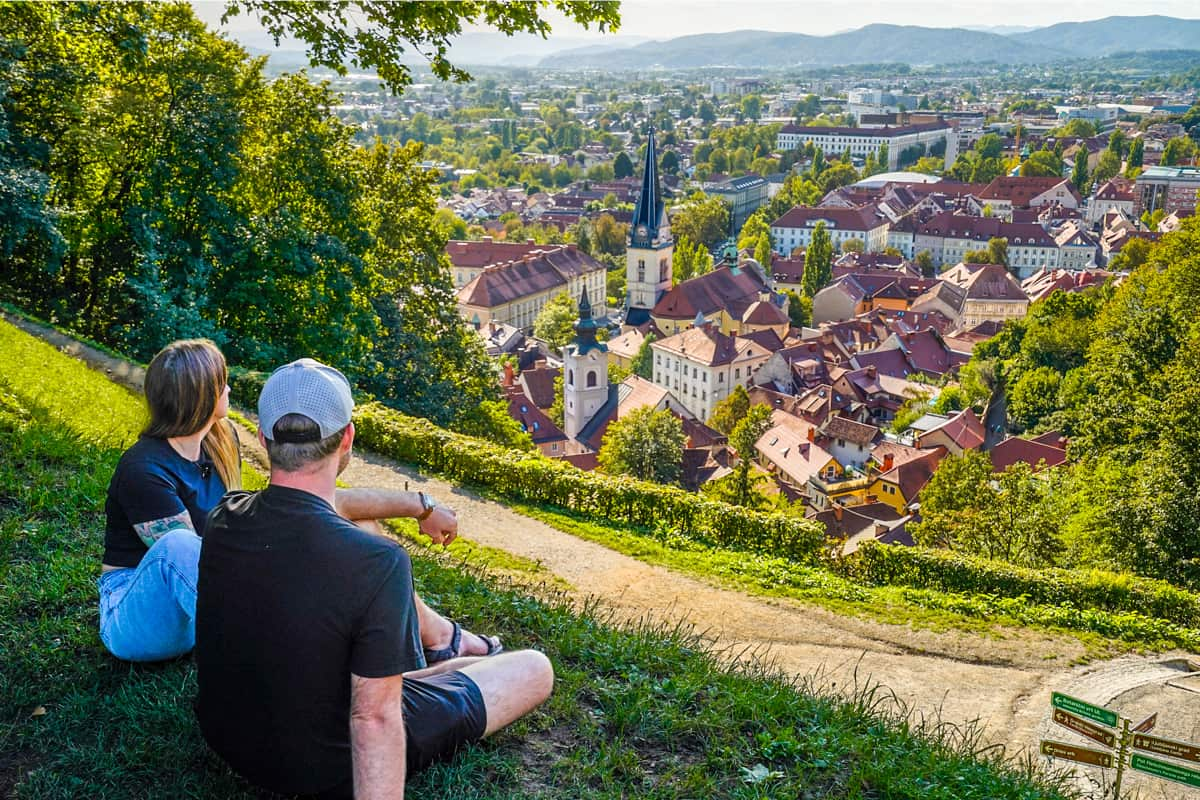
You can easily get to any of the destinations we discuss below with a rental car. However, given that the most touristy area of Ljubljana is pedestrian-only, having a rental car while staying in the city can be tricky and require a bit of pre-planning (i.e., staying outside of the city center and confirming that your hotel has parking facilities).
Accordingly, for the day trips referenced below, I am going to highlight how to get to each of these destinations via public transit, if possible, or with a tour group.
1. Bled
How far is it from Ljubljana? 40 minutes
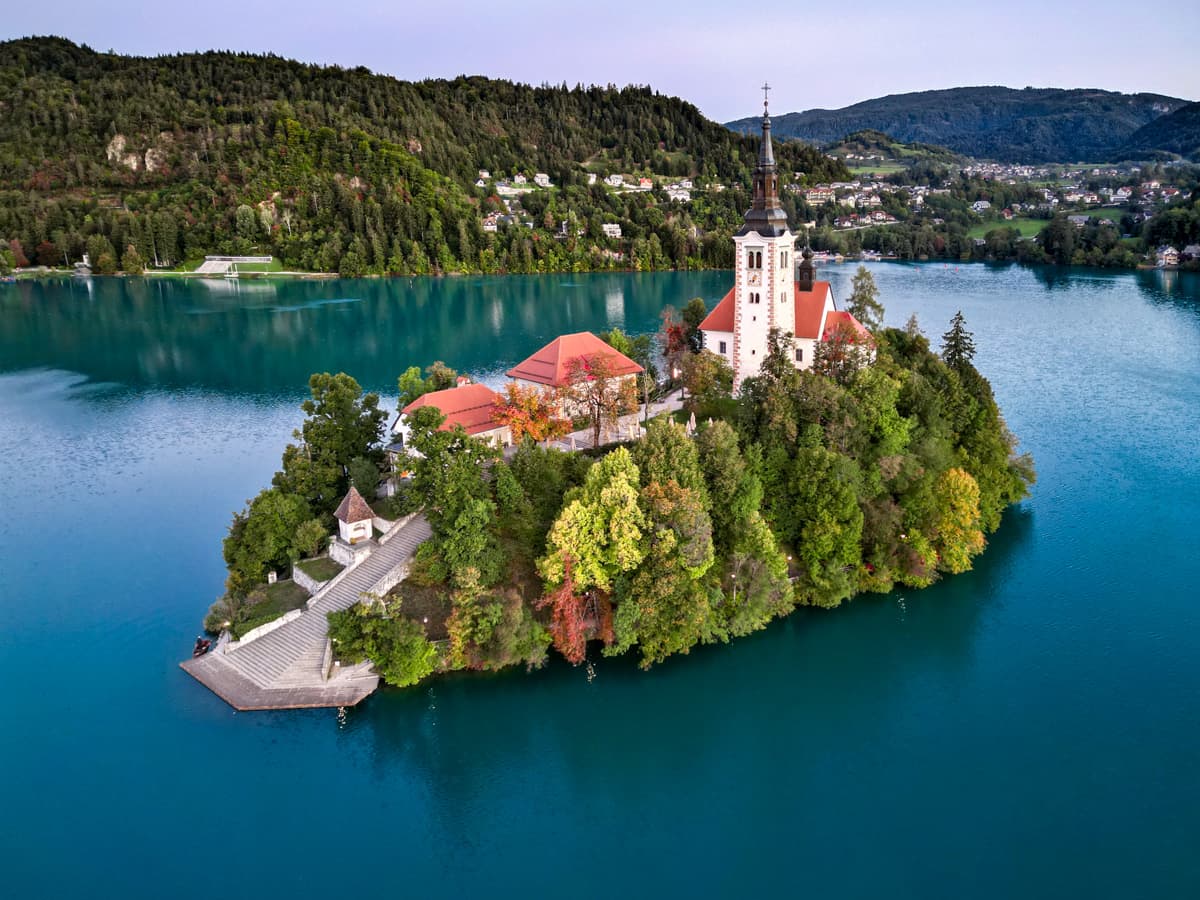
Bled is one of the most popular day trips from Ljubljana—and for good reason!
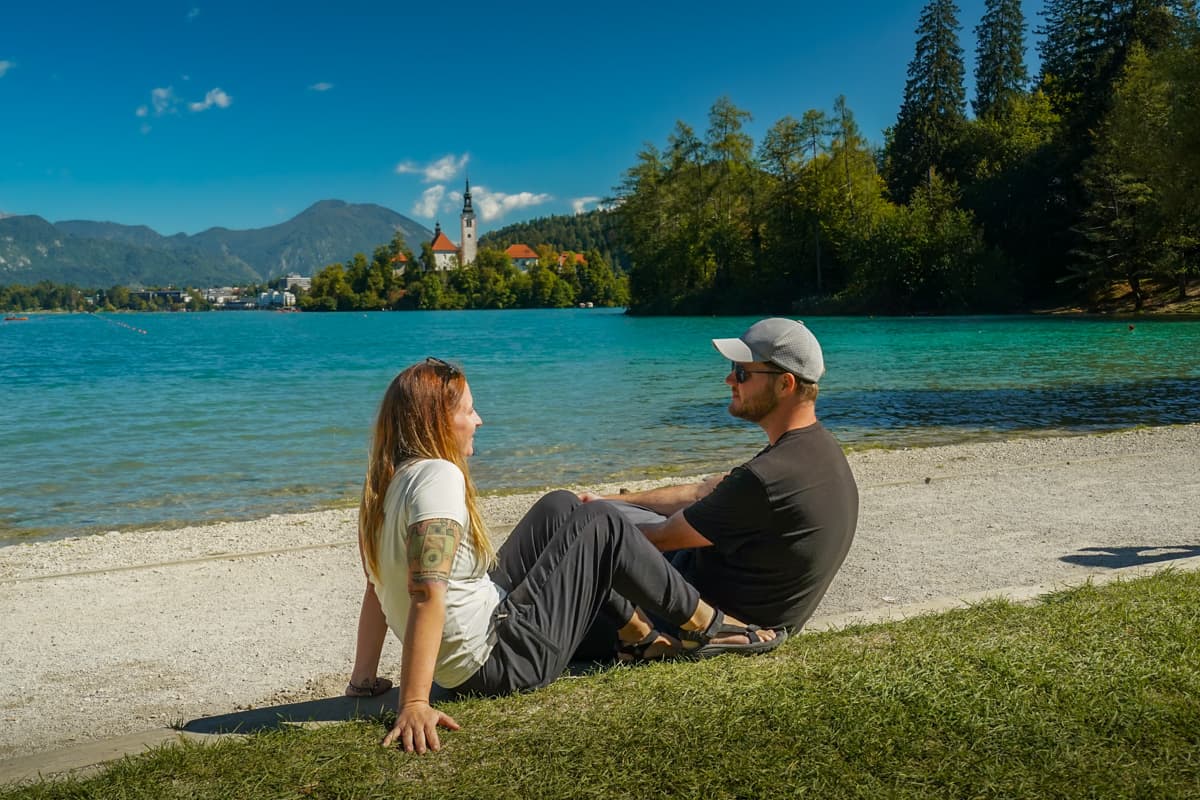
This resort town is home to the iconic Lake Bled, a beautiful lake with turquoise waters and a picturesque island, complete with a Medieval church perched on its shores. The lake is surrounded by the town’s centuries-old buildings, lush forest-covered mountains, and even Bled Castle, built high into a cliffside overlooking the town. It seriously looks like something straight out of a fairytale!
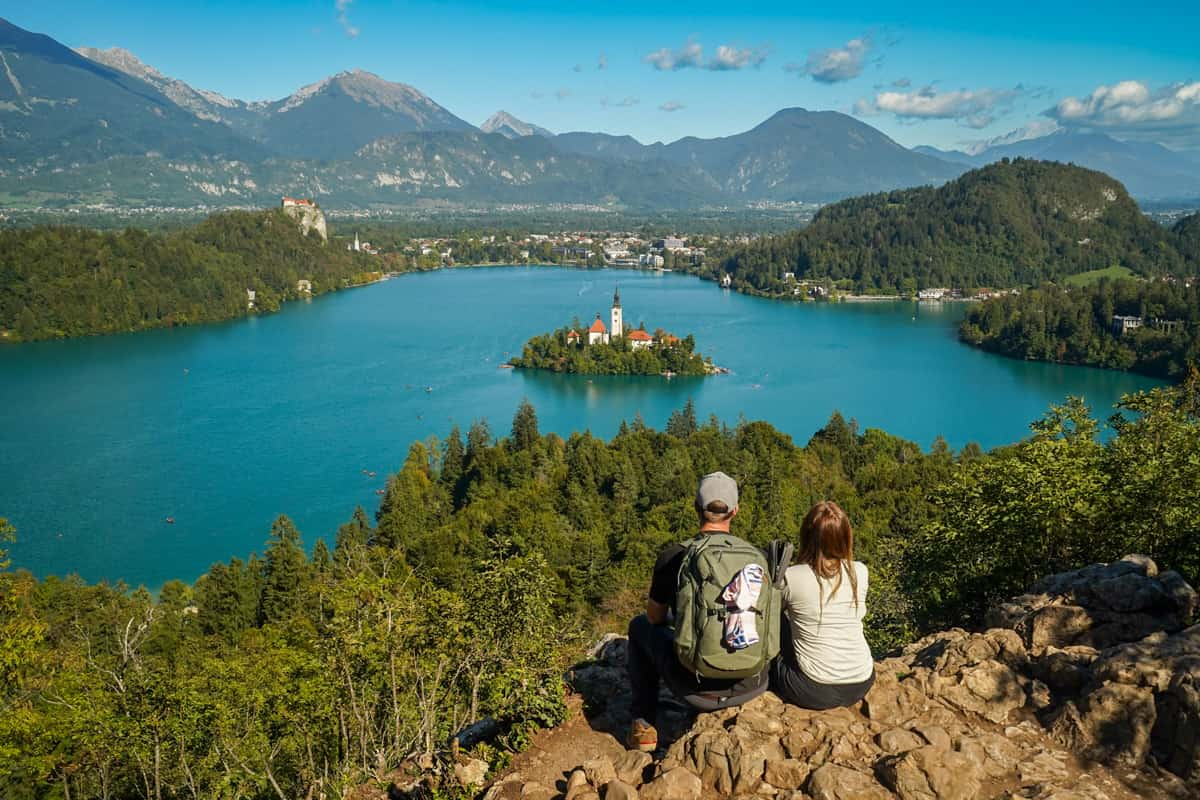
There are a LOT of fun things to do in Bled, so you could easily spend a couple of days here.
However, if you’re short on time, we spent one day, just walking along the path that encircles the lake’s shores and hitting some of the highlights along the way, including:
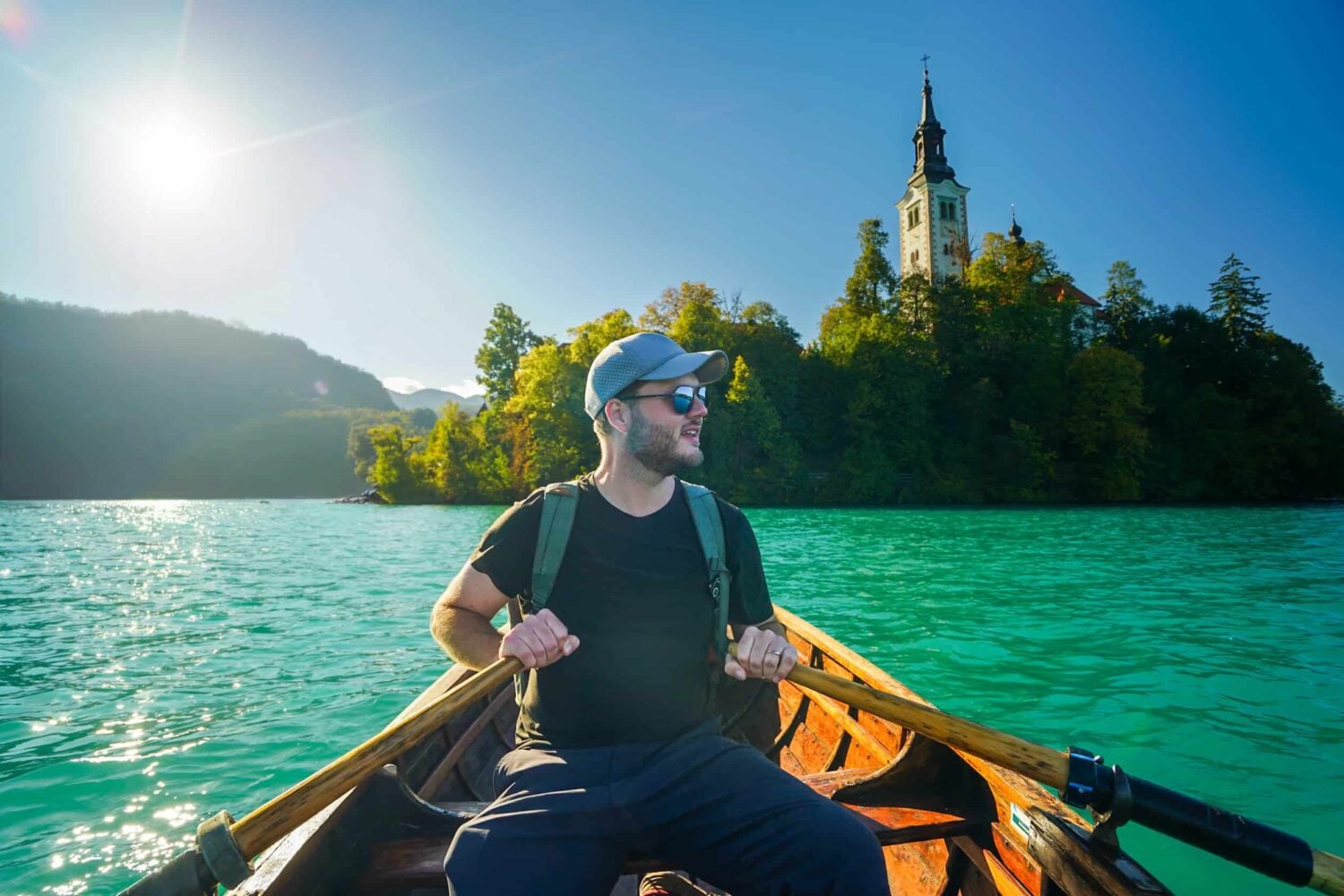
- renting a rowboat and paddling to Bled Island (we rented our boat here and had a great experience);
- swimming in the lake from one of its beaches, like Velika Zaka; and
- hiking up to the viewpoints at Ojstrica and Mala Osojnica (you can follow this trail).
Be sure to save room for some food!
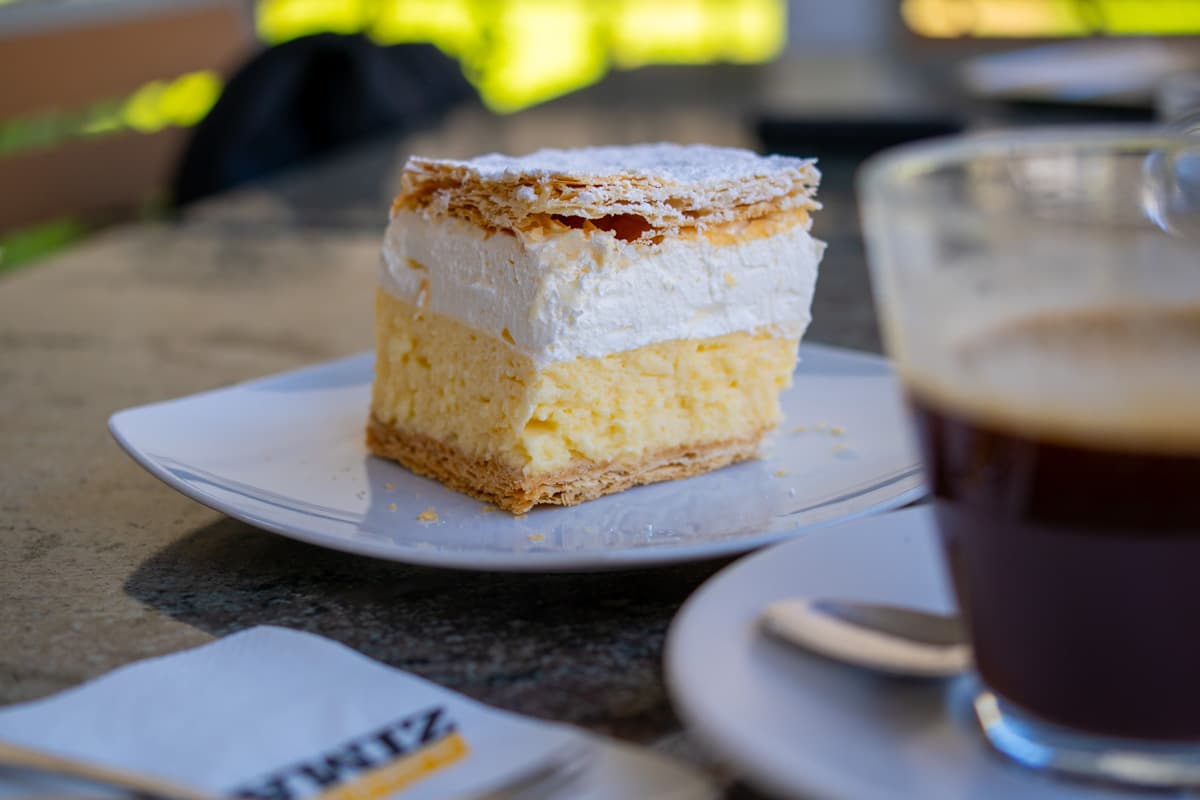
During your time here, you, of course, need to try some Bled cream cake, which consists of layers of thick custard and airy whipped cream, sandwiched between two puff pastries. Our favorites in town are Confectionary Zima and ŠMON Slaščičarna.
Another highlight is Monika Poklukar, a restaurant run by three generations of women, out of their home, who make pretty much everything that’s served by hand, including breads, cheeses, beers, and some fun spirits (including one called “Mother-in-law’s tears!”). From the intimate setting to the tour you get of their historic home after your meal, this was one of our favorite experiences in all of Slovenia!
If you’re visiting in the colder months, be prepared to have more limited offerings for things to do in Bled. Many attractions and restaurants, like Monika Poklukar, close from around November through March.
How to get to Bled
Public transit
There are buses from the Ljubljana bus station to Bled every 15 to 30 minutes, depending on the day. Tickets cost between €5-10 (one-way).
I’d suggest purchasing tickets at the bus station, as it’s much cheaper than booking through an online third party service and Arriva, the bus operator, often declines credit cards that are not from Slovenia.
Tours
If you’d prefer to go on a guided tour, there are tons of options from Ljubljana, including:
- Small group tour to Bled from Ljubljana: This tour offers roundtrip transportation from your hotel to Bled and a complimentary slice of Bled cream cake (and a coffee to wash it all down), plus optional adventures on a pletna boat to Bled Island and a hike up to Bled Castle.
- Half day tour to Bled from Ljubljana: I love the guides with this company. There are some places that you can opt to stop at, like Bled Castle and Bled Island, but the guides will typically check with your group to see if there’s anything you’re interested in doing and try to work it into the schedule. Definitely a great value!
2. Vintgar Gorge
How far is it from Ljubljana? 50 minutes (and just 10 minutes from Bled!)
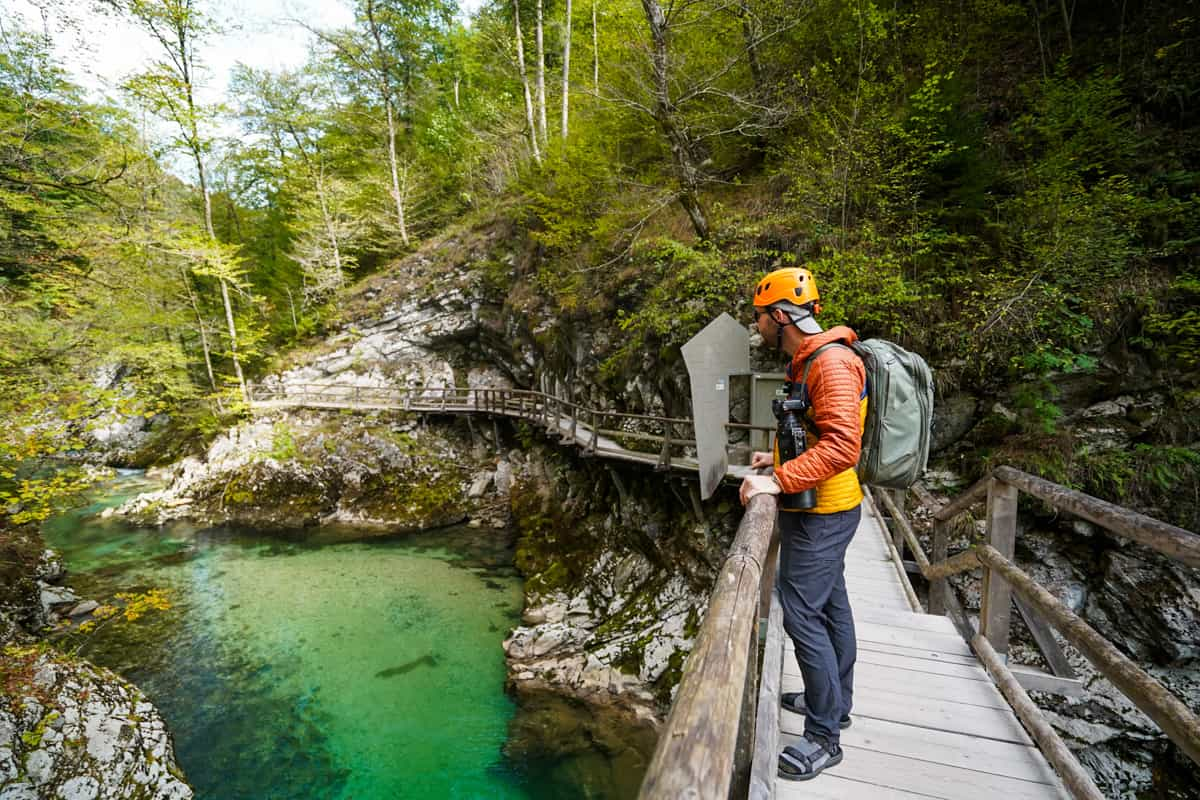
The Vintgar Gorge isn’t as famous as some of the other attractions in Slovenia, like Bled or Piran. However, it’s seriously one of the coolest and most beautiful places we visited in the country!
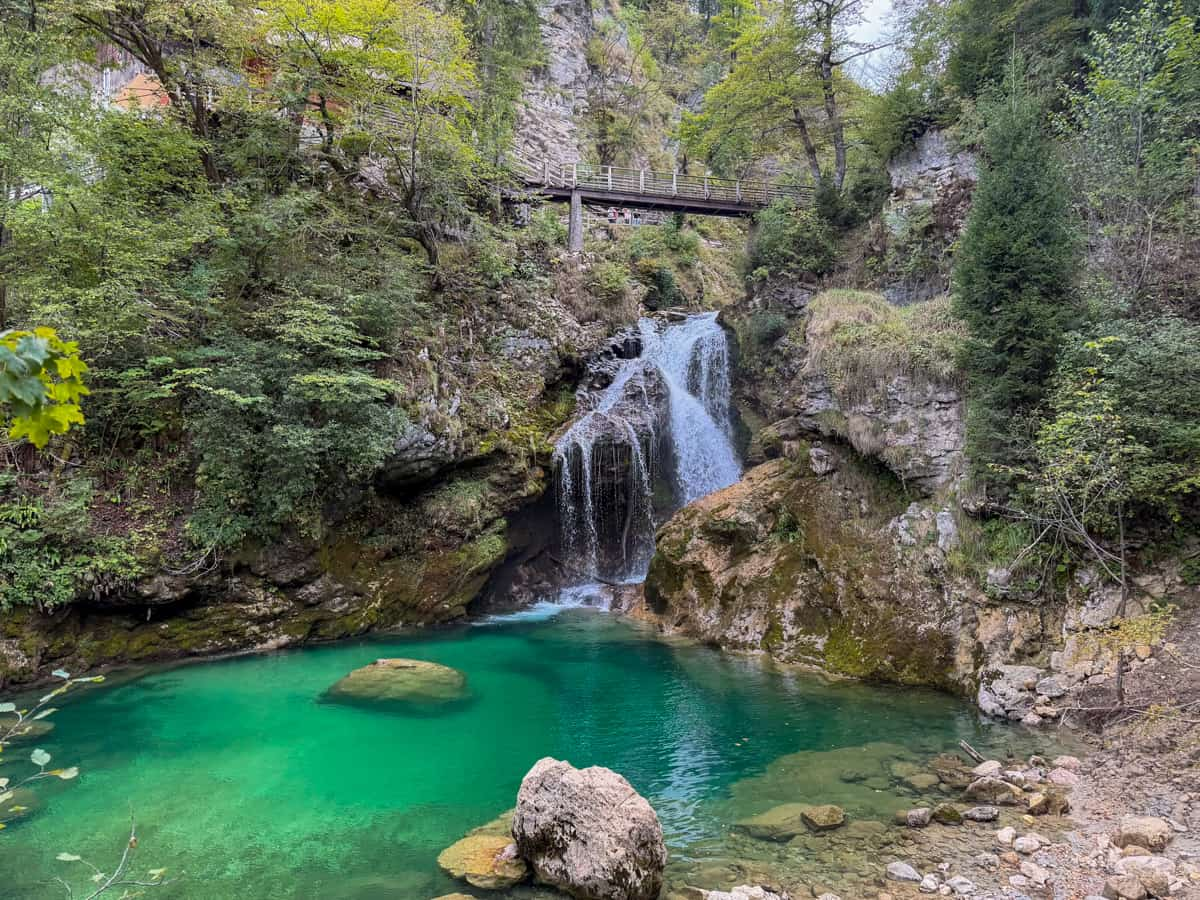
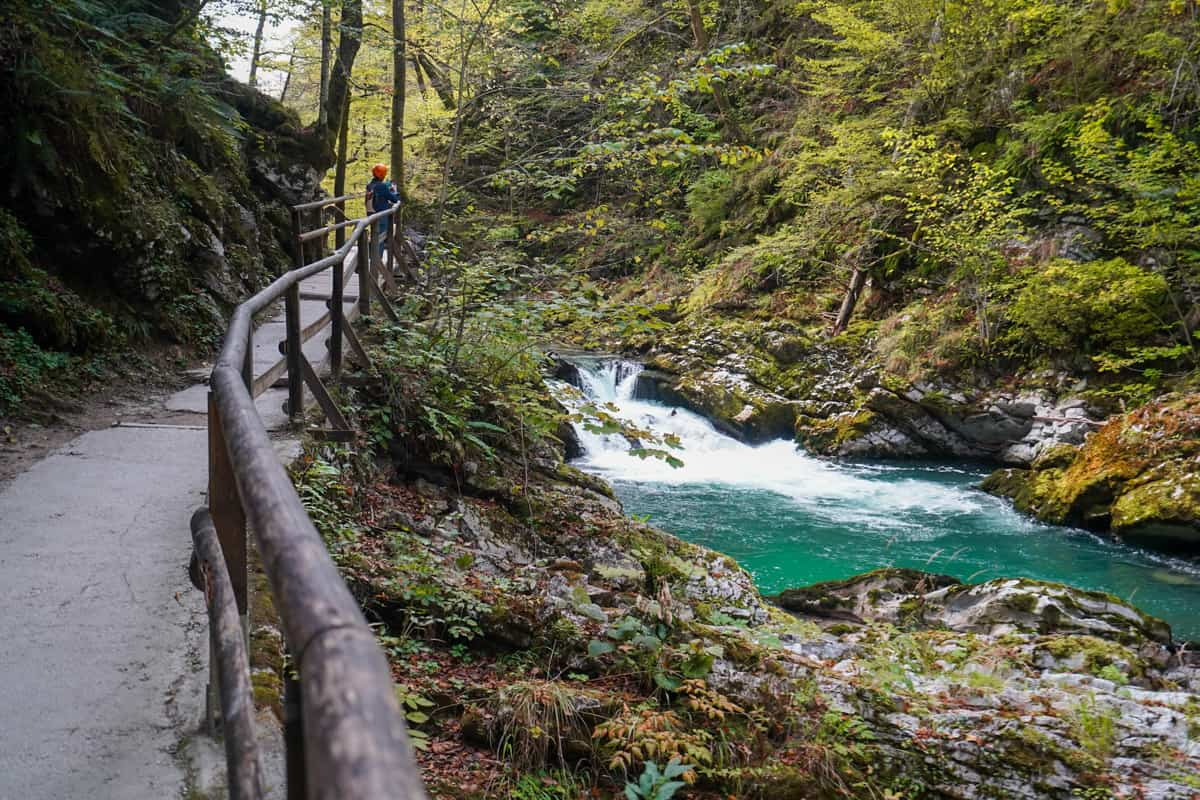
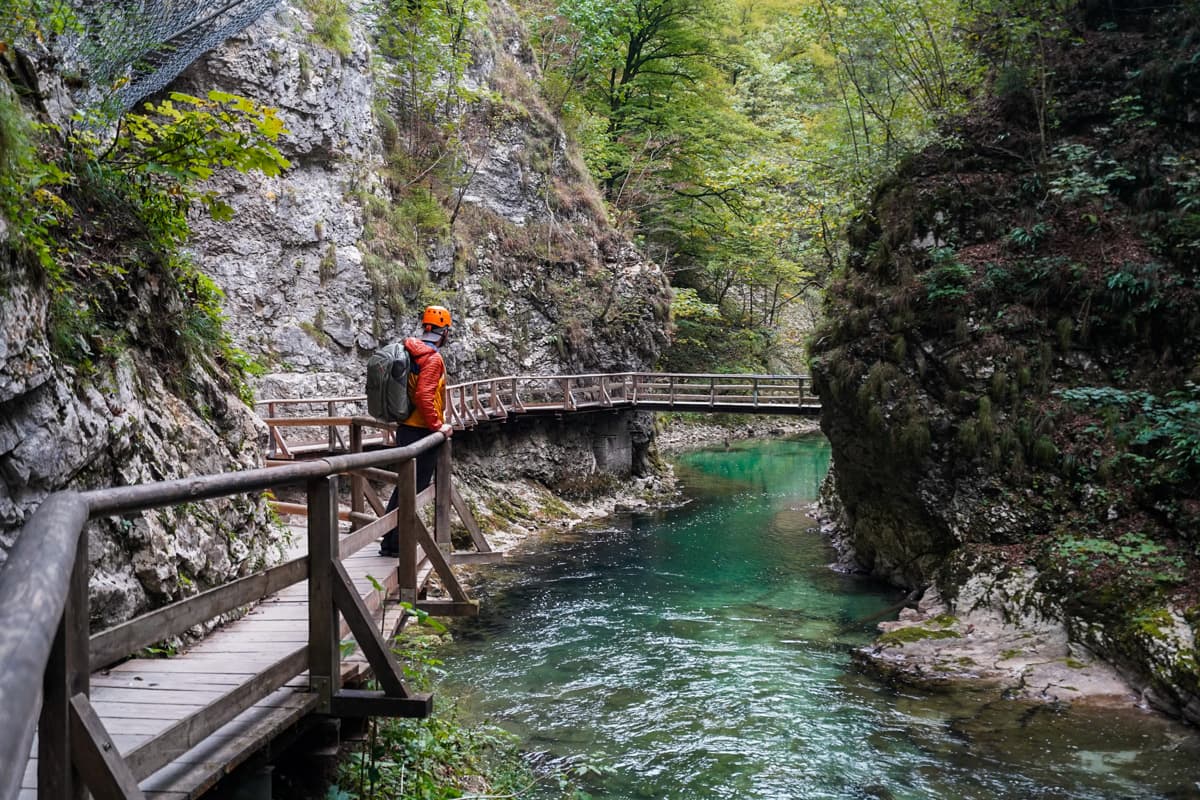
Essentially, you walk along a one mile long wooden boardwalk, suspended over the emerald green water of the Radovna River, through a limestone canyon, with limestone cliffs that reach up to 300 feet tall. Along the way, the river forms all kinds of neat features, like whirlpools and waterfalls, that you get a birds eye view of.
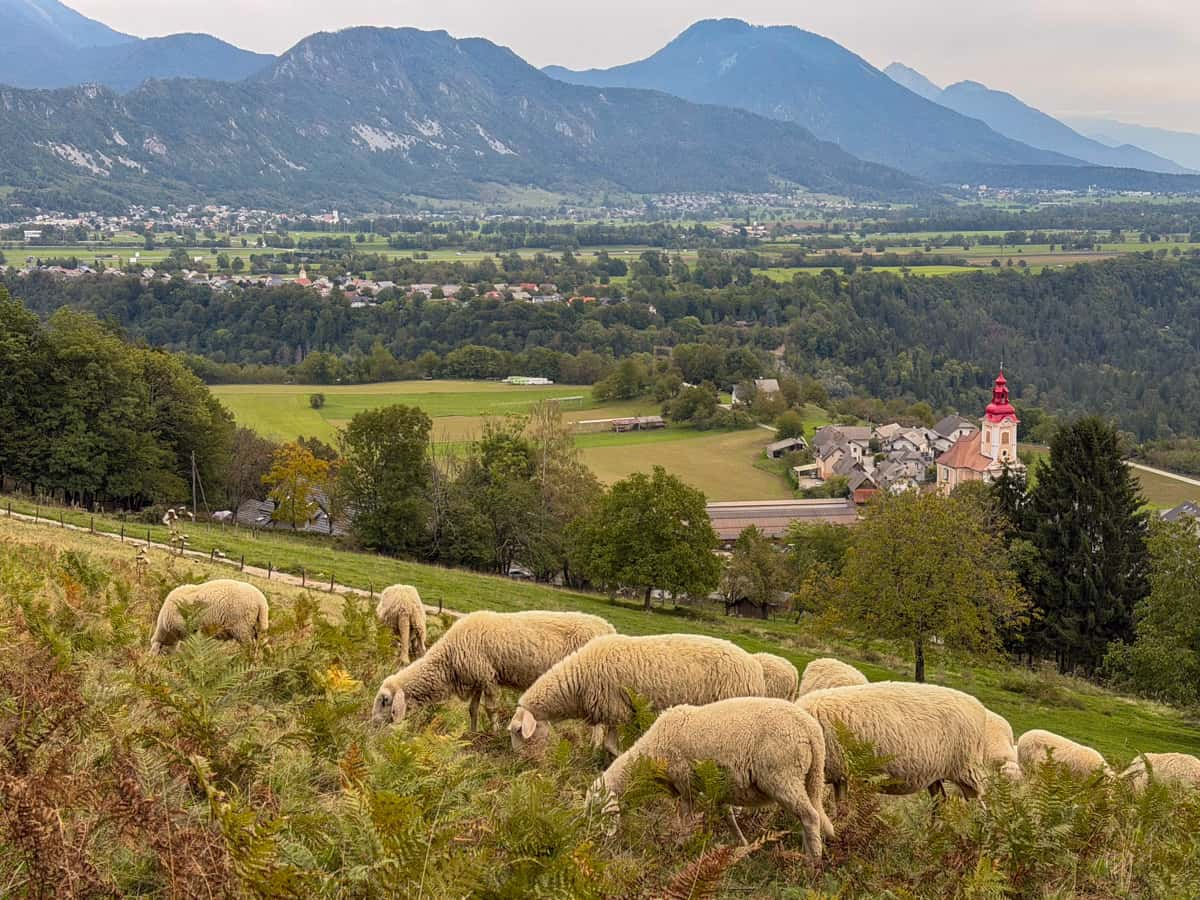
The boardwalk is hiked one-way, so, in order to get back to the trailhead, you loop an additional 1.8 miles through a lush forest and, eventually, through pastures of grazing sheep and cows, with sweeping views of the surrounding farm towns and the Julian Alps. You can check out a trail map here.
If you were quickly walking through the gorge, you could easily tackle it in about an hour and a half or so—but we had so much fun taking photos and videos that we spent over four hours here!
Visiting the Vintgar Gorge is a little funky. You have to purchase timed entry tickets online, in advance, as they do not sell tickets at the entrance, and you also are required to take a shuttle there from either the Bled bus station or from the Central VINTGAR Parking (which is included in the ticket price).
Given that you have to head to Bled in order to get to the Vintgar Gorge, it’s a great idea to combine a visit to both these destinations into one outing. Truth be told, I think you’d be a bit rushed to squeeze in everything in just a day, so, if you can swing it, you might want to consider an overnight stay in Bled to allow for enough time for both destinations.
It’s worth noting that the Vintgar Gorge is closed from November through the end of March for the winter season.
How to get to the Vintgar Gorge
Public transit
Head to the Ljubljana bus station and board an Arriva bus to Bled.
From here, you’ll catch a shuttle to the Vintgar Gorge (as mentioned above, the shuttle is included in the ticket price).
Tours
Most tours to the Vintgar Gorge from Ljubljana will also include stops in Bled and Lake Bohinj, like:
- Lake Bled, Lake Bohinj, and the Vintgar Gorge: This small group tour, with a maximum of just 8 people, packs in some of the best sights of Slovenia’s alpine region, including the Bled Castle and some Bled cream cake in their namesake town; the Vintgar Gorge; and the peaceful waters of Lake Bohinj. I also love that this tour includes hotel pick-up and drop-off!
- A day in Alpine Slovenia: Lakes Bled, Bohinj & Vintgar Gorge: Somehow, this tour is even MORE jam-packed, with stops at the Vintgar Gorge, Bled, Lake Bohinj, AND the charming town of Škofja Loka, which is one of the best preserved medieval towns in Slovenia, complete with a castle that dates back to the early 13th century and the oldest bridge in all of Central Europe. Because you hit so many sights in one day, the pacing of this tour can honestly feel a bit rushed, but, if you’re someone that wants to make the most of your time in Slovenia, this is the option you want!
3. Lake Bohinj
How far is it from Ljubljana? One hour and 30 minutes
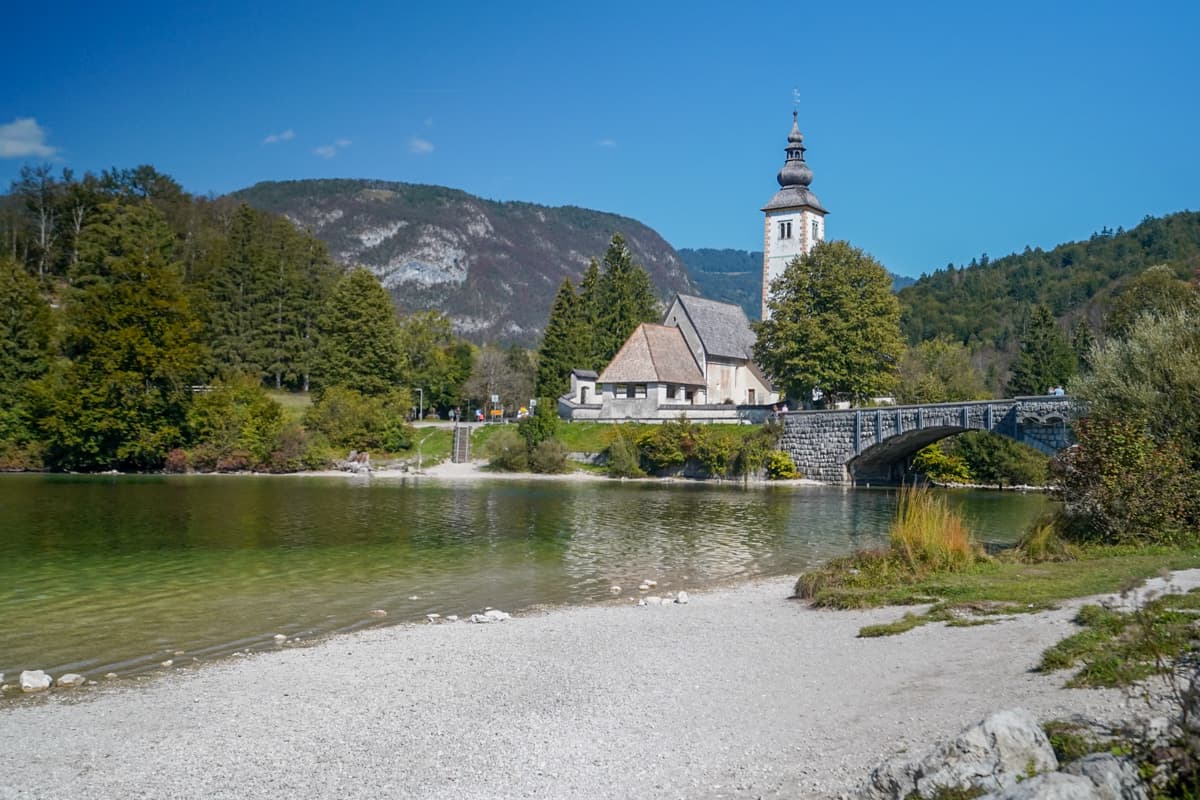
Lake Bohinj is the largest natural lake in Slovenia and is commonly referred to as the less touristy version of Lake Bled. It also lies in the heart of Triglav National Park, the only national park in Slovenia that protects the high alpine forests, rivers, and valleys of the Julian Alps.
I can see why—Lake Bohinj has crystal clear, emerald colored water, with historic buildings built along its shores and surrounded by the Julian Alps. In my opinion, there are less things to do in Lake Bohinj than in Bled, but, if you’re looking to get away from the crowds and explore a more authentic side of Slovenia, it’s a great option.
We moseyed around the path that follows along the lake’s shores, stopping to admire the Church of St. John the Baptist, the most iconic building in town. The church dates back to before 1300 and is known for its beautifully preserved frescoes.
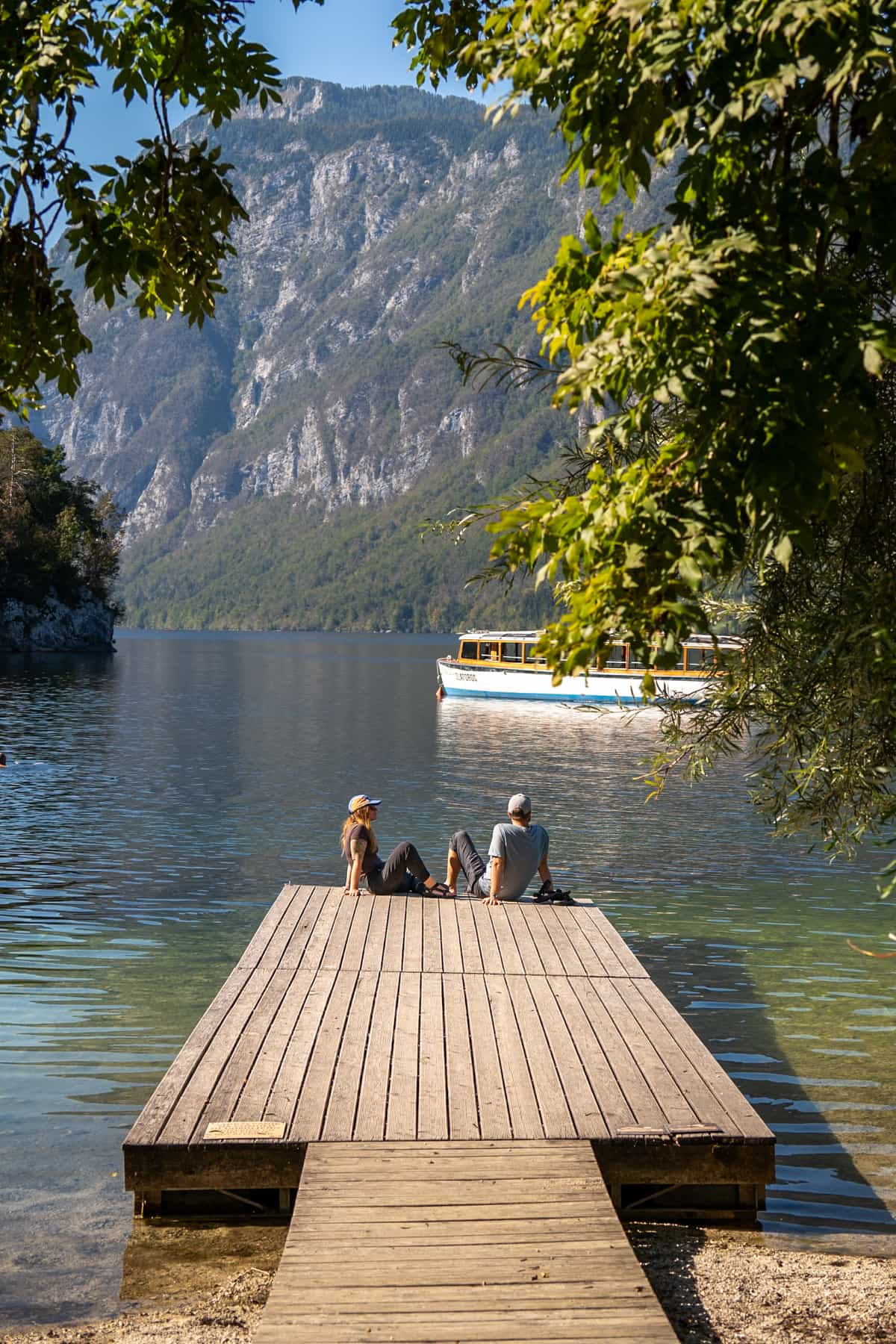
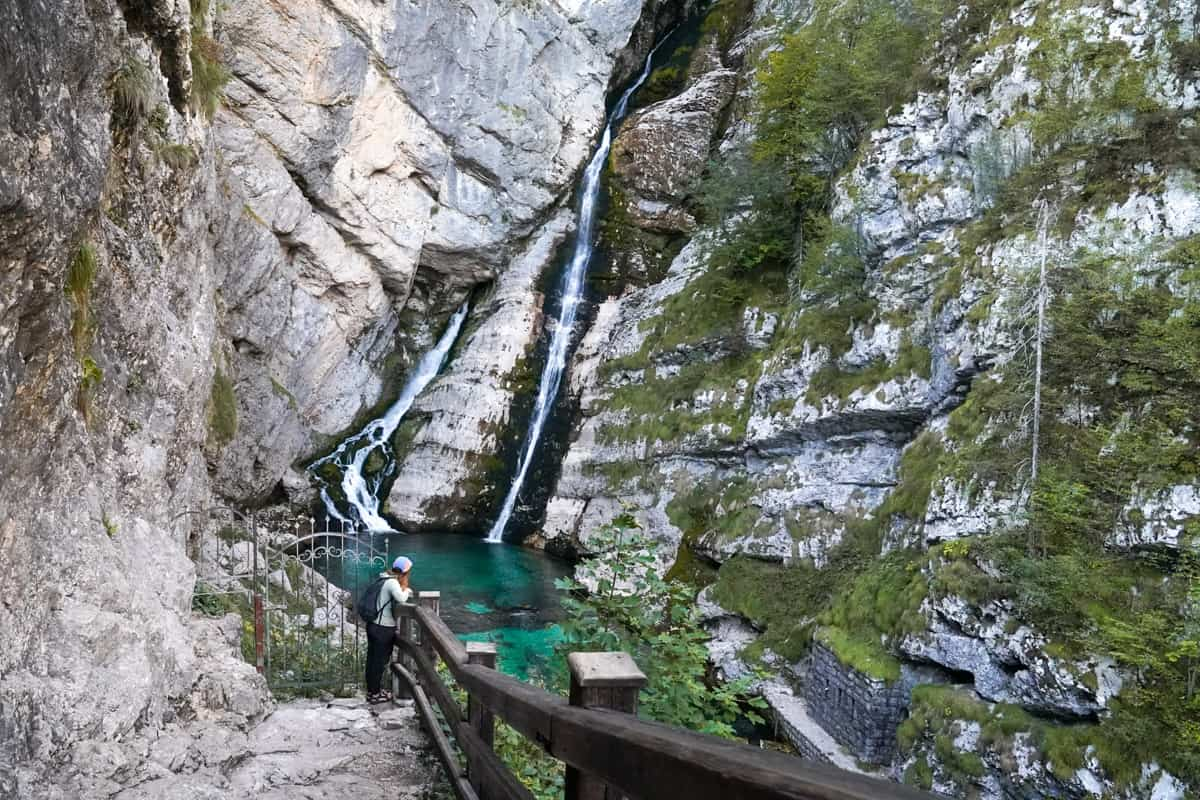
There are plenty of outdoor adventures to get up to in Lake Bohinj, like swimming from its beaches, like Verejná pláž; renting a stand-up paddleboard or kayak to spend some time out on the water; or take an electric boat across the lake to enjoy the surrounding alpine views. I also enjoyed hiking to Slap Savica, a unique waterfall with two distinct ribbons that fall into a shockingly turquoise pool.
How to get to Lake Bohinj
Public transit
There are hourly buses from the Ljubljana bus station to various stops along the shores of Lake Bohinj, including the Bohinjsko jezero/lake, which is right by the famous church and most of the kayak outfitters and boat tour companies. Tickets cost around €10-15 (one-way).
Tours
Given that Lake Bohinj is located less than half an hour away from Lake Bled, the two destinations are often visited together, like these tours:
- Lake Bled and Lake Bohinj Tour: This 9.5 hour tour combines the best that these two alpine towns have to offer, including a boat ride on Lake Bled, climbing up to Lake Castle, hiking to the Savica waterfall, and even taking a dip in Lake Bohinj’s turquoise waters.
- Savica Waterfall, Lake Bohinj, and Lake Bled Tour: This 8 hour tour hits many of the same highlights—the Savica waterfall, the shores of Lakes Bohinj and Lake Bled—but allows guests a bit more freedom and flexibility in choosing the activities they do in each destination. This is the perfect option for travelers that want to choose-your-own-adventure.
4. Triglav National Park
How far is it from Ljubljana? Triglav National Park is HUGE, so it really depends on where you’re headed in the park. However, I’d generally expect it to take anywhere from an hour and a half to three hours to drive from the city to various points of interest in the national park.
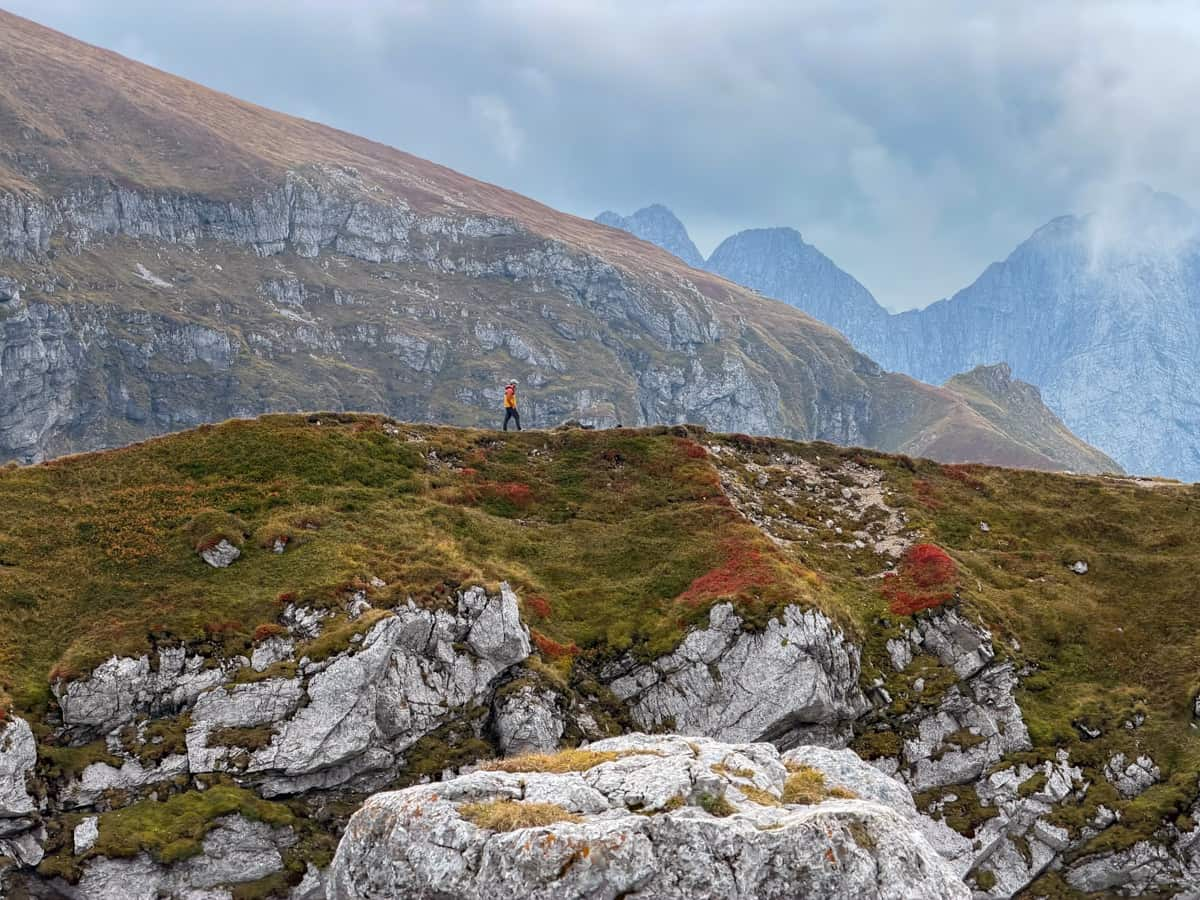
Triglav National Park is an alpine wonderland that sprawls for 840 square kilometers across the western corner of Slovenia. It serves to protect the flora, fauna, and natural features, like caves, mountains, and waterfalls, of the Julian Alps, plus the unique cultural heritage of traditional alpine farming and villages.
There are tons of cool places to explore in Triglav National Park. To be honest, we spent three days exploring this national park and feel like we could have dedicated at least a week to hitting its main highlights! However, here are some of the most popular spots to consider adding to your list:
Great Soča Gorge
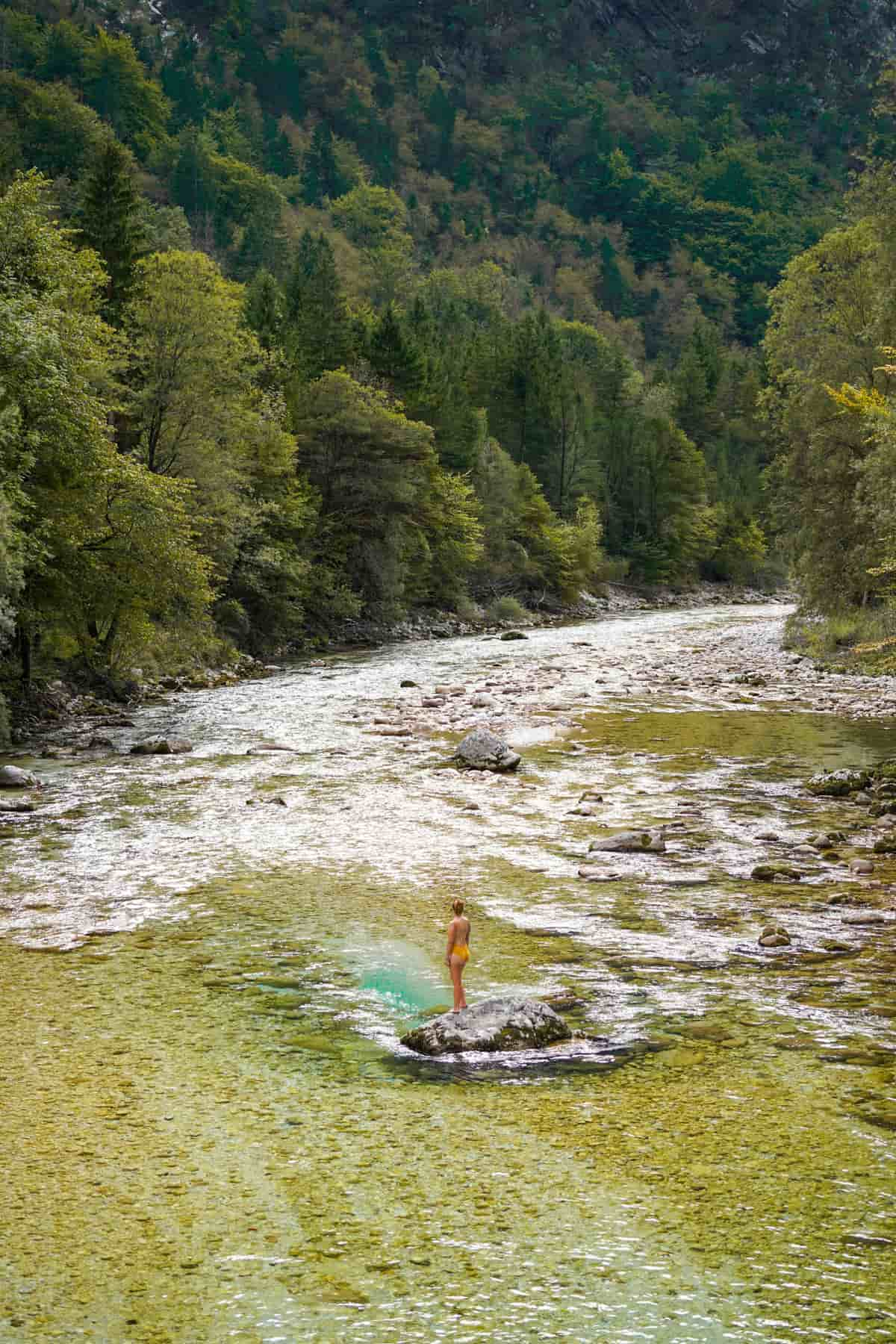
The Soča River is a glacially fed river, with crystal clear turquoise water. Over the millenia, the rushing river has eroded an extremely narrow gorge through limestone cliffs. The current is too strong in the gorge itself to swim in, but there are a series of shallow pools that directly feed into the gorge, where you can relax in the (extremely chilly!) waters.
Lake Jasna
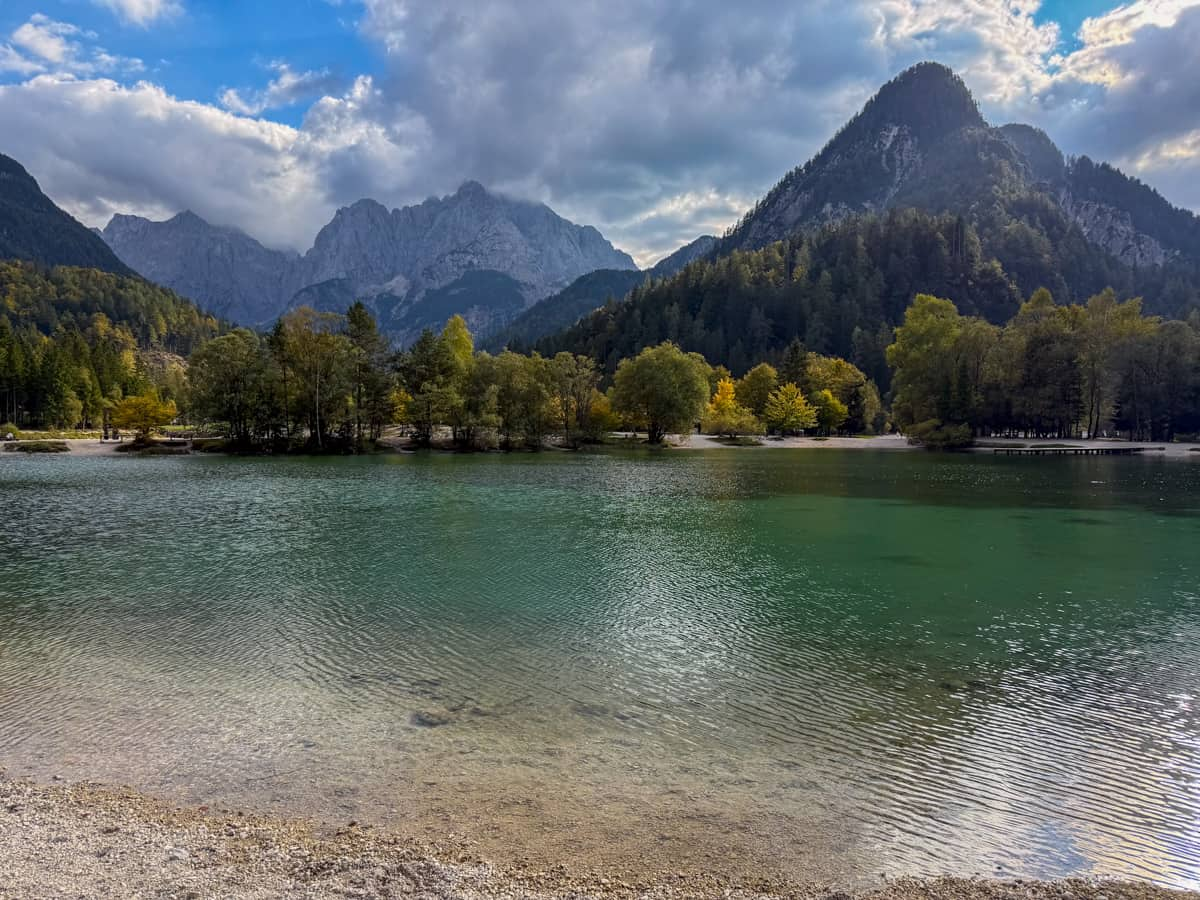
This alpine lake, known for its turquoise waters, sits on the outskirts of the charming resort town of Kranjska Gora and has a stunning background of some of the most dramatic views of the Julian Alps. In the mornings, you can often catch the surrounding alpine scenery, perfectly reflected into the lake’s waters.
Vršič Pass
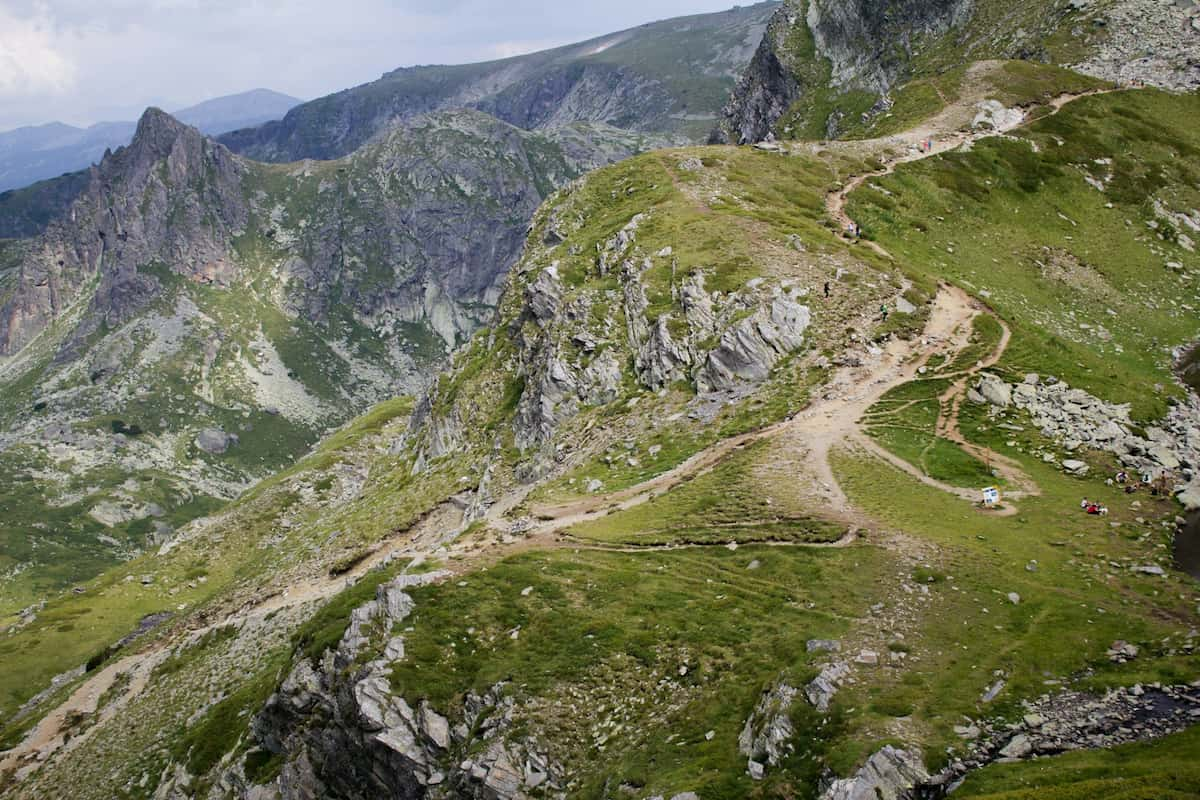
This is the highest mountain pass in Slovenia, connecting Kranjska Gora to the north to the Great Soča Gorge to the south, with a road that iconically has 50 hairpin turns. There are several viewpoints along the way, but, if you want to stretch your legs a bit more, the hikes to Slemenova Špica or the Vršič Pass offer even better views of the surrounding Alps.
Peričnik Waterfall
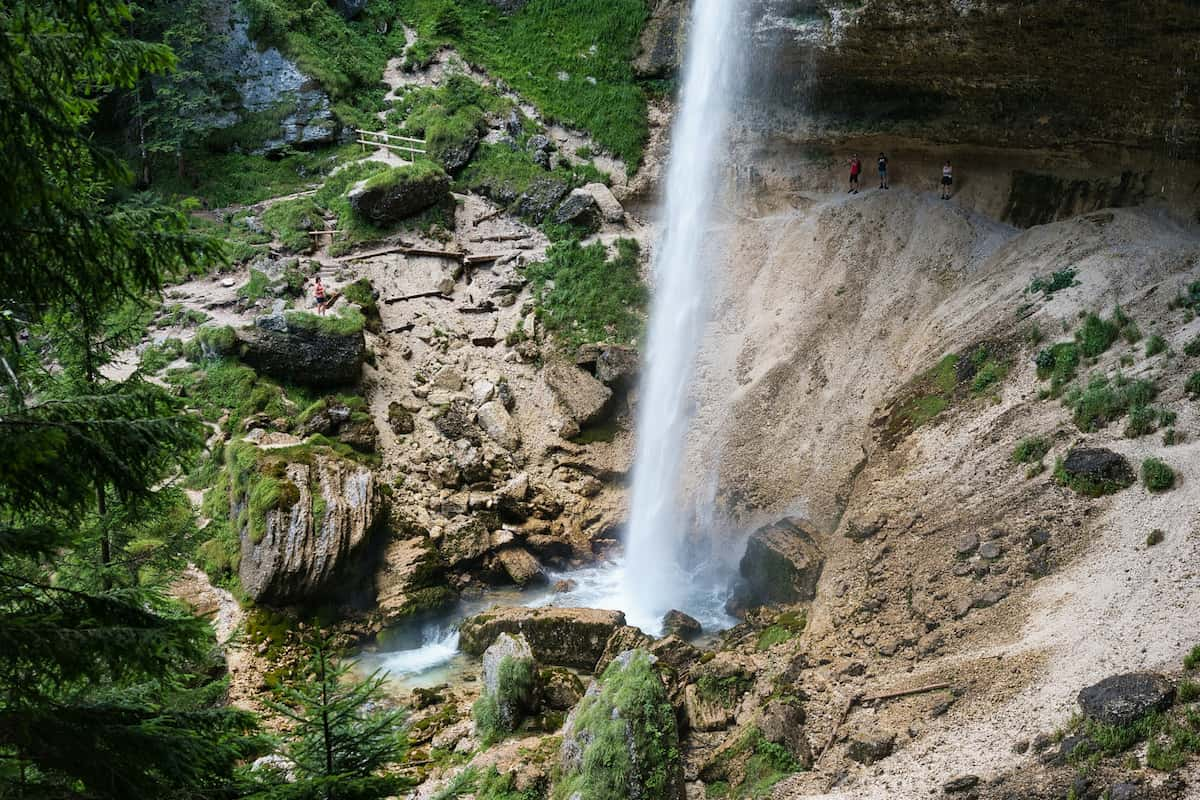
This is one of the most popular waterfall hikes in Triglav National Park, with a path that leads you right behind the curtain of a two-tiered waterfall (it kind of feels like Iceland!).
How to get to Triglav National Park
Public transit
As mentioned above, Triglav National Park is pretty spread out, with most of its points of interest located in more remote areas. I really wouldn’t recommend trying to explore Triglav National Park by bus and, instead, consider getting a rental car for the day or going with a tour group.
Tours
There are several tours from Ljubljana that hit the seven “alpine wonders” of Triglav National Park, which include all of the stops I mentioned above and the perfect mix of mountains, rivers, and alpine lakes.
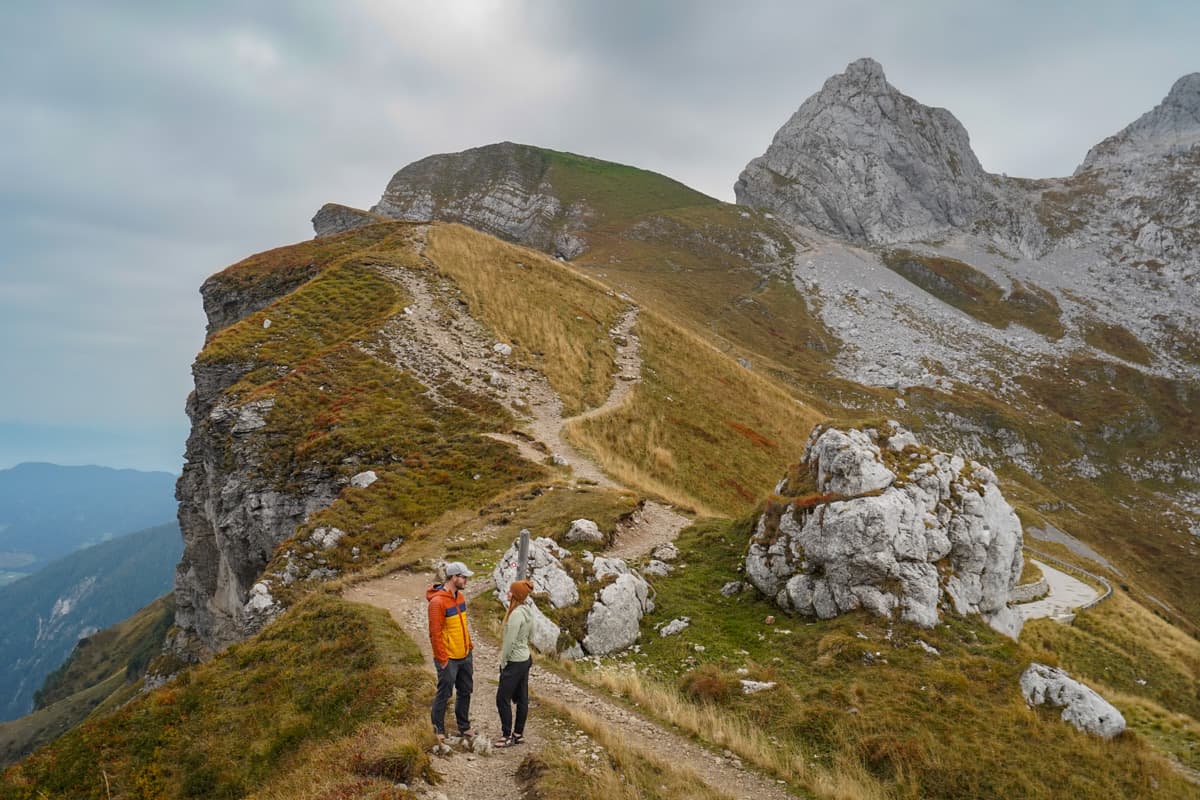
You obviously won’t be able to see EVERYTHING in Triglav National Park on these trips, but it’s your best bet for squeezing as much as you can into just a day!
- Triglav National Park and Soča Day Trip: On this 11 hour trip from Ljubljana, you’ll hit the aforementioned Seven Alpine Wonders, plus even have free time to wander around the alpine city of Bovec or even add on a whitewater rafting trip down the Soča River.
- Full day Tour to Triglav National Park: This 12 hour tour hits the highlights of Triglav National Park, including the seven Alpine Wonders and even a hop over the border to Italy. The guides with this particular tour group are incredible at adjusting the itinerary, based on the season—for example, you might take a dip in the turquoise waters of the Soča in the summertime, but head to a ski jump where Olympians train in the wintertime.
5. Postojna Cave and Predjama Castle
How far is it from Ljubljana? 55 minutes
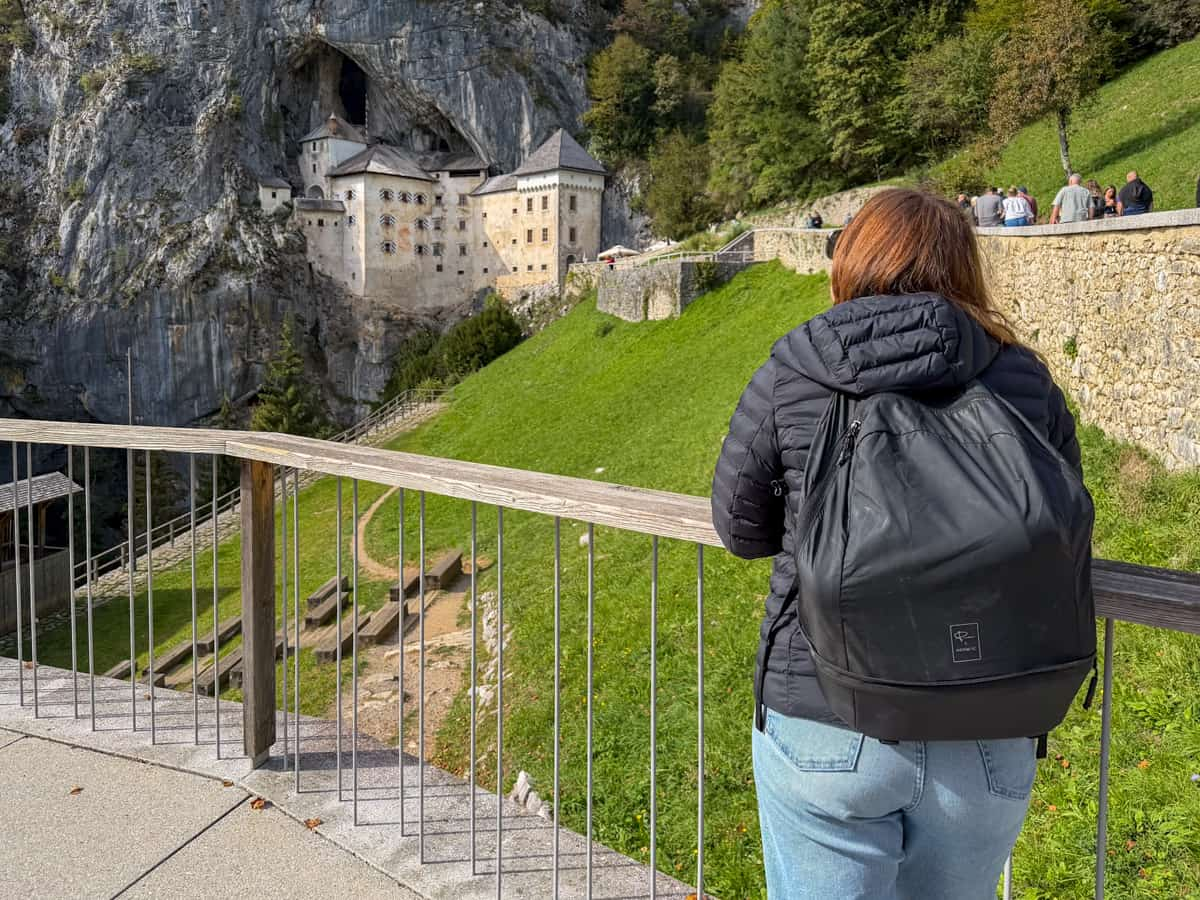
Fun fact—did you know that Slovenia has one of the highest densities of caves, per capita of any country on the planet, with 16,000 known caves with an additional 500 caves discovered per year?
Many of these caves have become attractions within the country, but the two most popular options are Postojna Cave and Predjama Castle, which are conveniently located just a few kilometers from each other and are typically visited together as one of the most popular day trips from Ljubljana.
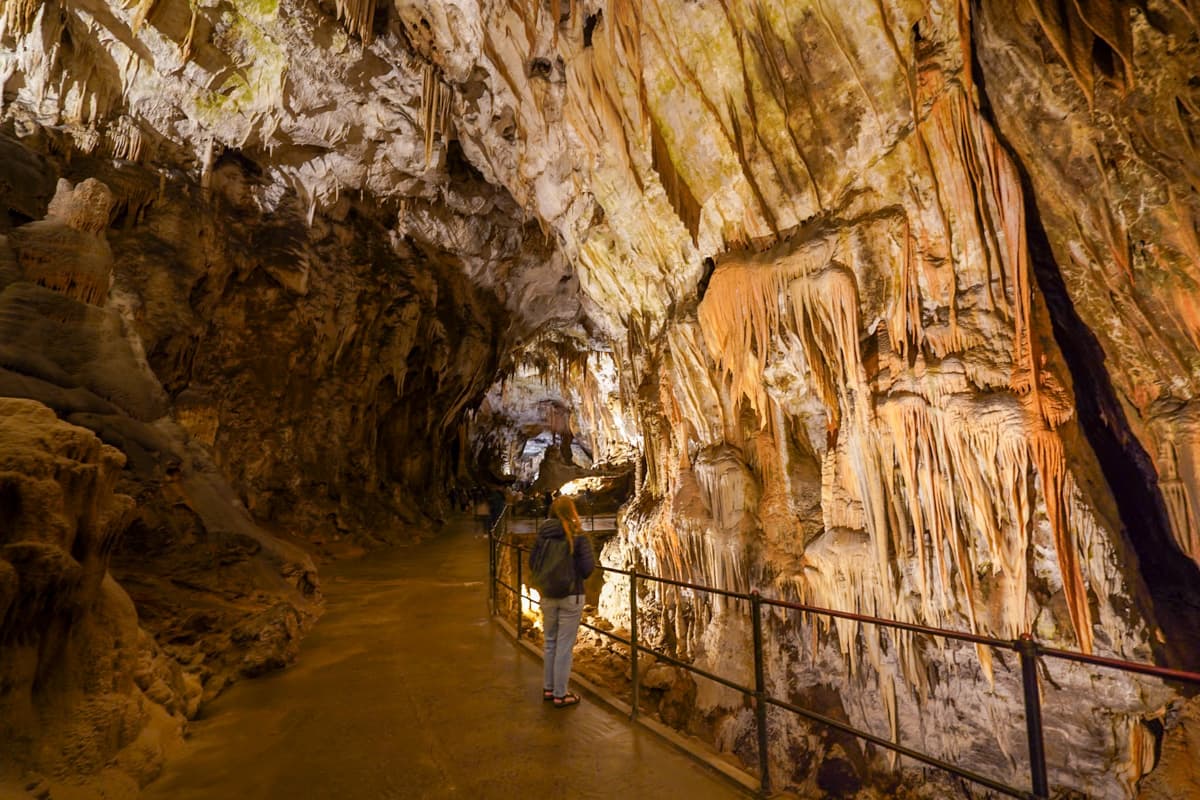
Each of these caves are uniquely interesting,
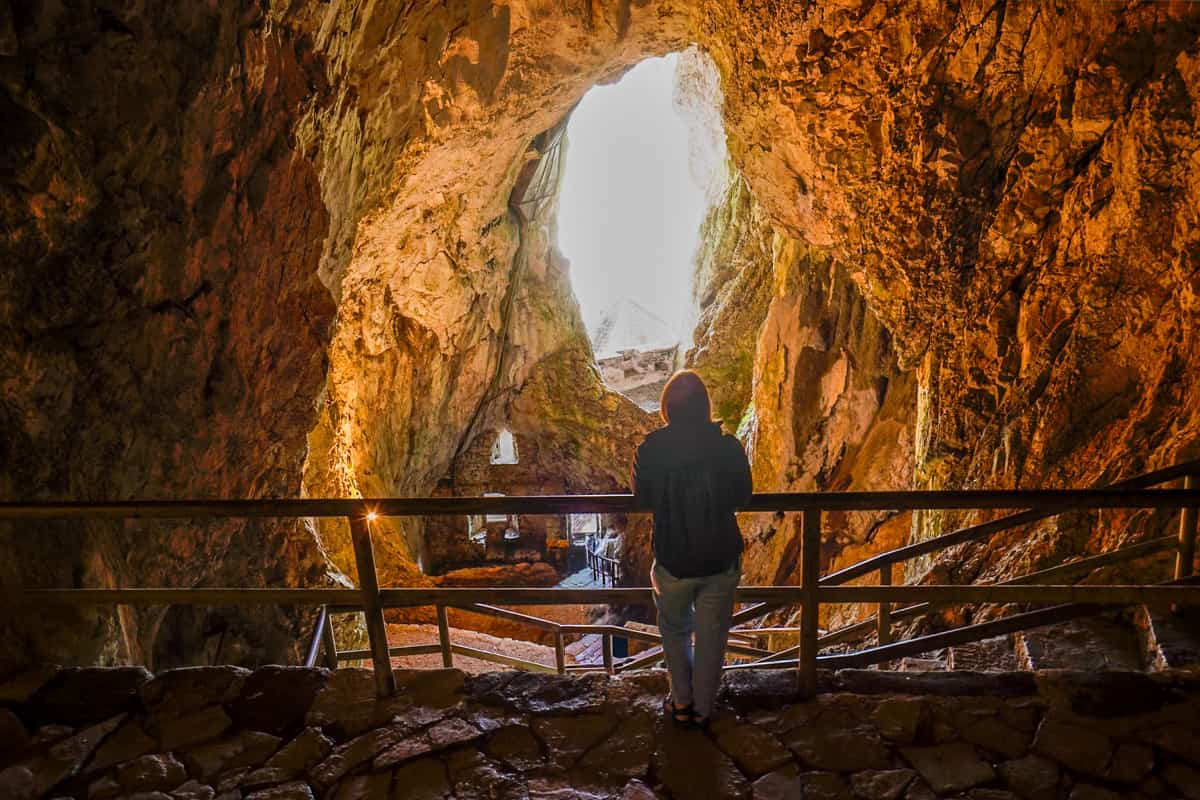
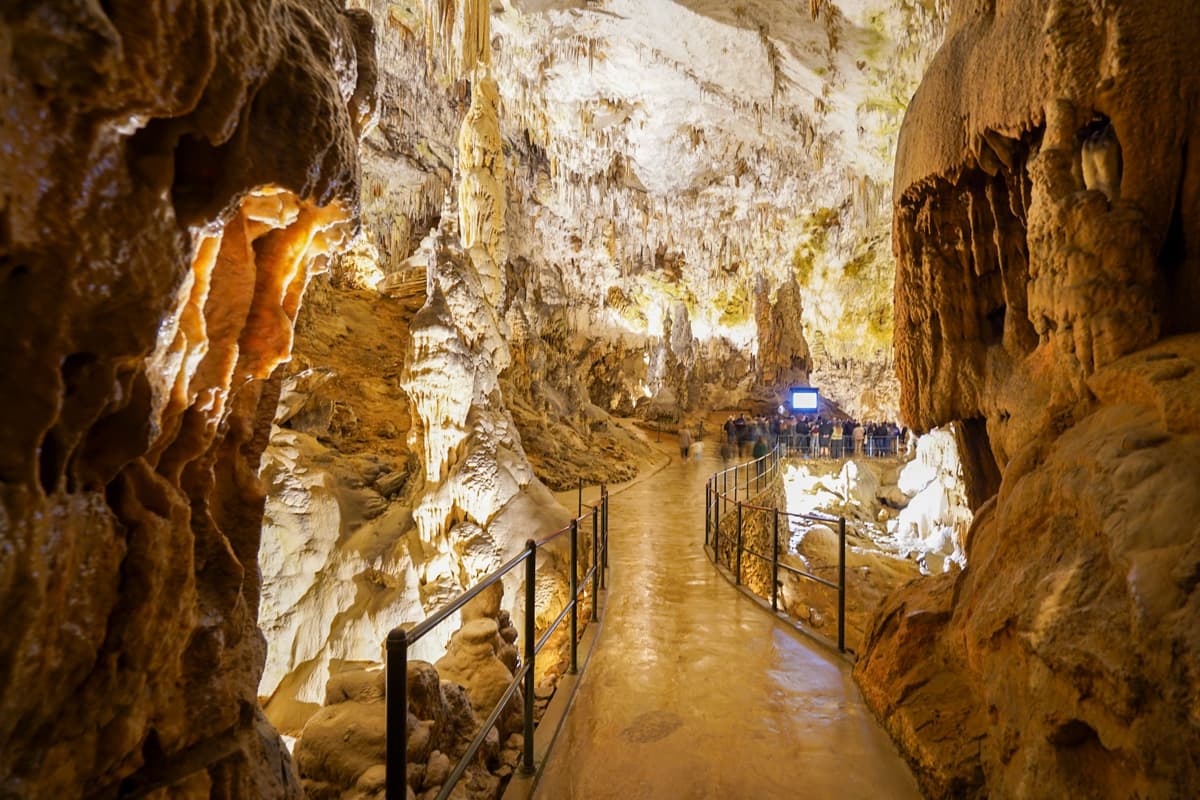
Postojna Cave is a massive underground system and is actually the second largest cave system in the country. One of the most unique things about this cave is that, in order to access its walking paths, you take a 4 kilometer electric train, deep into its caverns.
This train ride is SO much fun, whizzing past stalactites and stalagmites and through narrow tunnels (as a huge Harry Potter fan, it reminded me of the mining carts that you use to get around Gringott’s!). It also holds a number of impressive titles, including the oldest train system in an underground cave and the only double track train system in a cave.
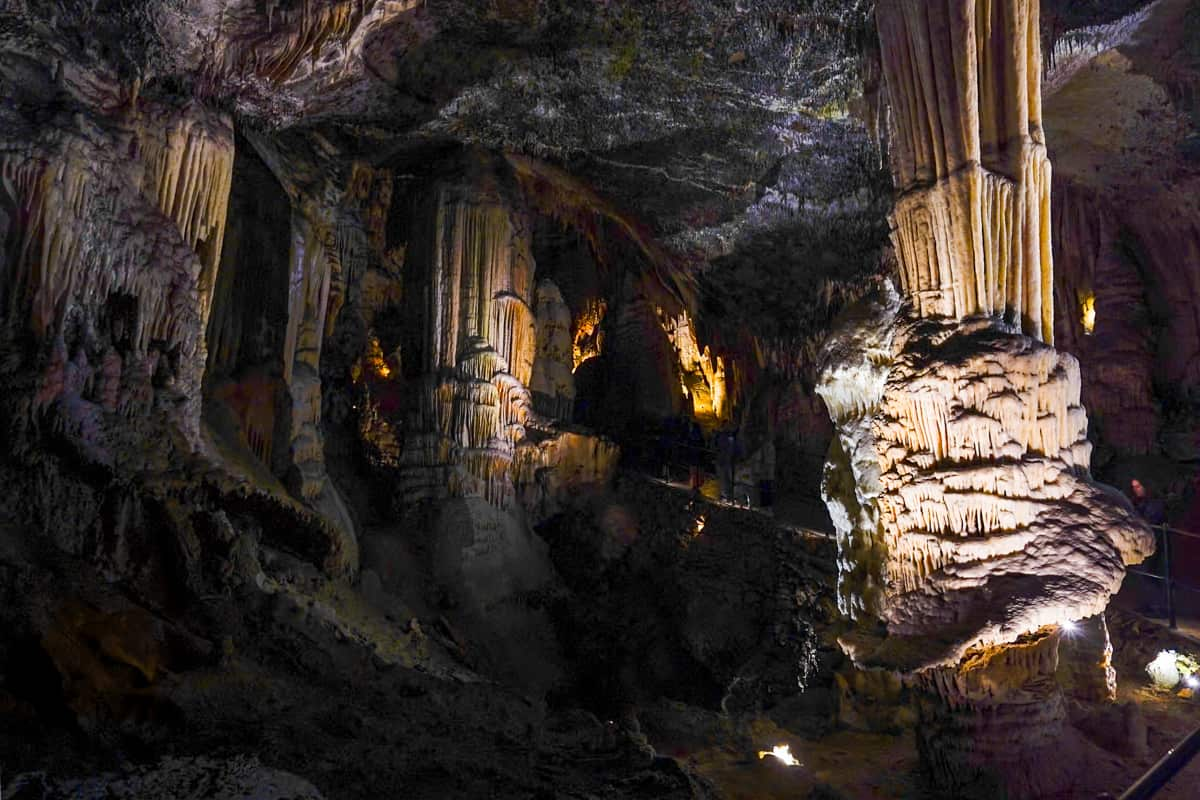
Once you’ve reached the cave’s walking path, the cave itself is stunning, with massive caverns, seemingly endless rock formations, and other unique features, including baby dragons, a blind white salamander that lives in the complete darkness of caves, and the world’s only post office in a cave.
Predjama Castle is yet another interesting stop, as the largest cave castle in the world!
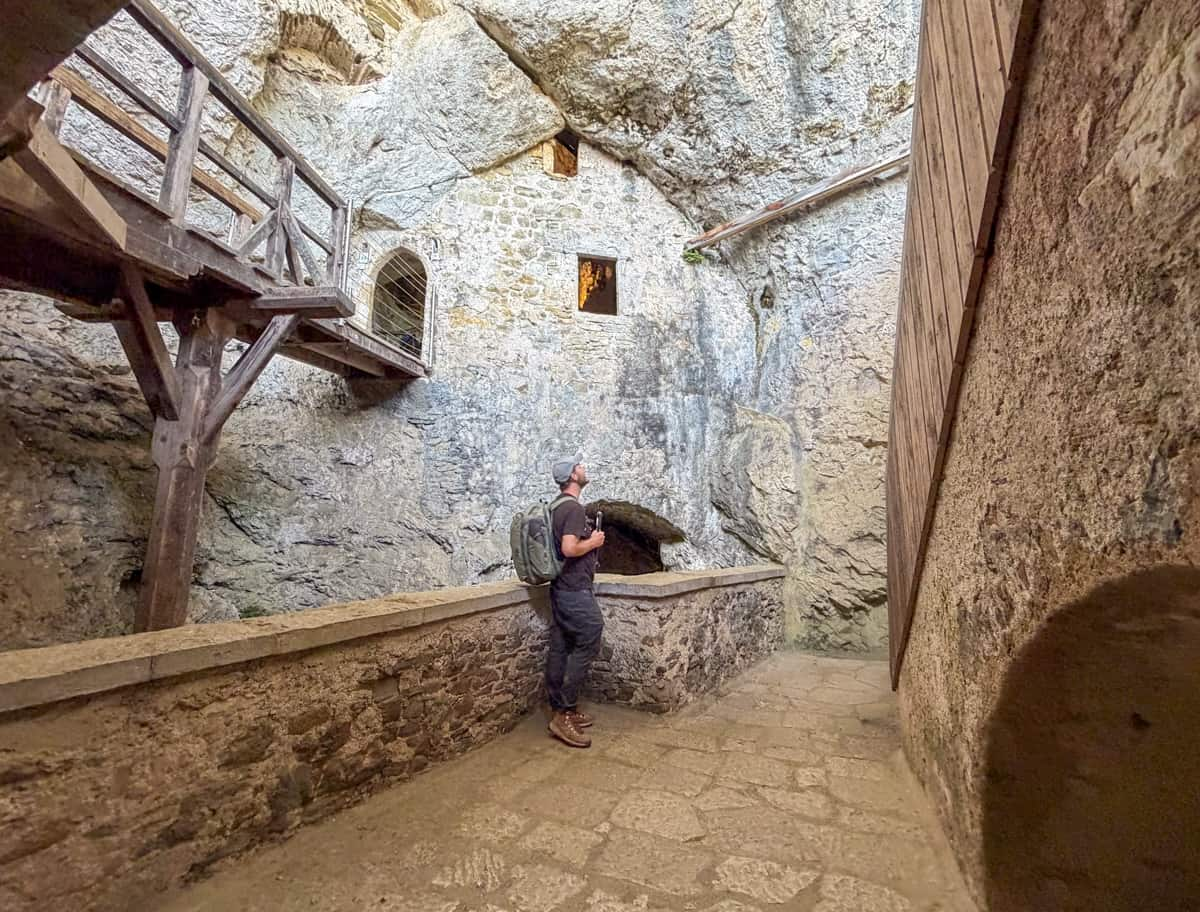
The castle was built in the mouth of a massive cave, to provide a high vantage point and natural protection from invaders. There’s an audioguide that you can listen to as you wander from room to room in the castle, with plenty of historical artifacts and educational signage to learn more about its history and the people that once lived here.
How to get to Postojna Cave and Predjama Castle
Public transit
Getting to the caves via public transit is doable, but requires a couple of transfers and may be more challenging outside of the peak summer tourist season.
From the Ljubljana bus station, catch a bus to the town of Postojna, with departures every half an hour to an hour. Tickets cost between €5-10 (one-way).
There is a local bus that runs between the Postojna bus station and Postojna Cave, available Monday through Saturday, or it’s about a 20 minute walk to the cave.
From here, there’s a shuttle that runs to Predjama Castle during the summer months (with roundtrip tickets costing €2) or you can hire a local taxi to get the 9 km to Predjama Castle.
There is no public transit from Predjama Castle back to the Postojna bus station from the castle, so you’ll need to take a taxi.
Tours
You’ll definitely pay a bit more to take a tour to the caves from Ljubljana, but, in my opinion, the premium is TOTALLY worth avoiding the headaches of dealing with figuring out five different public transit options.
We actually took this exact tour from Ljubljana and REALLY enjoyed ourselves. Our local guide was extremely knowledgeable about Slovenia and offered a stress-free way to hit both of the caves.
6. Škocjan Caves
How far is it from Ljubljana? 1 hour
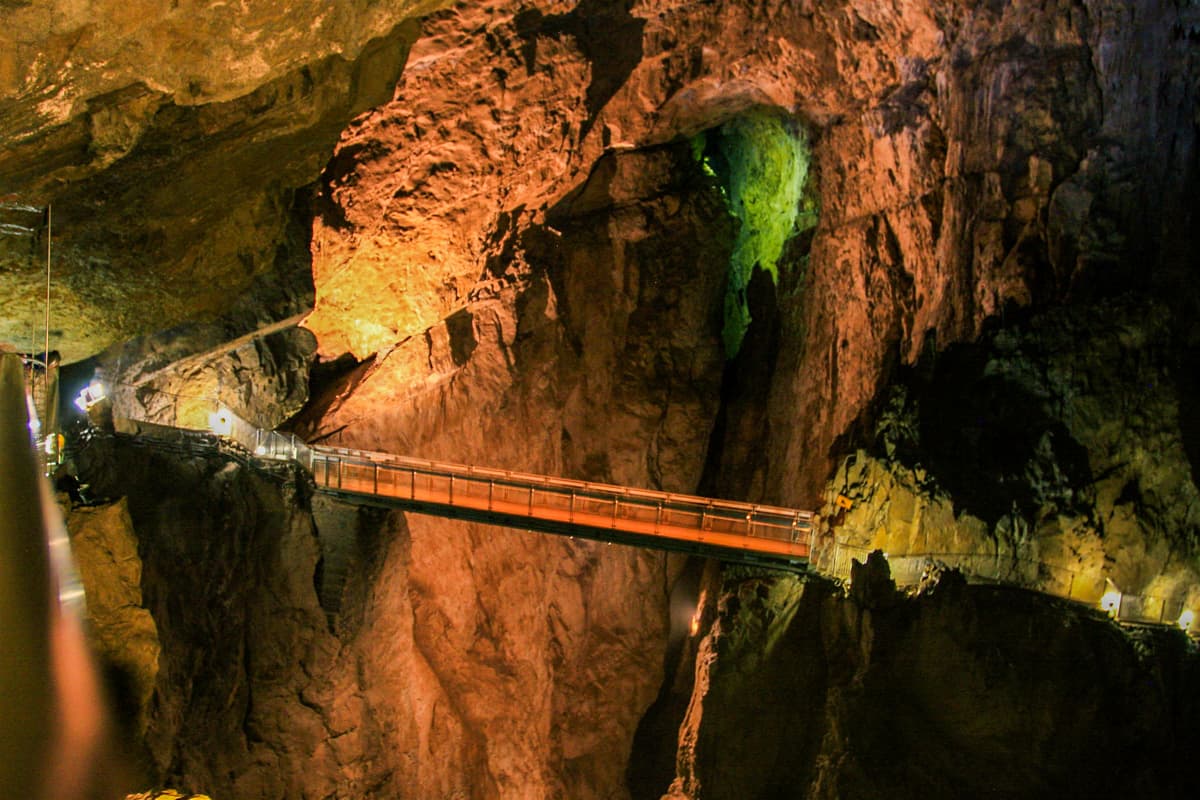
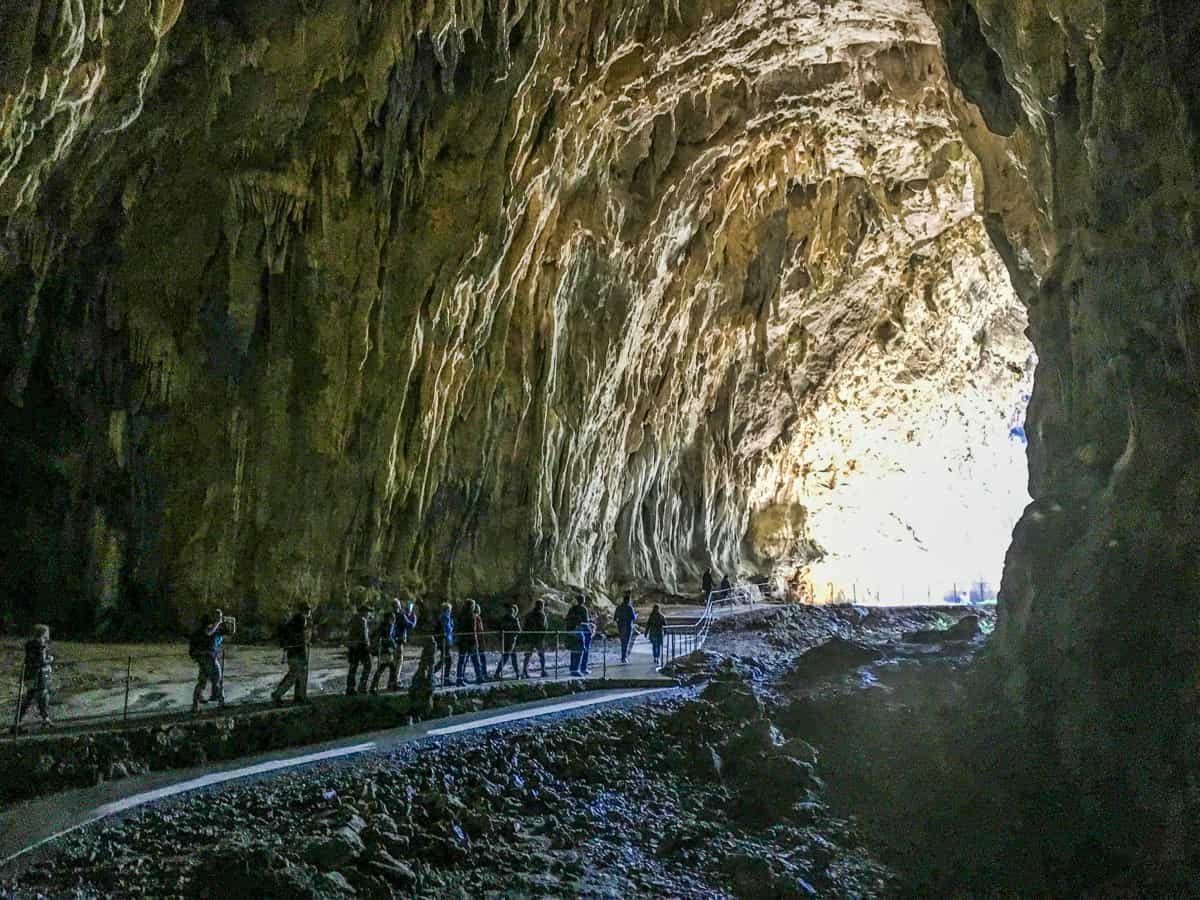
If you want to experience part of Slovenia’s caves but are trying to stay away from the crowds, the Škocjan Caves are significantly less touristy than Predjama Castle or Postojna and one of the most underrated day trips from Ljubljana.
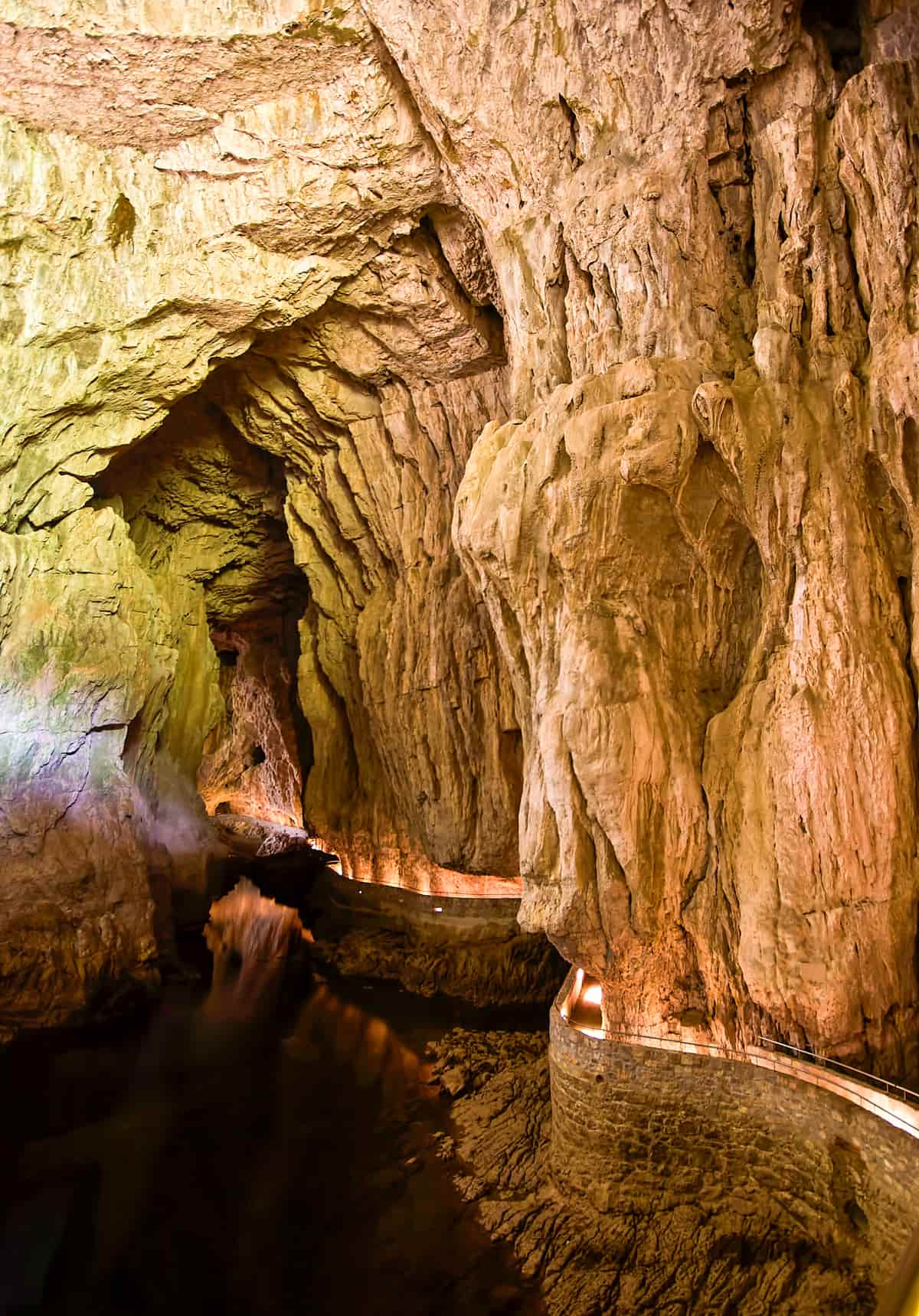
The Škocjan Caves pack a BIG punch. They’re actually classified as a UNESCO World Heritage Site for their exceptional natural features and their constantly evolving rock formations, which are created, in large part, by the Reka River.
The river actually runs 6 kilometers through the cave, creating one of the world’s largest subterranean canyons, as well as waterfalls and whirlpools.
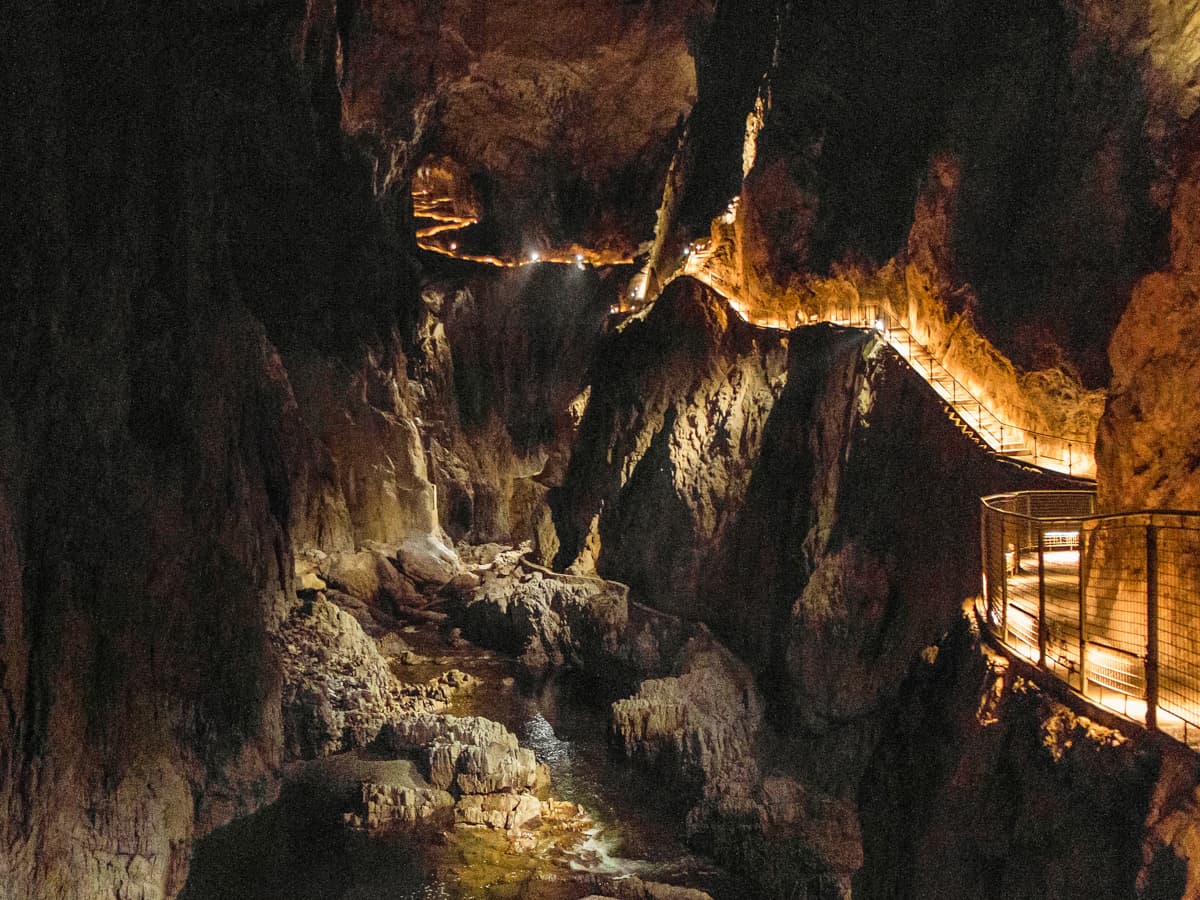
Škocjan is also famous for its dramatically high bridges, like the Cerkvenik Bridge, which stretches approximately 50 meters above the Reka River rushing below. The addition of the river flowing through the cave makes it feel like something straight out of Middle Earth!
Despite being a smaller cave than Postojna, Škocjan actually has a longer, 3 kilometer-long pathway that leads through its caves. It actually may not be the best option if you have mobility challenges, as there’s a total of about 500 stairs that you need to climb up and down to walk through its caverns.
How to get to Škocjan Cave
Public transit
There isn’t a super direct way to get from Ljubljana to the Škocjan Caves via public transit.
However, if you’re willing to transfer a few times, you can catch a bus from the Ljubljana bus station to the Divača station, get on a bus there to D. Ležeče, and finally, walk the remaining 2.3 kilometers to the cave (or get a taxi the rest of the way).
Tours
There are several tours that make it much easier to get to Škocjan Caves from Ljubljana, including this half-day tour and this five hour option.
These tours include roundtrip transportation from your hotel in Ljubljana, as well as an English-speaking driver that provides background on Slovenia and its natural history. However, these tours do not include entry tickets to the cave, which you’ll need to purchase separately.
Alternatively, a trip to the Škocjan Caves is often combined with a visit to Piran, a colorful Venetian town along the Adriatic coastline (and one of our favorite stops in Slovenia!), like these tours:
- UNESCO Škocjan Caves & Piran Tour: This small group tour (of no more than 8 guests) packs in a LOT of adventures around southwestern Slovenia, including visiting the caves; a stop at the San Servolo Castle, a fortress built near the Italian border; and three hours to explore cobblestone alleyways of Piran.
- Škocjan Caves and Piran Day Trip: This tour focuses on just the caves and Piran, allowing more time to explore this coastal city.
Again, neither of these options include entry tickets to the Škocjan Caves, so you’ll need to purchase tickets onsite.
7. Piran
How far is it from Ljubljana? 1 hour and 30 minutes
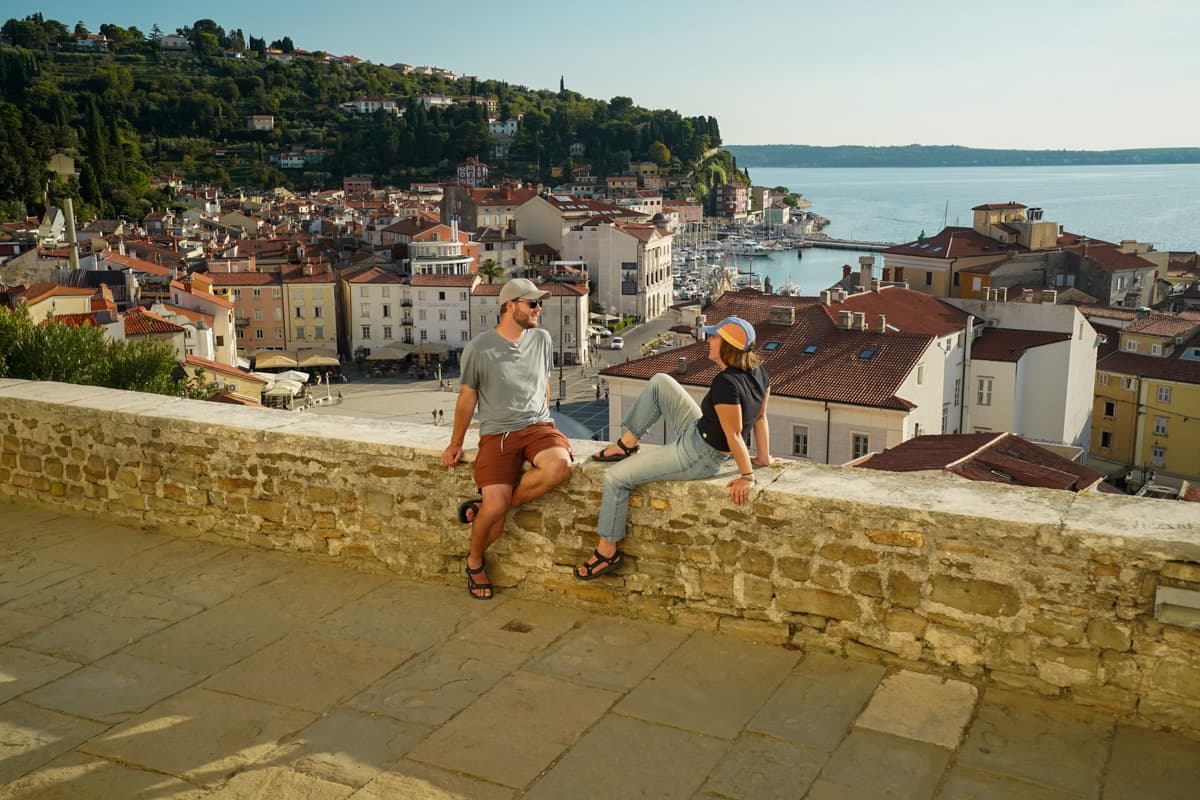
Although Slovenia’s neighbors, Croatia and Italy, are more famous for its beaches, Slovenia has a 30 mile stretch of the Adriatic coastline to itself. Piran is the most famous town along the coastline, with colorful Venetian buildings, historic churches, and direct access to the emerald waters of the Adriatic Sea.
To be honest, we almost didn’t go to Piran—I had heard extremely mixed reviews about it being an overly crowded tourist trap. But I’m so glad we went anyway. It really was one of the highlights of our time in Slovenia!
Tartini Square is the main plaza in Piran, and a good spot to start your explorations of the city.
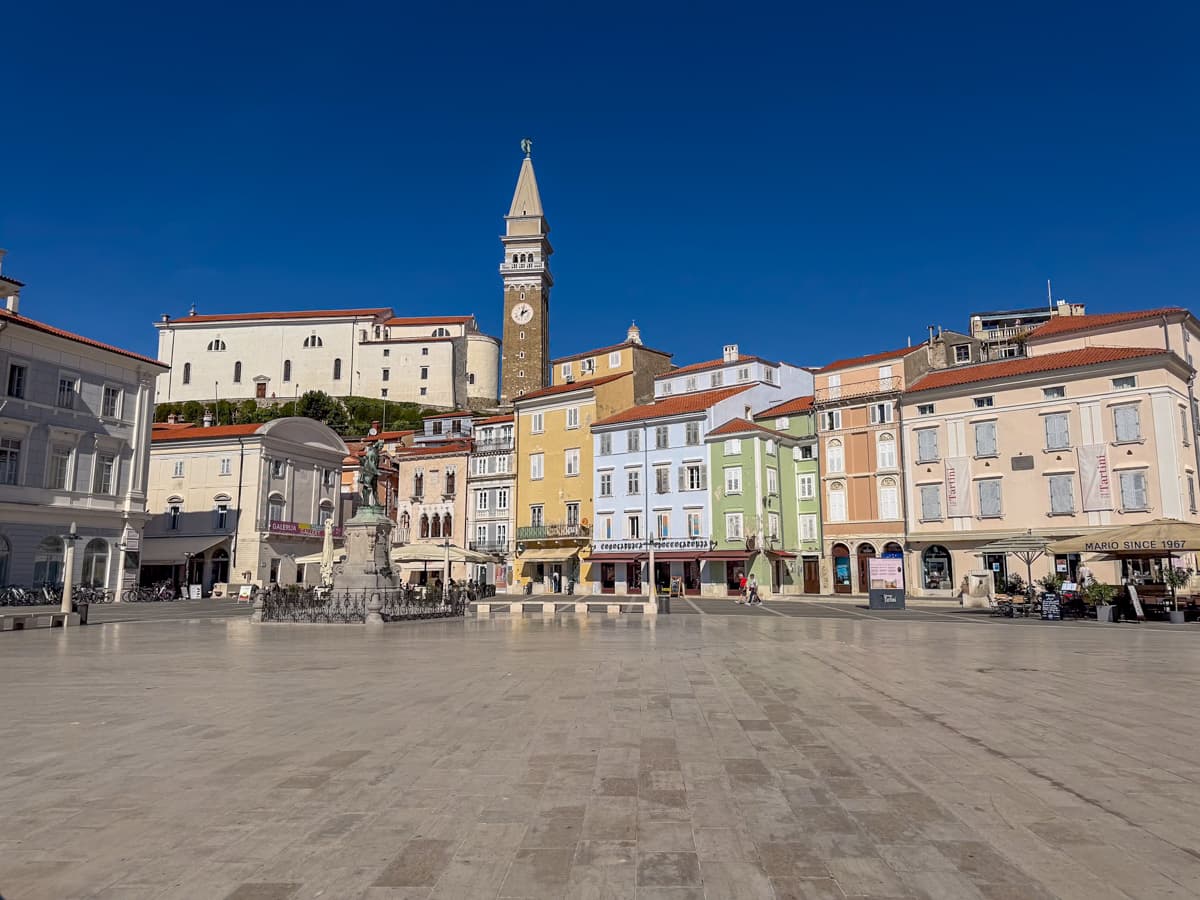
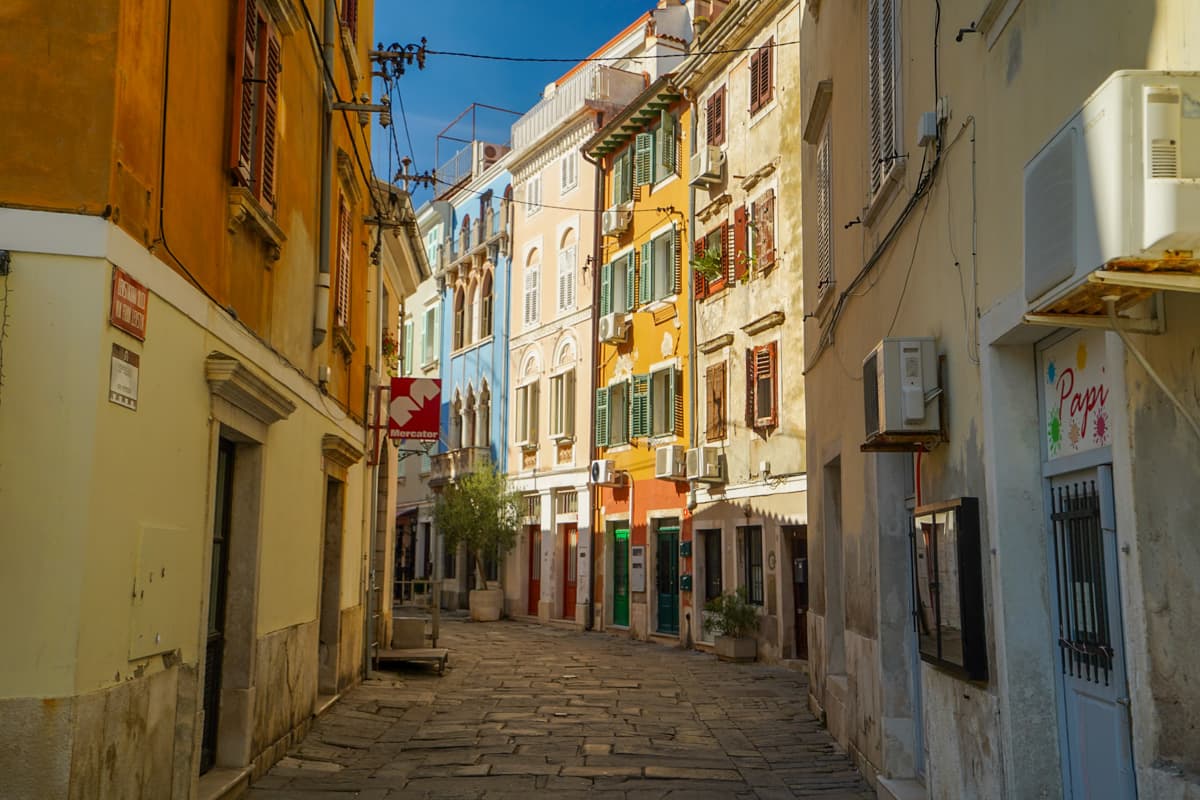
For example, from the square, you can wander through a maze of cobblestone streets up to the Parish Church of St. George, which is built high on a hillside that offers some of the most stunning views over the city.
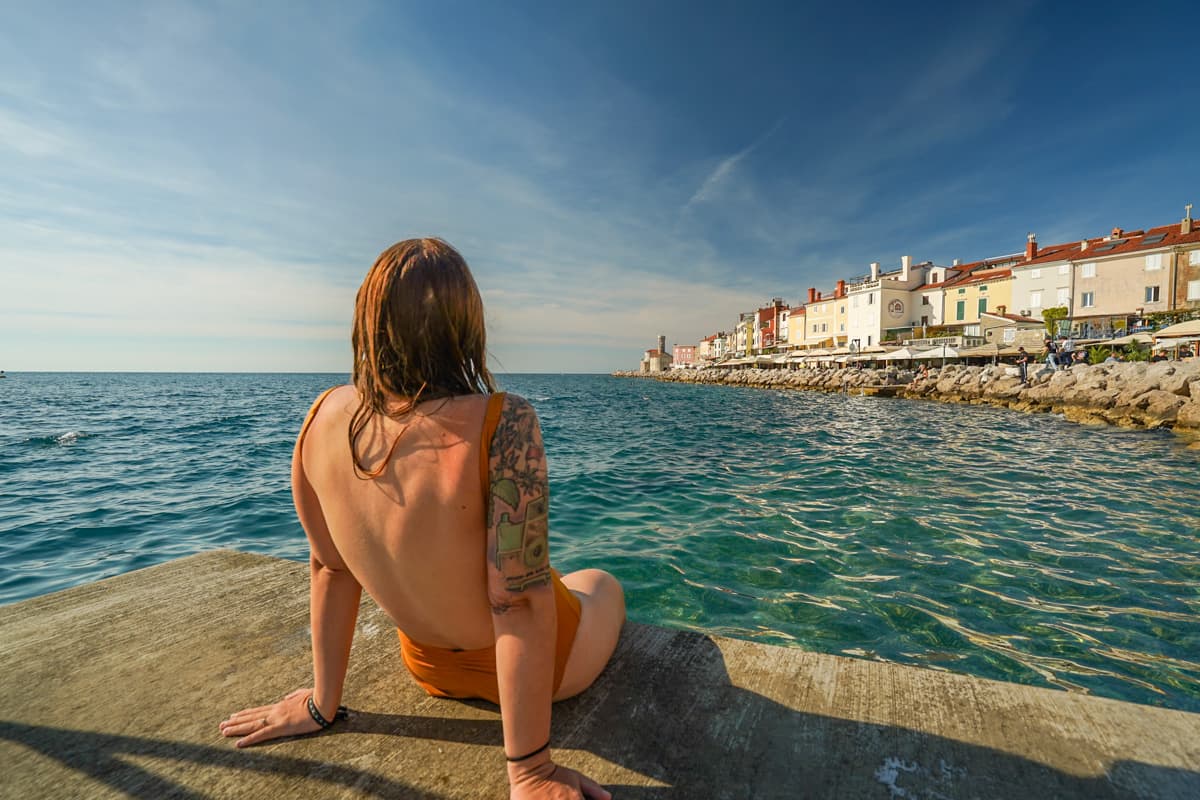
Alternatively, you can spend your time soaking up the sun at one of the “beaches” (i.e., concrete docks with plenty of room to sunbathe and ladders that lead down into the water). Our favorite was this public beach, with lots of room to spread out and great views of the colorful buildings lining the coastline. As we were leaving this beach, we even spotted some fellow beachgoers getting served cocktails from the nearby Hotel Piran!
If you happen to be visiting during sunset, I’d suggest heading to the Walls of Piran, defensive walls that were constructed as far back as the 7th century, which provide jaw-dropping views of the town and, beyond, the sun sinking into the Adriatic Sea.
Piran also has a great food and drink scene. We loved getting coffee at Caffe Neptune, which is right next to the town’s harbor; Slaščičarna for gelato; and Okrepčevalnica Barka for pizza.
How to get to Piran
Public transit
You can take a direct Arriva bus from the Ljubljana Bus Station to Piran. A one-way ticket typically costs €10-12.
This tends to be a popular route, so buses, especially if you have a preference as to what class you take, tend to sell out. I’d definitely recommend getting here on the earlier side if you’re visiting during busier periods, like the summer or on weekends.
Tours
There are several tours from Ljubljana that visit Piran, with many of the options combining the coastal town with other attractions in southwest Slovenia, like the Škocjan Caves, Predjama Castla, or Postojna Cave.
- Half-day tour to Piran and Portoroz: On this tour, you’ll have time to stroll around and explore Piran, as well as stop in the resort town of Portoroz, known for its white sandy beaches. Definitely a good way to explore the Slovenian coastline! Both of the visits to the coastal towns are on the shorter side, so this is best for travelers that have a limited amount of time to explore Ljubljana.
- UNESCO Škocjan Caves & Piran: This tour includes a two hour stop at the Škocjan Caves and three hours to wander around the streets of Piran. I love that this option gives you a bit more time to soak in the Venetian charm of Piran, so this would be my personal choice here!
- Postojna Cave, Predjama Castle, and Piran Tour: Alternatively, if you want to see the more popular Postojna Cave and Predjama Castle, this tour combines stops at both of these attractions, plus three hours in Piran, with a guided city tour and plenty of time to explore on your own.
8. Maribor
How far is it from Ljubljana? One hour and 30 minutes
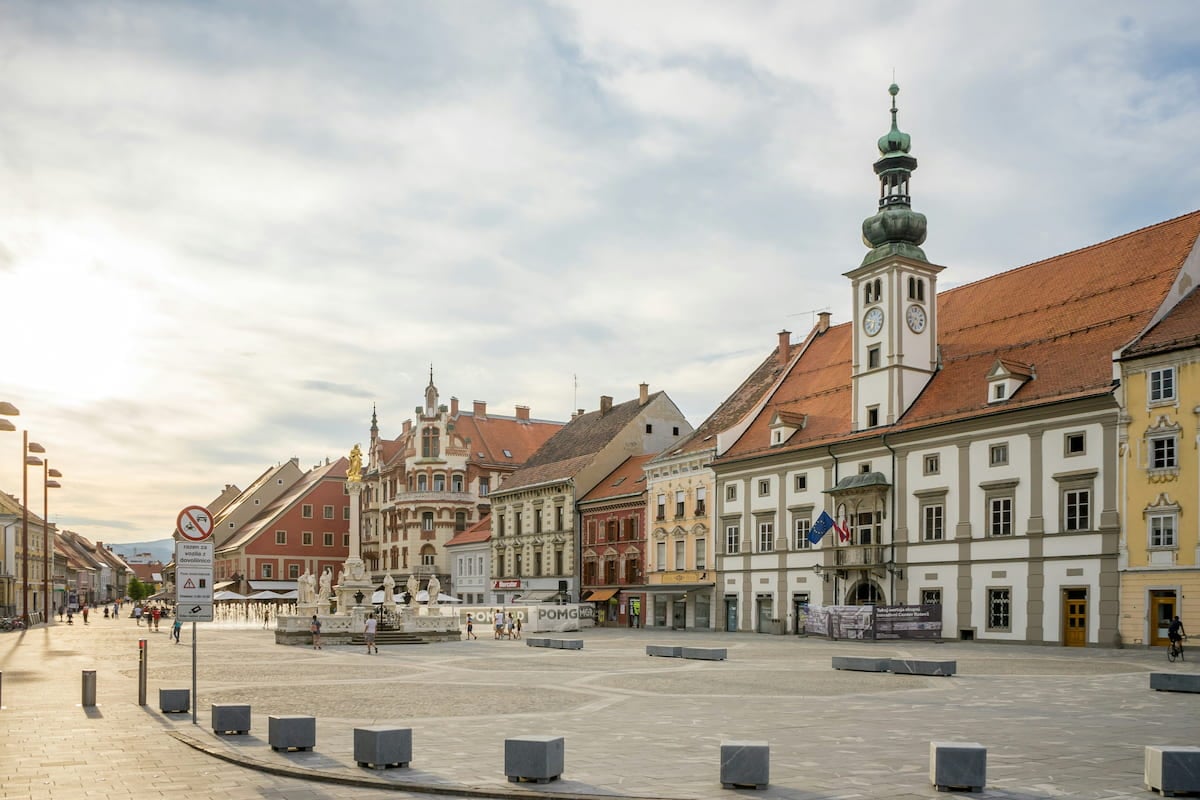
Maribor is the second largest city in Slovenia, but it’s actually mostly known for something else—its wine!
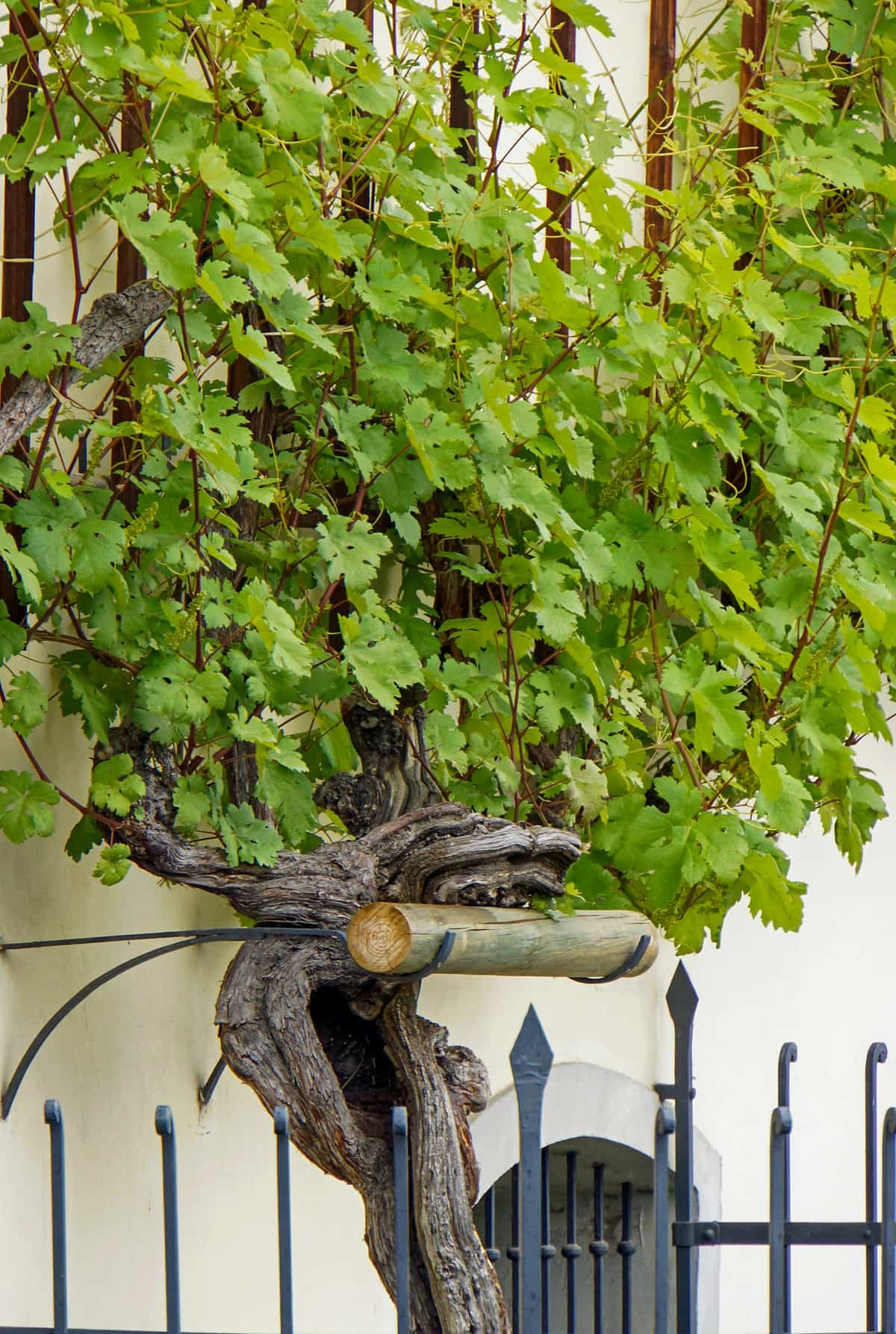
The city is home to the Guiness Book of World Records’ holder of the oldest grapevine on the planet, which is actually 400 years old. There was actually a whole festival to celebrate this grapevine while we were visiting Slovenia, which typically occurs during the grape harvest season in late September.
Maribor is also located in the largest wine-growing area of Slovenia, surrounded by vineyards producing Štajerska wines, which is a type of crisp, aromatic wines. This area is ideal for growing grapes, due to its location in the Pohorje mountains, the easternmost part of the Alps, which creates the perfect geological and climatic conditions.
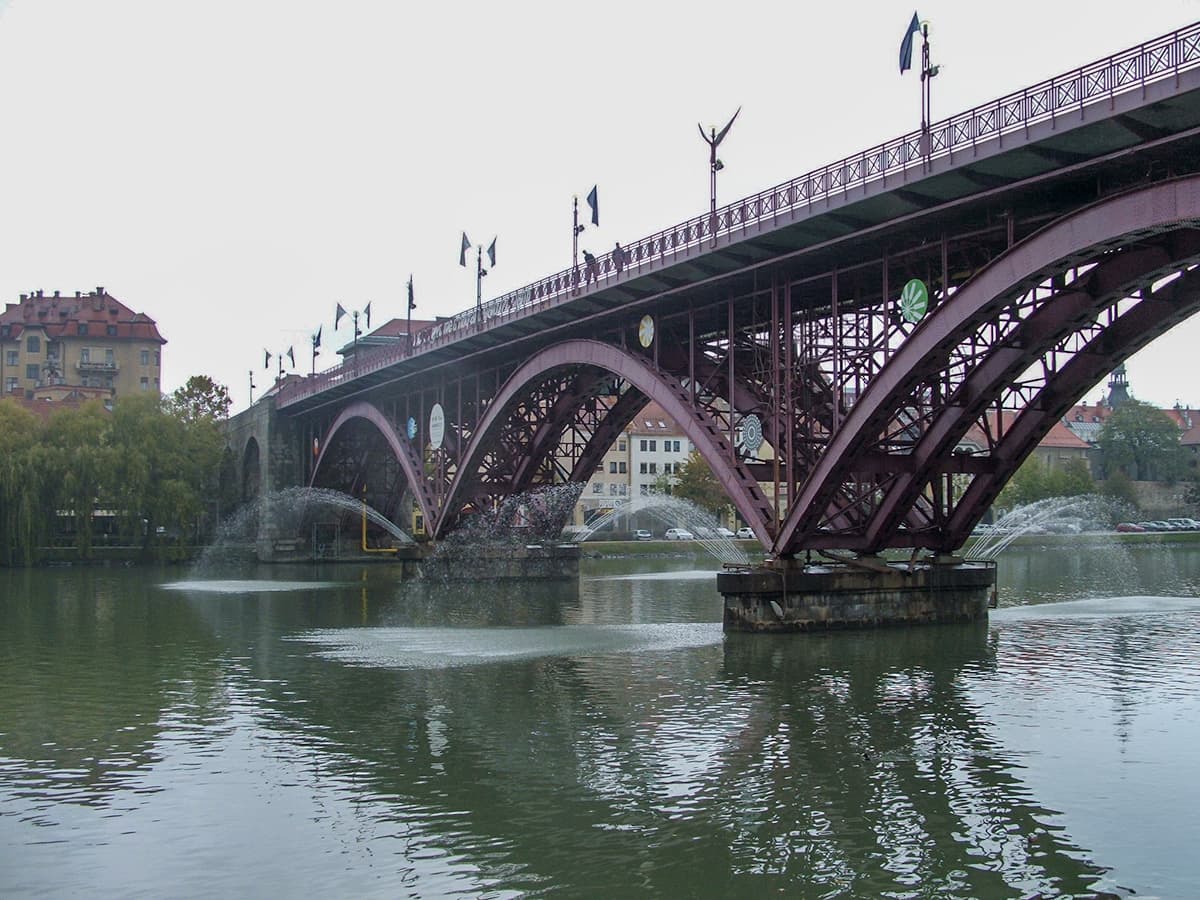
Beyond just wines, Maribor is a beautiful Medieval city, much like Ljubljana. A good place to start to explore the city is either Grajski Trg, one of the main squares in the city that is flanked by the 15th century Maribor Castle, or Glavni Trg, the main town square that’s home to its city hall and the oldest brewery in Maribor. But, really, I’d just suggest wandering around the cobblestone alleyways of its Old Town, exploring its buzzy cafe culture and the eclectic shops lining its streets.
How to get to Maribor
Public transit
From the Ljubljana bus station, there are departures to Maribor every hour or so, depending on what day of the week it is. Tickets cost €7–19.
Tours
Most of the tours to Maribor from Ljubljana highlight both the city’s culture and history and its importance in Slovenian wine production.
- Maribor and Styria Tour: This tour from Ljubljana stops at several interesting sites in eastern Slovenia, including Žiče, which is a historic monastery, and the city of Maribor. In the city, you’ll go on a guided walking tour of the city, plus have time to explore on your own, if you want to cross any wineries off your bucket list.
- Ptuj & Haloze Wine Cellar Tour with Tastings: This tour focuses more on the wine-producing region around Maribor, including visiting (and tasting!) at a family-run vineyard that’s been producing wine for several generations. Afterwards, you’ll head to Ptuj, Slovenia’s oldest town, which is home to a 12th century castle and an iconic wine cellar that holds some of the oldest vintages in the country. If you’re an oenophile, this tour is a must!
I hope you enjoy taking a few day trips from Ljubljana. You can honestly cover SO much ground in Slovenia, even when you’re using its capital city as your base camp for your entire trip. Do you have any questions about adventuring around Ljubljana? Let us know in the comments below!
